
Venus Day vs Year
VENUS TIME DIAL
CHRONOLOGICAL ORBITAL MECHANICS
The Long Sidereal Day
Venus spins on its axis exceptionally slowly, taking 243 Earth days to complete one full rotation. This slow axial spin means that a single structural day on Venus lasts longer than its entire trip around the Sun.
Time required for one physical spin on its internal axis.
The only planet where its rotation outlasts its orbital path.
Day vs Year
A Temporal Paradox. Venus spins so slowly that its sidereal day outlasts its orbital year. Time here is defined by a backward sunrise.
- 🔄 Rotation: 243 Earth days (Backward/Retrograde).
- ☀️ Solar Day: 117 Earth days from sunrise to sunrise.
- 📅 The Year: 225 Earth days to circle the Sun.
Day vs Year
A Temporal Paradox. Venus spins so slowly that its sidereal day outlasts its orbital year. Time here is defined by a backward sunrise.
- 🔄 Rotation: 243 Earth days (Backward).
- ☀️ Solar Day: 117 Earth days from noon to noon.
- 📅 The Year: 225 Earth days to circle the Sun.
The Venusian Year
Swift Revolution. Venus completes its journey around the Sun in just 225 days, moving significantly faster than Earth.
- 📅 Duration: 224.7 Earth Days.
- 🚀 Velocity: 35.02 km/s orbital speed.
- 📐 Orbit: Near-perfect circle (Eccentricity < 0.01).
MISSION: VENUS / TEMPORAL DYNAMICS
THE ROTATIONAL ANOMALY
Venus exhibits one of the most bizarre rotational profiles in the solar system. It rotates on its axis once every 243 Earth days, which is actually slower than its orbital period of 225 Earth days. This means a single day on Venus lasts longer than its entire year. To add to the complexity, Venus rotates in a "retrograde" direction—clockwise, unlike most other planets—likely the result of a massive, ancient collision that completely reversed its spin. This creates a solar day (time from sunrise to sunrise) of roughly 117 Earth days, creating long, slow transitions of light and dark.

MISSION: VENUS / POWER HARVESTING
SOLAR FLUX: THE DIFFUSE CHALLENGE
Venus receives nearly double the solar flux of Earth (about 2600 Watts per square meter at the top of the atmosphere). However, with an albedo of 0.75, the planet reflects the vast majority of this energy. For a floating base at 50 kilometers, the challenge is not total lack of power, but the nature of the light. The thick sulfuric clouds scatter incoming radiation, transforming direct solar beams into diffuse, low-contrast light. To harvest energy here, we cannot rely on standard solar panels; we must use high-efficiency, multi-junction thin-film photovoltaics designed to capture light across a broad spectrum of wavelengths, including the infrared that penetrates the cloud tops.
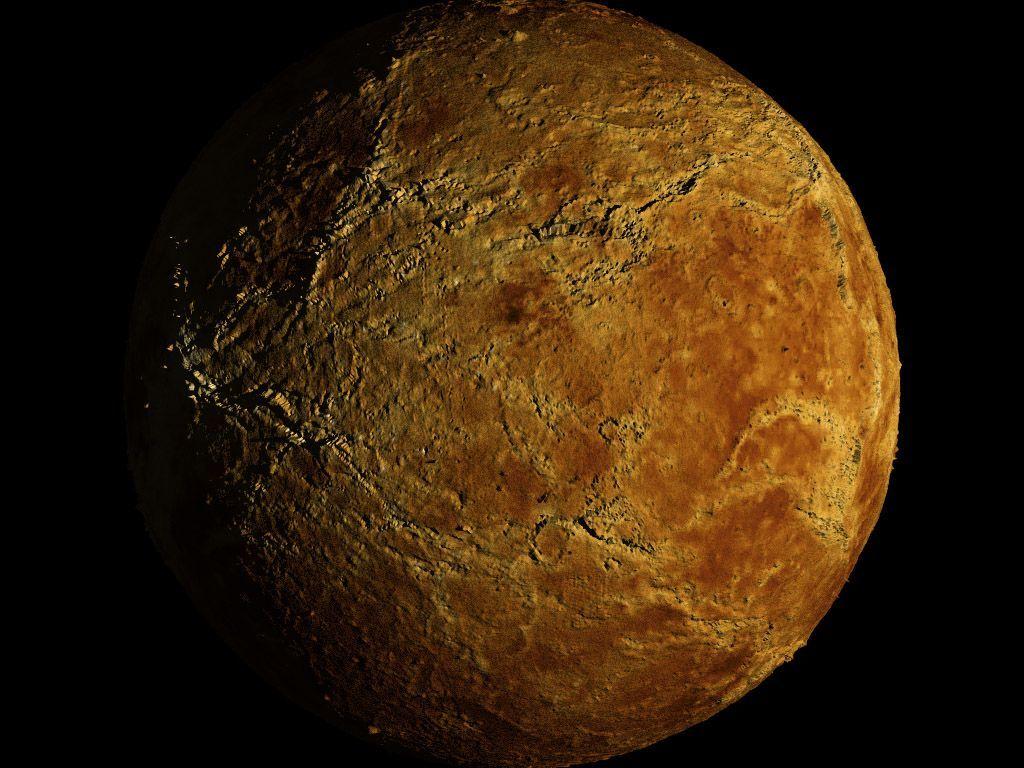
Dive Deep Venus
Venus

Venus Pressure Depth

Structural Crush Depth
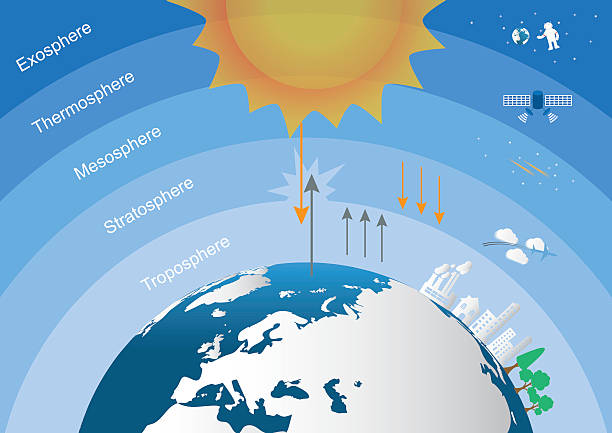
Atmospheric Density
Greenhouse Heating

Cooling Energy

Buoyancy Lift

Altitudinal Habitability

Floating Base Stability

Venus Day vs Year
Venus Transit

Sulfuric Acid Corrosion

CO2 to O2 Conversion

Lightning Frequency

Windturbine Power

Comms Through Clouds

Landed Probe Lifespan

Venus Gravity Assist
Titanium vs Steel

Sonic Velocity on Venus

Acid Rain

Cloud Cities

Venus Mysteries
View 3D Model
Sources
SIDEREAL DAY
Venus takes **243 Earth days** to complete one rotation, making it the slowest spinner in the system.
ROTATION DATAORBITAL YEAR
A year on Venus (one orbit around the Sun) lasts **225 Earth days**, shorter than its sidereal day.
ORBITAL STATSSOLAR DAY (DIURNAL)
Due to the combination of rotation and orbit, the Sun rises every **117 Earth days**.
DAY/NIGHT CYCLEThe Morning Star

Venus: The hottest planet in our solar system due to runaway greenhouse effects.
Day vs Year

Sidereal Day: 243 Earth Days
Orbital Year: 225 Earth Days
Rotation: Retrograde (Clockwise)