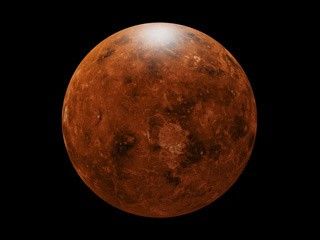
Lightning Frequency
LIGHTNING FREQUENCY
IONIZED ATMOSPHERIC DISCHARGES
Cloud Deck Discharges
Unlike Earth, where lightning bolts strike the solid crust, electrical storms on Venus occur exclusively inside the cloud matrix. Energy is discharged completely between clouds miles above the superheated surface.
Intermittent electrical activity that parallels Earth's tropical storm cells.
Confirmed through electromagnetic wave drops recorded by deep orbital monitors.
Static Horizons
Atmospheric Discharge. Monitoring low-frequency whistler waves indicating lightning activity within the 55km cloud deck.
- 🌩️ Global Rate: ~45 strikes / second.
- 📡 Detection: LF Whistler Wave verification.
- 🛡️ Shielding: Faraday cage active on habitat skin.
Acid Storm
Static Horizons Detected. Real-time monitoring of triboelectric charging within the H₂SO₄ concentrated mist.
- 🌩️ Mechanism: Cloud-to-Cloud Discharge.
- 🧪 Medium: 95% Concentrated Sulfuric Acid.
- 📡 Sensor: V-Express Whistler Monitor.
VLF Whistler
Radio Visualization. Translating low-frequency electromagnetic pulses from the acid cloud deck into structural data.
- 📻 Band: 3kHz - 30kHz (Very Low Frequency).
- 📉 Dispersion: Frequency-dependent time delay detected.
- 🛰️ Source: Venus Express Magnetometer data.
MISSION: VENUS / ATMOSPHERIC PHYSICS
THE LIGHTNING ENIGMA
The question of Venusian lightning remains one of the most debated topics in planetary meteorology. Early Soviet Venera landers and orbiter flybys suggested strong evidence of electromagnetic pulses consistent with lightning. However, subsequent missions, including observations from the Akatsuki orbiter and various flybys, have struggled to provide definitive optical confirmation. We face a discrepancy: electromagnetic data suggests a high frequency of electrical discharge, but we lack the clear, visual photographic evidence of flashes that we possess for Earth or Jupiter.

MISSION: VENUS / ATMOSPHERIC CHARGE
GENERATION MECHANISMS
On Earth, lightning is driven by ice and water droplet collisions in convection cells. Venus, however, operates under vastly different conditions. If lightning occurs, it is likely driven by triboelectric charging—the accumulation of electrical charge through particle friction. This could occur within dense, wind-driven sulfuric acid aerosol clouds or during localized volcanic eruptions that inject dust and ash into the atmosphere. These charged particles, suspended in the super-dense supercritical CO2 environment, could create massive potential differences, leading to electrical discharges in the form of lightning or corona discharge, even in the absence of traditional water-based storms.

MISSION: VENUS / ELECTRONIC HARDENING
IMPACT ON MISSION HARDWARE
Operating electronics in a potential electrical storm requires a "Defense-in-Depth" strategy. The primary defense against atmospheric discharge is the Faraday cage—a continuous, conductive shell that surrounds sensitive instruments, preventing external electromagnetic pulses (EMP) or direct arc-over from damaging internal circuits. Furthermore, the high-pressure CO2 environment can exacerbate static buildup on external surfaces. To mitigate this, probes must employ active grounding systems to bleed off accumulated charge before it reaches a critical breakdown voltage, ensuring that the mission architecture remains stable against the unpredictable electrical nature of the Venusian clouds.

Sources
VENUS EXPRESS DATA
ESA's orbiter detected low-frequency "whistler mode" waves, a signature sign of lightning strikes.
ESA FINDINGSAKATSUKI OBSERVATIONS
Japanese orbiter's lightning camera (LAC) searches for optical flashes to verify electrical activity.
JAXA MISSIONATMOSPHERIC CHARGE
Scientific analysis of how sulfuric acid droplets generate static electricity through friction.
NASA ANALYSISV-Lightning
High-altitude electrical discharges within the sulfuric acid cloud layers.
Flash Metrics

Rate: ~45 strikes per second (global)
Medium: Sulfuric Acid Haze
Detection: ESA Venus Express (VEx)
Source: Science Photo Library
Dive Deep Venus
Venus

Venus Pressure Depth

Structural Crush Depth
Atmospheric Density

Greenhouse Heating

Cooling Energy

Buoyancy Lift

Altitudinal Habitability

Floating Base Stability

Venus Day vs Year
Venus Transit

Sulfuric Acid Corrosion

CO2 to O2 Conversion

Lightning Frequency

Windturbine Power

Comms Through Clouds

Landed Probe Lifespan

Venus Gravity Assist
Titanium vs Steel

Sonic Velocity on Venus

Acid Rain

Cloud Cities

Venus Mysteries