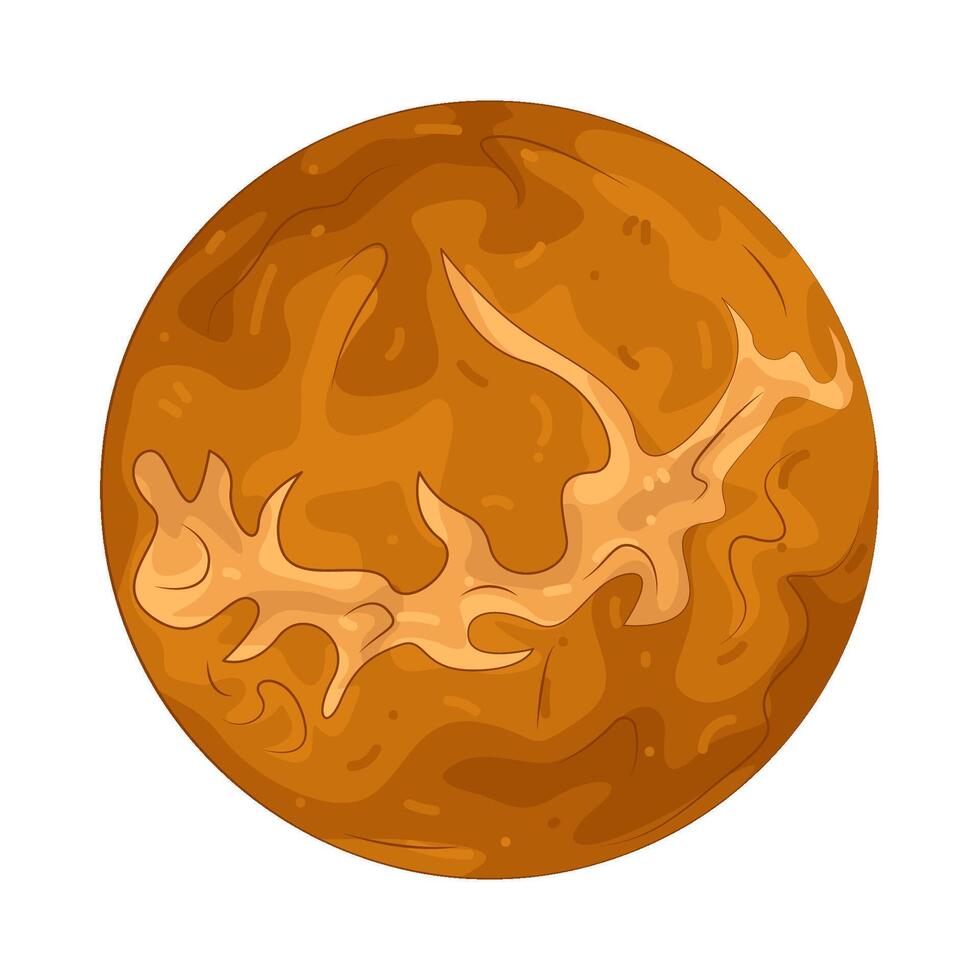
Atmospheric Density
ATMOSPHERIC DENSITY
SUPER-CRITICAL MASS INTERFACE
Mass Comparison
Venus holds the most massive atmosphere of any terrestrial body in the solar system. The extreme abundance of compressed carbon dioxide wraps the planet in a heavy blanket that completely reshapes surface mechanics.
The total amount of air gas molecules packed over the Venusian surface layer.
Roughly 50 times denser than standard room-temperature air on Earth.
Density Unit
Fluid-Atmosphere. Analyzing the 65 kg/m³ surface density that turns gases into supercritical fluids.
- 🧪 Supercritical CO2: Behaving like a liquid-gas hybrid.
- 🎈 Extreme Buoyancy: Breathable air acts as a lifting gas.
- ⚙️ Fluid Drag: High resistance requiring heavy-duty motor torque.
Density-X Unit
Atmospheric Mass. Analyzing the 65 kg/m³ surface density. On Venus, air is no longer a gas—it is a Supercritical Fluid.
- 🌊 Fluidic Air: 50x denser than Earth's sea-level atmosphere.
- ⚙️ Torque Load: Massive drag requiring high-output motor systems.
- 🌡️ Heat Retention: High density traps 737 K of thermal energy.
Cloud Base 50km
The Sweet Spot. 1-Bar pressure and Earth-like temperatures. The only place where humans could live without a pressure suit.
- 🛡️ 1-Bar Stability: No internal-external pressure differential.
- 🎈 Auto-Buoyancy: Nitrogen/Oxygen acts as a lifting gas.
- ⚡ Solar Surplus: Massive energy yield above the cloud deck.
Density Log: 0M
Supercritical Abyss. At ground level, the 65 kg/m³ density creates a fluid-like atmosphere that traps heat and crushes standard structures.
- 🌊 Fluid State: 53x denser than Earth's sea-level air.
- ⚙️ Mechanical Drag: Massive resistance to any lateral movement.
- 🕯️ Refractive Index: Extreme light bending due to molecular density.
The "Why" Unit
Data is Survival. Density and pressure determine the Crush Depth and Thermal Death of every Venusian mission.
- 🛡️ Hull Thickness: Preventing catastrophic buckling at 92 Bar.
- ⏳ Mission Clock: Predicting thermal soak in dense fluids.
- 🚢 Buoyancy: Ensuring the lander doesn't "float" off the surface.
MISSION: VENUS / DENSITY ANALYSIS
THE FLUID ATMOSPHERE
At the surface of Venus, the atmospheric density is approximately 65 kg/m³, which is about 50 to 60 times the density of Earth’s atmosphere at sea level. Because the surface temperature exceeds the critical point of carbon dioxide, the gas enters a "supercritical fluid" state. It loses the distinction between liquid and gas, resulting in a medium that is incredibly dense and highly conductive of heat. This density is the primary reason why heat energy is trapped so efficiently, and why any craft descending here faces immense drag long before it reaches the surface.

MISSION: VENUS / DYNAMICS
DRAG & BUOYANCY
Because Venusian atmosphere at the surface is nearly 60 times as dense as Earth's, the aerodynamic rules change entirely. Drag force ($F_d$), governed by the equation Fd = Fl = ½ ρ v2 Cl A, increases drastically. For a landing craft, this is a double-edged sword: the high density provides incredible braking power during entry, reducing the need for retro-propulsion, but it also creates massive structural strain and convective heat transfer. Conversely, this high density allows for unique exploration possibilities; a craft filled with Earth-standard air would act as a powerful "aerostat," experiencing massive buoyant lift, effectively making it a natural balloon in the thick, supercritical CO₂.
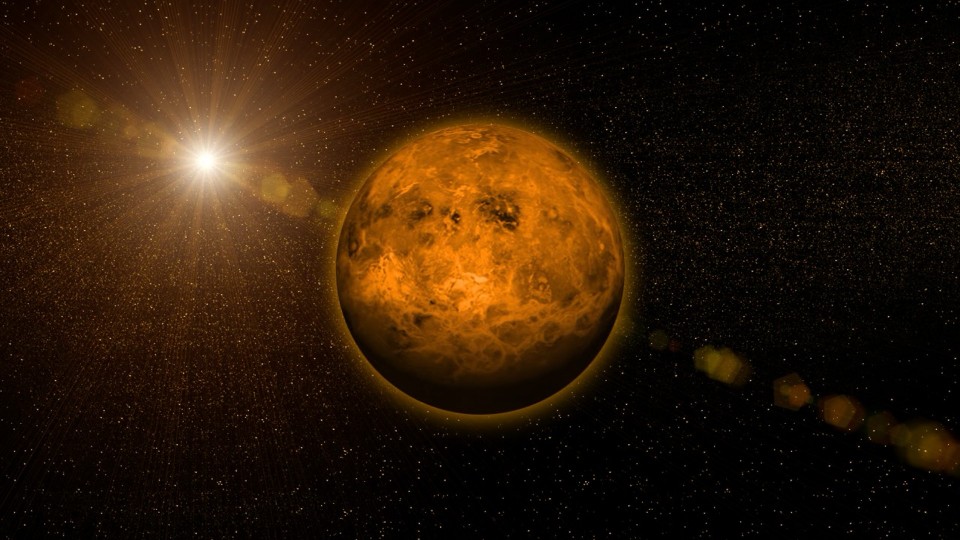
DEEP SPACE / MATERIAL SCIENCE
YIELD POINT: FAILURE DYNAMICS
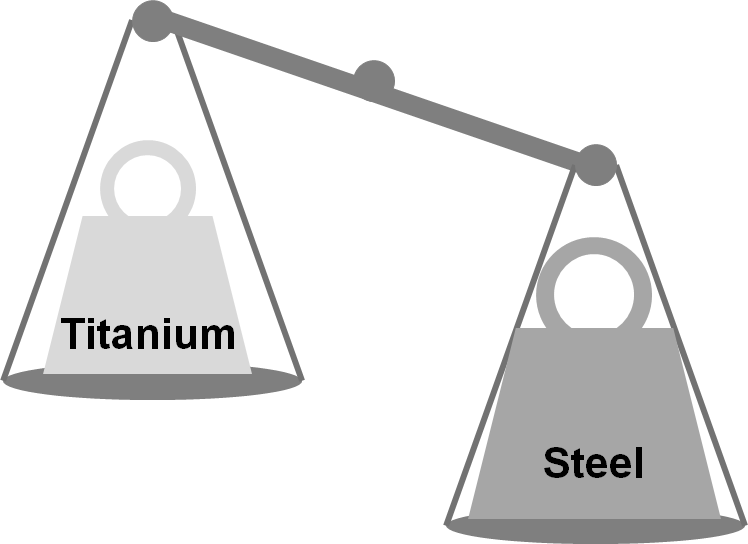
When a vessel approaches its crush depth, materials do not always fail instantaneously. We must analyze the transition from elastic deformation (where the hull returns to its original shape) to plastic deformation (permanent bending). Aerospace alloys, such as Grade 5 Titanium, are selected for their high yield-to-density ratio, but even they suffer from "fatigue creep" under extreme atmospheric load. Our engineering goal is to maximize the margin between the operational pressure and the catastrophic failure point, ensuring that even under maximum stress, the vessel maintains structural coherence.
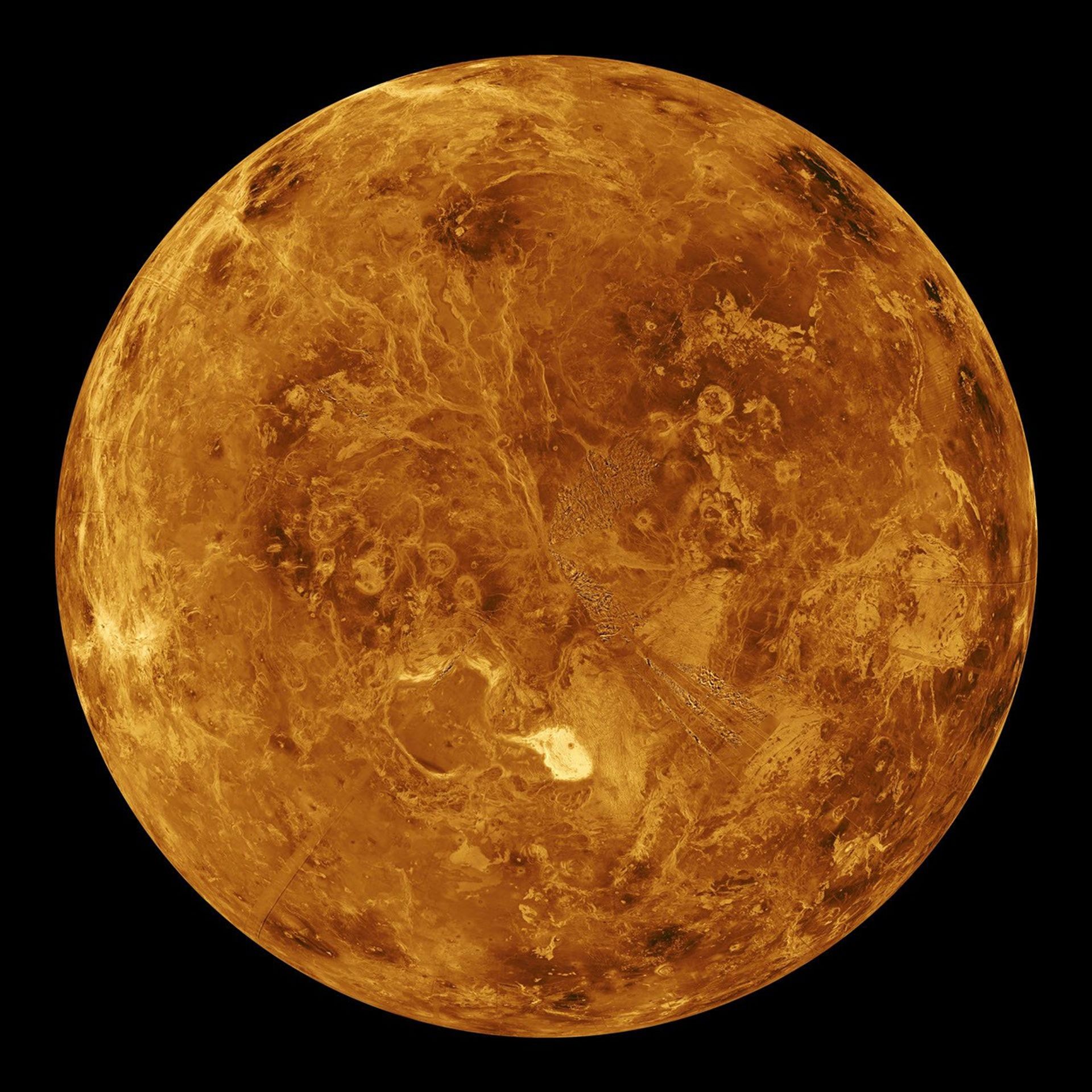
Dive Deep Venus

Venus

Venus Pressure Depth

Structural Crush Depth
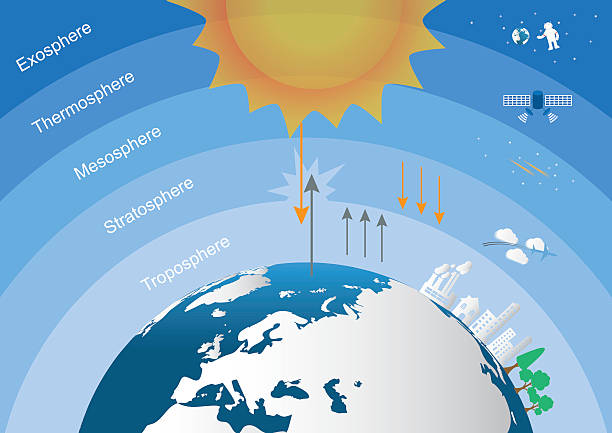
Atmospheric Density

Greenhouse Heating

Cooling Energy

Buoyancy Lift

Altitudinal Habitability

Floating Base Stability

Venus Day vs Year
Venus Transit

Sulfuric Acid Corrosion

CO2 to O2 Conversion

Lightning Frequency

Windturbine Power

Comms Through Clouds

Landed Probe Lifespan

Venus Gravity Assist
Titanium vs Steel

Sonic Velocity on Venus

Acid Rain

Cloud Cities

Venus Mysteries
View 3D Model
Sources
NASA FACT SHEET
Hard data on Venusian mean molecular weight and surface density values.
TECHNICAL DATAVORTEX DYNAMICS
How the high density of the atmosphere creates "Super-Rotation" winds.
WIND SCIENCEDENSITY VS ALTITUDE
Comparative study of how density drops as you move toward the cloud tops.
PROFILES