Comms Through Clouds
COMMS THROUGH CLOUDS
PROPAGATION IN OPAQUE ATMOSPHERES
Atmospheric Windows
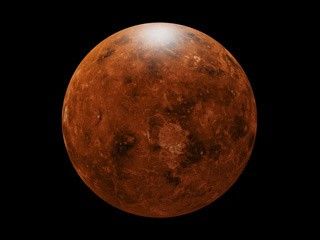
Venus's dense carbon dioxide atmosphere and heavy sulfuric acid clouds completely scatter visible light, but specific microwave bands (like S-band and X-band) slice through the heavy vapor layers with minimal signal attenuation.
Optimized transmission windows bypass heavy atomic absorption thresholds.
Enables direct data links between high-altitude orbital relays and deep surface landers.
Link Sync
Atmospheric Transparency. Real-time monitoring of S-Band attenuation through the middle cloud deck (55km).
- 📻 Freq: 2.2 GHz (S-Band) Direct Link.
- 📉 Loss: -184.2 dB (Total Path Attenuation).
- 🌀 Refraction: 1.04n (Dense-Medium Correction).
Spectral Window
The 2.3 GHz Anchor. S-Band frequencies sit in the physical "null zone" where sulfuric acid scattering and atmospheric absorption are at their lowest.
- 🔍 Target: 2.3 GHz (13 cm wavelength).
- 🛡️ Resistance: Immune to Mie scattering from acid droplets.
- 🛰️ Heritage: Used by Magellan and Venus Express.
Comms Barrier
The Radio Wall. Atmospheric density and acid mist act as a physical shield, obliterating high-frequency data links.
- 🚫 Band Death: Ka-band waves are scattered and absorbed by H₂SO₄.
- 📻 Long Waves: S-band and UHF provide the only reliable "heartbeat."
- 🌐 DSN Link: Massive 70m Earth antennas required for signal recovery.
Link Budget
Extreme Attenuation. Managing the -180 dB path loss through the dense CO₂ substrate and multi-path refractive layers.
- 📉 Path Loss: -180 dB (Critical).
- 📡 Antenna: 3.7m High-Gain Parabolic.
- ⚡ Margin: +15 dB above noise floor.
MISSION: VENUS / DEEP SPACE COMMS
ATMOSPHERIC RF DAMPING
Communication with a surface or low-altitude Venusian probe faces severe attenuation. The Venusian atmosphere is dense and composed of gases that absorb and scatter electromagnetic radiation, particularly in the higher microwave bands traditionally used for high-bandwidth telemetry. Furthermore, the sulfuric acid clouds are not just corrosive; they are conductive, creating a variable RF environment that can lead to significant signal path loss. To maintain a constant link, we must move away from high-frequency optical or Ka-band signals and instead utilize lower frequency S-band or L-band telemetry, which offers better penetration through the "fog" of the thick lower atmosphere.

MISSION: VENUS / ORBITAL RELAY INFRASTRUCTURE
RELAY CONSTELLATIONS: BRIDGING THE GAP
To solve the attenuation problem, we must adopt a two-stage relay architecture. Probes in the lower atmosphere use short-range, lower-frequency links (S-band) to transmit data to a constellation of high-altitude orbiters. These orbiters operate above the dense, cloud-scattering layer, where they can utilize high-bandwidth X-band or even Optical (Laser) communications to beam data directly back to Earth's Deep Space Network (DSN). This configuration not only bypasses the signal absorption of the Venusian atmosphere but also ensures continuous, 24/7 connectivity, regardless of the probe's position relative to Earth or the planet's rotation.

MISSION: VENUS / AUTONOMOUS LOGIC
AUTONOMY & EDGE COMPUTING
Operating in the Venusian environment means dealing with significant signal latency—ranging from 2 to 14 minutes one way. This makes real-time Earth-based control impossible. Our probe architecture must utilize "Edge AI" processing: the hardware must be capable of autonomous navigation, scientific data prioritization, and fault detection without waiting for a ground-station handshake. By performing data compression and event-triggering onboard, the probe minimizes transmission duration, significantly reducing the energy required for the communication uplink and ensuring that critical scientific discoveries are captured even when the relay is over the horizon.

Sources
SIGNAL ATTENUATION
NASA research on how the high pressure and $CO_2$ content cause absorption of microwave signals.
JPL COMMS DATARELAY ARCHITECTURE
ESA designs for multi-satellite constellations to provide constant data links for atmospheric aerobots.
ENVISION MISSIONRADIO REFRACTION
Understanding how the Venusian "bending" of radio waves affects deep-space tracking and navigation.
PHYSICS GUIDEDive Deep Venus

Venus

Venus Pressure Depth

Structural Crush Depth
Atmospheric Density

Greenhouse Heating

Cooling Energy

Buoyancy Lift

Altitudinal Habitability

Floating Base Stability

Venus Day vs Year
Venus Transit

Sulfuric Acid Corrosion

CO2 to O2 Conversion

Lightning Frequency

Windturbine Power

Comms Through Clouds

Landed Probe Lifespan

Venus Gravity Assist
Titanium vs Steel

Sonic Velocity on Venus

Acid Rain

Cloud Cities

Venus Mysteries