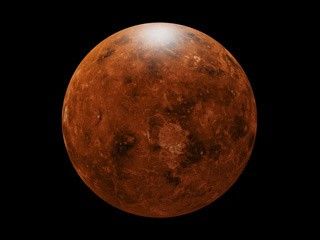
Sonic Velocity
SONIC VELOCITY
ACOUSTIC COMPRESSION IN DENSE MEDIA
Surface Velocity Peak
At ground level, sound waves tear through the hyper-dense supercritical atmosphere at approximately 410 meters per second. This is significantly faster than Earth's speed of sound, propelled by the extreme surface temperatures exceeding 460°C.
Superheated atomic kinetics overpower the dampening effects of heavy carbon gas molecules.
Acoustic signatures travel further but experience rapid dissipation due to carbon dioxide absorption boundaries.
Sonic Velocity
Supercritical Audio. In the crushing 92-bar depths, sound moves faster than on Earth, muffled by the sheer weight of the CO₂ ocean.
- 🎵 Velocity: ~410 m/s (20% faster than Earth).
- 📉 Attenuation: High frequencies are absorbed rapidly.
- 🌪️ Mach 1: 1,476 km/h at the surface.
Sonic Density
The CO₂ Ocean. At the surface, the atmosphere is so dense it behaves like a supercritical fluid, carrying sound 20% faster than Earth's air.
- 🌡️ Thermal Boost: High molecular vibration at 465°C.
- 🏗️ Density Effect: Molecular proximity at 92 Bar pressure.
- 📉 Pitch Shift: Deepening effect on vocal frequencies.
Fluid Surface
The Ghost Ocean. Venus has no liquid water, but its atmosphere is so thick that it flows, pushes, and crushes like the deep sea.
- ⚓ Depth Equivalent: 900m under Earth's ocean.
- 🧪 State: Supercritical CO₂ (Liquid/Gas hybrid).
- 🌬️ Density: 65 kg/m³ (Thick enough to move stones).
Earth vs Venus
Parallel Worlds. One is a blue marble of life; the other is a golden pressure cooker of acid and basalt.
- 🌡️ Heat: 15°C (Earth) vs 465°C (Venus).
- ☁️ Air: Nitrogen/Oxygen vs 96% CO₂.
- 🌀 Rotation: Fast/Forward vs Slow/Retrograde.
ACOUSTIC PHYSICS / VERTICAL PROFILES
THE VERTICAL MACH GRADIENT
The speed of sound on Venus (c) scales with the square root of the temperature (T). As your probe descends from the upper atmosphere into the lower layers, $T$ increases dramatically. Consequently, the local speed of sound increases as you get closer to the surface. This creates a fascinating engineering problem: a probe moving at a constant velocity (e.g., terminal velocity via parachute) will see its local Mach number (M = v/c) decrease as it descends, because the speed of sound is rising to meet it. You are effectively "slowing down" relative to the acoustic medium without actually changing your physical velocity.

STRUCTURAL ENGINEERING / ACOUSTIC DYNAMICS
ACOUSTIC-STRUCTURAL COUPLING
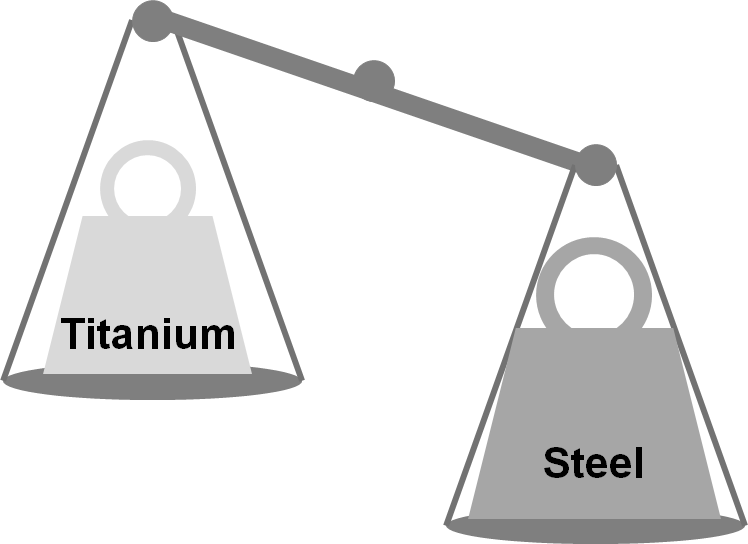
On Earth, acoustic noise is generally an annoyance. On Venus, it is a structural threat. The high density ($\rho \approx 65 \text{ kg/m}^3$) means that acoustic waves carry significant kinetic energy, creating high-amplitude pressure fluctuations against the lander's shell. This leads to Acoustic Fatigue: the constant vibrational energy from atmospheric turbulence or descent thrusters can induce micro-fractures in your titanium shell. To prevent this, we employ Modal Analysis during the design phase to ensure the lander's natural resonant frequencies do not align with the atmospheric acoustic forcing frequencies. Essentially, we are building a "tuning fork" that must be designed to remain silent.

THERMAL PROTECTION / ENTRY DYNAMICS
THE ABLATIVE CHALLENGE
Venusian entry is distinct from Mars or Earth entry due to the extreme heat load. Upon hitting the upper atmosphere, your spacecraft will be traveling at hyper-sonic velocities (~11 km/s). Kinetic energy is converted into heat within the shock layer. Unlike Mars, where you can rely on lightweight insulators, Venus entry requires Ablative Heat Shields. These materials (like PICA or carbon-phenolics) are designed to "sacrifice" themselves—they char, melt, and vaporize in a controlled manner, carrying the thermal energy away with the eroded material rather than allowing it to conduct into the lander’s core.
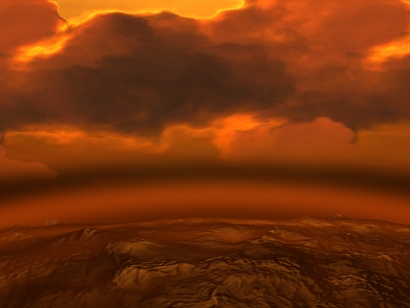
Sources
SURFACE SPEED
At the surface (~464°C), the speed of sound is roughly **410 m/s**, compared to Earth's 343 m/s.
ACOUSTIC DATAPITCH DISTORTION
Because the gas is so dense, sound waves travel faster but are absorbed more quickly, deeping the human voice.
NASA PHYSICSLAPSE RATE IMPACT
As altitude increases and temperature drops, the speed of sound decreases significantly toward the upper clouds.
THERMAL PROFILESDive Deep Venus

Venus

Venus Pressure Depth

Structural Crush Depth
Atmospheric Density

Greenhouse Heating

Cooling Energy

Buoyancy Lift

Altitudinal Habitability

Floating Base Stability

Venus Day vs Year
Venus Transit

Sulfuric Acid Corrosion

CO2 to O2 Conversion

Lightning Frequency

Windturbine Power

Comms Through Clouds

Landed Probe Lifespan

Venus Gravity Assist
Titanium vs Steel

Sonic Velocity on Venus

Acid Rain

Cloud Cities

Venus Mysteries