Greenhouse Heating
GREENHOUSE HEATING
Runaway Heat Analysis
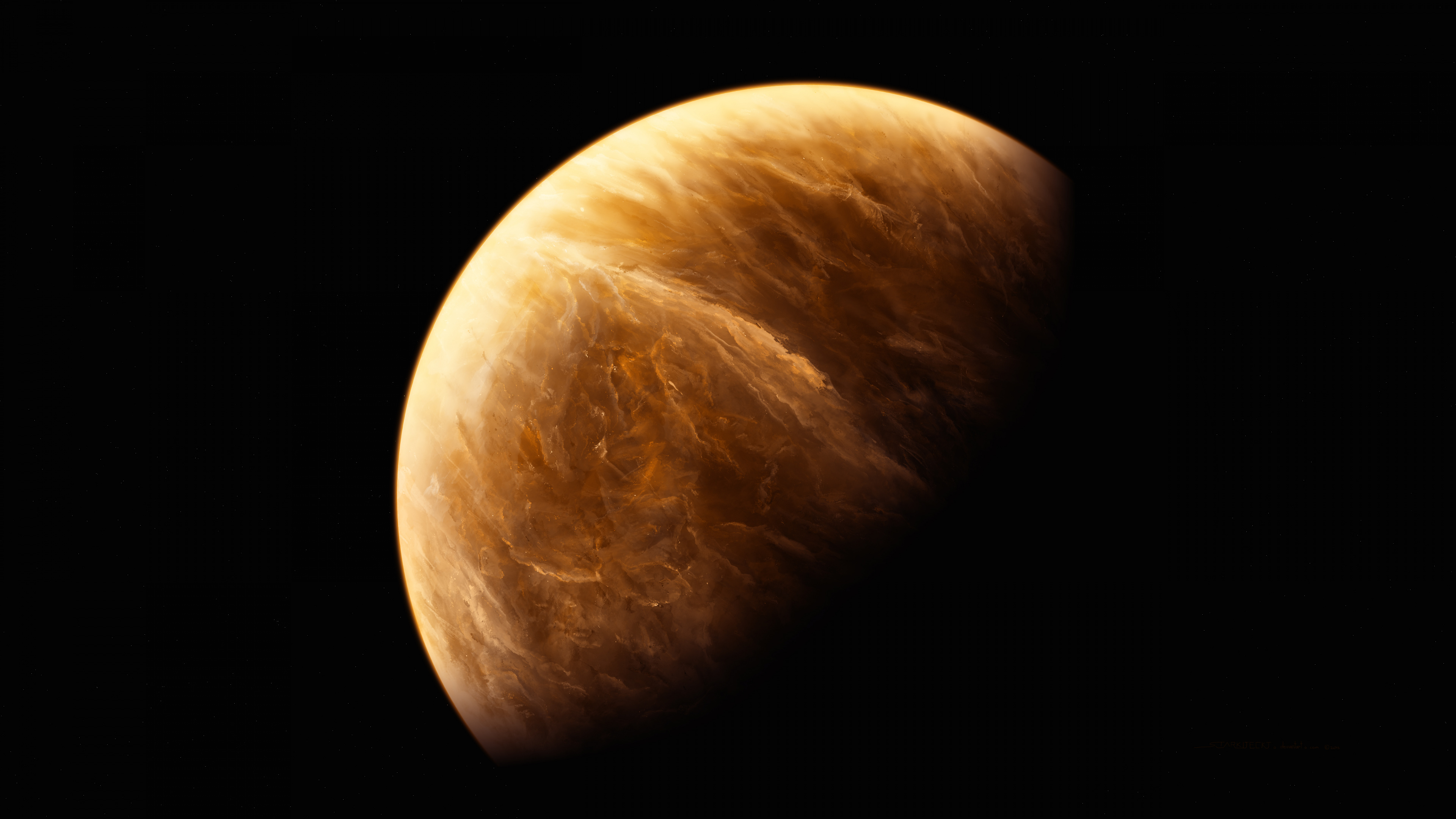
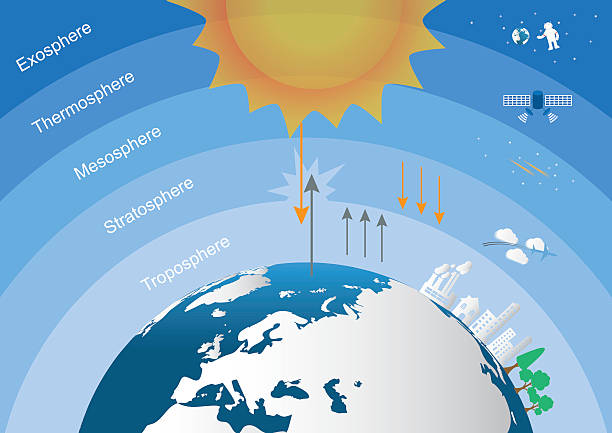
The dense carbon-dioxide atmosphere acts like a thermal blanket, trapping solar energy and driving surface temperatures to extreme levels.
Temperature in Celsius (°C).
Percentage of total atmosphere.
Greenhouse Trap
Thermal Forcing. A run-away 96.5% CO₂ atmosphere trapping infrared energy to sustain a constant 737 K surface.
- ☀️ Albedo Reflectivity: 70% of sunlight lost to sulfuric clouds.
- 🕸️ IR Absorption: CO₂ prevents heat from escaping into the vacuum.
- 🔄 Feedback Loop: Total evaporation of primordial water reserves.
Thermal Lock
Infrared Trapping. CO₂ molecules absorb re-radiated surface heat, creating a Molecular Vibration loop that heats the planet.
- 🫨 Molecular Bending: CO₂ vibrates upon absorbing 15-micron IR radiation.
- 🕸️ Optical Opacity: 99.9% of infrared energy is reflected back to the surface.
- 🌡️ Equilibrium: Surface temp stabilizes at a crushing 737 K.
Surface Peak
Thermal Stasis. A global furnace of 465°C that remains constant day and night, liquefying standard terrestrial metals.
- 🌋 Metal Liquefaction: Lead and Zinc exist as molten states on the surface.
- 🛡️ Alloy Softening: Aluminum structures lose 90% of yield strength.
- ⏳ Survival Limit: Electronics fail as internal heat-sinks reach 465°C.
Thermal Gradient
The Vertical Shift. As the atmosphere thins, the 737 K surface heat weakens into a temperate 298 K "Sweet Spot" at 50km.
- 🏔️ Lapse Rate: Constant cooling of ~8°C per kilometer of ascent.
- ☁️ 50km Zone: Earth-like 20°C to 30°C comfort range.
- 🛡️ Engineering Delta: Massive cooling requirements for surface descent.
The Heat War
Insulation vs. Proximity. Venus is hotter than Mercury because its 92-Bar CO₂ atmosphere traps heat that Mercury simply radiates away.
- 🕸️ Venus (465°C): Runaway greenhouse effect traps 99% of IR energy.
- 🌑 Mercury (430°C): Closer to the sun, but lacks an atmospheric "blanket."
- ⚖️ Density Factor: Venusian air is 50x denser, holding heat indefinitely.
MISSION: VENUS / THERMAL DYNAMICS
THE RUNAWAY THERMAL TRAP
Venus is the ultimate example of a runaway greenhouse effect. Unlike Earth, where the carbon cycle is mediated by oceans and plate tectonics, Venus's carbon is almost entirely locked in its atmosphere. As solar radiation enters, the dense canopy of CO₂ prevents infrared energy from escaping back into space. This creates a relentless positive feedback loop: as the surface temperature rises, the atmosphere's capacity to retain heat increases, effectively turning the entire planet into a high-pressure, thermal-locked pressure cooker where internal heat cannot radiate away.

MISSION: VENUS / ALBEDO ANALYSIS
THE ALBEDO PARADOX
Venus is essentially a cosmic mirror. With a Bond albedo of approximately 0.75, it reflects 75% of the sunlight that hits it back into space. Under normal circumstances, this high reflectivity should keep the planet relatively cool. However, the greenhouse mechanism is so efficient that it negates this advantage entirely. The small fraction of solar energy that does penetrate the thick, sulfuric cloud deck is trapped so effectively by the dense CO₂ that the planet reaches a thermal equilibrium point far beyond what its absorption levels would predict. The albedo protects the planet from *initial* heat, but it cannot stop the *internal* heat-recycling engine once energy is inside.
Dive Deep Venus

Venus

Venus Pressure Depth

Structural Crush Depth
Atmospheric Density

Greenhouse Heating

Cooling Energy

Buoyancy Lift

Altitudinal Habitability

Floating Base Stability

Venus Day vs Year
Venus Transit

Sulfuric Acid Corrosion

CO2 to O2 Conversion

Lightning Frequency

Windturbine Power

Comms Through Clouds

Landed Probe Lifespan

Venus Gravity Assist
Titanium vs Steel

Sonic Velocity on Venus

Acid Rain

Cloud Cities

Venus Mysteries

View 3D Model
Sources
CO2 CONTINUUM
At high pressure, $CO_2$ absorbs IR radiation across the entire spectrum, leaving no "windows" for heat to escape.
SPECTRAL DATAESA VENUS EXPRESS
Mission data identifying rare carbon isotopes and sulfuric acid aerosols as secondary greenhouse agents.
MISSION FINDINGSBRITANNICA: TROPOSPHERE
Analysis of why adiabatic heating and a 111-layer atmospheric model are needed to explain 737 K temperatures.
HEAT MODELING