
Altitudinal Habitability
VENUS ATMOS-LAYERS
ALTITUDINAL HABITABILITY METRICS
Stratospheric Sweet Spot
Between 50 and 60 kilometers altitude, conditions shift to mirror Earth perfectly. Atmospheric pressure sits at 1.0 bar, and ambient temperatures level off between 20°C and 50°C, forming the most habitable aerial band in our solar system.
Identical to sea level pressure on Earth.
Ideal liquid water thresholds if acid can be shielded.
Habitability Zone
The Atmospheric Oasis. At 50km, Venus offers the most Earth-like conditions in the solar system, with breathable pressures and temperate climates.
- 🌡️ Temperate Air: Ambient temperatures ranging from 20°C to 35°C.
- ⚖️ 1-Bar Pressure: No heavy pressure hulls or explosive decompression risks.
- 🛡️ Solar Protection: Thick upper atmosphere shields against cosmic radiation.
Lethal Zone
The Supercritical Abyss. A crushing soup of 92 Bar pressure and 465°C heat that liquefies biological life and erodes machinery.
- 🧪 Supercriticality: CO₂ acts as a solvent, penetrating micro-seals.
- 🛡️ Pressure Load: Force equivalent to being 3,000 feet deep in Earth's ocean.
- 🌫️ Acid Corrosion: Concentrated Sulfuric clouds dissolve standard alloys.
Hostile Transition
Double-Trench Pressure. At 20km, the atmosphere is twice as heavy as the Mariana Trench, paired with a downpour of concentrated acid.
- 🌊 Pressure Peak: 200+ Bar force, exceeding Earth's deepest marine limits.
- 💧 Acid Virga: Sulfuric rain that evaporates before touching the surface.
- 🏗️ Hull Fatigue: Materials suffer simultaneous chemical and mechanical stress.
Sweet Spot
Atmospheric Sanctuary. At 52km, the crushing pressure vanishes, replaced by 1.0 Bar of air and a temperate 25°C breeze.
- 👕 Shirt-Sleeve: No pressure suit needed; ambient temps are Earth-normal.
- 🎭 Oxygen Only: Humans only require a breathing mask and acid-proof skin.
- 🎈 Auto-Float: The habitat's own air supply provides the lift to stay aloft.
MISSION: VENUS / HABITABILITY
THE ALTITUDINAL SWEET SPOT
While the surface of Venus is a death trap, there exists a thin, stable atmospheric layer 50 to 55 kilometers above the ground where conditions are surprisingly Earth-like. In this zone, the atmospheric pressure is exactly 1 bar, and the temperature averages between 20 to 30 degrees Celsius. This altitude is low enough to be protected from most of the sun's harsh radiation by the layers of atmosphere above, yet high enough to escape the crushing pressure and melting heat of the crust. It represents the most hospitable environment for potential human-led exploration in the inner solar system outside of Earth.

MISSION: VENUS / RADIATION DEFENSE
RADIATION SHIELDING: THE CANOPY
One of the greatest hazards for deep space exploration is ionizing radiation. However, within the Venusian habitable zone at 50 kilometers, the dense atmosphere above provides substantial shielding. The overlying mass of the CO2-rich atmosphere acts as an effective buffer, attenuating both galactic cosmic rays and solar particle events. The shielding density at this altitude is roughly equivalent to Earth's sea level protection (about 1000 g/cm2), creating a naturally safe haven that protects sensitive electronics and biological systems from the harsh solar environment that would otherwise threaten a deep-space mission.

Dive Deep Venus
Venus

Venus Pressure Depth

Structural Crush Depth
Atmospheric Density

Greenhouse Heating

Cooling Energy

Buoyancy Lift

Altitudinal Habitability

Floating Base Stability

Venus Day vs Year
Venus Transit

Sulfuric Acid Corrosion

CO2 to O2 Conversion

Lightning Frequency

Windturbine Power

Comms Through Clouds

Landed Probe Lifespan

Venus Gravity Assist
Titanium vs Steel

Sonic Velocity on Venus

Acid Rain

Cloud Cities

Venus Mysteries
View 3D Model
Sources
THE CLOUD CITIES
Scientific papers on why Venus is a better candidate for colonization than Mars due to pressure levels.
HABITABILITY DATAAERIAL BIOSIGNATURES
Exploring the possibility of microbial life existing within the temperate sulfuric acid clouds.
ASTROBIOLOGYPHYSICAL PARAMETERS
Comparing the thermal and barometric lapse rates of Venus to identify safe zones for equipment.
ATMOSPHERIC LAYERSAerostat Design
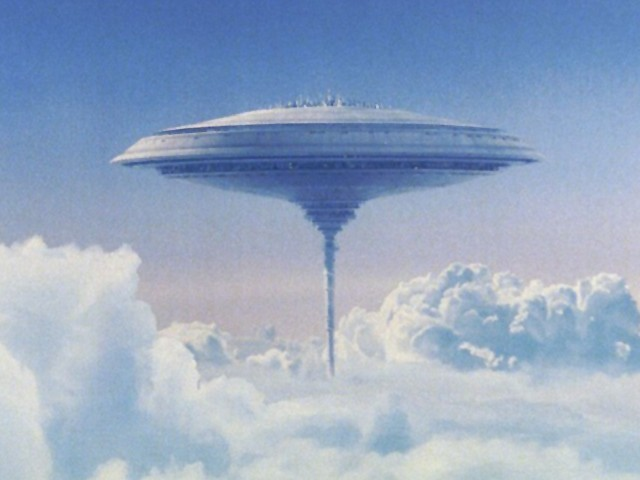
Structural schematics for buoyant lifting bodies in the sulfuric haze.
HAVOC Concept

Lighter-than-air outposts utilizing Venus's dense atmosphere for lift.
Cloud Horizon
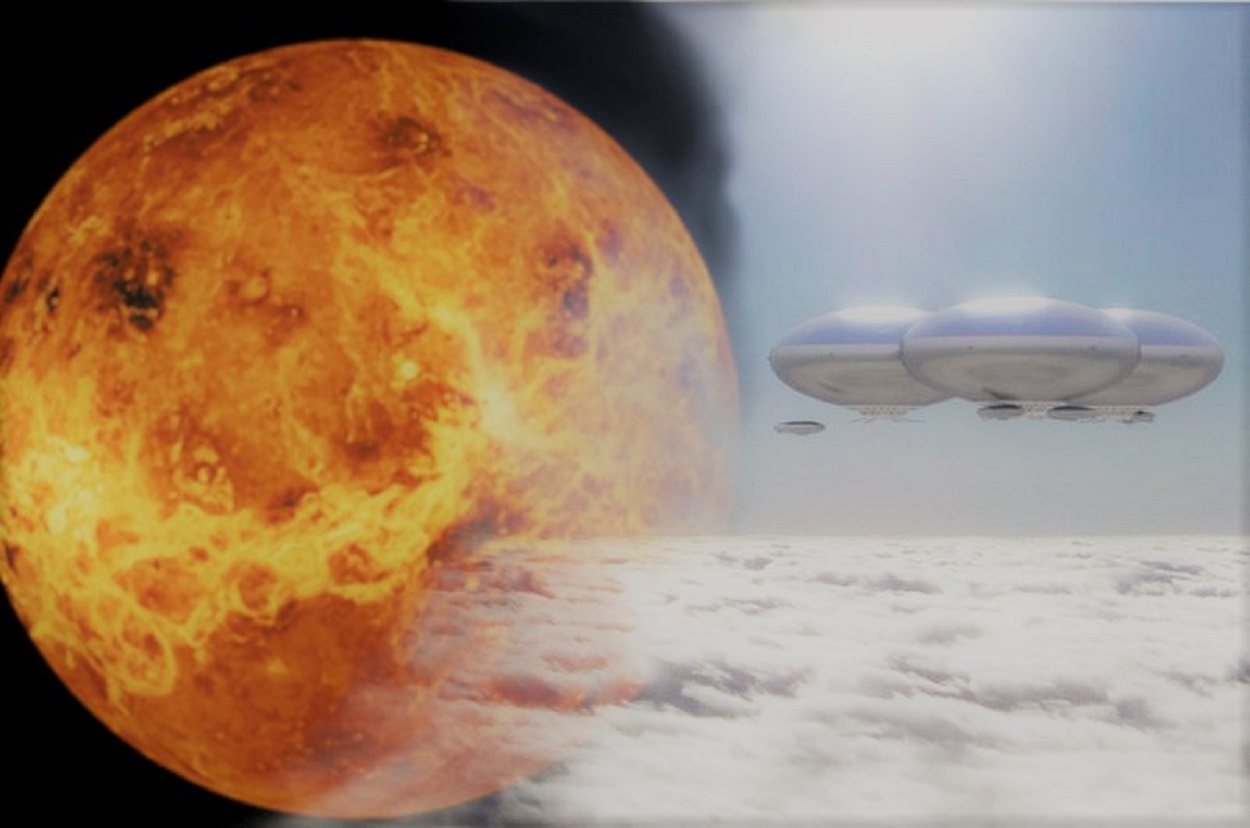
Altitude: 50km - 65km
Pressure: ~1.0 Bar (Earth Normal)
Source: NASA / Venus Exploration