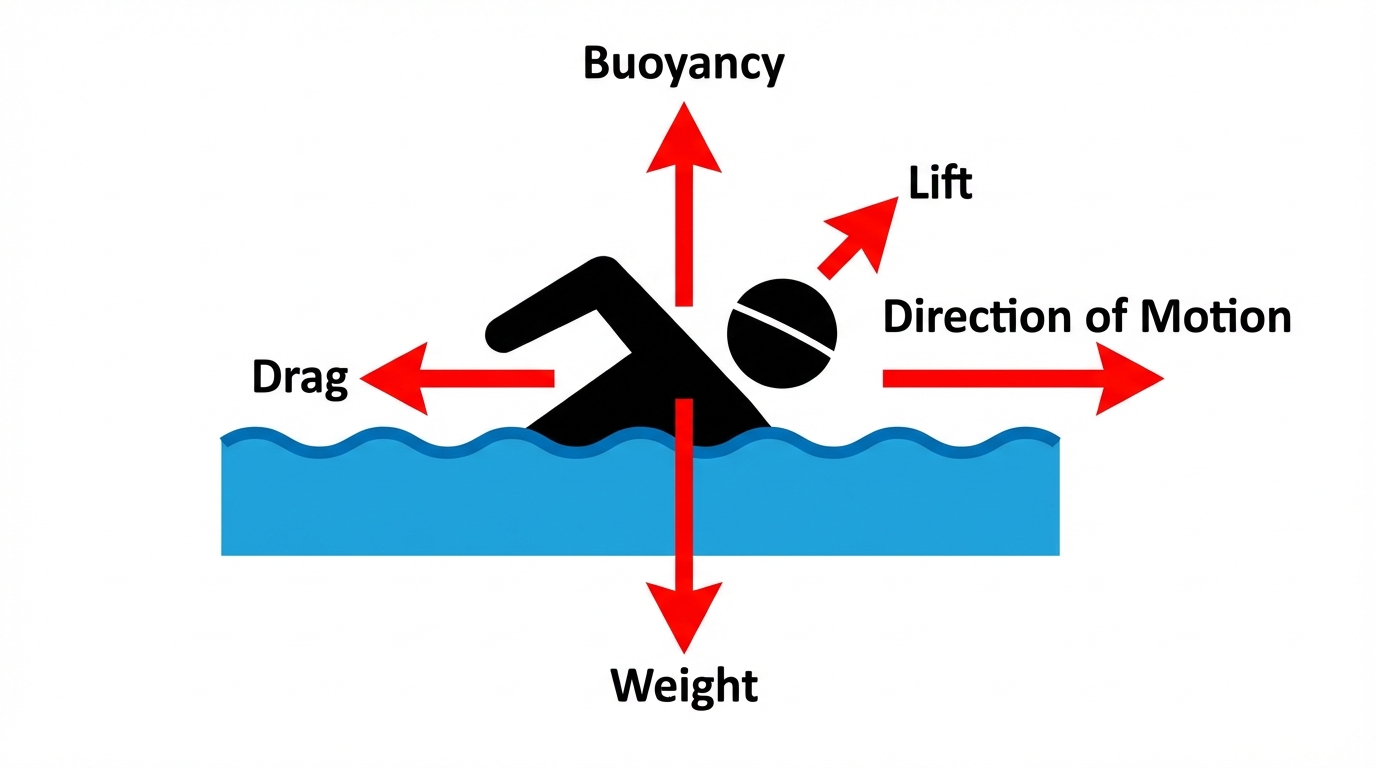
Buoyancy Lift
AERO VENUS
STRATOSPHERIC BUOYANCY MECHANICS
Breathing Air Lift
Because the background atmospheric shell of Venus is incredibly heavy carbon dioxide (CO2), standard Earth breathing air (Nitrogen and Oxygen) acts as an excellent, non-explosive lifting gas. A balloon filled with regular air will easily float large payloads here.
Net structural lifting capacity within dense CO2 gas layers.
Optimized zone featuring 1 Atmosphere of standard pressure.
Buoyancy Lift
Fluid Displacement. The upward force generated when an object displaces its own weight in the surrounding atmosphere.
- ⚖️ Archimedes' Law: Lift equals the weight of the displaced gas.
- ☁️ Venusian Float: Breathable air acts as a lifting gas in CO₂.
- 🚢 Neutrality: The point where weight and buoyant force reach 0.
Breathable Lift
The Native Float. On Venus, Nitrogen and Oxygen are lifting gases. Your living space is its own flotation device.
- 🧪 Molecular Delta: Air (29g/mol) is significantly lighter than CO₂ (44g/mol).
- 🛡️ Zero Differential: Internal and external pressures are equal at 1.0 Bar.
- 🎈 Auto-Buoyancy: 1m³ of air lifts ~0.3kg of structure on Venus.
Vacuum Airshell
The Ultimate Buoyancy. By evacuating the interior of a rigid structure, we achieve the maximum possible lift in the Venusian sky.
- 🌌 Zero Mass Interior: Displacing 44g/mol CO₂ with 0g/mol vacuum.
- 🏗️ Lattice Rigidity: Must resist 1.0 Bar of compressive force at float altitude.
- 🚀 Max Payload: ~25% more lifting power than a standard air balloon.
MISSION: VENUS / AEROSTAT DYNAMICS
THE BUOYANT FRONTIER
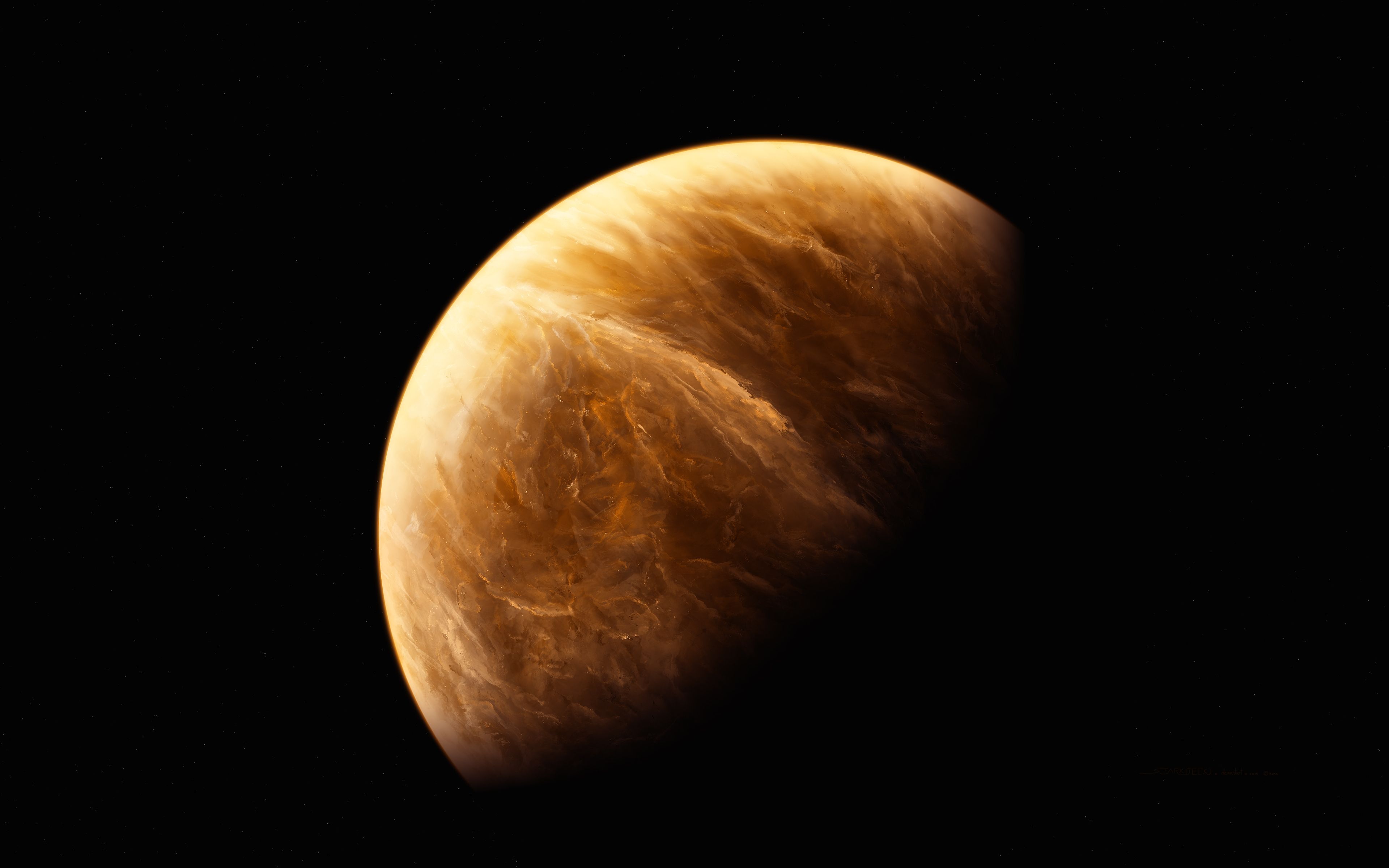
Venus offers a unique aerodynamic advantage: because the atmosphere is composed of heavy carbon dioxide, breathable Earth air (nitrogen and oxygen) acts as a lifting gas. At an altitude of approximately 50 to 55 kilometers, the pressure is 1 bar—equivalent to Earth’s sea level—and temperatures hover at a comfortable 20°C to 30°C. In this region, a craft filled with Earth-standard air would float effortlessly, functioning as a permanent "aerostat." This creates a habitable "sweet spot" that bypasses the crushing, molten hellscape of the surface entirely.
MISSION: VENUS / ENGINEERING
AEROSTAT MATERIAL INTEGRITY
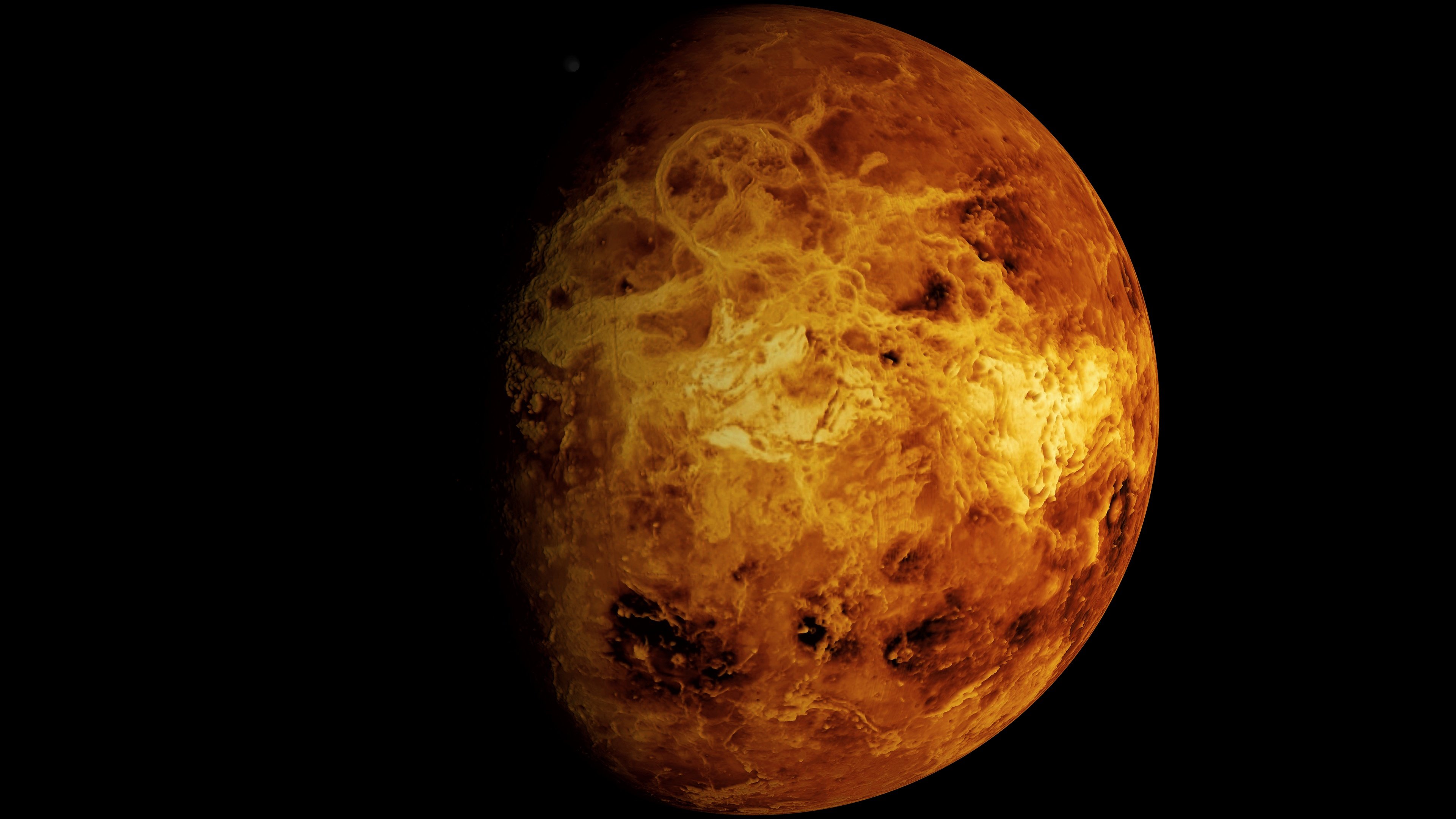
Achieving buoyancy on Venus is a challenge of material science. The buoyant force Fb is defined by the difference in density between the ambient atmosphere (ρatm) and the internal lifting gas (ρgas), calculated as Fb = (ρatm - ρgas) · V · g. However, at 50km, the envelope is exposed to concentrated sulfuric acid. Standard polymers fail here. To maintain structural lift, the aerostat must utilize PTFE (Polytetrafluoroethylene) or fluorinated ethylene propylene (FEP) skins. These materials provide the chemical inertness required to survive long-term mission profiles without degrading under acid exposure.
Dive Deep Venus

Venus

Venus Pressure Depth

Structural Crush Depth
Atmospheric Density

Greenhouse Heating

Cooling Energy

Buoyancy Lift

Altitudinal Habitability

Floating Base Stability

Venus Day vs Year
Venus Transit

Sulfuric Acid Corrosion

CO2 to O2 Conversion

Lightning Frequency

Windturbine Power

Comms Through Clouds

Landed Probe Lifespan

Venus Gravity Assist
Titanium vs Steel

Sonic Velocity on Venus

Acid Rain

Cloud Cities

Venus Mysteries
View 3D Model
Sources
HAVOC CONCEPT
NASA's "High Altitude Venus Operational Concept" for manned airships in the clouds.
EXPLORE HAVOCVEGA BALLOONS
The history of the 1985 Soviet balloons that successfully floated in the Venusian winds.
VEGA MISSIONSAEROBOT DESIGN
Technical engineering for variable-altitude balloons (Aerobots) for Venus exploration.
JPL AEROBOT