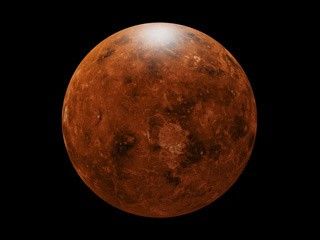
Venus Gravity Assist
VENUS SLINGSHOT
PLANETARY GRAVITY ASSIST MANEUVER
Kinetic Energy Transfer
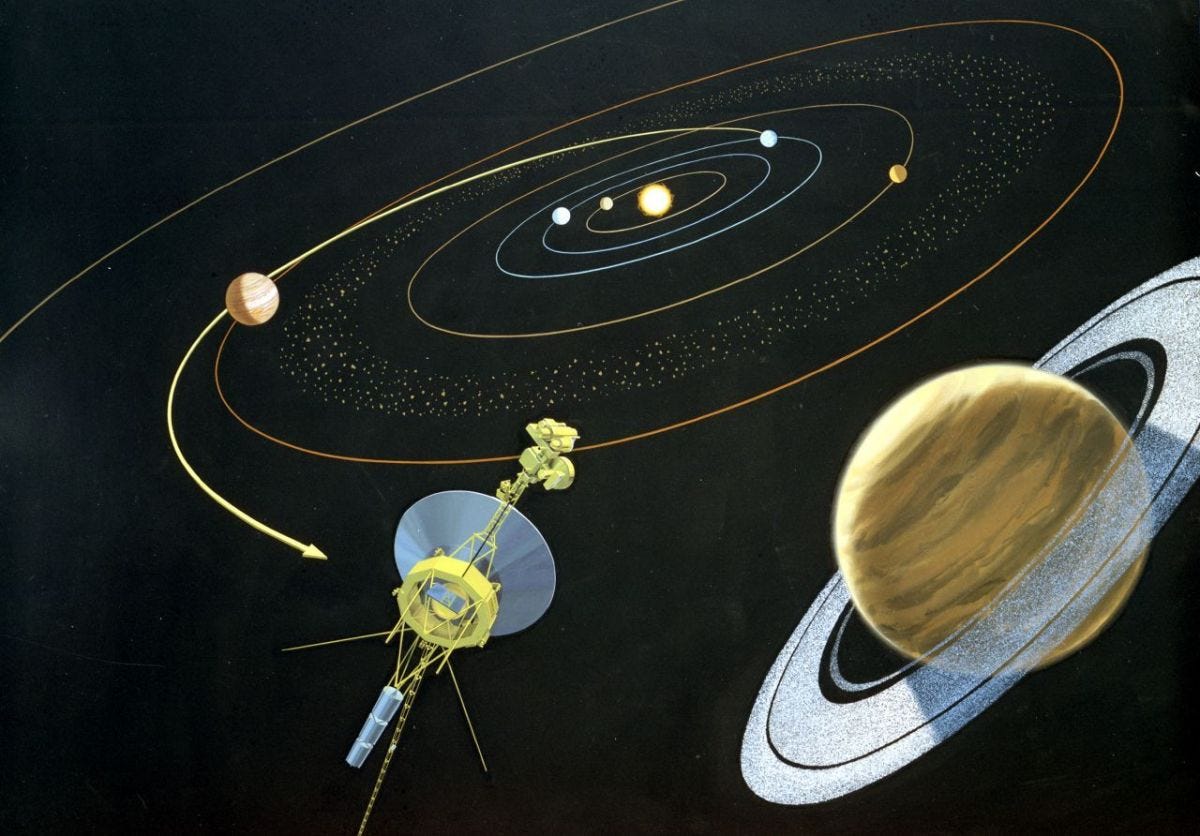
A gravity assist maneuver uses the relative motion and gravity of a planet to alter the path and speed of a spacecraft. By passing behind Venus in its orbit, a spacecraft 'steals' a portion of the planet's orbital momentum, gaining significant velocity without burning extra fuel.
The spacecraft emerges from the planet's gravitational well with a significantly higher heliocentric velocity.
The energy lost by Venus is so infinitesimal that its orbit is effectively unchanged by the interaction.
Gravity Assist
Orbital Momentum Theft. Leveraging the mass of Venus to accelerate toward the outer reaches or decelerate toward the Sun.
- 🔄 Delta v Boost: Up to 7.3 km/s per flyby.
- 🎯 Precision: Targeting the periapsis within ±2 km.
- ☀️ Solar Target: Essential for reaching Mercury or the Sun.
Inward Assist
Solar Braking. Using Mercury's gravity as a tether to dump orbital velocity and spiral toward the Sun's inner corona. =
- 📉 Speed Shed: Massive reduction in heliocentric energy.
- 🔄 Resonance: Often requires 6+ flybys for orbital insertion.
- 🔥 Thermal Load: 10x Earth's solar intensity during flyby.
Outward Sling
The Great Accelerator. Harnessing the angular momentum of the King of Planets to punch through the outer solar system and into the void.
- 🚀 Delta v Peak: The highest potential boost in the solar system.
- ☢️ Rad-Hardened: Must withstand Jupiter's lethal radiation belts.
- 🪐 Escape Vel: Essential for Interstellar escape trajectories.
Assist Logic
Zero-Fuel Propulsion. By interacting with the gravity well of Venus, we turn planetary mass into kinetic energy.
- ⛽ Fuel Savings: Saves 100s of kg in propellant mass.
- 📐 Plane Change: Easy adjustment of orbital inclination.
- 🏁 Mission Life: Less fuel used means more for mid-mission steering.
ORBITAL MECHANICS / TRAJECTORY DESIGN
THE VENUSIAN SLINGSHOT
A gravity assist isn't "bouncing" off a planet. It is a precise momentum exchange. As a spacecraft approaches Venus, it falls into the planet's gravitational well, accelerating. Because Venus is moving in its own orbit around the Sun, the spacecraft effectively "steals" a tiny, infinitesimal amount of momentum from the planet, altering its own trajectory and velocity relative to the Sun. We use Venus specifically because its proximity to the Sun and high mass make it the perfect "gatekeeper" to the inner solar system, allowing missions to reach Mercury or deep-space sun-synchronous orbits that would otherwise be energetically impossible to achieve with current launch vehicle capacities.
ORBITAL MECHANICS / ATMOSPHERIC CAPTURE
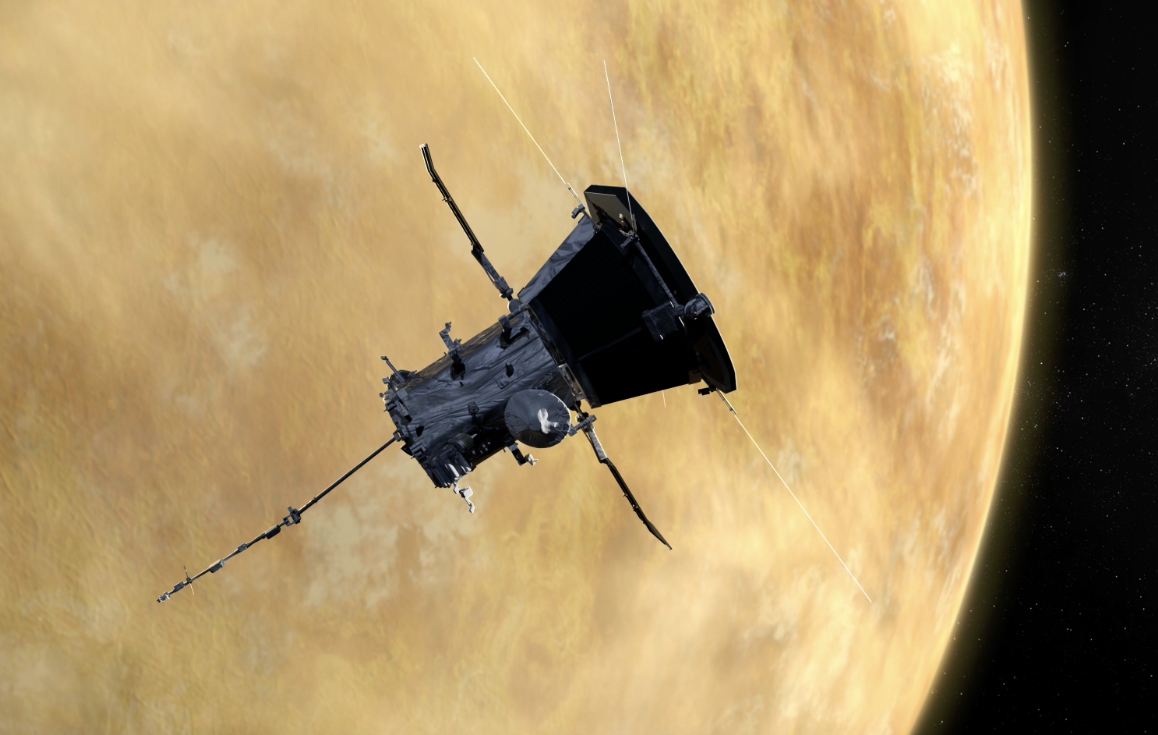
AEROBRAKING: THE ATMOSPHERIC DIVE
Aerobraking is the art of bleeding velocity by skimming the upper layers of a planet's atmosphere. At Venus, this is particularly efficient because the atmosphere is so thick. However, it is an engineering tightrope walk. You have to enter at precisely the right altitude: too shallow, and you don't slow down enough to capture into orbit; too deep, and the drag force exceeds your structural integrity—or worse, your thermal protection system fails, and the probe incinerates. It’s a series of controlled, repeated passes through the atmosphere, shedding speed one loop at a time until you reach your target orbit.

PLANETARY SCIENCE / RADAR ALTIMETRY
THE MAGELLAN MAPPING STRATEGY
When you cannot see the surface, you must synthesize the image. The Magellan mission utilized Synthetic Aperture Radar (SAR) to penetrate the dense CO2 and sulfuric acid cloud deck. By beaming radar pulses at the surface and measuring the return time and intensity (the "backscatter"), the probe reconstructed the planetary topography. This was not photography; it was data visualization. Magellan successfully mapped 98% of the surface at a resolution of roughly 100 meters, effectively turning a featureless, glowing marble into a geologically distinct world of tesserae, volcanic plains, and impact craters.
Sources
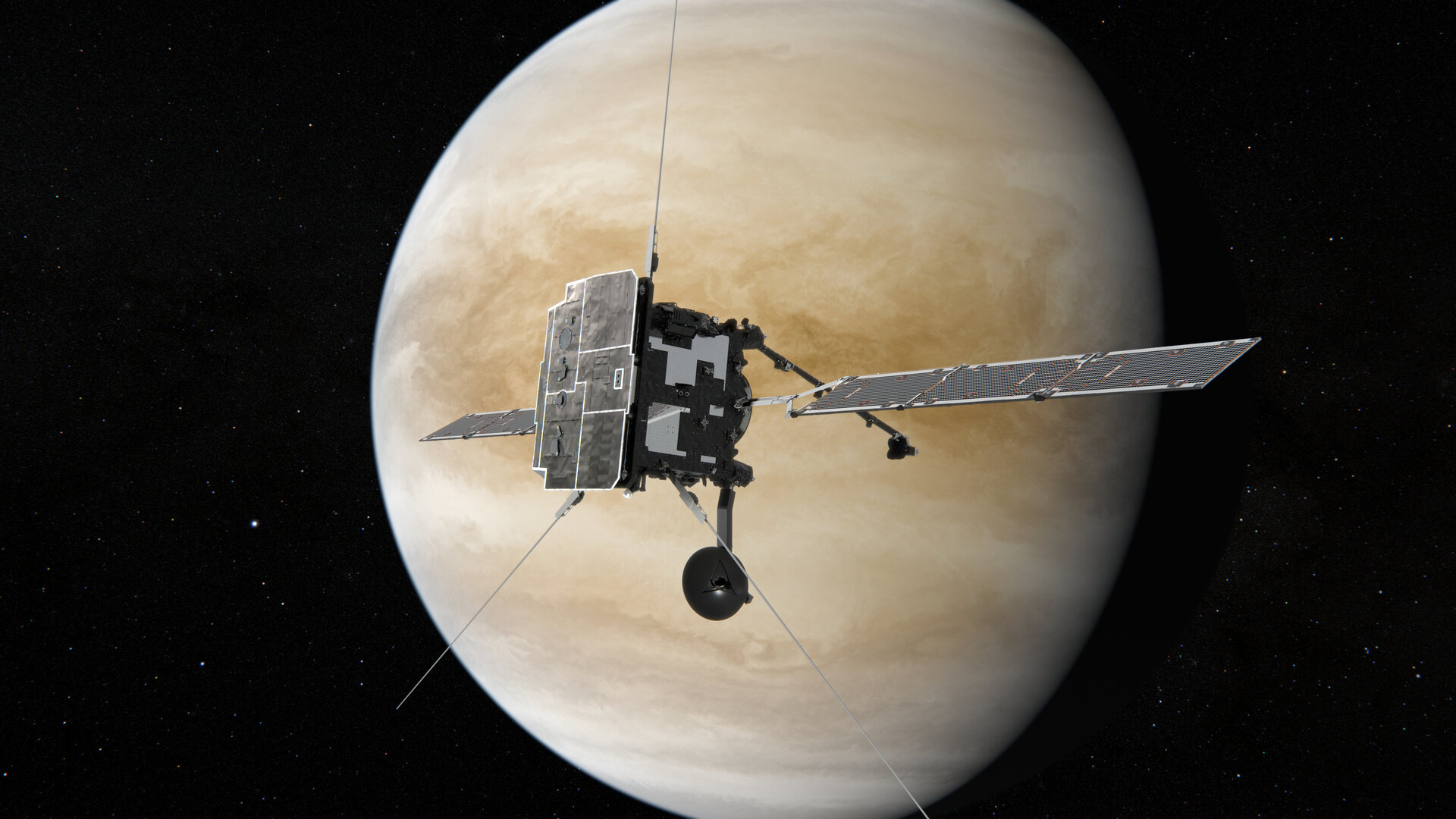
PARKER SOLAR PROBE
Uses 7 Venus flybys over 7 years to shrink its orbit and "touch" the Sun's corona.
FLYBY SCHEDULEDELTA-V MATH
Calculations on how planetary mass and approach angle determine the velocity change (Delta v).
ORBITAL PHYSICSBEPICOLOMBO PATH
How the ESA/JAXA mission used Venus to lose enough energy to be captured by Mercury's gravity.
INNER SYSTEM LINKSOrbital Entry
Future orbital missions designed to map the hidden surface using radar.
Solar Assist

Utilizing Venus to bleed off orbital energy and "fall" closer to the Sun.
Outer Path

Mission: JUICE (ESA)
Target: Jupiter Icy Moons
Benefit: Massive fuel savings via Delta-V boost.
Dive Deep Venus

Venus

Venus Pressure Depth

Structural Crush Depth
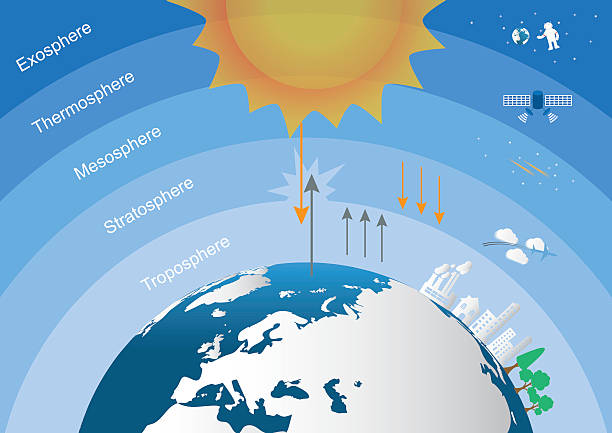
Atmospheric Density

Greenhouse Heating

Cooling Energy

Buoyancy Lift

Altitudinal Habitability

Floating Base Stability

Venus Day vs Year
Venus Transit

Sulfuric Acid Corrosion

CO2 to O2 Conversion

Lightning Frequency

Windturbine Power

Comms Through Clouds

Landed Probe Lifespan

Venus Gravity Assist
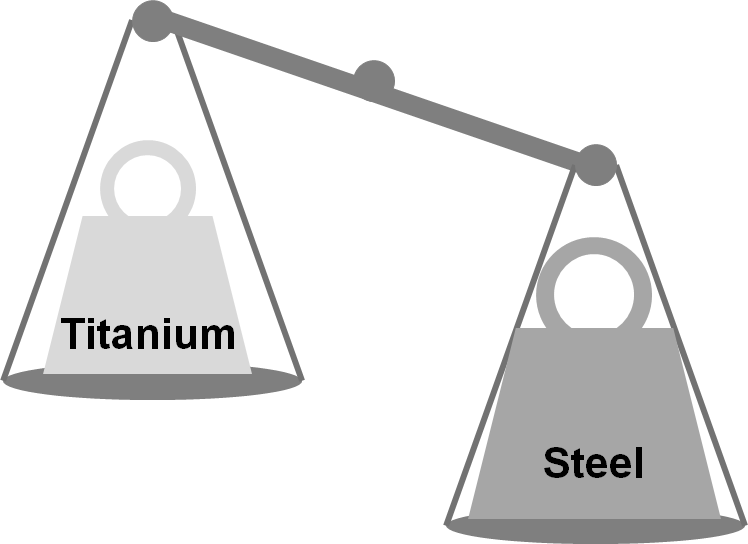
Titanium vs Steel

Sonic Velocity on Venus

Acid Rain

Cloud Cities

Venus Mysteries