
Cooling
CRYO VENUS
PLANETARY THERMAL REJECTION ENGINEERING
Orbital Sunshields
Placing a massive planetary solar shade at the Sun-Venus L1 Lagrange point would block 100% of incoming solar radiation. Deprived of sunlight, the planet will rapidly radiate its atmospheric heat back into the void of space.
Forcing net thermal deficit across the upper cloud decks.
Estimated timeline to freeze out atmospheric carbon dioxide.
Cooling Energy
Radiative Equilibrium. The rate at which a planet sheds thermal energy into the vacuum via Infrared Emission.
- 🌌 Vacuum Radiation: The primary cooling mechanism through T⁴ thermal emission.
- 🛡️ Opacity Block: Greenhouse gases acting as a thermal insulator.
- 🌋 Internal Horizons: Heat escaping from the core through the crust.
Cooling Horizons
Thermal Stagnation. Venus survives on a 1.3% Cooling Efficiency, where heat must reach the cloud tops before escaping into the void.
- 🛑 Infrared Block: 98.7% of surface radiation is reflected by the CO₂ blanket.
- ☁️ Cloud-Top Exit: Cooling only occurs at altitudes where the air is thin.
- 🏎️ Convective Lift: Heat is physically carried upward by dense fluid currents.
Radiative Exit
The Cooling Barrier. Energy can only escape the Venusian trap from the Cloud Tops, where the atmosphere finally becomes transparent to IR.
- 🌌 Vacuum Escape: Radiation only succeeds above the 55km altitude mark.
- 🛑 IR Opacity: The lower 50km acts as a total thermal insulator.
- ❄️ Negative Delta: Cooling occurs at -40°C, despite the 465°C surface.
Night Cooling
Thermal Inertia. The atmosphere is so dense that the surface stays at 737 K even after 58 days without sunlight.
- 🌙 Slow Decay: Temperature drops less than 5K during the two-month night.
- 🌀 Super-Rotation: 360 km/h winds pump day-side heat to the night side.
- ✨ IR Glow: The ground remains hot enough to glow in the infrared spectrum.
Wind Transport
Global Leveling. Super-rotating winds at 360 km/h move Terawatts of heat to the night side, maintaining a uniform 465°C.
- 🌀 Super-Rotation: Atmosphere circles the planet 60x faster than the surface.
- 🌡️ Isothermal Balance: Polar and night-side temps stay within 5°C of the equator.
- ⚡ Energy Horizons: Billions of kilograms of hot CO₂ moved every second.
MISSION: VENUS / THERMODYNAMICS
RADIATIVE EQUILIBRIUM: THE STANDOFF
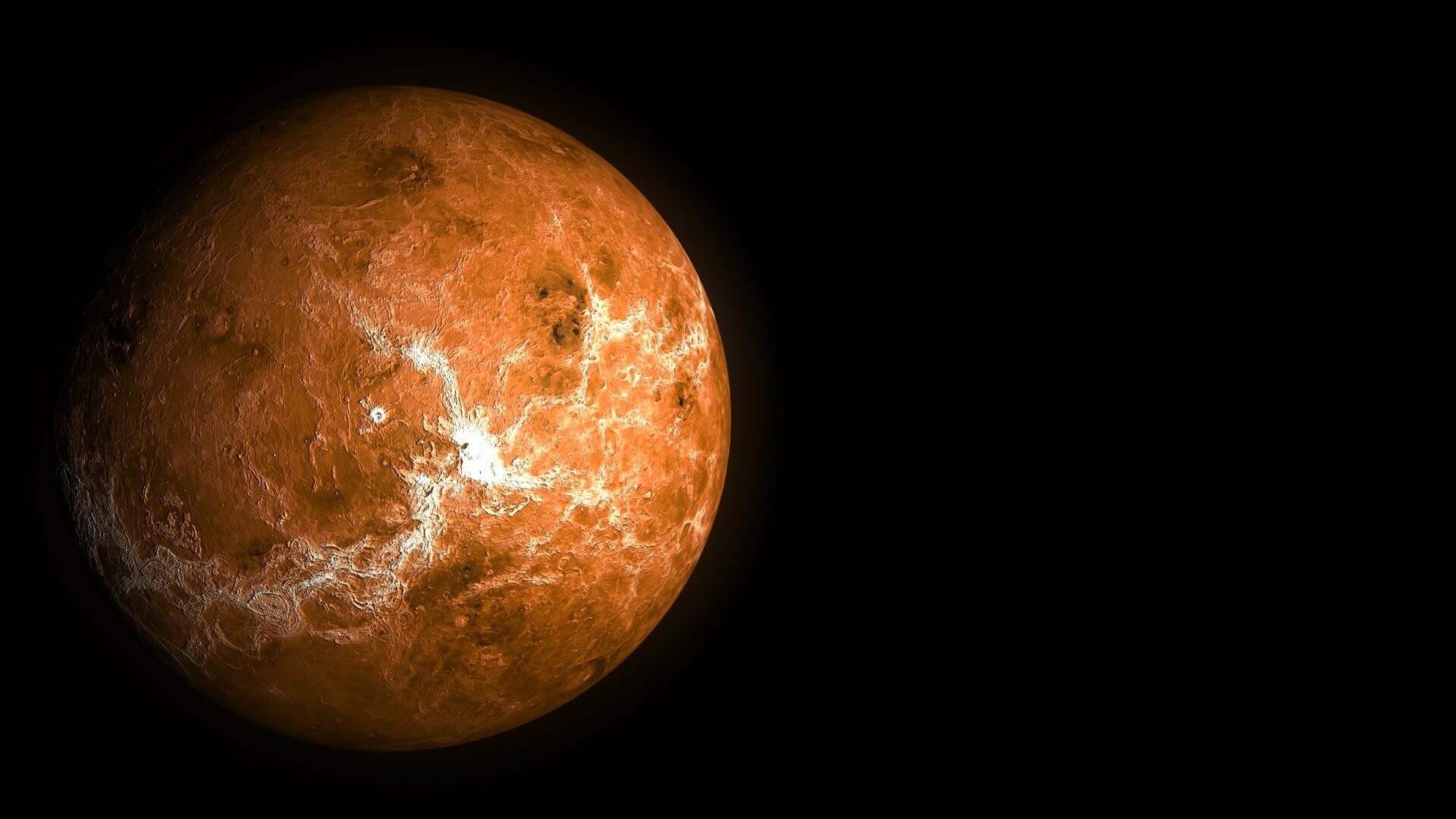
Planets naturally cool themselves by radiating absorbed solar energy back into space as infrared light. On Venus, this process is broken. Because the lower atmosphere is incredibly opaque to infrared radiation, the energy cannot escape directly from the surface. Instead, the heat is absorbed, re-radiated, and re-absorbed by the dense CO₂ layers in a chaotic, multi-step process. This prevents the planet from ever reaching a traditional radiative equilibrium, forcing the surface temperature to climb until it hits a balance point dictated entirely by the high-pressure thermal conductivity of the atmosphere itself.
MISSION: VENUS / HEAT DYNAMICS
GLOBAL HEAT TRANSPORT: THE ISOTHERM
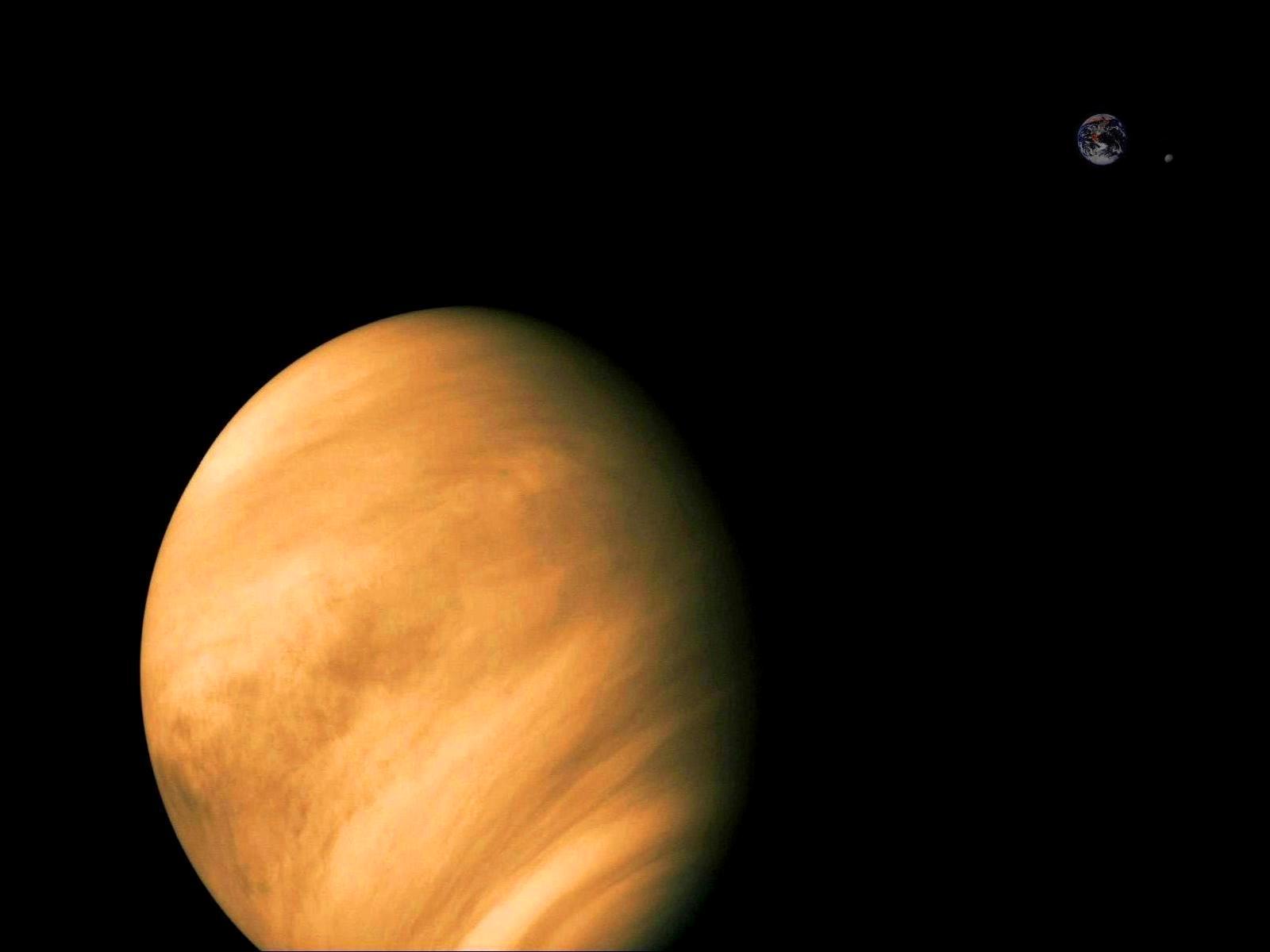
On most planets, the day/night cycle creates significant thermal gradients. Venus defies this. Due to its massive atmospheric density—60 times that of Earth—the planet possesses extraordinary thermal inertia. The atmosphere acts as a hyper-efficient convective engine, transporting heat from the sun-drenched dayside to the dark nightside before the surface can significantly cool. This creates a global thermal isotherm: the temperature on the surface of Venus is effectively the same at high noon as it is in the dead of the long, dark night. There is no relief from the heat anywhere on the planet.
Dive Deep Venus

Venus

Venus Pressure Depth

Structural Crush Depth
Atmospheric Density

Greenhouse Heating

Cooling Energy

Buoyancy Lift

Altitudinal Habitability

Floating Base Stability

Venus Day vs Year
Venus Transit

Sulfuric Acid Corrosion

CO2 to O2 Conversion

Lightning Frequency

Windturbine Power

Comms Through Clouds

Landed Probe Lifespan

Venus Gravity Assist
Titanium vs Steel

Sonic Velocity on Venus

Acid Rain

Cloud Cities

Venus Mysteries
View 3D Model
Sources
INFRARED WINDOWS
Specific spectral bands (around 1.0 to 2.3 microns) where thermal energy escapes from the deep atmosphere.
NIGHT-SIDE DATAMESOSPHERIC CO2
How the upper atmosphere acts as a giant radiator, cooling the planet via $CO_2$ emission to space.
UPPER ATMOSPHEREALBEDO EFFECT
While not "cooling" in a traditional sense, Venus reflects 70% of sunlight, preventing further heat absorption.
BOND ALBEDO: 0.7