
Constellation Centaurus
CONSTELLATION CENTAURUS
THE MYTHICAL CENTAUR & NEAREST STAR SYSTEM
The Celestial Centaur
Centaurus is one of the largest and most brilliant constellations in the southern sky. It represents the wise centaur Chiron and contains multiple premier astronomical landmarks, including our closest stellar neighbors.
A triple star system located just 4.37 light-years away from our Sun.
Ranked as the 9th largest modern constellation by total sky coverage area.
Centaur Sync
Proximity Grid Mapping. Analyzing the Alpha-Beta Rigil constant. New Horizons monitors the southern pointer vectors to track this high-luminosity celestial guardian.
- 🏹 Identity: The Centaur (Chiron / The Wise Teacher).
- 🔆 Alpha Centauri: The Closest Triple-Node System.
- 🌌 Omega Centauri: The Milky Way’s Largest Cluster Vector.
Rigil Sync
Proximity Array Mapping. Analyzing the 4.24 LY interstellar constant. New Horizons monitors the Alpha Cen A/B/C triple-node to track this high-priority neighbor vector.
- ☀️ Alpha Cen A: G-Type Sun-like Solar Node.
- 🔆 Proxima: The Red Dwarf Closest-Approach Vector.
- 🛰️ Distance: 4.24 Light-Year Calibration Point.
Omega Sync
Cluster Density Mapping. Analyzing the NGC 5139 multi-million star constant. New Horizons monitors the gravitational core vector to track this high-magnitude globular node.
- 🌌 NGC 5139: The Largest Galactic Globular Node.
- 💎 Density: ~10 Million Stars in a Single Spherical Array.
- 🔭 Visibility: Naked-Eye Magnitude Deep Sky Vector.
Radio Sync
Active Galactic Mapping. Analyzing the NGC 5128 "Centaurus A" constant. New Horizons monitors the relativistic jet vector to track this high-intensity radio galaxy node.
- 🌀 NGC 5128: Giant Elliptical Merger Architecture.
- 🕳️ Core: Supermassive Black Hole Power Engine.
- 📡 Signal: Primary Radio-Loud Extragalactic Vector.
Legacy of the Wise Centaur 📜
Sources
ALPHA CENTAURI
The closest star system to our Sun (~4.37 LY). It is a triple system including **Proxima Centauri**, the single closest star at roughly **4.24 light-years**.
SYSTEM DATAOMEGA CENTAURI
Known as **NGC 5139**, this is the largest and brightest globular cluster in the Milky Way, containing approximately **10 million stars**.
DEEP SKYCENTAURUS A
One of the closest radio galaxies to Earth. It features a massive black hole at its center and is famous for its distinct dark dust lane.
GALAXY SPECSThe Wise Centaur
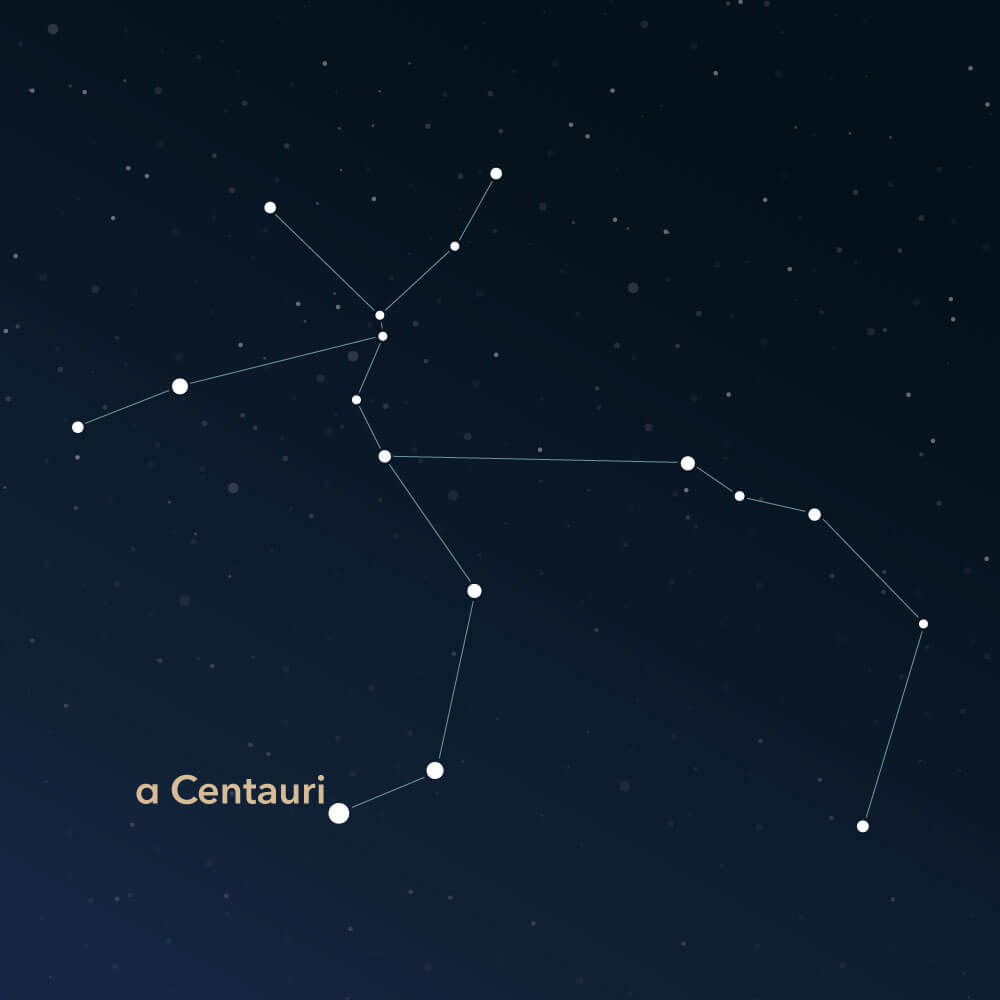
Classical depiction of Chiron, the immortal teacher of Greek heroes.
The Southern Pointers
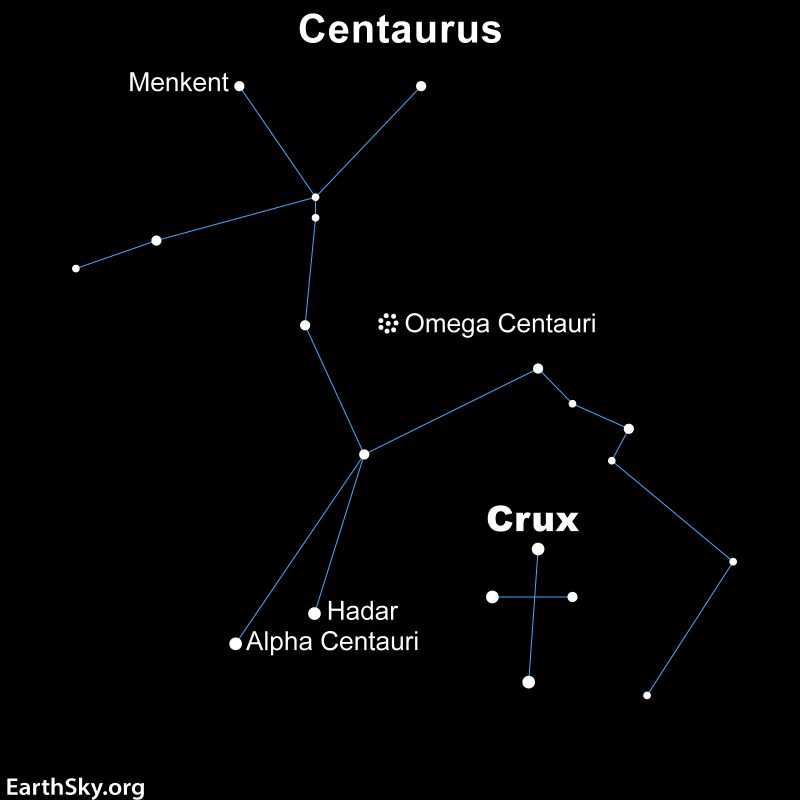
Visualization of Alpha and Beta Centauri pointing towards the Southern Cross (Crux).
Astronomical Chart
:max_bytes(150000):strip_icc()/centaurusconstellation-597687b6af5d3a00116f02f1.jpg)
Detailed map identifying the location of Omega Centauri and Centaurus A.
Centaurus Constellation • Bright Stars
The Centaur • Main Stars Ranked by Apparent MagnitudeCentaurus is a large and brilliant southern constellation. It contains Alpha Centauri, the nearest star system to the Sun and the third-brightest star in the night sky, as well as Hadar, one of the ten brightest stars.
| Star | Magnitude | Distance |
|---|---|---|
|
Rigil Kentaurus α Cen
Alpha Centauri • Nearest star system
|
0 | 0 ly |
|
Hadar β Cen
Beta Centauri
|
0 | 0 ly |
|
Menkent θ Cen
Theta Centauri
|
0 | 0 ly |
|
Muhlifain γ Cen
Gamma Centauri
|
0 | 0 ly |
|
Epsilon Centauri ε Cen
Blue giant
|
0 | 0 ly |
|
Eta Centauri η Cen
Be star
|
0 | 0 ly |
|
Zeta Centauri ζ Cen
Leepwal
|
0 | 0 ly |
|
Delta Centauri δ Cen
Be star
|
0 | 0 ly |
|
Iota Centauri ι Cen
Nearby star
|
0 | 0 ly |
|
Lambda Centauri λ Cen
Double star
|
0 | 0 ly |
STELLAR ANCHOR
RIGIL KENTAURUS
Officially designated as Alpha Centauri A (α Centauri A), standing as the primary star of our closest stellar system.
NIGHT SKY LUMINOSITY
MAGNITUDE -0.01
Shining brightly as the third-brightest individual star visible from Earth, surpassed only by Sirius and Canopus.
EXACT COORDINATES
J2000 MAPPING
Equatorial position fixed precisely at Right Ascension 14h 39m 36s and a southern Declination of -60° 50′ 02″.
STELLAR CLASSIFICATION
G2V SOLAR TWIN
A main-sequence yellow dwarf star with a surface temperature of roughly 5,790 K, closely mirroring our Sun.
MASS & RADIUS
1.1 SOLAR MASS
Possesses about 110% of the Sun's mass and a larger radius measuring approximately 1.22 times that of our home star.
INTERSTELLAR DISTANCE
4.37 LIGHT-YEARS
Located at a distance of 1.33 parsecs (approx. 277,600 Astronomical Units) from our Solar System.
BINARY PARTNER
TOLIMAN (AB)
Gravitationally locked with Alpha Centauri B in an orbital dance spanning roughly 79.91 years around a shared barycenter.
SYSTEM TRINITY
PROXIMA CENTAURI
Accompanied by the faint red dwarf Proxima Centauri as the third distant member of this bound multi-star network.

Rigil Kentaurus FAQs
Essential insights into our solar system's closest stellar neighbor.
Rigil Kentaurus (also designated as Alpha Centauri A) is a Sun-like yellow main-sequence star. It is the primary and brightest component of the Alpha Centauri star system, our closest stellar neighbor.
Rigil Kentaurus is located approximately 4.34 light-years (about 25 trillion miles or 277,600 Astronomical Units) away from our Solar System.
The name is derived from the Arabic phrase *Rijl al-Qinṭūrus*, which translates directly to "the foot of the Centaur," reflecting its position within the constellation Centaurus.
It is part of a triple star system. Rigil Kentaurus (Alpha Centauri A) and Toliman (Alpha Centauri B) form a close binary pair, while Proxima Centauri acts as a distant third companion.
On its own, Rigil Kentaurus is the fourth-brightest individual star in the night sky. Combined with Alpha Centauri B, their combined light makes the system appear as the third-brightest point of light overall.
It is classified as a G2V yellow main-sequence star, making it remarkably similar to our Sun in color, composition, and type, though it is roughly 10% to 15% more massive and about 50% more luminous.
No. Because of its deep southern declination, it is not visible to observers located north of approximately 29 degrees latitude (roughly parallel to Orlando, Florida or Houston, Texas).
Advanced observations, including data from the James Webb Space Telescope, have targeted candidate planets in the system, though searching for stable planetary orbits around binary components remains an active area of research.
The two main stars share an eccentric mutual orbit around a common center of mass lasting approximately 79.8 years, varying in distance between 11.2 and 35.6 Astronomical Units.
Astronomical models estimate that the primary stars are roughly 5.2 to 5.3 billion years old, making them slightly older than our own Sun.
Rigil Kentaurus is a bright, Sun-like star, whereas Proxima Centauri is a faint red dwarf located slightly closer to Earth that orbits the main pair from a vast distance.
Rigil Kentaurus has a measurable proper motion and a negative radial velocity, meaning it is currently moving closer to our Solar System over time.
Due to its distinct brightness and clear coordinates, it holds official status as one of the primary navigational stars utilized for celestial positioning and orientation.
As the absolute closest star system beyond our own, it represents the most logical primary destination for theoretical future interstellar probes, flyby missions, and science fiction exploration.
French Jesuit missionary Jean Richaud first identified Rigil Kentaurus as a double star in 1689 while observing from India, making it one of the earliest double stars ever recorded.
Recommended Tools
View AllLoading recommended tools...

Centaurus Constellation FAQs
Exploring the magnificent half-man, half-horse mythological constellation in the southern night sky
The constellation known for being half-human and half-horse is **Centaurus**, representing the mythical centaur from classical Greek astronomy and folklore.
It often honors Chiron, the wise and noble centaur who tutored legendary Greek heroes like Hercules, Achilles, and Perseus in medicine, music, and archery.
Its most famous luminaries are **Alpha Centauri** (our solar system's nearest stellar neighbor) and **Beta Centauri** (Hadar), both shining brilliantly in the southern celestial hemisphere.
Alpha Centauri is a triple-star system located just 4.37 light-years away from Earth, making it a primary target in the search for interstellar exploration and exoplanets.
Centaurus houses magnificent deep-sky wonders, including **Omega Centauri** (the largest and brightest globular cluster visible from Earth) and the active starburst galaxy **Centaurus A**.
As a prominent southern constellation, it is best observed during the spring months (around May) from locations in the Southern Hemisphere, though low northern latitudes can see parts of it.
While Sagittarius is also depicted as a centaur (an archer holding a bow), Centaurus is a separate, much larger constellation representing a different mythological centaur figure.
Yes! It was originally cataloged by the Greco-Roman astronomer Ptolemy in the 2nd century as one of the 48 original constellations in his work *Almagest*.
Alpha and Beta Centauri are famously known as "The Pointers" because drawing an imaginary line through them points directly toward the Southern Cross (Crux) constellation used for navigation.
Key search phrases include: half-horse constellation, Centaurus star map, Alpha Centauri proximity, Omega Centauri cluster, and southern sky mythology.
Explore More!
Andromeda

Antlia

Apus

Aquarius

Aquila

Ara

Aries

Auriga

Bootes

Caelum
Camelopardalis

Cancer

Canes Venatici

Canis Major

Canis Minor

Ursa Major (The Big Bear)

Cassiopeia

Centaurus

Cepheus

Cetus (The Whale)

Chamaeleon

Circinus

Columba

Coma Berenices

Corona Australis

Corona Borealis

Corvus

Crater

Crux

Cygnus

Delphinus
Dorado

Draco

Equuleus

Eridanus

Fornax

Gemini

Grus (The Crane)

Hercules

Horologium (The Clock)

Hydra

Hydrus

Indus
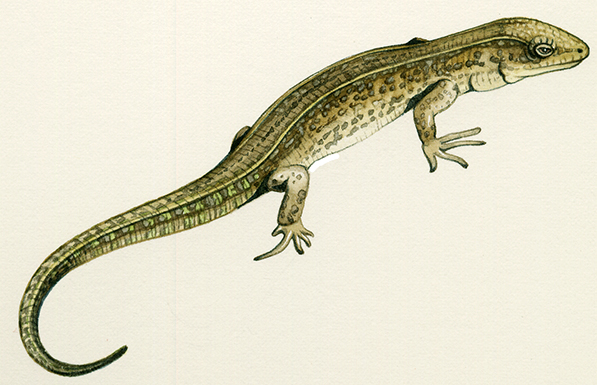
Lacerta

Leo

Leo Minor

Lepus (The Hare)

Libra

Lupus (The Wolf)

Lynx

Lyra

Mensa

Microscopium

Monoceros (The Unicorn)

Musca (The Fly)

Norma
Octans

Ophiuchus
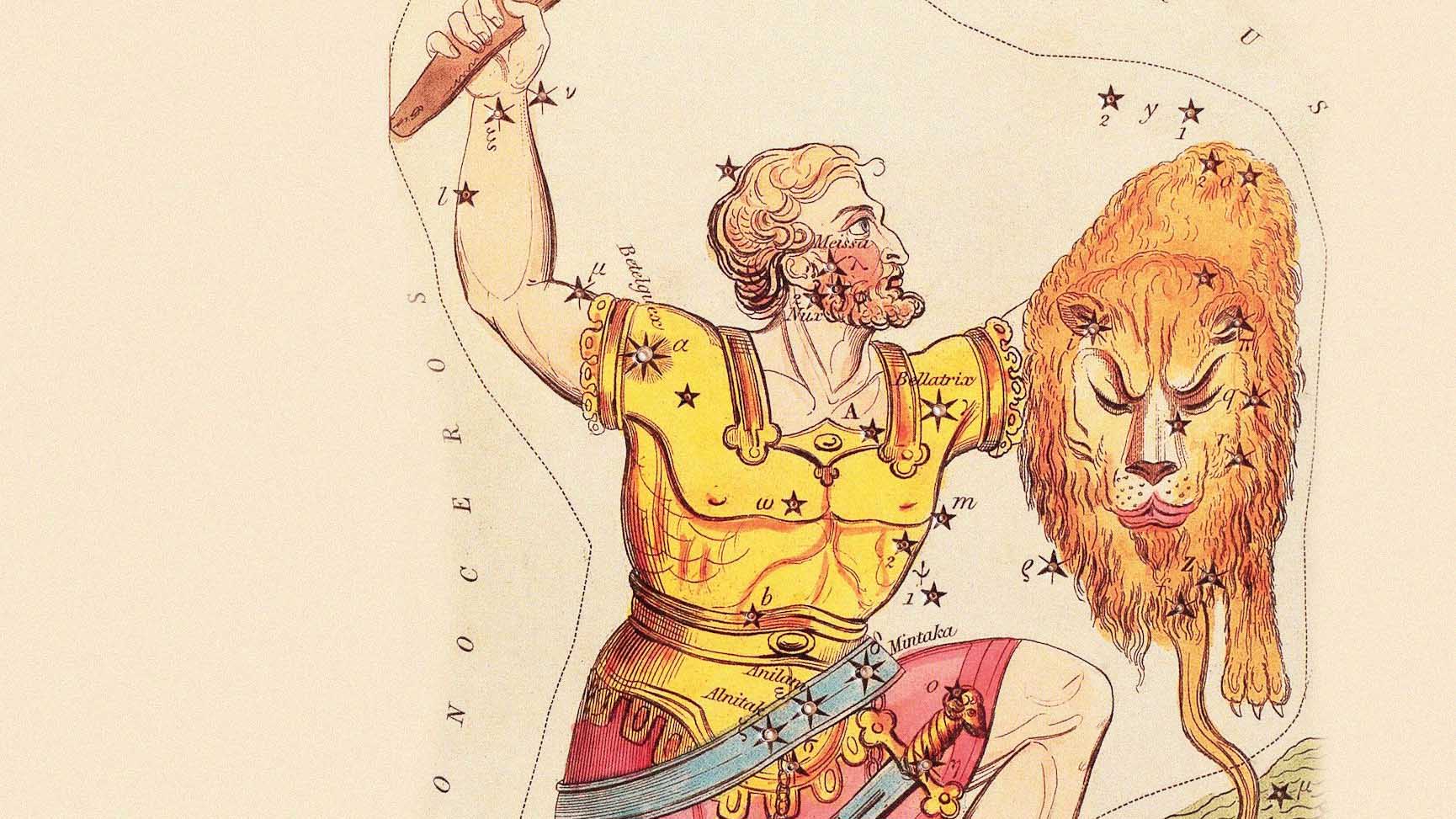
Orion (The Hunter)

Pavo (The Peacock)

Pegasus

Perseus

Phoenix

Pictor

Pisces

Piscis Austrinus

Puppis

Pyxis

Reticulum

Sagitta

Sagittarius

Scorpius

Sculptor

Scutum

Serpens

Sextans

Taurus

Telescopium

Triangulum

Triangulum Australe

Tucana

Ursa Minor

Vela (The Sails)

Virgo

Volans (Flying Fish)

Vulpecula (The Fox)
