
Constellation Aries
CONSTELLATION ARIES
THE CELESTIAL RAM & ZODIAC ORIGINS
The Golden Ram
Aries is one of the classic 48 constellations cataloged by the 2nd-century astronomer Ptolemy and stands as the first sign of the zodiac. Historically marking the vernal equinox, it features a distinctive curved horn pattern formed by its leading stars.
An orange giant star situated approximately 65.9 light-years away from Earth.
Ranked as the 39th largest modern constellation by total celestial area coverage.
Aries Sync
Ecliptic Horizon Mapping. Analyzing the zodiacal constant of the celestial ram. New Horizons monitors the Hamal spectral shift to track this cardinal northern vector.
- ♈ Legacy: The Golden Fleece (First Point of Aries).
- 🌟 Hamal: Orange Giant Alpha-Node.
- 🔭 Deep Sky: NGC 772 Spiral Galaxy.
Cardinal Sync
Vernal Equinox Mapping. Analyzing the "First Point of Aries" historical constant. New Horizons monitors the Celestial Equator intersection to track this leadership-tier zodiacal vector.
- ♈ Position: Historical Vernal Equinox Point.
- 👑 Archetype: Symbol of Leadership & Initiative.
- 🌱 Cycle: The Celestial New Beginning.
Horns Sync
Binary Node Mapping. Analyzing the Hamal solar-offset constant. New Horizons monitors the Mesarthim separation to track this iconic double-star northern vector.
- 🌟 Hamal: Alpha-Node Brighter than the Sun.
- ♊ Mesarthim: Stunning Telescopic Binary.
- 🔭 Optics: Resolved via Small Aperture Sync.
Galactic Sync
Extragalactic Vector Mapping. Analyzing the tidal interaction constant of NGC 772. New Horizons monitors the asymmetric spiral arm expansion to track this deep-space gravitational node.
- 🌀 NGC 772: Unbarred Spiral Galaxy Node.
- 🌊 Tidal Shift: Unusually Long Spiral Arm.
- 🌌 Type: High-Interaction Deep Sky Vector.
Legacy of the Golden Ram 📜
Sources
HAMAL (ALPHA)
The brightest star in Aries is an orange giant. It is about **66 light-years** away and is slightly more than twice as massive as the Sun.
ALPHA DATAMESARTHIM
A beautiful binary star system (Gamma Arietis) that can be easily split with a small telescope. It was one of the first double stars discovered.
BINARY DATANGC 772
A large unbarred spiral galaxy. It has a visible "tidal tail" caused by gravitational interactions with its neighbor, NGC 770.
DEEP SKYAnnotated Chart

Mapping of the main stellar points and nearby deep-space objects.
The Golden Ram

The ram whose Golden Fleece was the object of the voyage of the Argonauts.
IAU Boundary Map

Detailed survey showing Aries positioned between Pisces and Taurus.
Aries Constellation • Bright Stars
The Ram • Main Stars Ranked by Apparent MagnitudeAries is a modest northern constellation. Only a few of its stars are bright enough to stand out under suburban skies. Magnitudes and distances below are approximate mean values.
| Star | Magnitude | Distance |
|---|---|---|
|
Hamal α Ari
Alpha Arietis • Head of the Ram
|
0 | 0 ly |
|
Sheratan β Ari
Beta Arietis
|
0 | 0 ly |
|
Bharani 41 Ari
c Arietis
|
0 | 0 ly |
|
Mesarthim γ Ari
Gamma Arietis
|
0 | 0 ly |
|
Botein δ Ari
Delta Arietis
|
0 | 0 ly |
|
Lilii Borea 39 Ari
39 Arietis
|
0 | 0 ly |
|
ε Arietis ε Ari
Epsilon Arietis
|
0 | 0 ly |
|
35 Arietis
35 Ari
|
0 | 0 ly |
|
λ Arietis λ Ari
Lambda Arietis
|
0 | 0 ly |
|
ζ Arietis ζ Ari
Zeta Arietis
|
0 | 0 ly |
|
14 Arietis
14 Ari
|
0 | 0 ly |
|
κ Arietis κ Ari
Kappa Arietis
|
0 | 0 ly |
CELESTIAL MAPPING
IAU BOUNDARIES
Official sky borders defined by the International Astronomical Union in 1930 to partition constellations into precise geometric areas.
SOLAR PATHWAY
THE ECLIPTIC
The apparent annual path of the Sun across the celestial sphere, running directly through official zodiac constellation limits.
WATER CONSTELLATION
PISCES
The large celestial fish constellation spanning a major sector of the modern ecliptic path under IAU coordinate rules.
RAM CONSTELLATION
ARIES
The celestial ram constellation situated next along the eastward progression of the Sun's annual apparent track.
BOUNDARY INTERSECTION
ECLIPTIC CROSSING
The specific coordinate threshold where the Sun physically transitions across the border from Pisces into Aries.
HISTORICAL EPOCH
YEAR -67
A specific historical baseline epoch context used for charting ancient celestial mechanics and coordinate shifts.
AXIAL WOBBLE
PRECESSION
The slow, conical shift of Earth's rotational axis driving the gradual westward drift of equinox points over millennia.
EQUINOX MARKER
FIRST POINT
The historic vernal equinox reference point (0° celestial longitude) historically linked to Aries, now shifted into Pisces.
Best months to view
Aries
Aries, the Ram, is a modest zodiac constellation lying between Pisces and Taurus. Its three main stars (Hamal, Sheratan and Mesartim) form a distinctive crooked line. Best placed in the evening sky from November through January, reaching its highest point around December. Visible from almost the entire planet (latitudes +90° to –60°).
Peak Season
November – January. December is ideal when Aries culminates high in the evening sky around 8–9 p.m. local time.
Moon-free nights
Helpful. Aries is not a bright constellation — dark, moonless skies make the crooked line of Hamal–Sheratan–Mesartim much easier to spot.
How to find it
Look between the Great Square of Pegasus / Pisces and the bright star Aldebaran in Taurus. The three stars of the Ram’s head form a gentle curve.
Recommended Tools
View AllLoading recommended tools...
Gamma Arietis (Mesarthim): Right Ascension, Declination & Boundary Coordinates
Explore precise astrometric data for Gamma Arietis (Mesarthim), including Right Ascension (RA), Declination (DEC), and exact IAU constellation boundary coordinates for advanced celestial mapping and stargazing.
Open Gamma Arietis HubExplore More!
Andromeda

Antlia

Apus

Aquarius

Aquila

Ara

Aries

Auriga

Bootes

Caelum
Camelopardalis

Cancer

Canes Venatici

Canis Major

Canis Minor

Ursa Major (The Big Bear)

Cassiopeia

Centaurus

Cepheus

Cetus (The Whale)

Chamaeleon

Circinus

Columba

Coma Berenices

Corona Australis

Corona Borealis

Corvus

Crater

Crux

Cygnus

Delphinus
Dorado
Draco

Equuleus

Eridanus

Fornax

Gemini

Grus (The Crane)

Hercules

Horologium (The Clock)

Hydra

Hydrus

Indus
Lacerta

Leo

Leo Minor

Lepus (The Hare)

Libra

Lupus (The Wolf)

Lynx

Lyra

Mensa

Microscopium

Monoceros (The Unicorn)

Musca (The Fly)

Norma
Octans

Ophiuchus
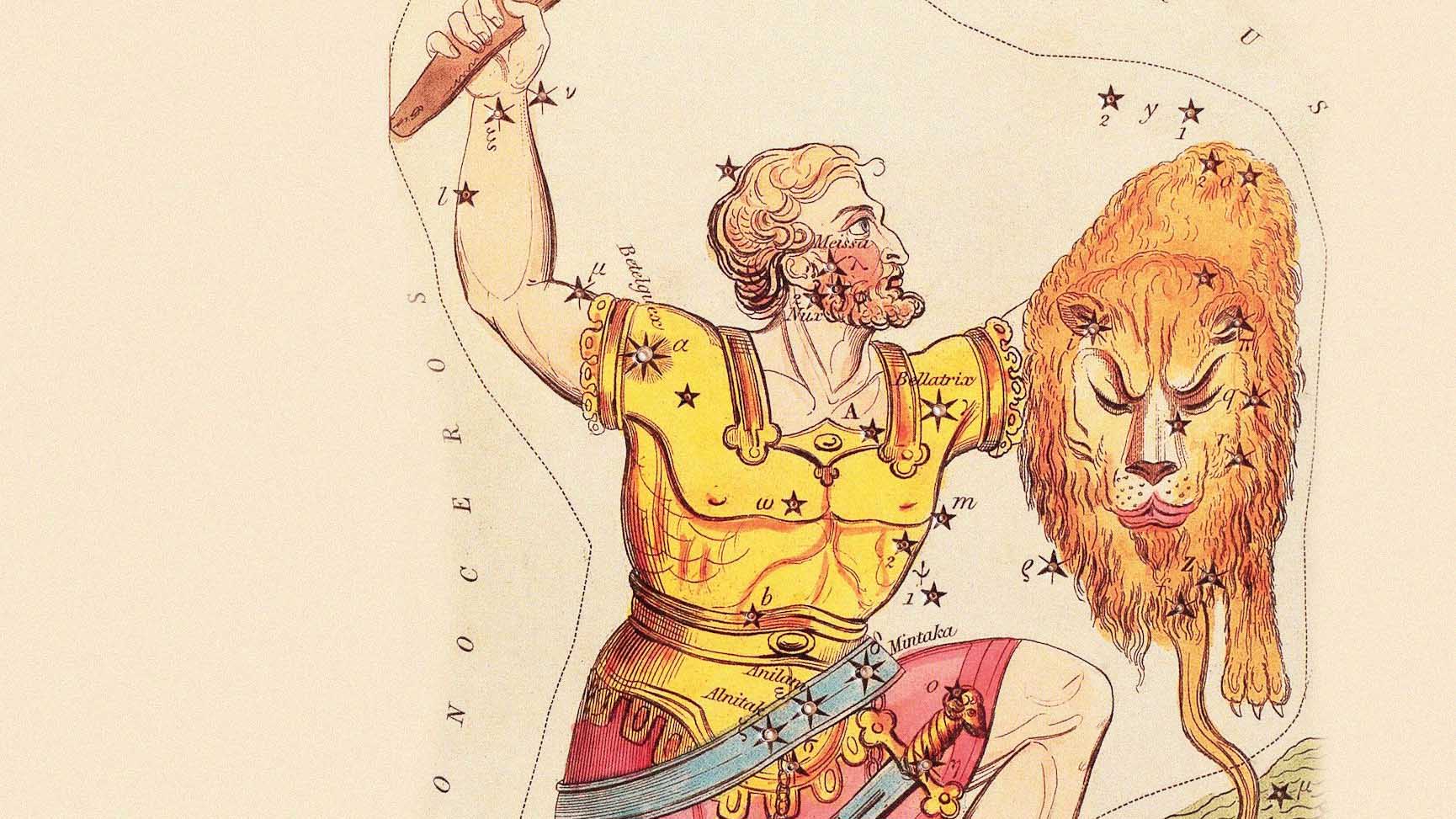
Orion (The Hunter)

Pavo (The Peacock)

Pegasus

Perseus

Phoenix

Pictor
Pisces

Piscis Austrinus

Puppis

Pyxis

Reticulum

Sagitta

Sagittarius

Scorpius

Sculptor

Scutum

Serpens

Sextans

Taurus

Telescopium

Triangulum

Triangulum Australe
Tucana

Ursa Minor

Vela (The Sails)

Virgo

Volans (Flying Fish)

Vulpecula (The Fox)
