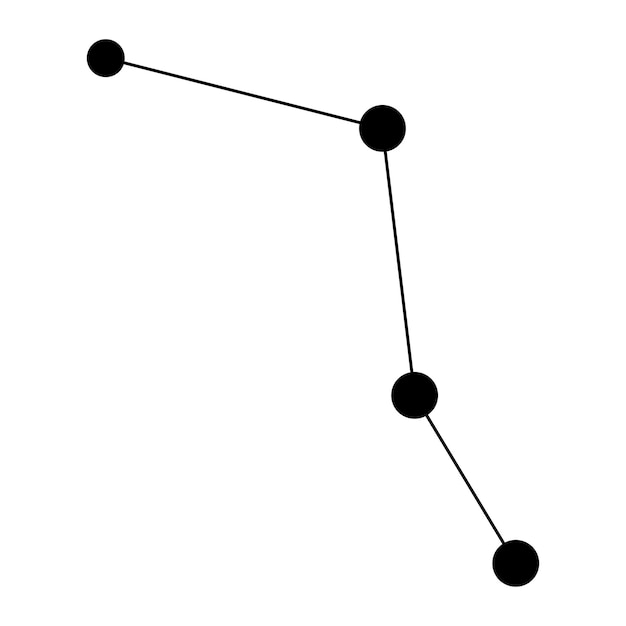
Constellation Caelum
CONSTELLATION CAELUM
THE SCULPTOR'S CHISEL & SOUTHERN SKIES
The Sculptor's Chisel
Caelum is one of the smallest and faintest constellations in the modern sky. Located in the southern celestial hemisphere, it was introduced in the 18th century by French astronomer Nicolas Louis de Lacaille to represent a carving tool.
A yellow-white main-sequence star accompanied by a faint red dwarf companion.
Ranked as the 81st largest modern constellation out of all 88 standardized sectors.
Caelum Sync
Precision Tool Mapping. Analyzing the Sculptor's Chisel constant. New Horizons monitors the faint southern magnitude nodes to track this specialized engraving vector.
- 📐 Definition: Caelum Sculptorium (The Engraver's Chisel).
- 🔨 Origin: Established by Lacaille in 1752.
- 🔭 Nature: Smallest and Faintest Southern Vector.
Burin Sync
Spatial Geometry Mapping. Analyzing the "Caelum Scalptorium" historical constant. New Horizons monitors the Eridanus-Columba border to track this narrow southern carving vector.
- 📐 Identity: The Engraver's Chisel (Scalptorium).
- 📍 Coordinates: Centered between Eridanus and Columba.
- 🔨 Scale: Compact and Specialized Southern Node.
Lumen Sync
Low-Magnitude Node Mapping. Analyzing the Alpha Caeli spectral constant. New Horizons monitors the Gamma Caeli red-giant binary to track this faint southern vector.
- 🔘 Alpha Caeli: Primary Node of the Sculptor's Tool.
- 🔴 Gamma Caeli: Red Giant / White Dwarf Binary Sync.
- 🔭 Magnitude: Subtle High-Precision Southern Node.
Quasar Sync
Singularity Node Mapping. Analyzing the HE0450-2958 "Naked Quasar" constant. New Horizons monitors the hostless luminosity vector to track this high-energy extragalactic anomaly.
- 🌌 HE0450-2958: The Unique "Naked Quasar" Node.
- ⚛️ Anomaly: Absence of a detectable host galaxy.
- ⚡ Energy: High-Magnitude Quasar Horizons Sync.
Legacy of the Chisel 📜
Sources
ALPHA CAELI
The brightest star in Caelum is a binary system about **66 light-years** away. The primary is an F-type main-sequence star, slightly hotter than our Sun.
ALPHA DATAOBSERVATION
Due to its southern location and lack of bright stars, it is best seen from the Southern Hemisphere during summer. It looks like a faint, narrow wedge.
IAU SPECSRR CAELI
A notable binary system containing a red dwarf and a white dwarf. It is an eclipsing binary, providing vital data on star masses and radii.
DEEP SKYSymbolic Form
Visual representation of the engraver's tool, symbolizing precision and craftsmanship.
Stellar Plot
Plotting of Alpha and Beta Caeli, the primary stars of this sparse region.
IAU Boundary Map

Official survey map showing Caelum bordered by Columba, Eridanus, and Pictor.
Caelum Constellation • Bright Stars
The Chisel • Main Stars Ranked by Apparent MagnitudeCaelum is a small, faint southern constellation. It has no stars brighter than magnitude 4.4 and is best observed from the Southern Hemisphere during December–February.
| Star | Magnitude | Distance |
|---|---|---|
|
Alpha Caeli α Cae
Brightest star in Caelum
|
0 | 0 ly |
|
Gamma¹ Caeli γ¹ Cae
Second brightest
|
0 | 0 ly |
|
Beta Caeli β Cae
Third brightest
|
0 | 0 ly |
|
Delta Caeli δ Cae
Hot subgiant
|
0 | 0 ly |
|
HD 30080
Orange giant
|
0 | 0 ly |
|
HD 31093
White star
|
0 | 0 ly |
|
Nu Caeli ν Cae
Double star
|
0 | 0 ly |
|
Lambda Caeli λ Cae
Red giant
|
0 | 0 ly |
|
Gamma² Caeli γ² Cae
Companion to γ¹
|
0 | 0 ly |
|
Zeta Caeli ζ Cae
Orange giant
|
0 | 0 ly |
Best months to view
Caelum
Caelum, the Chisel, is one of the smallest and faintest constellations in the sky. Introduced by Lacaille, it has no stars brighter than magnitude 4.5. Best viewed in January when it reaches its highest point in the evening sky. Visible from latitudes south of about +40° — excellent across the Southern Hemisphere and just visible low in the south from the southern parts of the Northern Hemisphere.
Peak Season
December – February. January is ideal when Caelum culminates high in the southern evening sky under dark conditions.
Moon-free nights
Essential. Caelum is extremely faint — even modest moonlight will make the constellation nearly impossible to trace. Choose nights around new moon.
How to find it
Look between Columba (the Dove) and Eridanus, south of Lepus. Alpha Caeli (mag 4.45) is the brightest star. Dark skies and patience are required.
Recommended Tools
View AllLoading recommended tools...
Explore More!
Andromeda

Antlia

Apus

Aquarius

Aquila

Ara

Aries

Auriga

Bootes

Caelum
Camelopardalis

Cancer

Canes Venatici

Canis Major

Canis Minor

Ursa Major (The Big Bear)

Cassiopeia

Centaurus

Cepheus

Cetus (The Whale)

Chamaeleon

Circinus

Columba

Coma Berenices

Corona Australis

Corona Borealis

Corvus

Crater

Crux

Cygnus

Delphinus

Dorado

Draco

Equuleus

Eridanus

Fornax

Gemini

Grus (The Crane)

Hercules

Horologium (The Clock)

Hydra

Hydrus

Indus
Lacerta

Leo

Leo Minor

Lepus (The Hare)

Libra

Lupus (The Wolf)

Lynx

Lyra

Mensa

Microscopium

Monoceros (The Unicorn)

Musca (The Fly)

Norma
Octans

Ophiuchus

Orion (The Hunter)

Pavo (The Peacock)

Pegasus

Perseus

Phoenix
Pictor

Pisces

Piscis Austrinus

Puppis

Pyxis

Reticulum

Sagitta

Sagittarius

Scorpius

Sculptor

Scutum

Serpens

Sextans

Taurus

Telescopium

Triangulum

Triangulum Australe

Tucana

Ursa Minor

Vela (The Sails)

Virgo

Volans (Flying Fish)

Vulpecula (The Fox)
