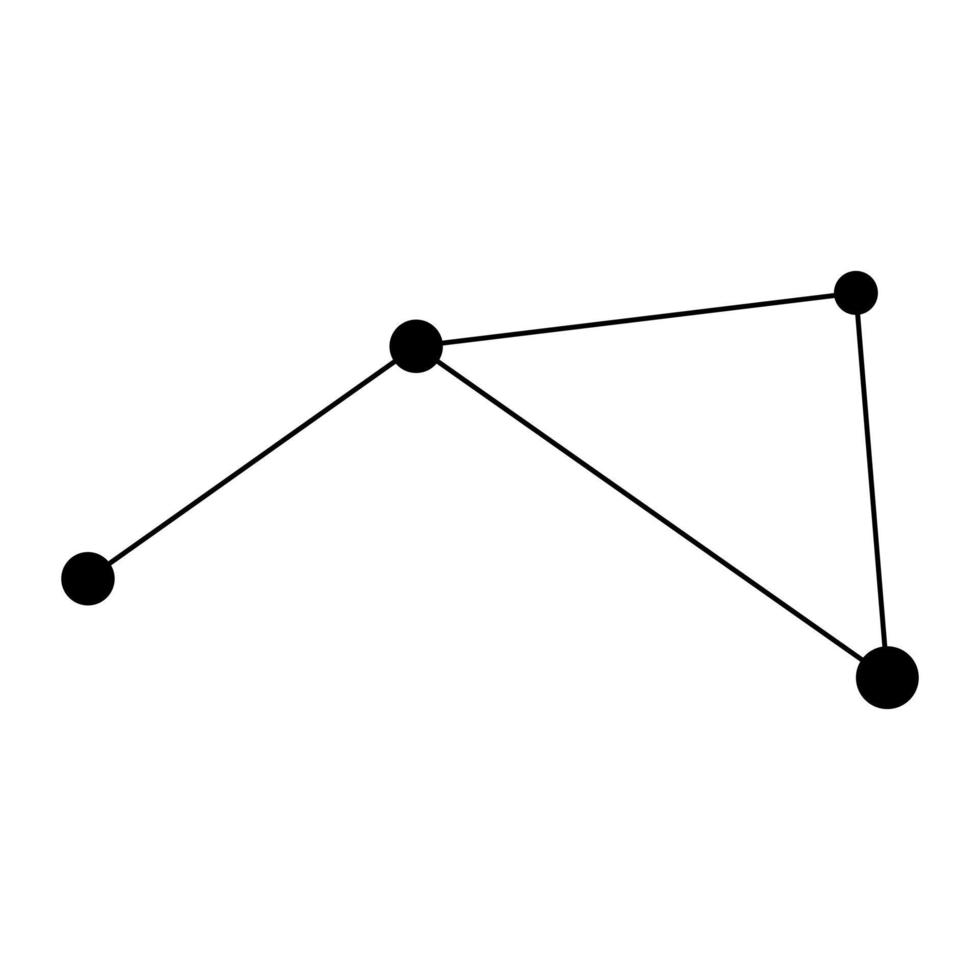
Constellation Antlia
CONSTELLATION ANTLIA
THE PNEUMATIC AIR PUMP & SOUTHERN SKIES
The Air Pump
Located in the southern celestial hemisphere, Antlia represents the vacuum pump invented by French physicist Abbé Nicolas Louis de Lacaille in the 18th century. Composed primarily of faint stars, it sits quietly between Hydra, Pyxis, and Vela.
An orange giant star situated roughly 366 light-years away from Earth.
Ranked as the 62nd largest constellation out of the 88 modern standardized sectors.
Antlia Sync
Pneumatic Machine Mapping. Analyzing the 1750-era industrial constant of Nicolas-Louis de Lacaille. New Horizons monitors the Alpha Antliae Magnitude to track this faint southern vector.
- 💨 Legacy: Antlia Pneumatica (Air Pump).
- 📡 Deep Sky: NGC 2997 Spiral Galaxy.
- 📐 Position: Southern Celestial Hemisphere.
Pneumatic Sync
Instrument Geometry Mapping. Analyzing the 1750 Lacaille constant. New Horizons monitors the Boyle-Mariotte Law variables to track this non-mythological vector.
- 🧪 Origin: Created by Nicolas-Louis de Lacaille.
- 💨 Honoring: The Robert Boyle Air Pump.
- 🚫 Root: Zero Mythological Influence.
Magnitude Sync
Low-Luminosity Mapping. Analyzing the 4.0 magnitude threshold across the celestial grid. New Horizons monitors the Photon Horizons to track the 360-light-year distance of Alpha Antliae.
- 🌑 Threshold: No Stars Brighter than 4th Mag.
- 🟠 Alpha Antliae: K-type Orange Giant.
- 📏 Distance: 360 Light-Years From Earth.
Cluster Sync
Extragalactic Mass Mapping. Analyzing the Abell S0636 cluster density. New Horizons monitors the Gravitational Binding Constant to track the Antlia Dwarf companion trajectory.
- 🌌 Abell S0636: High-Density Galaxy Cluster.
- 🛸 Antlia Dwarf: Local Group Companion.
- 🧬 Type: Dwarf Elliptical Galaxy.
Legacy of the Air Pump 📜
Sources
ALPHA ANTLIAE
The brightest star in the constellation is an Orange Giant. It is roughly **320 light-years** away and is slightly variable in brightness.
ALPHA DATAANTLIA CLUSTER
This region contains the **Antlia Cluster**, a collection of approximately 230 galaxies. It is the third closest galaxy cluster to our Local Group.
DEEP SKYVISIBILITY
Antlia is best seen in the Southern Hemisphere during late winter and spring. It borders the constellation Hydra to the north and Vela to the south.
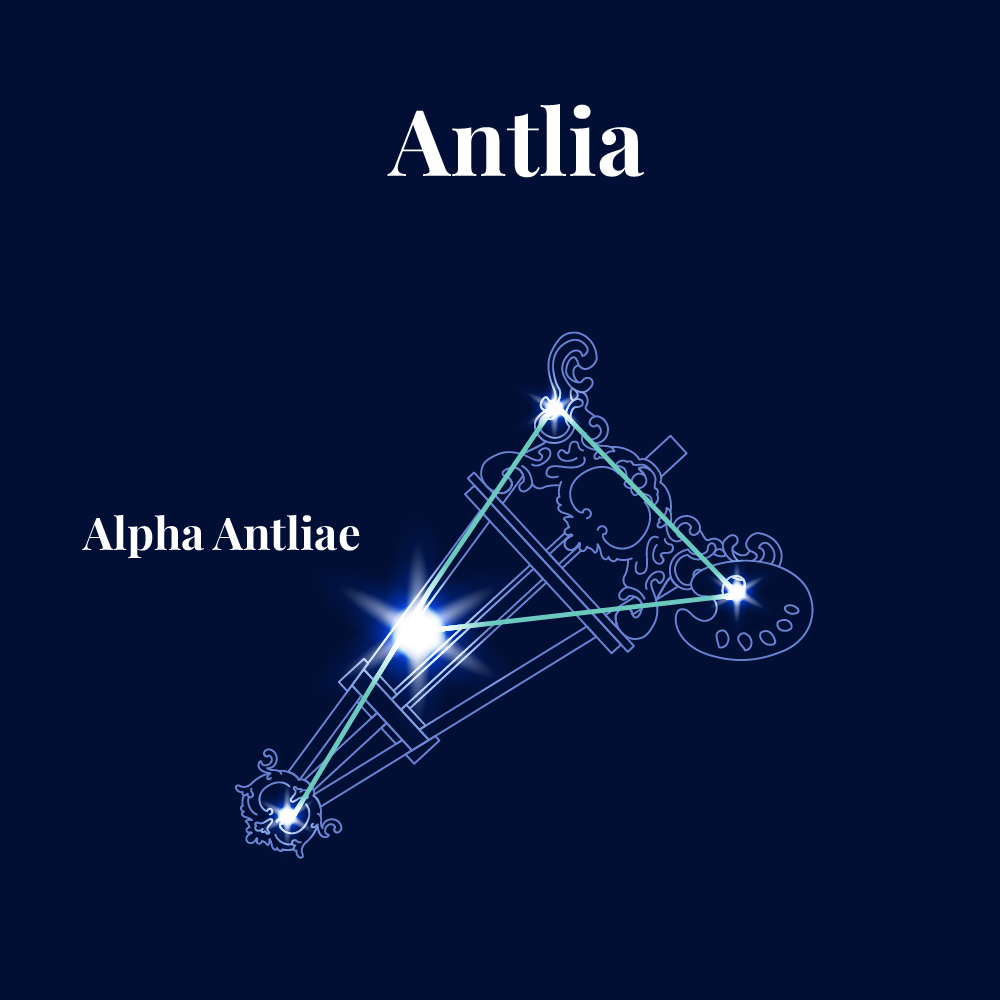
IAU SPECSIAU Boundaries

Official International Astronomical Union (IAU) chart showing the region's borders.
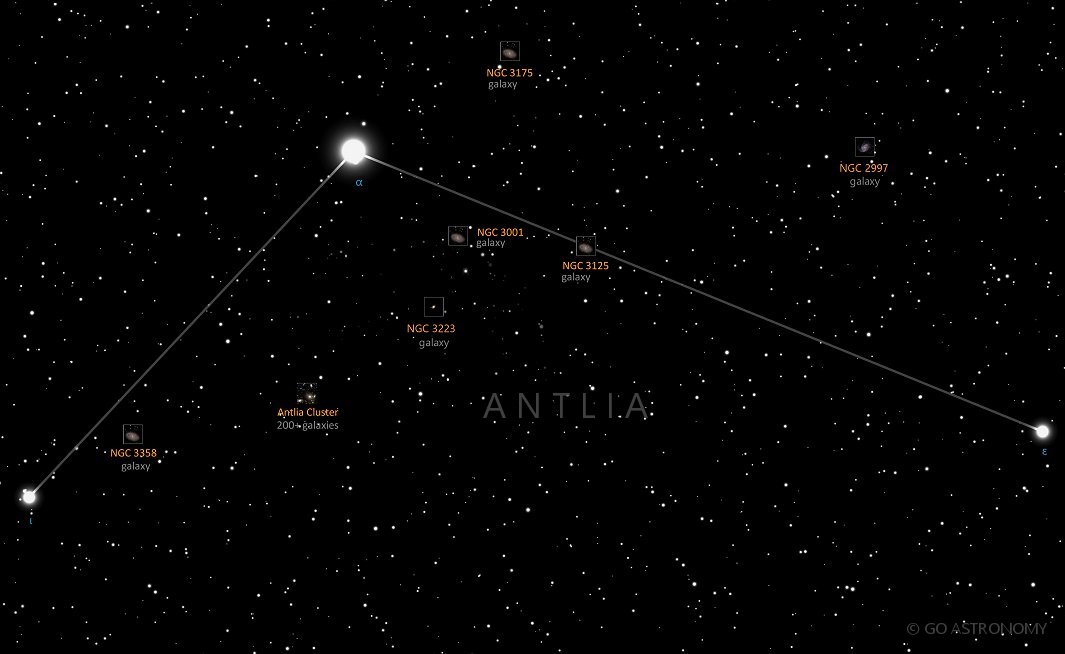
Stellar Map

A plot of the main stars, including Alpha Antliae, the brightest in the group.
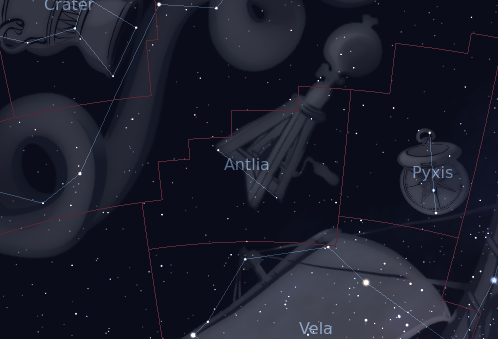
Observational View

Wide-field visualization of where Antlia sits relative to Hydra and Vela.

Antlia Constellation • Bright Stars
The Air Pump • Main Stars Ranked by Apparent MagnitudeAntlia is a faint southern constellation with no stars brighter than magnitude 4.0. Its brightest members are mostly orange giants. Best observed from the Southern Hemisphere during March–May.
| Star | Magnitude | Distance |
|---|---|---|
|
Alpha Antliae α Ant
Brightest star in Antlia
|
0 | 0 ly |
|
Epsilon Antliae ε Ant
Second brightest
|
0 | 0 ly |
|
Iota Antliae ι Ant
Third brightest
|
0 | 0 ly |
|
Theta Antliae θ Ant
Binary system
|
0 | 0 ly |
|
Eta Antliae η Ant
Double star
|
0 | 0 ly |
|
Delta Antliae δ Ant
Binary system
|
0 | 0 ly |
|
Zeta¹ Antliae ζ¹ Ant
Part of wide pair
|
0 | 0 ly |
|
Zeta² Antliae ζ² Ant
Optical companion
|
0 | 0 ly |
|
U Antliae
Carbon star
|
0 | 0 ly |
|
HR 3833
Unnamed bright star
|
0 | 0 ly |
Best months to view
Antlia
Antlia, the Air Pump, is a faint southern constellation introduced by Lacaille. It has no stars brighter than magnitude 4.25, so dark skies are essential. Best viewed in April when it reaches its highest point in the evening sky. Visible from latitudes south of about +45° — excellent from the Southern Hemisphere, low and brief from the southern parts of the Northern Hemisphere.
Peak Season
March – May. April is ideal when Antlia culminates high in the evening sky for southern observers and is still reachable from mid-northern latitudes.
Moon-free nights
Essential. Antlia’s stars are all faint — even a quarter moon will wash most of them out. Aim for the week around new moon.
How to find it
Look south of Hydra (below Alphard) and east of Vela. From the south it sits between Hydra and the Milky Way. Binoculars help confirm the faint pattern.
Recommended Tools
View AllLoading recommended tools...
Explore More!
Andromeda

Antlia

Apus

Aquarius

Aquila

Ara

Aries

Auriga

Bootes

Caelum
Camelopardalis

Cancer

Canes Venatici

Canis Major

Canis Minor

Ursa Major (The Big Bear)

Cassiopeia

Centaurus

Cepheus

Cetus (The Whale)

Chamaeleon

Circinus

Columba

Coma Berenices

Corona Australis

Corona Borealis

Corvus

Crater

Crux

Cygnus

Delphinus
Dorado
Draco

Equuleus

Eridanus

Fornax

Gemini

Grus (The Crane)

Hercules

Horologium (The Clock)

Hydra

Hydrus

Indus
Lacerta

Leo

Leo Minor

Lepus (The Hare)

Libra

Lupus (The Wolf)

Lynx

Lyra

Mensa

Microscopium

Monoceros (The Unicorn)

Musca (The Fly)

Norma
Octans

Ophiuchus
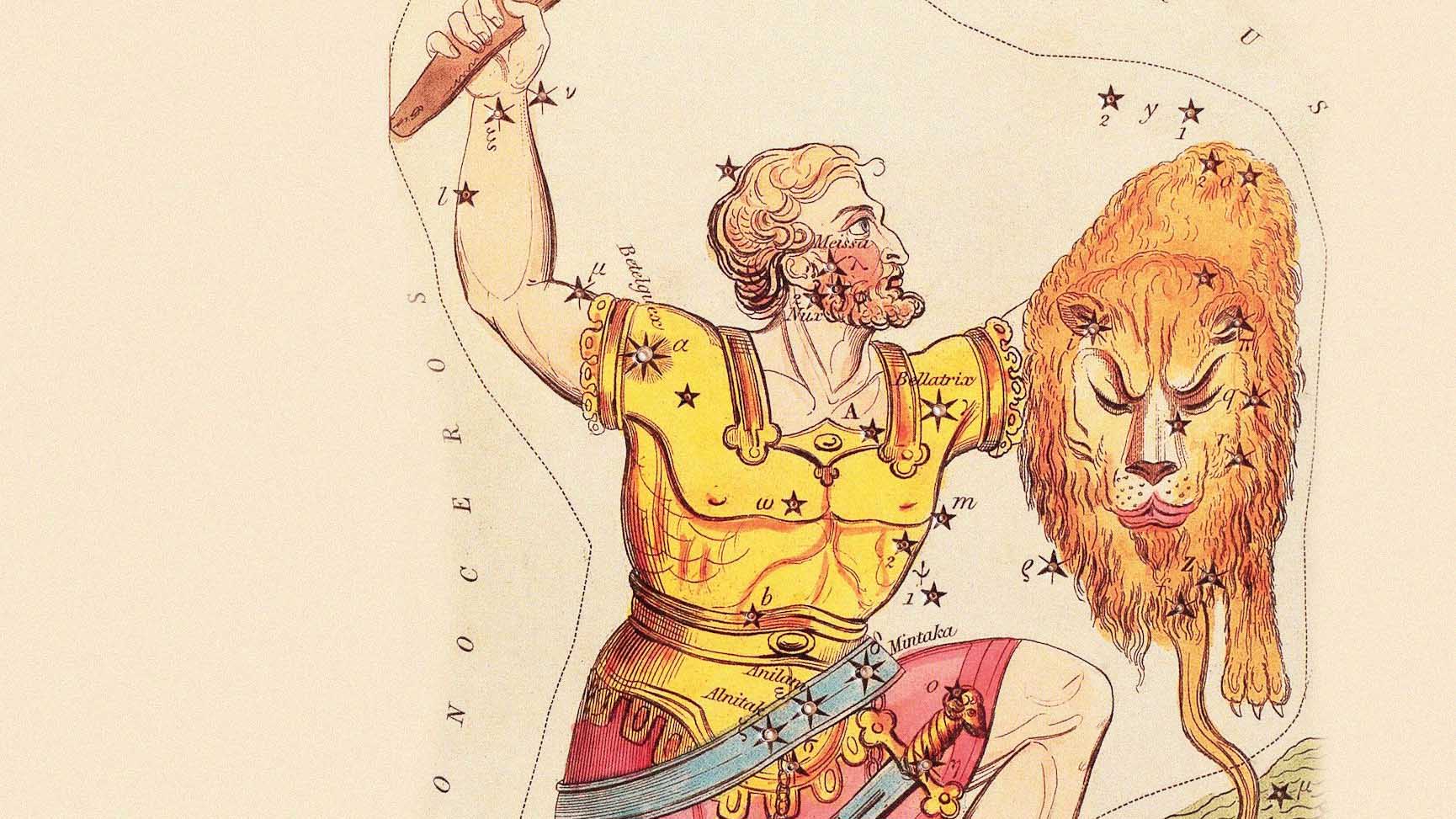
Orion (The Hunter)

Pavo (The Peacock)

Pegasus

Perseus

Phoenix
Pictor
Pisces

Piscis Austrinus

Puppis

Pyxis

Reticulum

Sagitta

Sagittarius

Scorpius

Sculptor

Scutum

Serpens

Sextans

Taurus

Telescopium

Triangulum

Triangulum Australe
Tucana

Ursa Minor

Vela (The Sails)

Virgo

Volans (Flying Fish)

Vulpecula (The Fox)
