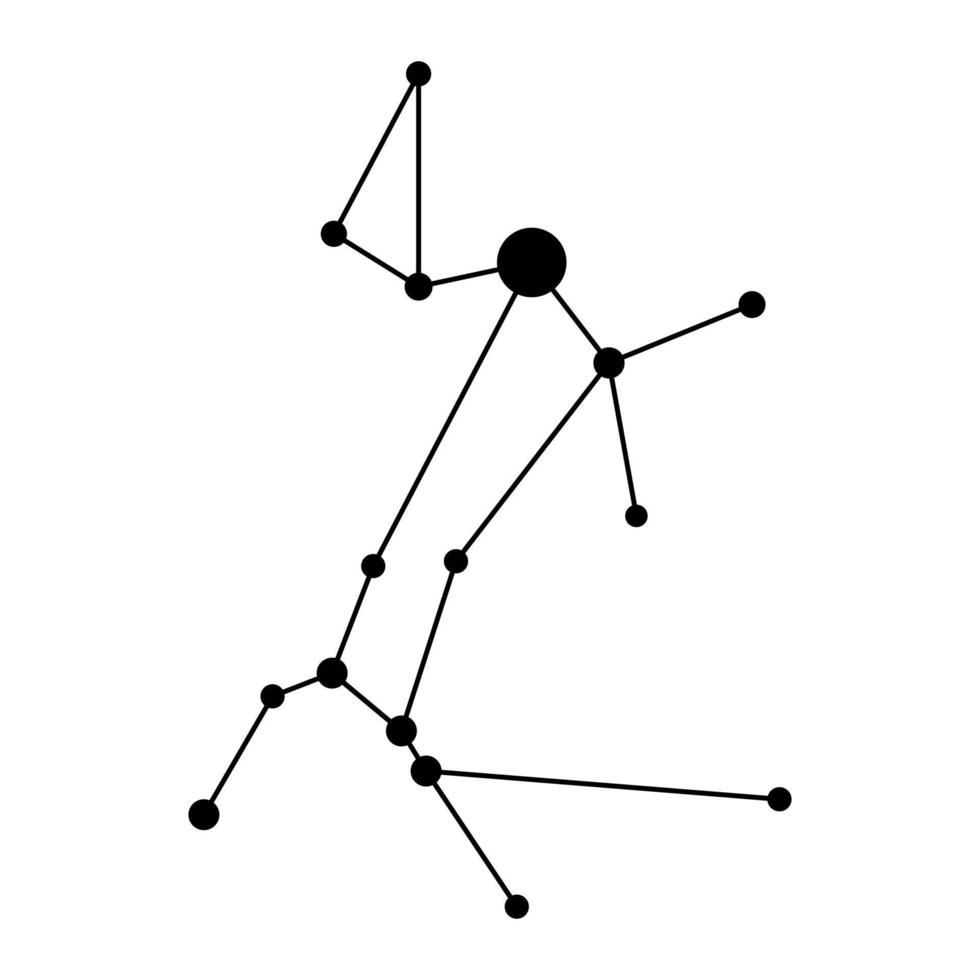
Constellation Canis Major
CONSTELLATION CANIS MAJOR
THE GREATER DOG & HOME OF SIRIUS
The Greater Hunting Dog
Canis Major is a magnificent southern constellation representing the larger dog following Orion across the winter sky. It contains Sirius, the single brightest star in the entire night sky, and sits amidst rich Milky Way star fields.
A dazzling binary star system located just ~8.6 light-years away from Earth.
Ranked as the 43rd largest modern constellation by total sky coverage area.
Major Sync
Primary Magnitude Mapping. Analyzing the Sirius A/B binary constant. New Horizons monitors the winter triangle nodes to track this high-intensity southern hunter vector.
- 🐕 Identity: The Greater Dog (Laelaps).
- 💎 Sirius: The Alpha-Node (Dog Star).
- 🔭 Nature: Highest Luminosity Stellar Vector.
Sirius Sync
Binary Engine Mapping. Analyzing the Sirius A main-sequence constant. New Horizons monitors the white dwarf "Pup" orbital vector to track this high-luminosity Alpha node.
- 💎 Sirius A: The Dominant Main-Sequence Horizons.
- ⚪ Sirius B: The High-Density "Pup" White Dwarf.
- 🛰️ Nature: Binary Magnitude Calibration Point.
Adhara Sync
Ultraviolet Node Mapping. Analyzing the Epsilon Canis Majoris spectral constant. New Horizons monitors the extreme-UV Horizons to track this high-magnitude "Virgin Star" vector.
- 💜 Adhara: The "Virgin" Second-Brightest Node.
- ⚡ EUV Source: Rare Extreme Ultraviolet Radiation Hub.
- 🔭 Luminosity: Brightest UV beacon in the local sky.
Helmet Sync
Emission Bubble Mapping. Analyzing the NGC 2359 "Thor's Helmet" constant. New Horizons monitors the Wolf-Rayet stellar winds to track this high-velocity ionized gas vector.
- 🛡️ NGC 2359: Viking-Morphology Emission Node.
- 🌀 Driver: WR7 Massive Wolf-Rayet Stellar Engine.
- ⚡ Dynamics: Shock-Ionized Interstellar Buffer.
Legacy of the Great Dog 📜
Sources
SIRIUS (ALPHA)
The "Dog Star" is only **8.6 light-years** away. It is a binary system; Sirius A is a bright main-sequence star, while Sirius B is a faint white dwarf.
SIRIUS DATAVY CANIS MAJORIS
One of the largest known stars in the universe. It is a red hypergiant so massive that if placed at the center of our solar system, its surface would extend past Saturn.
HYPERGIANT SPECSMESSIER 41
A bright open cluster located just below Sirius. It contains about 100 stars and was first recorded by Aristotle as early as 325 BC.
DEEP SKYThe Faithful Hound
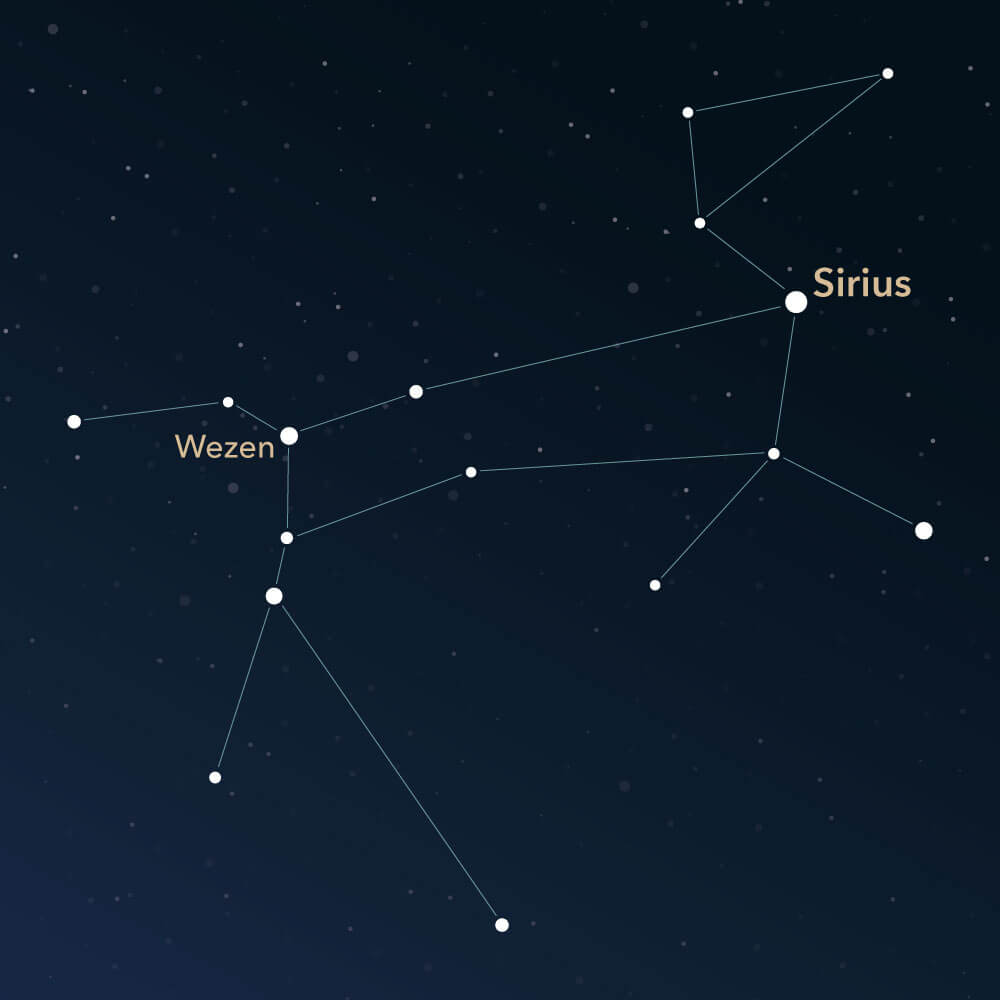
Artistic depiction of Orion's larger hunting dog pursuing the hare, Lepus.
The Dog Star

Visual highlighting the overwhelming luminosity of Sirius ($\alpha$ Canis Majoris).
Stellar Alignment

Connecting the primary stars Adhara, Wezen, and Murzim to form the dog's body.
Canis Major Constellation • Bright Stars
The Greater Dog • Main Stars Ranked by Apparent MagnitudeCanis Major is a southern constellation famous for Sirius, the brightest star in the night sky. It also contains several luminous blue and white supergiants and the open cluster M41.
| Star | Magnitude | Distance |
|---|---|---|
|
Sirius α CMa
Alpha Canis Majoris • Brightest star in the sky
|
0 | 0 ly |
|
Adhara ε CMa
Epsilon Canis Majoris
|
0 | 0 ly |
|
Wezen δ CMa
Delta Canis Majoris
|
0 | 0 ly |
|
Mirzam β CMa
Beta Canis Majoris
|
0 | 0 ly |
|
Aludra η CMa
Eta Canis Majoris
|
0 | 0 ly |
|
Furud ζ CMa
Zeta Canis Majoris
|
0 | 0 ly |
|
Omicron² Canis Majoris ο² CMa
Blue supergiant
|
0 | 0 ly |
|
Unurgunite σ CMa
Sigma Canis Majoris
|
0 | 0 ly |
|
Kappa Canis Majoris κ CMa
Be star
|
0 | 0 ly |
|
Omicron¹ Canis Majoris ο¹ CMa
Red supergiant
|
0 | 0 ly |
Best months to view
Canis Major
Canis Major, the Greater Dog, is home to Sirius — the brightest star in the night sky. It follows Orion across the heavens and is best placed in the evening from December through March, reaching its highest point around February. Visible from latitudes +60°N to –90°S, it is a spectacular winter constellation in the north and a summer highlight in the south.
Peak Season
December – March. January and February are ideal when Sirius and Canis Major culminate high in the evening sky.
Moon-free nights
Helpful for the fainter stars and clusters, though Sirius itself remains brilliant even under moderate moonlight.
How to find it
Follow Orion’s Belt downward (southeast in the northern sky). The three belt stars point directly to brilliant Sirius, the heart of Canis Major.
Recommended Tools
View AllLoading recommended tools...
Explore More!

Andromeda

Antlia

Apus

Aquarius

Aquila

Ara

Aries

Auriga

Bootes

Caelum
Camelopardalis

Cancer

Canes Venatici

Canis Major

Canis Minor

Ursa Major (The Big Bear)

Cassiopeia

Centaurus

Cepheus

Cetus (The Whale)

Chamaeleon

Circinus

Columba

Coma Berenices

Corona Australis

Corona Borealis

Corvus

Crater

Crux

Cygnus

Delphinus

Dorado

Draco

Equuleus

Eridanus

Fornax

Gemini

Grus (The Crane)

Hercules

Horologium (The Clock)

Hydra

Hydrus

Indus
Lacerta

Leo

Leo Minor

Lepus (The Hare)

Libra

Lupus (The Wolf)

Lynx

Lyra

Mensa

Microscopium

Monoceros (The Unicorn)

Musca (The Fly)

Norma
Octans

Ophiuchus
Orion (The Hunter)

Pavo (The Peacock)

Pegasus

Perseus

Phoenix

Pictor

Pisces

Piscis Austrinus

Puppis

Pyxis

Reticulum

Sagitta

Sagittarius

Scorpius

Sculptor

Scutum

Serpens

Sextans

Taurus

Telescopium

Triangulum

Triangulum Australe
Tucana

Ursa Minor

Vela (The Sails)

Virgo

Volans (Flying Fish)

Vulpecula (The Fox)
