
Constellation Cancer
CONSTELLATION CANCER
THE CELESTIAL CRAB & THE BEEHIVE CLUSTER
The Celestial Crab
Cancer is the faintest of the 12 zodiac constellations, tucked between Gemini and Leo. Though subtle to the naked eye, it holds historic significance as the marker for the summer solstice and hosts stunning deep-space objects.
A famous naked-eye open cluster also known as Praesepe or the manger.
Ranked as the 31st largest modern constellation by total sky coverage area.
Cancer Sync
Zodiacal Grid Mapping. Analyzing the inverted-Y constant. New Horizons monitors the ecliptic intersection nodes to track this ancient crustacean vector.
- 🦀 Identity: The Crab (Karkinos).
- ☀️ Significance: Former Home of the Summer Solstice.
- 🔭 Nature: Faintest Zodiacal Magnitude Node.
Loyalty Sync
Mythic Loyalty Mapping. Analyzing the Hera-Karkinos intervention constant. New Horizons monitors the Lerna battlefield vector to track this rewards-based celestial elevation.
- 🛡️ Origins: The Giant Crab of Lerna (Karkinos).
- ⚔️ Conflict: Intervention against the Labors of Heracles.
- ✨ Apotheosis: Placed in the Stars by Hera’s Decree.
Praesepe Sync
Open Cluster Mapping. Analyzing the M44 "Beehive" proximity constant. New Horizons monitors the 600-light-year density vector to track this multi-hundred stellar swarm.
- 🐝 The Beehive: Ancient M44 Open Cluster Node.
- 🔭 Visibility: Naked-Eye Resolution Buffer.
- 🌌 Scale: High-Density Stellar Population Sync.
Giant Sync
Exoplanetary Node Mapping. Analyzing the 55 Cancri five-planet orbital constant. New Horizons monitors the Beta Tarf luminosity to track this high-complexity extrasolar vector.
- 🌟 Beta Cancri: The Brightest "Tarf" Orange Giant Node.
- 🪐 55 Cancri: Pentaplanetary System Hosting a Super-Earth.
- 🛰️ Discovery: High-Magnitude Extrasolar Data Sync.
Legacy of the Giant Crab 📜
Sources
TARF (BETA)
The brightest star in Cancer is an orange K-type giant. It is roughly **290 light-years** away and has at least one confirmed gas giant planet orbiting it.
BETA DATABEEHIVE CLUSTER
Also known as **Messier 44**, this open cluster is visible to the naked eye as a fuzzy patch. It contains over 1,000 stars, including many red giants.
DEEP SKY55 CANCRI
A famous sun-like star with five confirmed planets, including "Janssen," a super-Earth so close to its sun that it likely has oceans of lava.
EXOPLANET INFOAnnotated Chart

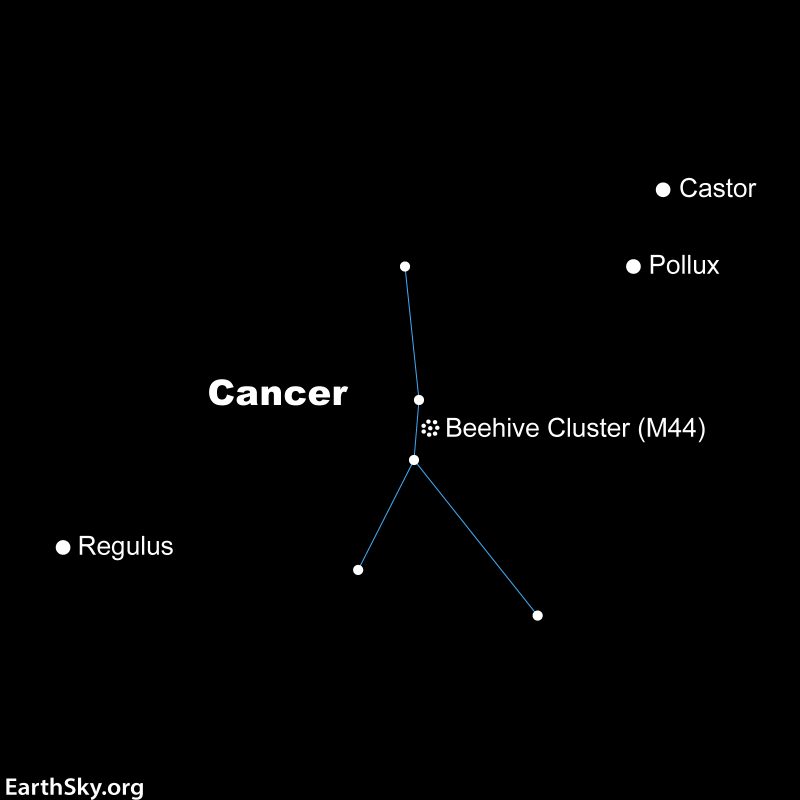
Visualization of the inverted 'Y' shape and the location of the M44 cluster.
The Giant Crab

Illustrating Karkinos, the crab sent by Hera to distract Heracles during his second labor.
The Beehive Cluster
Close-up of M44, one of the nearest open clusters to our Solar System.
Cancer Constellation • Bright Stars
The Crab • Main Stars Ranked by Apparent MagnitudeCancer is a faint zodiac constellation. Its brightest star is only magnitude 3.5. It is best known for the Beehive Cluster (M44) and the open cluster M67.
| Star | Magnitude | Distance |
|---|---|---|
|
Tarf β Cnc
Beta Cancri • Brightest in Cancer
|
0 | 0 ly |
|
Asellus Australis δ Cnc
Delta Cancri
|
0 | 0 ly |
|
Iota Cancri ι Cnc
Yuyu
|
0 | 0 ly |
|
Acubens α Cnc
Alpha Cancri • Sertan
|
0 | 0 ly |
|
Asellus Borealis γ Cnc
Gamma Cancri
|
0 | 0 ly |
|
Tegmine ζ Cnc
Zeta Cancri
|
0 | 0 ly |
|
HD 71115
Yellow giant
|
0 | 0 ly |
|
8 Cancri
White star
|
0 | 0 ly |
|
Chi Cancri χ Cnc
Nearby star
|
0 | 0 ly |
|
Nahn ξ Cnc
Xi Cancri
|
0 | 0 ly |
Best months to view
Cancer
Cancer, the Crab, is a faint zodiac constellation best known for the Beehive Cluster (M44 / Praesepe). It lies between Gemini and Leo and is highest in the evening sky during March. Visible from nearly the entire planet, it is a classic late-winter to spring constellation in the Northern Hemisphere and an autumn highlight in the south.
Peak Season
February – April. March is ideal when Cancer culminates high in the evening sky around 9 p.m. local time.
Moon-free nights
Very helpful. Cancer’s stars are faint; the Beehive Cluster (M44) shines best under dark, moonless skies and is a superb binocular target.
How to find it
Look between the bright stars of Gemini (Castor & Pollux) and Leo (Regulus). The Beehive Cluster appears as a fuzzy patch to the naked eye under dark skies.
Recommended Tools
View AllLoading recommended tools...
Explore More!
Andromeda

Antlia

Apus

Aquarius

Aquila

Ara

Aries

Auriga

Bootes

Caelum
Camelopardalis

Cancer

Canes Venatici

Canis Major

Canis Minor
Ursa Major (The Big Bear)

Cassiopeia

Centaurus

Cepheus

Cetus (The Whale)

Chamaeleon

Circinus

Columba

Coma Berenices

Corona Australis

Corona Borealis

Corvus

Crater

Crux

Cygnus

Delphinus
Dorado
Draco

Equuleus

Eridanus

Fornax

Gemini

Grus (The Crane)

Hercules

Horologium (The Clock)

Hydra

Hydrus

Indus
Lacerta
Leo

Leo Minor

Lepus (The Hare)

Libra

Lupus (The Wolf)

Lynx

Lyra

Mensa

Microscopium

Monoceros (The Unicorn)

Musca (The Fly)

Norma
Octans

Ophiuchus
Orion (The Hunter)

Pavo (The Peacock)

Pegasus

Perseus

Phoenix
Pictor
Pisces

Piscis Austrinus

Puppis

Pyxis

Reticulum

Sagitta

Sagittarius

Scorpius

Sculptor

Scutum

Serpens

Sextans

Taurus

Telescopium

Triangulum

Triangulum Australe
Tucana

Ursa Minor

Vela (The Sails)

Virgo

Volans (Flying Fish)

Vulpecula (The Fox)
