
Constellation Aquila
CONSTELLATION AQUILA
THE CELESTIAL EAGLE & SUMMER TRIANGLE
The Soaring Eagle
Aquila sits proudly along the celestial equator, crossed directly by the rich star clouds of the Milky Way. Known since antiquity, it forms one vertex of the prominent Summer Triangle asterism alongside Vega and Deneb.
A rapid rotator located just ~16.7 light-years away from Earth.
Ranked as the 22nd largest modern constellation by total sky coverage area.
Aquila Sync
Avian Equator Mapping. Analyzing the Summer Triangle constant of the celestial raptor. New Horizons monitors the Altair Rotation Velocity to track this high-speed stellar node.
- 🦅 Archetype: Zeus’s Thunderbolt Carrier.
- ✨ Altair: Rapidly Rotating A-type Anchor.
- 📐 Alignment: Summer Triangle Vertex.
Thunder Sync
Lore Geometry Mapping. Analyzing the Ganymede Ascent constant across millennia of cultural observation. New Horizons monitors the Mythic Elevation to track the Eagle's flight from the mortal realm.
- ⚡ Role: Carrier of Zeus’s Thunderbolts.
- 🏺 Ganymede: The Divine Snatched Cup-Bearer.
- 🌍 Legacy: Globally Recognized Avian Figure.
Altair Sync
Centrifugal Geometry Mapping. Analyzing the 12th-magnitude luminosity constant. New Horizons monitors the Polar Flattening ratio to track this non-spherical oblate vector.
- 🌟 Rank: 12th Brightest Node in the Night Sky.
- 🌪️ Velocity: Ultra-Fast 286 km/s Rotation.
- 🎾 Physics: Oblate Spheroid (Pole Flattening).
Nebula Sync
Stellar Remnant Mapping. Analyzing the ionized shell expansion of NGC 6781. New Horizons monitors the Galactic Plane density to track high-velocity gas vectors across the Milky Way.
- 💠 NGC 6781: High-Contrast Planetary Nebula.
- 🌌 Milky Way: Dense Star Field Integration.
- 🧬 Type: Ionized Gas Shell Emissions.
Legacy of the Eagle 📜
Sources
ALTAIR (ALPHA)
The 12th brightest star in the sky. It is a fast rotator, spinning so quickly ($286$ km/s) that its shape is flattened into an oblate spheroid.
ALTAIR DATASUMMER TRIANGLE
Altair forms one corner of the **Summer Triangle** asterism, along with Vega (Lyra) and Deneb (Cygnus), making it a key seasonal marker.
ASTERISM GUIDENGC 6781
A beautiful planetary nebula resembling a ghostly bubble. It represents the final stages of a star's life as it sheds its outer layers.
DEEP SKYEagle Silhouette

Classical depiction of the Eagle soaring through the Milky Way's galactic plane.
The Summer Triangle
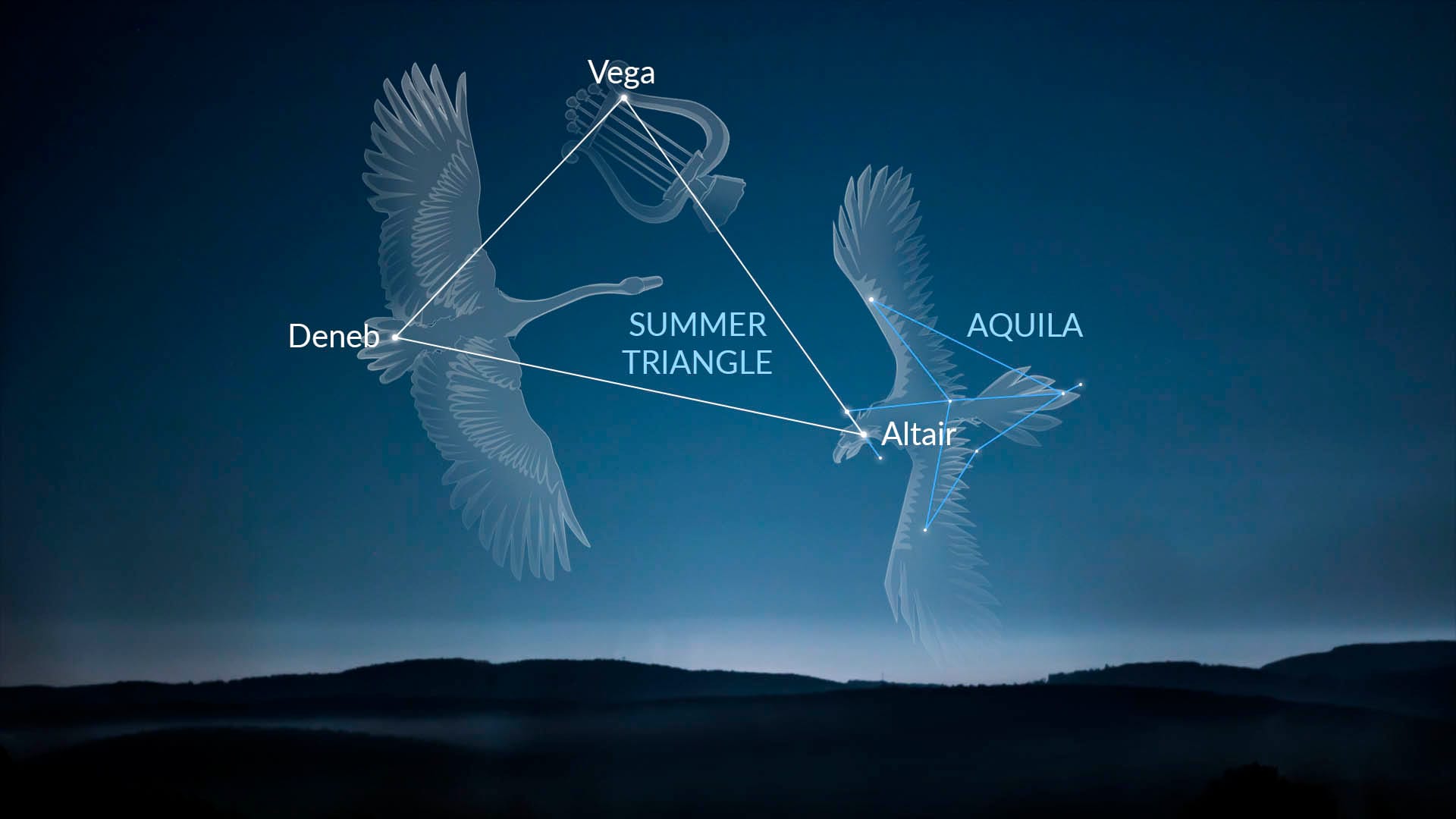
Visualization showing Altair's relation to Deneb (Cygnus) and Vega (Lyra).
Astronomical Chart

Detailed map identifying the main stars: Altair, Alshain, and Tarazed.
Aquila Constellation • Bright Stars
The Eagle • Main Stars Ranked by Apparent MagnitudeAquila is a prominent northern constellation. Its brightest star, Altair, is one of the closest naked-eye stars and forms the Summer Triangle with Vega and Deneb.
| Star | Magnitude | Distance |
|---|---|---|
|
Altair α Aql
Alpha Aquilae • 12th brightest star
|
0 | 0 ly |
|
Tarazed γ Aql
Gamma Aquilae
|
0 | 0 ly |
|
Okab ζ Aql
Zeta Aquilae
|
0 | 0 ly |
|
Theta Aquilae θ Aql
Antinous
|
0 | 0 ly |
|
Delta Aquilae δ Aql
Al Mizan
|
0 | 0 ly |
|
Lambda Aquilae λ Aql
Tail of the Eagle
|
0 | 0 ly |
|
Alshain β Aql
Beta Aquilae
|
0 | 0 ly |
|
Eta Aquilae η Aql
Cepheid variable
|
0 | 0 ly |
|
Epsilon Aquilae ε Aql
Deneb el Okab
|
0 | 0 ly |
|
12 Aquilae
Variable star
|
0 | 0 ly |
Best months to view
Aquila
Aquila, the Eagle, soars along the Milky Way and is home to the bright star Altair — one corner of the famous Summer Triangle. It is best placed in the evening sky from July through October, reaching its highest point around August. Visible across nearly the entire planet (latitudes +90° to –75°), it is a classic late-summer constellation for northern observers and a winter highlight in the south.
Peak Season
July – October. August is ideal when Aquila (and Altair) culminates high in the evening sky as part of the Summer Triangle.
Moon-free nights
Helpful for the fainter stars and Milky Way background, though Altair itself remains easy even under moderate moonlight.
How to find it
Find the Summer Triangle: Vega (Lyra), Deneb (Cygnus) and Altair (Aquila). Altair is the southernmost and brightest star of Aquila — the eagle’s head.
Recommended Tools
View AllLoading recommended tools...
Explore More!
Andromeda

Antlia

Apus

Aquarius

Aquila

Ara

Aries

Auriga

Bootes

Caelum
Camelopardalis

Cancer

Canes Venatici

Canis Major

Canis Minor

Ursa Major (The Big Bear)

Cassiopeia

Centaurus

Cepheus

Cetus (The Whale)

Chamaeleon

Circinus

Columba

Coma Berenices

Corona Australis

Corona Borealis

Corvus

Crater

Crux

Cygnus

Delphinus
Dorado

Draco

Equuleus

Eridanus

Fornax

Gemini

Grus (The Crane)

Hercules

Horologium (The Clock)

Hydra

Hydrus

Indus
Lacerta

Leo

Leo Minor

Lepus (The Hare)

Libra

Lupus (The Wolf)

Lynx

Lyra

Mensa

Microscopium

Monoceros (The Unicorn)

Musca (The Fly)

Norma
Octans

Ophiuchus
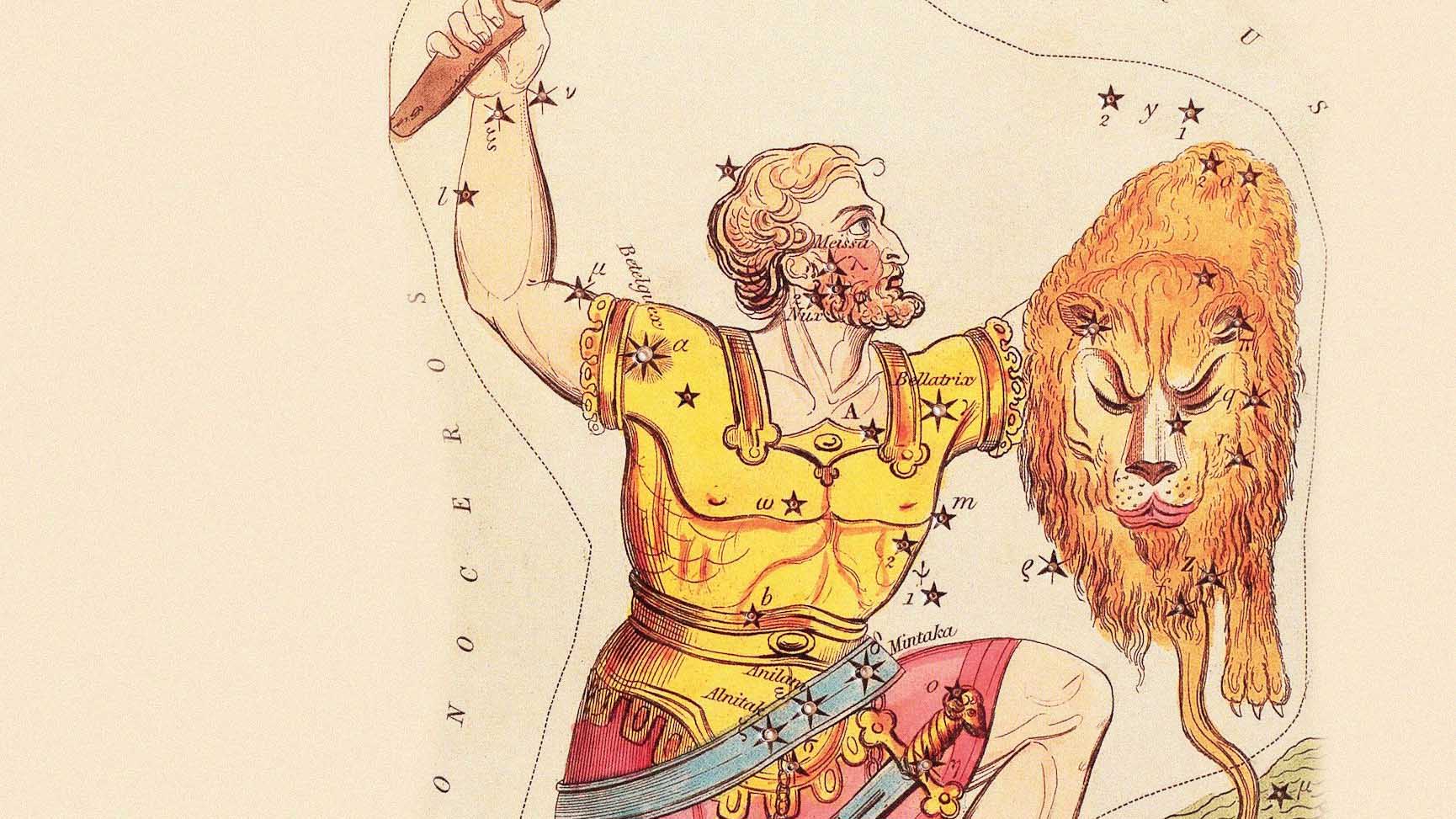
Orion (The Hunter)

Pavo (The Peacock)

Pegasus

Perseus

Phoenix

Pictor

Pisces

Piscis Austrinus

Puppis

Pyxis

Reticulum

Sagitta

Sagittarius

Scorpius

Sculptor

Scutum

Serpens

Sextans

Taurus

Telescopium

Triangulum

Triangulum Australe

Tucana

Ursa Minor

Vela (The Sails)

Virgo

Volans (Flying Fish)

Vulpecula (The Fox)
