
Cloud Cities
VENUS CLOUD CITIES
STRATOSPHERIC HABITAT CONCEPT
The Habitable Altitude
At approximately 50 to 60 km above the surface, Venus offers a unique region where atmospheric pressure and temperature are remarkably similar to Earth’s at sea level. This "Goldilocks Zone" is the target for hypothetical buoyant, lighter-than-air habitats.
At 50km, Earth-like pressure allows for habitats that don't need heavy, pressure-resistant shells.
Standard Earth air (oxygen/nitrogen) acts as a lifting gas in the dense CO₂ atmosphere of Venus.
Cloud Cities
The 1-Bar Haven. At 50km altitude, Venus becomes the most hospitable place in the solar system for human expansion. =
- 🎈 Lifting Gas: Standard air acts as a buoyant force in CO2
- 🌡️ Benign Temp: 25°C average at the 50km ceiling.
- 🛡️ Protection: Atmospheric shielding against solar radiation.
Target Altitude
The Descent Path. Choosing the right altitude is a balance between surviving the heat and achieving mission goals.
- 📍 50 KM: The "Habitable" 1-Bar zone.
- 🔥 12 KM: Critical thermal failure for uncooled probes.
- 📉 0 KM: 92 Bar crushing pressure at the basalt plains.
Lifting Gas
The Air We Breathe. On Venus, Nitrogen and Oxygen are buoyant. Your living room is the engine that keeps the city afloat.
- ⚖️ Density Delta: Air is 34% lighter than CO2
- 🏗️ Lift: 1km sphere = ~200,000 tons of net payload.
- 🛑 Safety: No catastrophic "pop"—pressure is equalized.
The 1-Bar Zone
Perfect Equilibrium. At 50km, the pressure outside matches the pressure inside. No implosions. No explosions. Just stability.
- 🛡️ Hull Integrity: Lightweight composites replace heavy metal.
- 🩹 Safety: "Slow leak" physics allows for easy repairs.
- 🌡️ Thermal: Ambient heat (0-50°C) is ideal for life.
In-Situ Resources
Atmospheric Mining. The Venusian sky is a warehouse of raw materials. From carbon hulls to drinking water, the air provides everything.
- 🏗️ Carbon: Extracted for Graphene 3D-printing.
- 💧 Water: Reclaimed from Sulfuric Acid (H2SO4).
- 🌬️ Air: Pure N2/O2 mix for habitat cycles.
Acid Shield
The Teflon Barrier. To survive theH2SO4 deck, our envelopes use PTFE-laminate technology to repel corrosion and UV radiation.
- 🧪 Inertia: PTFE is immune to concentrated sulfuric acid.
- 🏗️ Strength: Kevlar core handles the city's mass.
- ☀️ UV Rated: Resists solar degradation at 50km.
FUTURE CONCEPTS / AEROSPACE ARCHITECTURE
THE 50KM GOLDILOCKS ZONE
At 50km altitude, the atmosphere has a pressure of ~1 bar—exactly like sea level on Earth—and temperatures range between 20°C and 50°C. In this region, you don't need a pressurized hull; you just need a breathing apparatus to scrub the sulfur out of the air. Because the atmosphere is composed of heavy carbon dioxide, a habitat filled with "breathable air" (nitrogen and oxygen) would act like a lifting gas. The habitat itself would be a buoyant vessel, effectively floating on the dense CO2 sea below.

STRUCTURAL ENGINEERING / BUOYANCY
THE BUOYANCY ADVANTAGE
On Earth, a helium balloon is a toy. On Venus, a balloon filled with breathable air (a 70/30 Nitrogen-Oxygen mix) acts as a powerful lifting force because the surrounding CO2 is so much denser. This leads to an elegant architectural solution: the habitat itself is the buoyancy vessel. You do not need to "hang" your city from a balloon; the structure of the city is the balloon. By controlling the internal temperature and the volume of gas, you can adjust your altitude with ease, turning the entire city into a massive, stable, floating dirigible.

METEOROLOGY / ATMOSPHERIC DYNAMICS
THE SUPER-ROTATION CHALLENGE
The entire atmosphere of Venus rotates significantly faster than the planet itself. At the 50km altitude "habitable zone," wind speeds are constant and brutal. For a floating habitat, this means you are permanently locked into a global, high-speed jet stream. You cannot "anchor" your city in one spot; you are inherently a traveler. The engineering task shifts from station-keeping to streamline navigation: your city must be aerodynamic, minimizing drag to avoid excessive structural stress, while utilizing this constant wind for localized power generation through airborne turbines.
Dive Deep Venus
Venus

Venus Pressure Depth

Structural Crush Depth
Atmospheric Density
Greenhouse Heating

Cooling Energy

Buoyancy Lift

Altitudinal Habitability

Floating Base Stability

Venus Day vs Year
Venus Transit

Sulfuric Acid Corrosion

CO2 to O2 Conversion

Lightning Frequency

Windturbine Power

Comms Through Clouds

Landed Probe Lifespan

Venus Gravity Assist
Titanium vs Steel

Sonic Velocity on Venus

Acid Rain

Cloud Cities

Venus Mysteries
View 3D Model
Sources
LIFTING GAS GAIN
Because Venus's air is so dense, breathable oxygen/nitrogen mix acts as a lifting gas, allowing humans to live "inside the balloon."
HAVOC DESIGNRADIATION SAFETY
The 50km atmosphere provides radiation protection equivalent to Earth's, far superior to the surface of Mars or the Moon.
ATMOSPHERIC SHIELDSOLAR EFFICIENCY
Above the thickest cloud layers, solar panels receive 40% more energy than on Earth, providing limitless power for life support.
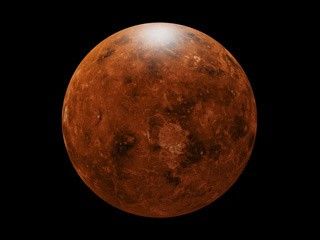
ENERGY ANALYSISThe Veiled Planet

True-color visualization of the dense, reflective cloud deck.
System Core
Heat-sink architecture designed for extreme thermal dissipation.
Aerostat Outpost
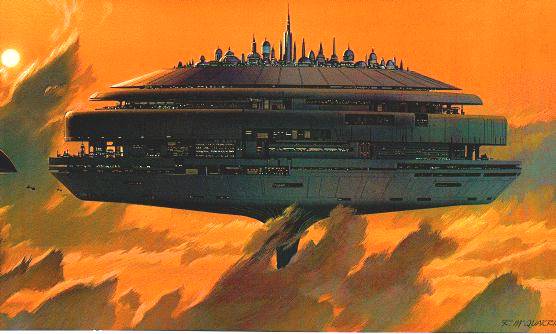
Concept: Floating Cities
Advantage: Gravity is 90% of Earth's
Utility: Long-term human presence