
Acid Rain
VENUSIAN ACID RAIN
ATMOSPHERIC SULPHURIC DYNAMICS
Sulphuric Acid Clouds
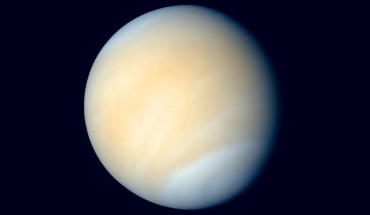
Venus is shrouded in dense, reflective clouds composed primarily of concentrated sulphuric acid. These clouds form at altitudes of 50–70 km, where temperatures are more Earth-like before the rain begins its descent.
The acid rains evaporate long before reaching the surface, creating a permanent, toxic haze.
The surface remains bone-dry and searing hot due to a runaway greenhouse effect triggered by the atmosphere.
Acid Virga
Corrosive Descent. Venusian rain is a concentrated sulfuric acid that evaporates before it ever touches the scorching ground.
- 🧪 Concentration: 75-96% pure Sulfuric Acid.
- ☁️ Altitude: Rain occurs between 48km and 58km.
- 🔥 Fate: Flash-evaporates at 30km due to 300°C+ heat.
Chemical Signature
The Sulfur Veil. Driven by solar photolysis, the interaction of Sulfur Dioxide and UV light creates a planet-wide acid shroud.
- 🌫️ Main Body: 96.5% Carbon Dioxide (CO2).
- ☀️ Reaction: UV light transforms SO2 into H2SO4.
- 🎨 Visual: High albedo creates a brilliant yellow reflection.
Extreme Corrosion
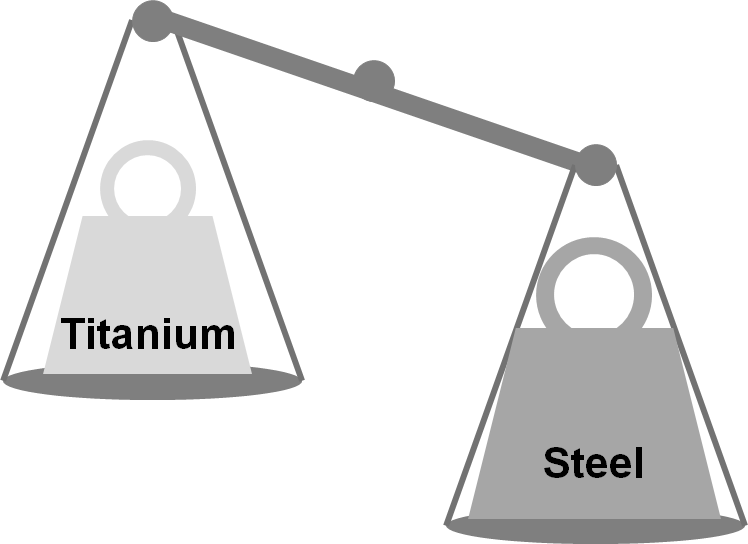
The Chemical War. Without the protective oxide of Titanium or the noble neutrality of Gold, a probe is dissolved by the clouds before it can even see the surface.
- ✨ Gold Plating: Zero-reactivity for all external sensors.
- 💎 Sapphire: Acid-proof optics for visual data.
- 🚧 Failure: Standard steel dissolves in < 15 minutes.
Acid Warning
Critical Concentration. The 95% H2SO4 deck is a molecular shredder. Only Noble metals and Sapphire optics can maintain signal integrity.
- 🛑 Steel Failure: Structural bypass in < 10 mins.
- 🛡️ Shielding: Titanium-Gold hybrid required.
- 🛰️ Optics: Synthetic Sapphire is the only clear path.
Cloud Deck
The Opaque Layer. Between 45km and 70km, H2SO4 droplets create a total optical blackout, requiring radar-guided descent.
- 🌫️ Visibility: < 1.0 km (Critical Scattering).
- 🧪 Acid Type: Concentrated Sulfuric (H2SO4).
- 📏 Altitude: 25 km thick blanket.
PLANETARY METEOROLOGY / VIRGA
THE RAIN THAT EVAPORATES
In the upper atmosphere (about 50–60 km altitude), the temperature is cool enough for sulfuric acid droplets to condense into clouds. As these droplets fall due to gravity, they encounter the ever-increasing temperature gradient of the lower atmosphere. By the time they reach an altitude of roughly 25 kilometers, the ambient temperature exceeds the boiling point of the acid. The droplets completely evaporate back into gas long before they reach the surface. This phenomenon is known as Virga—precipitation that evaporates before it hits the ground.

GEOCHEMISTRY / ATMOSPHERIC INTERACTION
THE SURFACE WEATHERING CYCLE
Since it doesn't rain liquid acid, what happens to the sulfur? It participates in thermochemical weathering. The hot, dense atmosphere acts as a chemical reactor, where sulfur dioxide gas reacts with calcium-bearing minerals in the basaltic surface rocks to produce anhydrite (CaSO4) and carbon monoxide. This is a slow, "dry" corrosion process that effectively "bakes" the surface, constantly changing the mineralogy of the crust. Your lander is not just sitting in a hot, pressurized room; it is sitting in an active chemical kiln.
Dive Deep Venus
Venus

Venus Pressure Depth

Structural Crush Depth
Atmospheric Density

Greenhouse Heating

Cooling Energy

Buoyancy Lift

Altitudinal Habitability

Floating Base Stability

Venus Day vs Year
Venus Transit

Sulfuric Acid Corrosion

CO2 to O2 Conversion

Lightning Frequency

Windturbine Power

Comms Through Clouds

Landed Probe Lifespan

Venus Gravity Assist
Titanium vs Steel

Sonic Velocity on Venus

Acid Rain

Cloud Cities

Venus Mysteries
View 3D Model
Sources
THE VIRGA EFFECT
Rain falls from the upper clouds but vaporizes at ~30km altitude due to temperatures exceeding 300°C.
NASA CLOUD DATASULFUR CYCLE
Venus's "water cycle" is actually a sulfur cycle, where SO2 is converted to acid and recycled back into gas.
ESA CHEMISTRYCORROSIVE MIST
Even without direct "rain" on the surface, the lower atmosphere contains trace acidic vapors that affect metal stability.
SURFACE CHEMISTRY