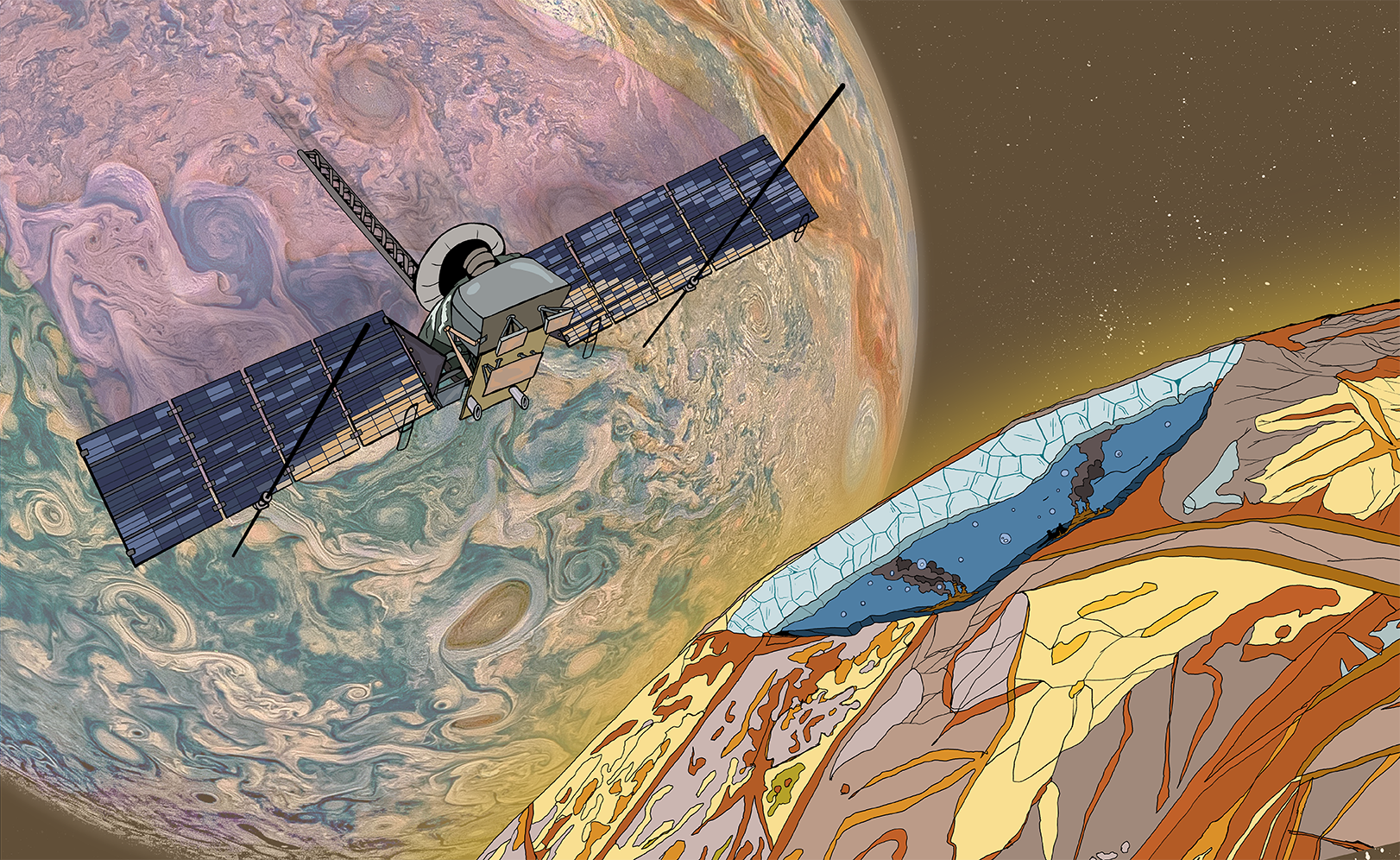
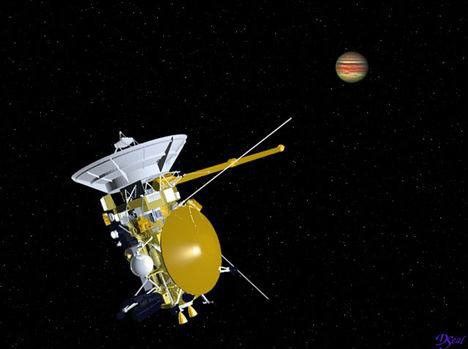
Conducting science at Europa is fundamentally a game of speed and protection. Because the moon resides deep within Jupiter’s radiation belts, spacecraft cannot remain in a stable, long-term orbit around it. Instead, we utilize a "flyby" strategy—executing a series of precise, high-velocity passes. These flybys are timed to coincide with specific scientific goals, such as gravity-field mapping, surface imaging, or radar sounding. Each pass is a delicate ballet of orbital mechanics, leveraging gravitational assists from other Galilean moons (Ganymede, Callisto, and Io) to nudge the spacecraft into the perfect trajectory for a close encounter with Europa's surface.
A flyby is a high-stakes, time-compressed event. At closest approach, the spacecraft may be traveling at several kilometers per second, leaving only minutes to capture data. Sequencing—the automated scheduling of instrument operations—is critical. We must prioritize high-bandwidth instruments like cameras and radar sounders during the narrow window when the target surface feature is centered in the field of view. Simultaneously, "housekeeping" instruments like magnetometers and particle detectors must remain active to characterize the local environment. This requires an onboard sequencer that can autonomously switch instrument modes, manage data buffer allocation, and ensure all sensors are synced to the precise flyby timestamp.
Capturing data is only half the battle; returning it to Earth is the real constraint. During a high-speed Europa flyby, the spacecraft gathers terabytes of high-resolution imagery and radar data, yet the communication link to Earth—often limited by the Deep Space Network's (DSN) bandwidth and the inverse-square law—can take days or even weeks to download a single encounter's worth of data. To manage this, we employ onboard data compression and prioritization algorithms. "Lossless" compression is used for critical telemetry and low-res imaging, while "lossy" or selective compression is applied to massive high-res data sets. We also use autonomous systems to rank scientific packets by importance, ensuring the most vital data (e.g., proof of subsurface activity or surface ice composition) is sent during the first available DSN downlink window.
During a flyby, the spacecraft is effectively a high-speed projectile trying to photograph a moving target. At ranges of less than 100 kilometers and velocities exceeding 5 kilometers per second, even a millisecond of "jitter" results in significant motion blur. To achieve sub-arcsecond pointing accuracy, we employ high-torque reaction wheels combined with optical star-trackers that provide continuous attitude updates. During the flyby, the spacecraft must execute a "pitch-over" maneuver—rotating precisely to keep the sensors trained on the surface as Europa passes underneath—while simultaneously adjusting for the rotational speed of the target itself. This demands advanced feed-forward control algorithms that calculate the required motion profile long before the flyby commences.
As spacecraft operations become more ambitious, we move beyond pre-programmed sequences to "Autonomous Hazard Avoidance." During a low-altitude flyby, onboard computer vision systems process image streams in real-time to generate a 3D elevation map of the terrain. If the system detects hazardous features—such as jagged cryovolcanic spires, deep crevasses, or regions of high surface roughness that threaten lander stability—it can autonomously update its pointing or trajectory to "steer" the scientific focus toward safer or more geologically interesting sites. This capability reduces reliance on ground-based commanding, which is hindered by the long signal-delay times across the solar system.
Not every flyby is created equal. Because spacecraft resources—power, data storage, and thermal capacity—are limited, we must prioritize specific "Science Themes" for each encounter. A gravity-focused flyby will optimize the payload for radio science (measuring Doppler shifts in the carrier signal to map subsurface density), while a surface-composition flyby will prioritize infrared spectrometers and high-resolution color imagers. This "Payload Selection" is governed by a long-term campaign plan that ensures a balanced distribution of geophysical, geochemical, and environmental data over the course of the entire mission, rather than repeating redundant measurements during every pass.
Data received from a flyby is raw, compressed, and often distorted by the spacecraft's motion and the Jovian environment. The "Post-Flyby" phase involves rigorous validation pipelines. First, raw packets are reconstructed and time-stamped. Next, "radiometric calibration" corrects for sensor noise and temperature-induced artifacts. For imaging, this involves "orthorectification"—projecting raw pixel data onto a high-fidelity topographical model of Europa to account for terrain distortion. Finally, cross-instrument validation occurs: comparing radar sounder depth-profiles with gravity-derived density maps to ensure the scientific interpretations are consistent. Only after this rigorous cross-verification is the data ready for final release to the global scientific community.
Future flyby missions will shift from rigid, ground-commanded sequences to fully autonomous "Event-Driven" architectures. Rather than following a strict timeline, AI-enabled spacecraft will act as independent explorers, using real-time machine learning to detect transient phenomena—such as plume activity, surface thermal anomalies, or magnetic disturbances—and dynamically redirect their sensor suites to capture high-priority data before the flyby window closes. This transition leverages "Onboard Science Analysis" to summarize data locally, effectively turning the spacecraft into a self-directed laboratory that maximizes discoveries while minimizing the constraints imposed by light-speed communication delays.
A successful flyby is not merely a trajectory; it is a synchronized mission lifecycle. It begins long before the encounter with orbital phasing, evolves through the high-precision instrument sequencing at perijove, relies on robust fault protection during the high-radiation transit, and concludes with the systematic downlink and validation of scientific data. By treating these components as an integrated, feedback-driven loop, mission designers can push the boundaries of what is possible, allowing a single spacecraft to perform dozens of unique, high-value encounters over years of service. This holistic approach ensures that each flyby contributes to a mosaic of data that eventually reveals the secrets of Europa's subsurface ocean.