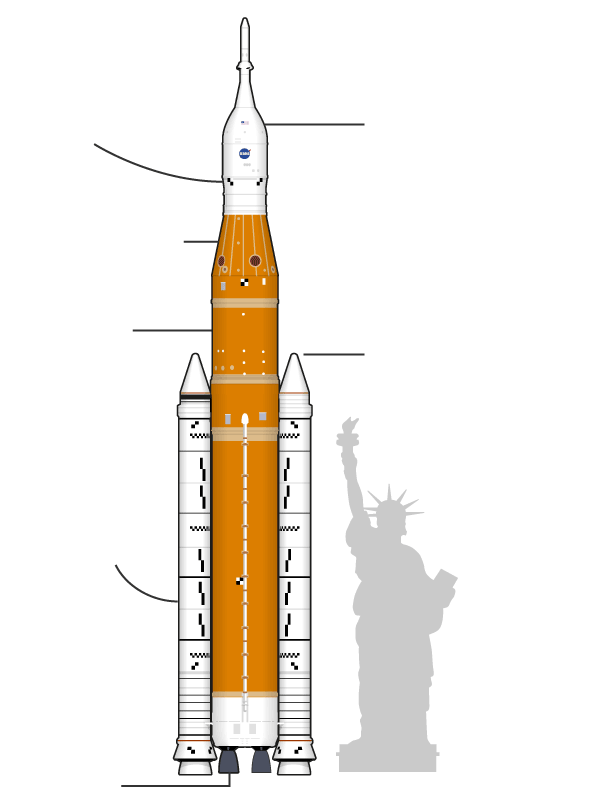
Artemis 2
ARTEMIS II TELEMETRY
CREWED LUNAR FLYBY PROFILE
Hybrid Free Return
Artemis II is NASA's first crewed mission to the Moon in over half a century. Utilizing a lunar free-return trajectory, the Orion capsule will harness lunar gravity to naturally swing back home to Earth without requiring a large engine burn.
Testing life support systems in high Earth orbit before initiating the trans-lunar injection phase.
Sailing past the far side of the Moon, pushing astronauts farther into deep space than ever before.
Lunar Sync
Mission Mapping. Monitoring the Cislunar Readiness Buffer to track the Artemis II trajectory interface.
- 👨🚀 Crew: 4 Astronaut Bio-Sync.
- 🛰️ Vehicle: Orion / SLS Heavy Buffer.
- 🔄 Path: Free-Return Trajectory Protocol.
Crew Sync
Human Mapping. Monitoring the Bio-Sync Buffer to track the human interface of the Artemis II mission.
- 🇺🇸 NASA: Wiseman, Glover, Koch.
- 🇨🇦 CSA: Jeremy Hansen Sync.
- 🛡️ Legacy: First Deep-Space Crew since 1972.
Path Sync
Trajectory Mapping. Monitoring the Free-Return Buffer to track the gravitational interface of the lunar swing.
- 🔄 Recoil: Natural Gravity Pivot Sync.
- 🛰️ Swing: 10,300 km Far Side Buffer.
- 🛡️ Safety: Passive Return Protocol.
Heavy Sync
Vehicle Mapping. Monitoring the Thrust-to-Mass Buffer to track the SLS and Orion flight interface.
- 🔥 Thrust: 8.8 Million Lbs Sync.
- 🛡️ Shield: 2,800°C Thermal Buffer.
- 🛰️ Module: Long-Duration Life Protocol.
The Mission Crew

Wiseman, Glover, Koch, and Hansen: The pioneers of the Artemis generation.
Launch Walkout
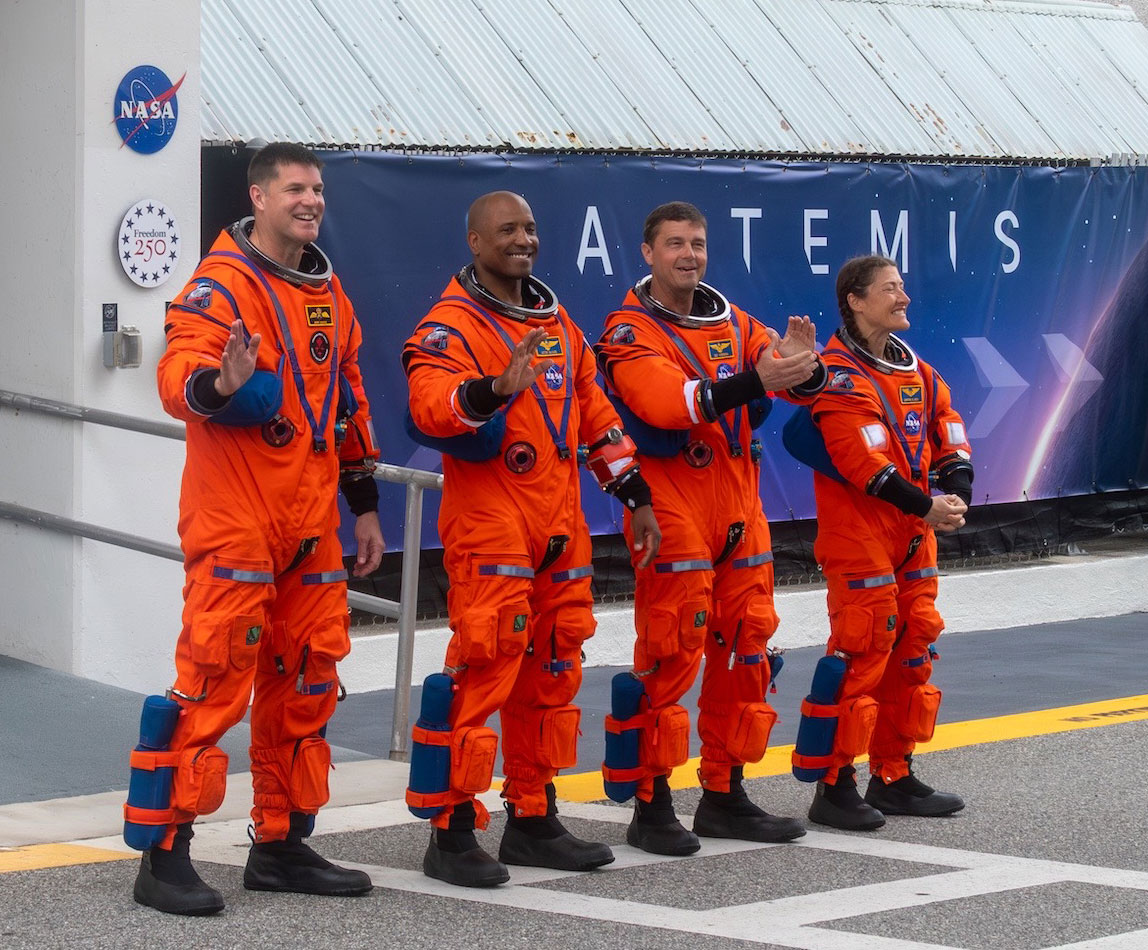
Astrononats departing for the launch pad in the Orion Crew Survival System suits.
Operational Readiness

Final system checks and crew briefings before orbital insertion.
The Heavy Lifter
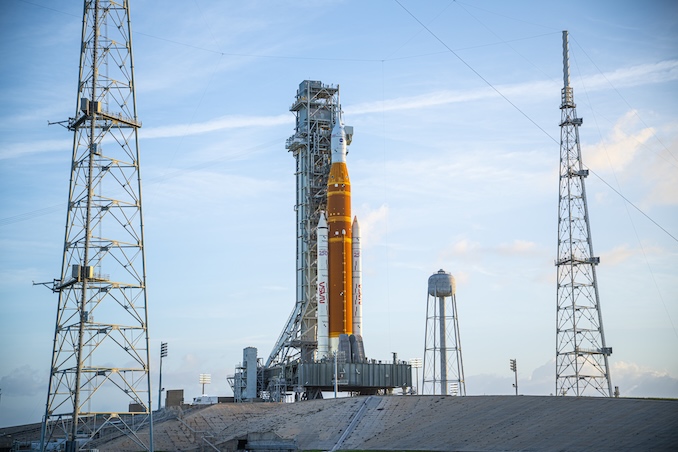
The SLS rocket standing at Launch Complex 39B at Kennedy Space Center.
Ascent Profile

Night-view of the launch infrastructure preparing for the 10-day mission.
Mission Vision
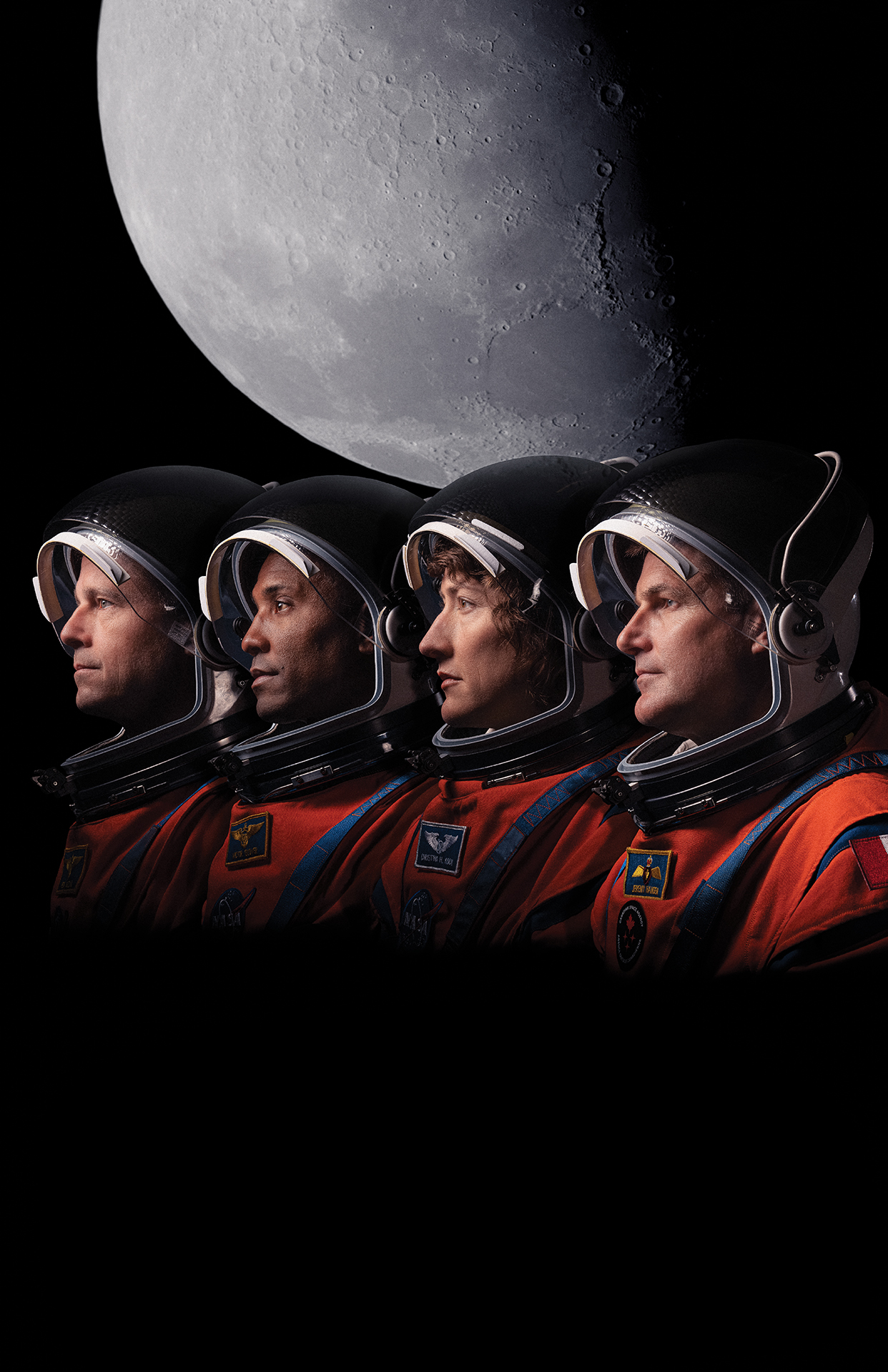
A legacy mission: Preparing the path for the first woman and first person of color on the Moon.
CREWED SPACEFLIGHT / LUNAR EXPLORATION
THE LUNAR FLYBY
Artemis II is a crewed lunar flyby mission. The crew of four will travel aboard the Orion spacecraft, propelled by the Space Launch System (SLS). The primary objective is to test the spacecraft's life-support systems, communications, and navigation in deep space with humans on board, paving the way for the landing mission, Artemis III.

LUNAR ARCHITECTURE / DEEP SPACE LOGISTICS
THE GATEWAY & SURFACE OPS
The strategy moves beyond "flags and footprints" by utilizing the Lunar Gateway—a modular space station in a Near-Rectilinear Halo Orbit (NRHO). This station acts as a communications relay, science laboratory, and staging point for expeditions to the lunar south pole. On the surface, the focus is on utilizing In-Situ Resource Utilization (ISRU) to extract water ice from permanently shadowed regions, which can be processed into liquid oxygen and hydrogen for fuel.

CREWED SPACEFLIGHT / LUNAR LANDING
THE LUNAR RETURN
Artemis III will utilize the Human Landing System (HLS)—a variant of SpaceX's Starship—to transport crew from lunar orbit to the surface. The mission will target the lunar South Pole, a region chosen for its potential water ice deposits. Unlike the short-duration Apollo missions, Artemis III is the first step toward building a permanent infrastructure.

LOGISTICS / ORBITAL MECHANICS
THE REFUELING CHAIN
Unlike Apollo, which carried all its fuel from Earth, Artemis III relies on a complex chain of orbital propellant transfers. Before the Starship HLS can land on the Moon, it must be topped off with fuel in Earth orbit via "tanker" versions of the vehicle. This enables the HLS to complete the high-energy maneuver required to reach the Moon and successfully land.

Recommended Tools
View AllLoading recommended tools...
- Missions -

Artemis II
James Webb Telescope
Mars Perseverance
Voyager Missions

Parker Solar Probe

Cassini-Huygens

Europa Clipper
New Horizons

Hubble Telescope

Chandrayaan-3
Sources
MISSION PATHWAY
Instead of orbiting the Moon, Artemis II will use a **Hybrid Free-Return Trajectory**. Earth's gravity will naturally pull the spacecraft back home after it swings around the lunar far side.
MISSION MAPTHE CREW
The mission features a historic crew: **Reid Wiseman**, **Victor Glover** (first Black astronaut on a lunar mission), **Christina Koch** (first woman), and **Jeremy Hansen** (first Canadian).
CREW PROFILESSLS POWER
Launching on the **Space Launch System (SLS) Block 1**, the rocket provides **8.8 million pounds of thrust** to propel Orion out of Earth's deep gravity well.
ROCKET SPECSThe Artemis Program Logo

The Artemis logo is a visual representation of NASA's mission to return humans to the Moon and eventually reach Mars. The design features a bold, stylized "A" that symbolizes an arrowhead from Artemis' quiver, representing strength and focus. The blue crescent represents the Earth, showing where we come from, while the grey arc symbolizes the Moon—our immediate destination. The trajectory pointing upward through the "A" signifies the path to Mars, highlighting that the Moon is a stepping stone to the Red Planet. The color palette of "Artemis Blue," "Horizon Tan," and "Lunar Silver" pays homage to the history of the Apollo missions while looking forward to a new era of space exploration.