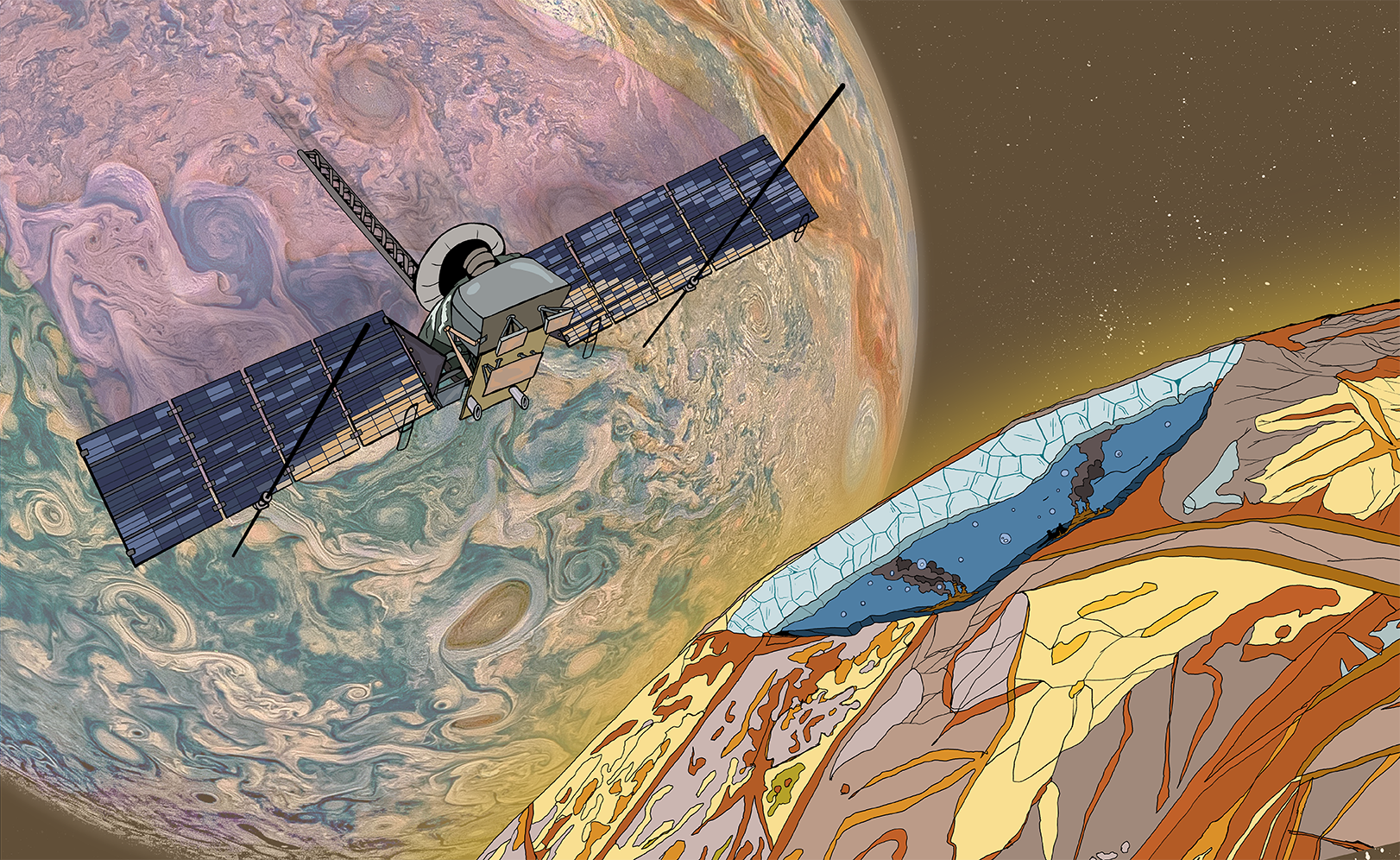
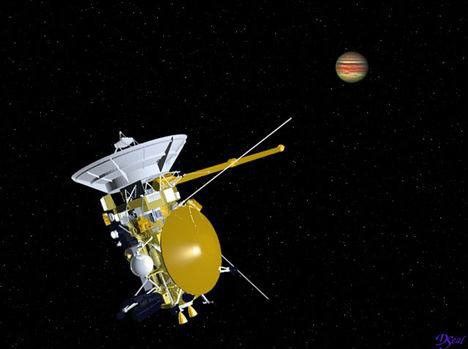
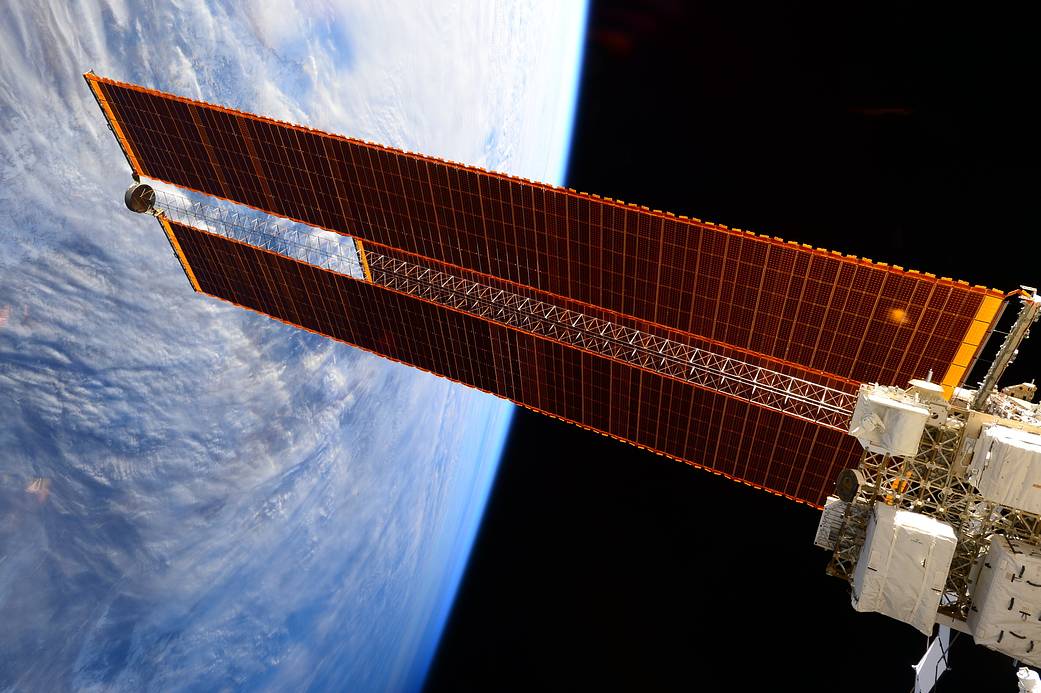
The Europa Clipper spacecraft is designed as a modular, high-resilience system. Its structural core, the "Vault," is the primary shield against Jupiter's intense radiation belts, housing all sensitive flight computers and electronic systems within thick aluminum-titanium walls. Outside this protective core, the spacecraft features expansive solar arrays—the largest ever flown on a planetary mission—necessary to capture enough sunlight at 5.2 AU to power high-bandwidth instruments and heavy-duty thermal management systems. This design architecture balances mass, radiation protection, and power generation to ensure functionality throughout the extended flyby mission.
Europa Clipper carries nine highly sensitive, complementary instruments engineered to work in concert during each close flyby. This suite provides a multi-layered view of the moon, from sub-surface crustal mapping to atmospheric sampling. By operating these instruments simultaneously, the spacecraft gathers a cohesive dataset that connects geophysical measurements, such as ice-shell thickness, with direct chemical analysis of surface materials and potential plume ejecta.
The Europa Clipper mission does not orbit Europa; it orbits Jupiter. By performing 49 targeted flybys of Europa, the spacecraft maintains a highly elliptical trajectory that keeps it in "low-radiation zones" for most of its mission. Each flyby is meticulously calculated to sample different regions of the moon—ranging from the geologically active southern hemisphere to the ancient, cratered terrains of the north. This resonant gravity-assist tour allows the spacecraft to remain functional for years, building up a global map of Europa’s surface, interior, and potential plume environments.
Communicating with the Europa Clipper requires high-gain antenna technology capable of beaming data back across 750 million kilometers. We rely on NASA's Deep Space Network (DSN)—a global array of massive 34-meter and 70-meter antennas—to maintain a persistent link. Because data rates drop significantly with distance (inverse-square law), the spacecraft employs high-efficiency X-band and Ka-band transponders. We also utilize a robust "Store and Forward" architecture: the spacecraft captures scientific data during flybys, stores it in high-capacity solid-state recorders, and then systematically downlinks it to the DSN when geometry and power budgets are optimal.
Maintaining precision in the Jovian radiation environment requires more than just mechanical reaction wheels; it demands a sophisticated, autonomous attitude control system (ACS). The spacecraft utilizes star-trackers to calculate its orientation in 3D space, which are then cross-referenced with inertial measurement units (IMUs) to maintain stability even during intense particle strikes. For flybys, the ACS is programmed with autonomous "pitch-over" maneuvers—ensuring that the spacecraft's sensor suite remains locked onto Europa’s surface features while moving at several kilometers per second. This autonomy is critical because the signal delay between Earth and Jupiter (up to 50 minutes round-trip) renders real-time joystick control impossible.
The Europa Clipper operates in a brutal thermal regime. As it orbits Jupiter, the spacecraft transitions between intense solar heating and deep-space freezing, all while generating its own internal heat from electronics and power systems. To stabilize this, we employ a "Thermal Control Subsystem" (TCS). This includes active elements like heat pipes and pumped-fluid loops that move waste heat from the central vault to radiators, as well as passive elements like multi-layer insulation (MLI) blankets—the gold-colored shielding that minimizes radiative heat loss. These systems ensure that the critical internal electronics remain within their strictly regulated operating range, preventing catastrophic thermal stress during the intense flyby encounters.
Operating a spacecraft 750 million kilometers from the Sun requires an unprecedented power strategy. Unlike missions to the inner solar system, Europa Clipper cannot rely on simple photovoltaic cells. The spacecraft features two massive solar arrays, each measuring over 14 meters in length, providing a total of 100 square meters of solar-collecting area. These arrays are engineered with high-efficiency multi-junction solar cells that can generate sufficient power even under the dim illumination of the Jovian system (only 4% of the intensity compared to Earth orbit). This power is fed into a robust battery management system, ensuring a continuous energy supply during the eclipses when the spacecraft passes into Jupiter's shadow.
Inside the spacecraft's radiation vault, the computing architecture is designed for ultimate resilience. The system utilizes redundant radiation-hardened processors to execute complex autonomous flight and instrument-sequencing tasks. Because radiation strikes can cause "bit flips" (Single Event Upsets) in memory, the storage system employs advanced Error Correction Code (ECC) algorithms and memory shielding to preserve data integrity. With terabytes of high-resolution imagery and radar data generated per flyby, the onboard Solid State Recorder (SSR) acts as a circular buffer, prioritizing and safeguarding the most valuable science packets until they can be beamed back to the Deep Space Network.
The Europa Clipper is more than the sum of its parts; it is an integrated masterpiece of interplanetary engineering. By balancing the "radiation vault" protection against high-efficiency power generation, and coupling autonomous navigation with a high-bandwidth data tether, the spacecraft achieves what was once impossible: a multi-year, multi-flyby exploration of a potentially habitable ocean world. This holistic architecture allows for the iterative collection of data—where each flyby informs the next—transforming raw bits from the Jovian system into our most profound understanding yet of Europa’s subsurface dynamics.