HOME
MISSION
ABOUT
CONTACT family_star
SURFACE EXPLORATION

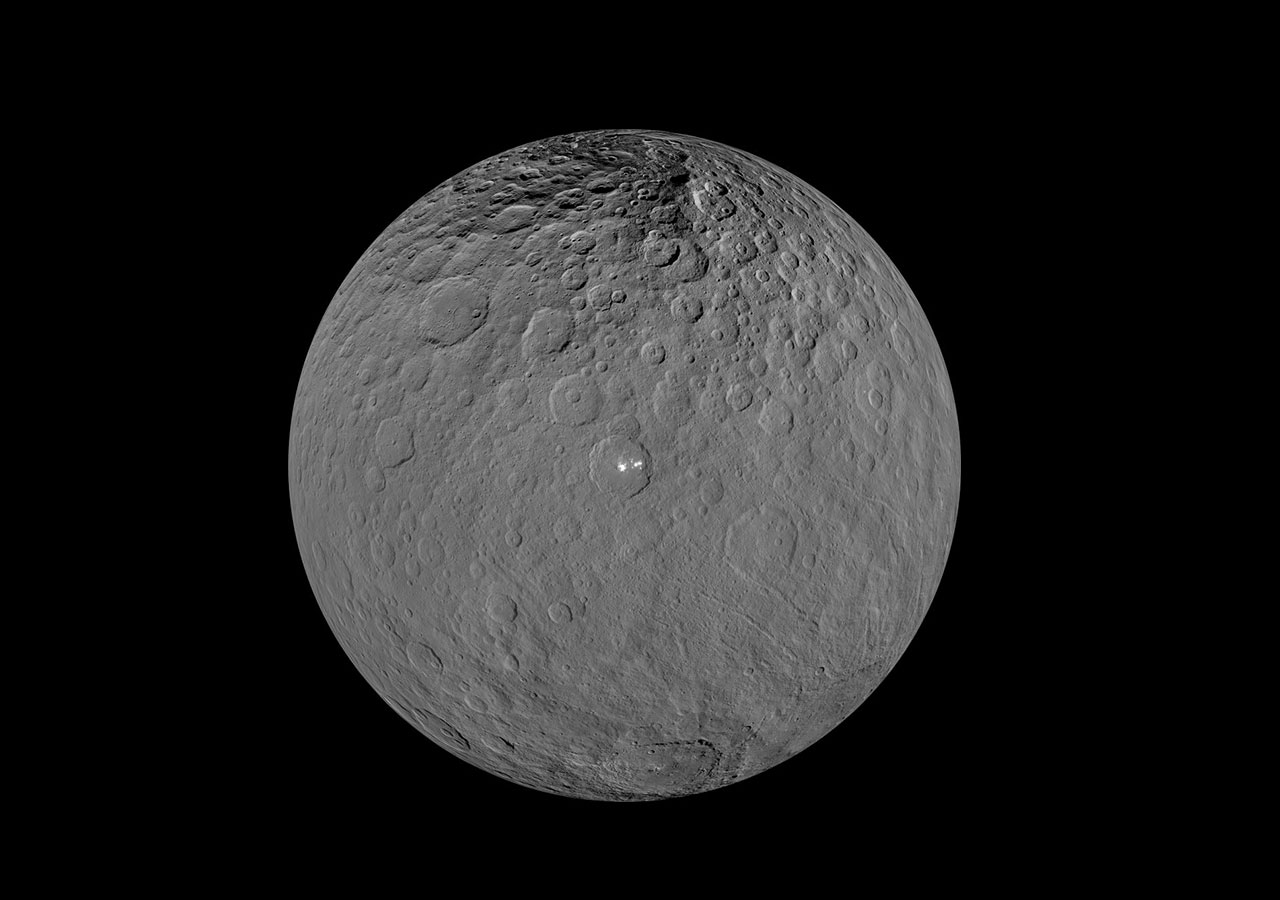
Ceres Surface Features

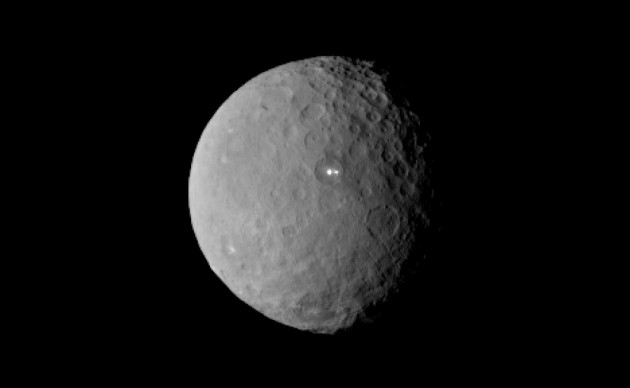
From its heavily cratered plains to mysterious bright spots and towering cryovolcanoes, the surface of Ceres tells a rich geological story. NASA's Dawn mission gave us our first close-up look at this dwarf planet, revealing a world shaped by impacts, ice, and subsurface activity. This series explores the fascinating terrain, composition, and dynamic processes visible on Ceres' surface.

01

Cratered Terrain

Ancient impact history and surface evolution.

02

Bright Deposits

Salt-rich spots and recent activity.

SURFACE DATA

Key Characteristics

Composition

Ice, clays, carbonates & organics

Topography

Cryovolcanoes & craters

Activity

Brine exposure & vapor release

RESEARCH NOTE

Ceres' surface is a window into the dwarf planet's interior, showing signs of both ancient and relatively recent geological processes.

Cratered Landscapes

Ceres’ surface is dominated by impact craters of all sizes, telling the story of billions of years of bombardment in the asteroid belt. Unlike many other bodies, many of Ceres’ craters show signs of relaxation and smoothing—likely due to the presence of ice and salts just beneath the surface. Large craters like Kerwan and Yalode reveal complex central peaks and fractured floors, while smaller ones preserve sharp rims. This mix of ancient and modified craters gives us clues about the dwarf planet’s icy composition and internal heat history.

Impact History Billions of years recorded
Floor Relaxation Ice & salt influence
Key Craters Kerwan, Yalode & Occator

The Mysterious Bright Spots

One of the most striking features on Ceres is the collection of highly reflective bright spots, especially prominent in Occator Crater. These spots are primarily composed of sodium carbonate and other salts left behind when briny water reached the surface and evaporated. The brightest patches, including Cerealia Facula, suggest relatively recent geological activity. These features not only make Ceres visually unique but also serve as direct evidence of subsurface volatiles interacting with the surface.

Occator Crater Most prominent bright deposits
Salt Composition Sodium carbonates & chlorides
Geological Youth Recent brine exposure

Cryovolcanoes & Domes

Ahuna Mons stands as the most dramatic feature on Ceres — a lonely, steep-sided mountain rising 4 kilometers high. It is a cryovolcano formed by the slow eruption of viscous, icy, and salty material from the interior. Unlike typical volcanoes on Earth, these "ice volcanoes" reshape the surface through cryovolcanism. The presence of such features indicates that Ceres still has some internal heat and mobile material beneath its crust, making its surface far more dynamic than it first appears.

Ahuna Mons Tallest cryovolcano on Ceres
Formation Process Briny mud extrusion
Surface Implications Ongoing geological activity

Surface Composition

Ceres' surface is a fascinating mix of water ice, phyllosilicates (clays), carbonates, and organic compounds. The dark, carbon-rich background material is punctuated by brighter salt deposits. This composition suggests Ceres formed in a region where water and rock mixed extensively, and later processes brought materials from the interior to the surface. The presence of ammonia-bearing minerals hints at formation conditions farther out in the solar system before Ceres found its home in the asteroid belt.

Main Materials Ice + clays + carbonates
Organics Abundant carbon compounds
Ammonia Clues Outer solar system origins

Topography & Elevation

Ceres displays a surprisingly varied topography for a small world. While mostly quite flat compared to larger planets, it features significant local relief including deep craters, elevated crater rims, and the prominent cryovolcano Ahuna Mons. The overall surface has a relatively uniform gravity field, but high-resolution mapping from Dawn revealed a mix of relaxed ancient basins and sharper, younger features. This topography reflects the balance between impacts and viscous relaxation driven by the ice-rich subsurface.

Elevation Range Moderate relief features
Relaxed Craters Ice-driven smoothing
Ahuna Mons 4 km high cryovolcano

Future Surface Exploration

Ceres offers one of the most accessible destinations for detailed surface study in the outer solar system. Future missions could include landers that analyze the bright salt deposits up close, rovers to traverse crater floors, or even sample return concepts targeting organic-rich areas. High-resolution mapping and in-situ analysis of cryovolcanic material would greatly enhance our understanding of this dwarf planet’s evolution and its potential as a window into the early solar system. Ceres continues to surprise us and remains a high-priority target for planetary scientists.

Mission Concepts Landers & sample return
Scientific Goals In-situ composition analysis
Legacy Understanding icy worlds

Ceres Surface Illustration

Ceres Surface Quiz

Test your knowledge about the landscape and geology of Ceres

1. What are the famous "bright spots" on Ceres made of? +

They are primarily composed of sodium carbonate salts left behind by evaporating briny water.

2. Is the surface of Ceres considered "wet" or "dry"? +

It is considered "wet," containing abundant water-bearing minerals and subsurface ice.

3. What is the name of the tall, pyramidal mountain on Ceres? +

The mountain is called Ahuna Mons, a cryovolcanic feature standing about 5 km tall.

4. Does Ceres have a thick atmosphere? +

No, Ceres lacks a significant atmosphere, which is why surface ice tends to sublimate away.

5. What process creates the fine, powdery regolith on Ceres? +

It is caused by "impact gardening," where constant small meteorite bombardments pulverize the surface.

6. Are there large, multi-hundred-kilometer craters on Ceres? +

Surprisingly, Ceres lacks extremely large craters, suggesting its crust may have relaxed over time.

7. What is the typical surface temperature during the day? +

Daytime temperatures vary, but can reach around -30°C to -93°C near the equator.

8. What mission captured the high-resolution surface data of Ceres? +

NASA's Dawn mission, which orbited Ceres from 2015 to 2018.

9. Does the surface show evidence of cryovolcanism? +

Yes, features like Ahuna Mons and salt deposits suggest past or ongoing cryovolcanic activity.

10. What is the approximate albedo (reflectivity) of Ceres? +

It is quite dark, with a geometric albedo of about 0.094, reflecting only 9% of sunlight.
CERES

Ceres Habitability

SCIENCE / 2026

CERES HABITABILITY

DID IT ONCE SUPPORT LIFE?

LEARN MORE
Ceres Surface

GEOLOGY / 2026

COMPLEX SURFACE

STEEP SLOPES & FRACTURES.

LEARN MORE
Ceres Water

ASTRONOMY / 2026

WATER ON CERES

OCEANS & BRIGHT SPOTS.

LEARN MORE
Dawn Mission

MISSION / 2026

DAWN LEGACY

NEW FINDINGS FROM ORBIT.

LEARN MORE
Future Missions

EXPLORATION / 2026

NEXT MISSIONS TO CERES

SAMPLE RETURN & BEYOND.

LEARN MORE

Try Tools!

Written By

Author

Senior Astronomy Consultant

Binul Nethaka

Give The Best Information Free, Fast, Easy and Clear experience for worldwide Information hungers!