HOME
MISSION
ABOUT
CONTACT family_star
ASTROBIOLOGY FRONTIER

Ceres Habitability

Tucked in the asteroid belt between Mars and Jupiter, Ceres stands as the largest object in that region and one of the most intriguing worlds in our solar system. With vast reserves of water ice and signs of past geological activity, this dwarf planet invites us to explore whether it could have once harbored conditions suitable for life. This series examines the astronomical evidence for Ceres' habitability potential, drawing from Dawn mission data and ongoing research.

01

Subsurface Brines

Investigating evidence of liquid water reservoirs beneath the icy crust.

02

Organic Chemistry

Exploring detected carbon compounds and their implications for prebiotic environments.

CELESTIAL DATA

Key Indicators

Water Inventory

Up to 25-50% water by volume

Geological Activity

Cryovolcanic features like Ahuna Mons

Organic Signatures

Carbon-rich compounds detected

RESEARCH NOTE

While Ceres is cold today, its past may have included long-lived liquid water and chemical energy sources that could support microbial habitability.

Subsurface Reservoirs

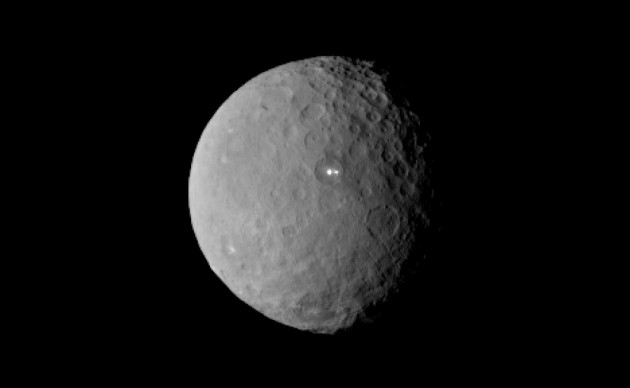
One of the most exciting discoveries about Ceres is the strong evidence for liquid water beneath its surface. Data from NASA's Dawn spacecraft revealed that this dwarf planet holds more water than any other body in the inner solar system besides Earth—potentially up to 25-50% water by volume in the form of ice and brines. Bright salt deposits in craters like Occator suggest that salty water (brines) has migrated from deeper layers to the surface in geologically recent times.

Brine Evidence Cryovolcanic activity
Water Inventory Ice-rich mantle
Habitability Clue Potential liquid pockets

Organic Molecules & Chemistry

Beyond water, Ceres holds another key piece of the habitability puzzle: organic compounds. The Dawn mission detected carbon-rich molecules on the surface, particularly in the vicinity of craters. These organics, combined with abundant ammonia-bearing minerals and hydrated clays, suggest that complex chemistry has been active on this dwarf planet. In the past, interactions between rock, water, and heat could have created environments rich in the building blocks of life—similar to hydrothermal systems we see on Earth.

Carbon Signatures Widespread organic detection
Mineral Diversity Clays and carbonates
Prebiotic Potential Hydrothermal-like processes

Geological Activity & Cryovolcanoes

Ceres isn't a frozen, dead world—it's geologically alive in its own icy way. The standout feature is Ahuna Mons, a massive cryovolcano that rises about 4 kilometers high. This dome was likely formed by the slow extrusion of salty, muddy brines from the interior. Such activity shows that heat and fluids have moved through Ceres over long periods, potentially creating localized habitable niches where liquid water, minerals, and organics could mix. Even today, occasional releases of water vapor hint at ongoing processes beneath the surface.

Ahuna Mons Recent cryovolcanism
Bright Spots Occator crater brines
Habitability Window Past & localized activity

Past Habitability Potential

While Ceres is a cold world today, research suggests it was far more hospitable in its ancient past. Radioactive decay and residual heat from formation likely kept a subsurface ocean or large brine reservoirs liquid for hundreds of millions of years. During this time, hydrothermal circulation could have provided the energy, water, minerals, and organic chemistry needed for prebiotic reactions. Recent models even point to long-lasting chemical energy sources that could have fueled microbial metabolisms—making Ceres one of the most accessible potentially habitable locations in the outer solar system.

Ancient Ocean Long-lived liquid water
Chemical Energy Hydrothermal gradients
Exploration Value Closest ocean world

Future Exploration & Implications

Ceres represents a unique opportunity for humanity—an accessible ocean world right in our cosmic backyard. Future missions could land on its surface, sample the bright salt deposits, or even drill into the crust to study subsurface brines. Understanding Ceres not only helps us assess its past habitability but also teaches us about the evolution of icy bodies across the solar system and beyond. Whether life ever took hold there or not, this dwarf planet reminds us how diverse and surprising our solar system truly is, and how close we might be to finding answers to one of humanity’s oldest questions.

Next Missions Sample return concepts
Astrobiology Value Closest inner ocean world
Broader Impact Icy body evolution insights

Ceres Illustration

Ceres Knowledge Quiz

Test your knowledge about the dwarf planet Ceres

1. What is the approximate diameter of Ceres? +

Ceres has a diameter of approximately 940 to 950 kilometers.

2. Where is Ceres located? +

Ceres is located in the main asteroid belt between the orbits of Mars and Jupiter.

3. When was Ceres discovered? +

Ceres was discovered on January 1, 1801, by Giuseppe Piazzi.

4. How long is one day on Ceres? +

A single rotation on its axis takes approximately 9.07 hours.

5. Is Ceres a planet, asteroid, or dwarf planet? +

Ceres is officially classified as a dwarf planet.

6. How long does it take for Ceres to orbit the Sun? +

It takes Ceres about 4.6 Earth years to complete one orbit.

7. Does Ceres have any moons? +

No, Ceres has no known natural satellites or moons.

8. What is the approximate surface temperature? +

The surface temperature is very cold, averaging around -140°C.

9. What is Ceres composed of? +

Ceres is composed primarily of rock and water ice.

10. What mission provided close-up images of Ceres? +

NASA's Dawn mission provided detailed images and data of Ceres in 2015.
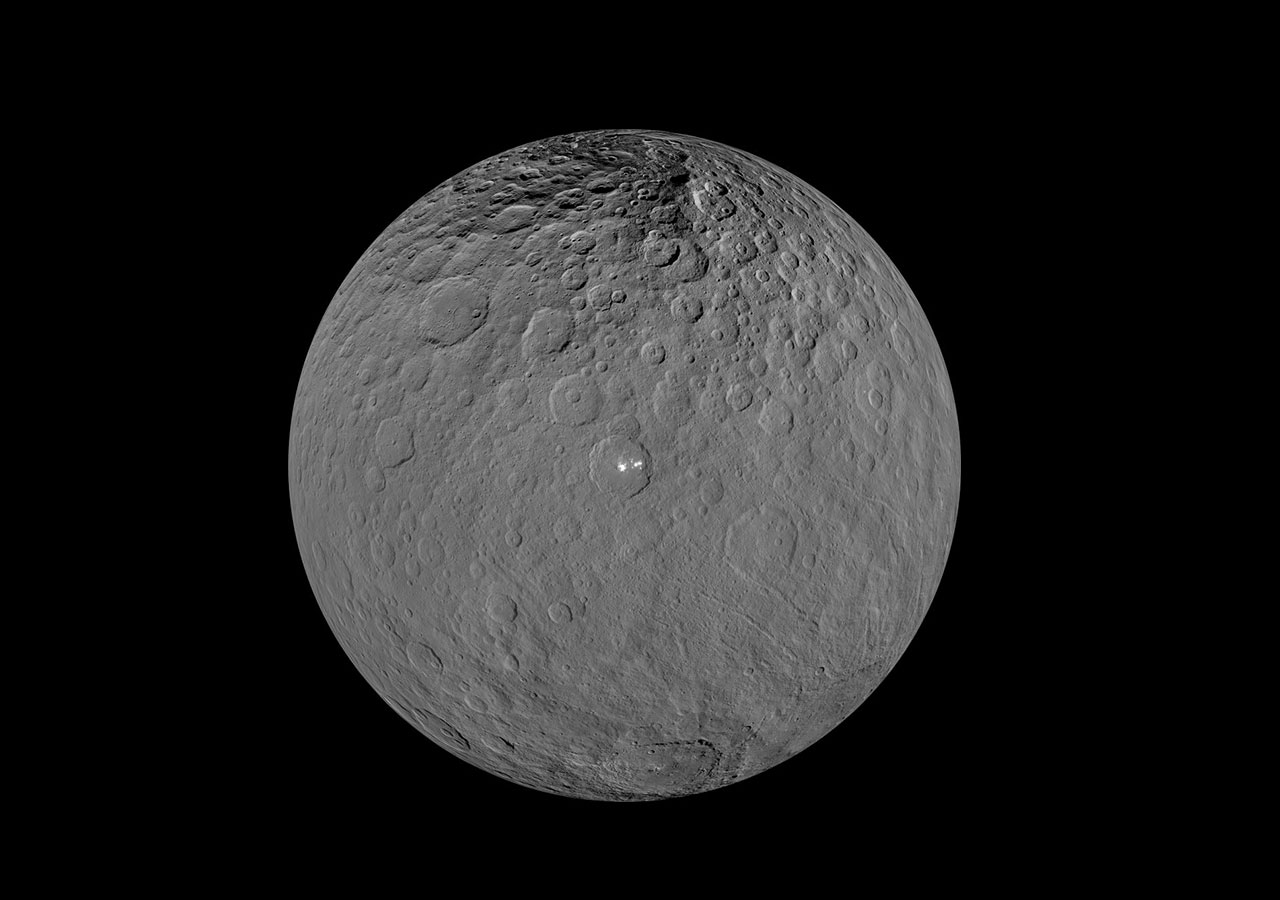
CERES

Ceres Habitability

SCIENCE / 2026

CERES HABITABILITY

DID IT ONCE SUPPORT LIFE?

LEARN MORE
Ceres Surface

GEOLOGY / 2026

COMPLEX SURFACE

STEEP SLOPES & FRACTURES.

LEARN MORE
Ceres Water

ASTRONOMY / 2026

WATER ON CERES

OCEANS & BRIGHT SPOTS.

LEARN MORE
Dawn Mission

MISSION / 2026

DAWN LEGACY

NEW FINDINGS FROM ORBIT.

LEARN MORE
Future Missions

EXPLORATION / 2026

NEXT MISSIONS TO CERES

SAMPLE RETURN & BEYOND.

LEARN MORE

Try Tools!


Written By

Author

Senior Astronomy Consultant

Binul Nethaka

Give The Best Information Free, Fast, Easy and Clear experience for worldwide Information hungers!