HOME
MISSION
ABOUT
CONTACT family_star
MISSION LEGACY

Dawn Legacy

NASA's Dawn spacecraft revolutionized our understanding of the asteroid belt by orbiting both Vesta and Ceres. Its groundbreaking findings from orbit continue to shape planetary science today. This series explores the major discoveries, unexpected revelations, and lasting scientific impact of the Dawn mission.

01

Ceres Discoveries

Bright spots, cryovolcanoes & subsurface water.

02

Vesta Insights

Ancient basaltic crust and giant impacts.

ORBITAL DATA

Key Achievements

First Asteroid Hopper

Orbiting two bodies

High-Res Mapping

Detailed surface geology

Composition Analysis

Water, organics & minerals

RESEARCH NOTE

Dawn's legacy lives on through ongoing analysis of its rich dataset, revealing new insights years after the mission ended.

ASTROPHYSICS / PLANETARY EXPLORATION

THE DAWN MISSION TO CERES

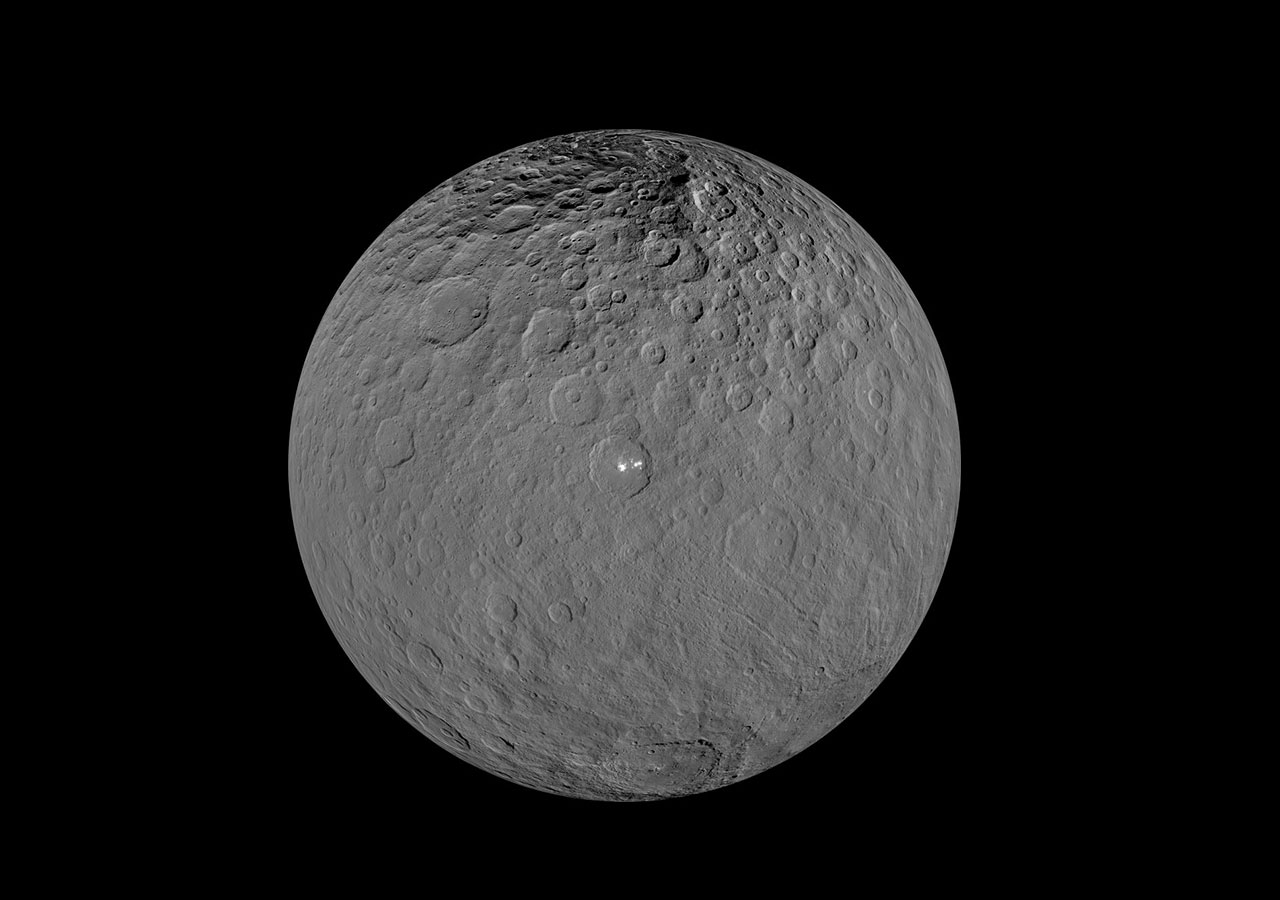
After finishing its survey of Vesta, Dawn reached Ceres in 2015. Ceres is a dwarf planet and the largest object in the asteroid belt. Dawn’s primary goal was to characterize the geological and chemical composition of this icy world, which contains a substantial amount of water ice beneath its surface.

Arrival Date March 2015
Key Discovery Briny deposits (Ahuna Mons)
End of Mission November 2018
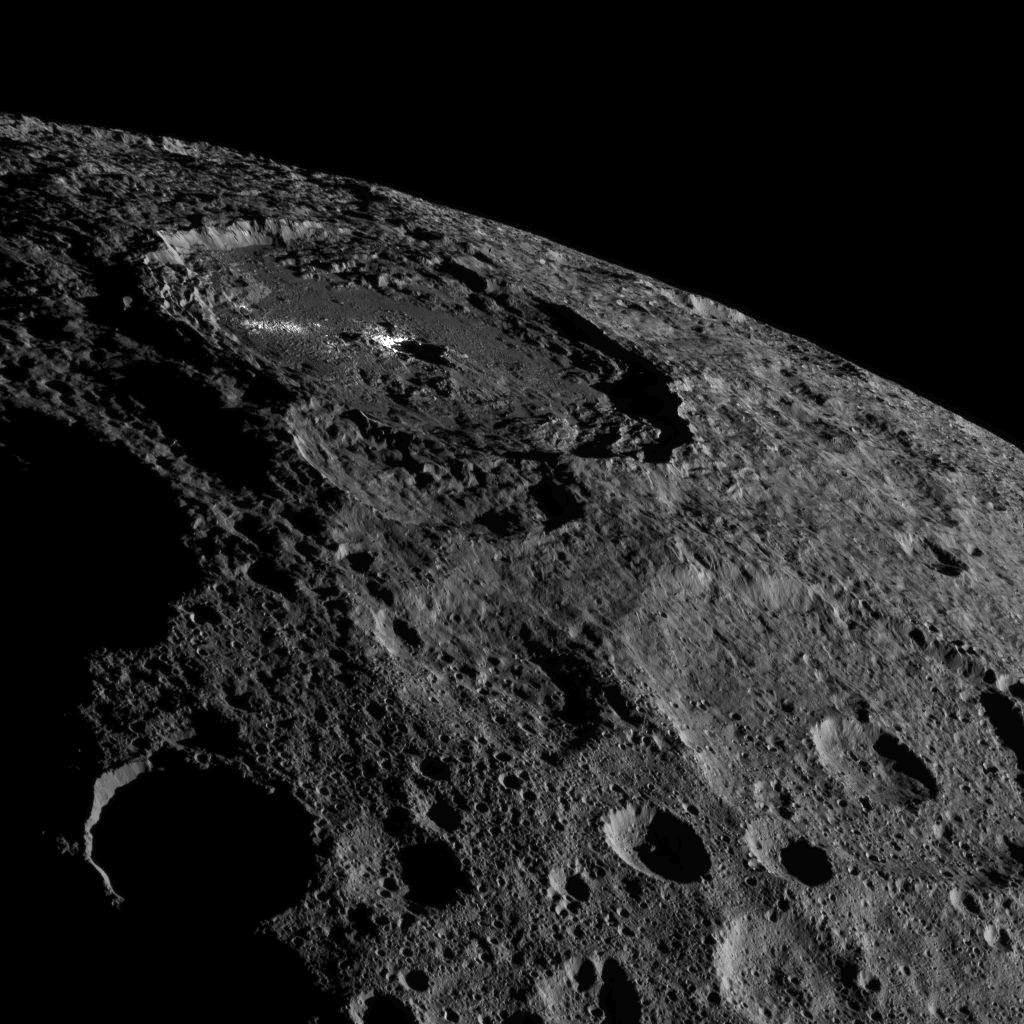
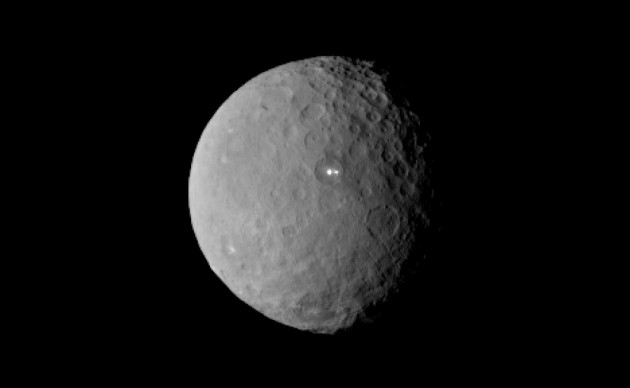
Ceres dwarf planet surface

ASTROPHYSICS / GEOLOGICAL FORMATIONS

OCCATOR CRATER

Occator Crater is a 92-kilometer-wide impact crater that hosts the famous "bright spots" observed by the Dawn spacecraft. These spots are not ice, but massive salt deposits—evidence that a cryovolcanic process brought salty water from deep beneath the crust to the surface, where the water evaporated and left the salt behind.

Feature Age Relatively young (geologically)
Main Composition Sodium carbonate (Na2CO3)
Internal Source Sub-crustal briny reservoir
Ceres bright spots visualization

ASTROPHYSICS / AEROSPACE ENGINEERING

ION PROPULSION

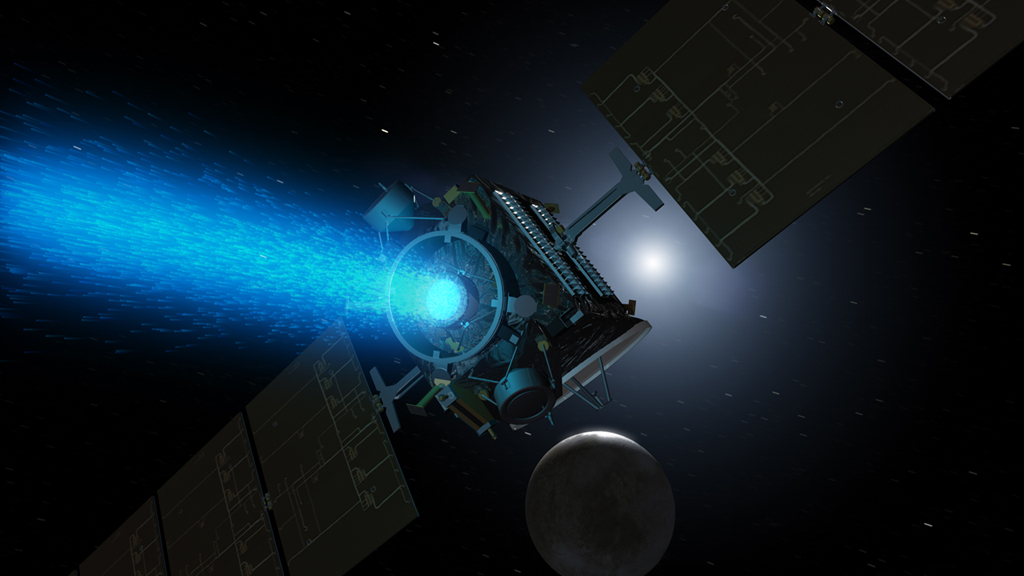
Unlike chemical rockets that burn fuel for a short, powerful burst, Dawn used an ion engine to accelerate gradually over years. By ionizing xenon gas and accelerating the ions using electric fields, the spacecraft achieved high efficiency, consuming far less propellant than traditional methods.

Propellant Xenon gas
Mechanism Electric field acceleration
Key Advantage 10 times more efficient than chemical
Ion engine concept

ASTROPHYSICS / MISSION LOGISTICS

THE FINAL ORBIT

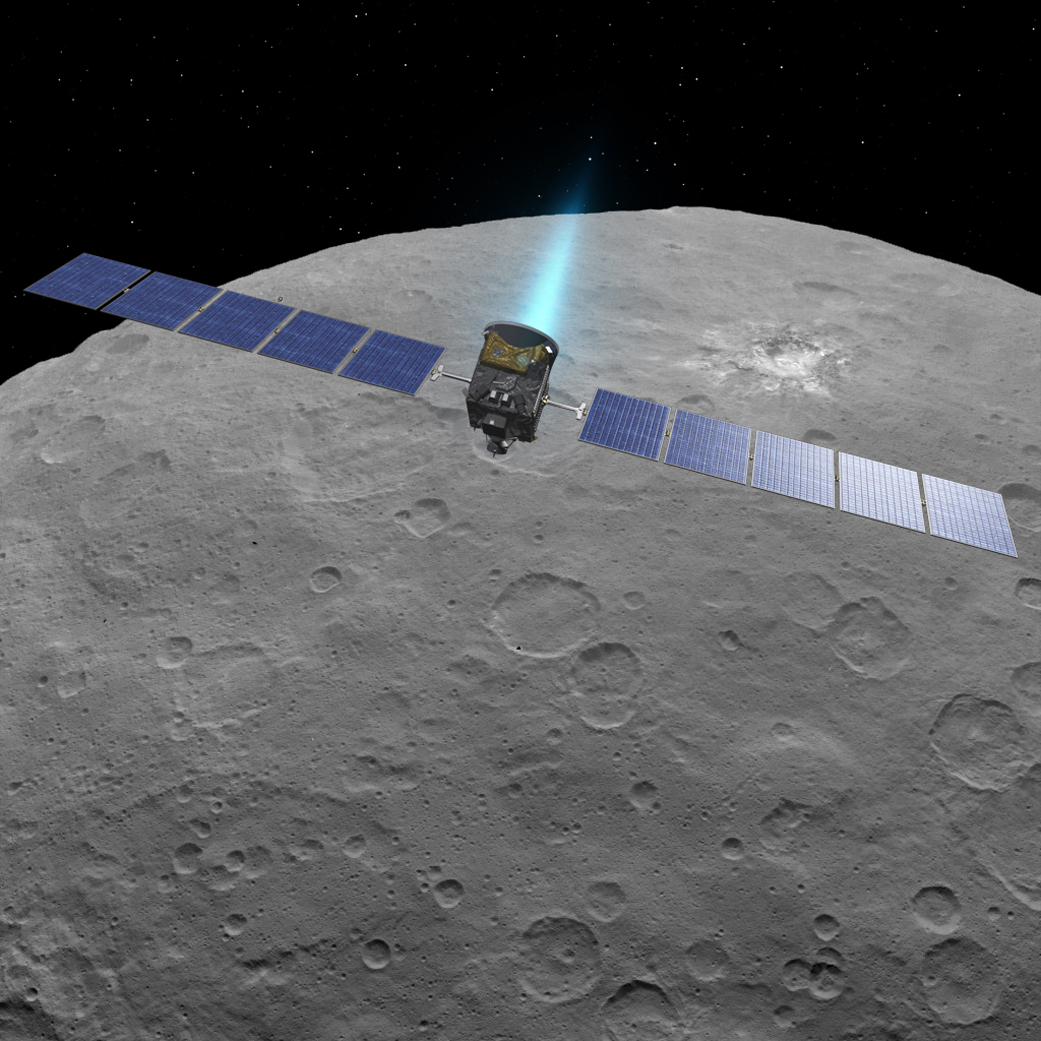
Unlike many missions that crash into a target, the Dawn spacecraft was placed into a stable "graveyard" orbit around Ceres. This orbit is high enough that it will remain stable for decades, ensuring that the spacecraft does not impact and potentially contaminate the pristine environment of the dwarf planet.

Final Date November 1, 2018
Final Altitude Approximately 35 km
Current Status Orbiting Ceres indefinitely
Satellite orbiting planet

ASTROPHYSICS / SCIENTIFIC LEGACY

THE SCIENTIFIC LEGACY

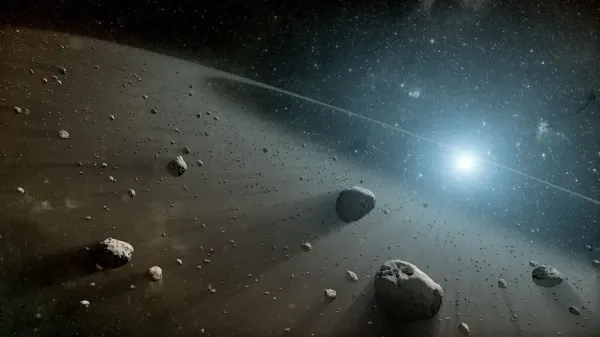
The Dawn mission redefined the asteroid belt from a collection of "rubble" into a region hosting diverse, geologically complex worlds. By comparing Vesta (dry, rocky) and Ceres (icy, salty), Dawn provided a "time capsule" that helps us understand how the building blocks of the inner solar system were distributed.

Data Volume Over 69,000 images returned
Maps Created Global topography and composition
Key Insight Inner solar system water delivery
Deep space exploration data visualization

ASTROPHYSICS / ASTROBIOLOGY

CERES: THE SEARCH FOR LIFE

Ceres possesses three critical ingredients for life: liquid water, essential chemical building blocks (like ammonia and organic compounds), and an energy source. While we haven't found life, Ceres remains a top priority for understanding the chemical evolution of planetary bodies in our solar system.

Water Subsurface briny reservoirs
Chemistry Confirmed presence of phyllosilicates & organics
Energy Internal heat from radioactive decay
Astrophysics planetary science concept

Dawn Mission Illustration

Dawn Mission & Legacy Quiz

Explore the impact of the historic mission to Ceres

1. What made the Dawn mission unique in space exploration? +

Dawn was the first spacecraft to orbit two different extraterrestrial bodies: Vesta and Ceres.

2. What type of propulsion did the Dawn spacecraft use? +

It used highly efficient ion propulsion, which allowed for multiple orbital maneuvers.

3. When did the Dawn spacecraft reach Ceres? +

Dawn entered orbit around Ceres on March 6, 2015.

4. What was the primary goal of the Dawn mission at Ceres? +

To characterize the geological evolution, surface composition, and internal structure of Ceres.

5. How did Dawn end its mission? +

The spacecraft ran out of hydrazine fuel and remains in a stable, permanent orbit around Ceres.

6. What did Dawn reveal about Ceres' interior? +

It revealed that Ceres is a differentiated body with a rocky core and a water-ice-rich outer shell.

7. What was the significance of the Occator crater findings? +

Occator provided clear evidence of geologically recent subsurface activity and salt-rich deposits.

8. How did Dawn contribute to the dwarf planet classification? +

By providing detailed data on its mass and shape, confirming it fits the criteria of a dwarf planet.

9. Why is Dawn’s legacy important for future missions? +

It demonstrated that ion propulsion is a viable, high-performance method for long-duration deep-space exploration.

10. Is the Dawn spacecraft still sending data? +

No, the mission officially concluded in 2018 after all fuel was exhausted and communication ceased.

CERES

Ceres Habitability

SCIENCE / 2026

CERES HABITABILITY

DID IT ONCE SUPPORT LIFE?

LEARN MORE
Ceres Surface

GEOLOGY / 2026

COMPLEX SURFACE

STEEP SLOPES & FRACTURES.

LEARN MORE
Ceres Water

ASTRONOMY / 2026

WATER ON CERES

OCEANS & BRIGHT SPOTS.

LEARN MORE
Dawn Mission

MISSION / 2026

DAWN LEGACY

NEW FINDINGS FROM ORBIT.

LEARN MORE
Future Missions

EXPLORATION / 2026

NEXT MISSIONS TO CERES

SAMPLE RETURN & BEYOND.

LEARN MORE

Try Tools!

Written By

Author

Senior Astronomy Consultant

Binul Nethaka

Give The Best Information Free, Fast, Easy and Clear experience for worldwide Information hungers!