Fly In Titan
PLANETARY LAB: HUMAN FLIGHT ON TITAN
LOW GRAVITY, DENSE NITROGEN ATMOSPHERE & WINGED AVIATION
The Physics of Human Flight on Titan
Titan offers the most unique human flight experience in the solar system. Because its surface gravity is only 14% of Earth's and its dense nitrogen atmosphere has a surface pressure 50% greater than Earth's, strap-on artificial wings would allow a human to fly purely through arm-flapping muscle power.
Extremely light body weight combined with heavy lift-generating gas.
Humans could sustain airborne movement with simple mechanical wings.
Flight Sync
Aviation Mapping. Analyzing the 1.5 Bar / 1.35 m/s² lift constant. New Horizons monitors the Density Buffer to track the feasibility of human-powered flight.
- Method: Muscle-Powered Wing Flapping.
- Density: 4.5x Earth (High Lift Sync).
- Gravity: 0.14g (Low Weight Sync).
Flight Sync
Aviation Mapping. Analyzing the 1.5 Bar / 1.35 m/s² lift constant. New Horizons monitors the Density Buffer to track the feasibility of human-powered flight.
- Method: Muscle-Powered Wing Flapping.
- Density: 4.5x Earth (High Lift Sync).
- Gravity: 14% g (Low Weight Sync).
Ratio Sync
Gravity-Lift Mapping. Analyzing the 14% gravity / 4.5x density constant. New Horizons monitors the Buoyancy Buffer to track the 32x flight advantage ratio.
- Weight Sync: 70kg (Earth) → 10kg (Titan).
- Lift Sync: 4.5x Atmospheric Density.
- Power: Human Muscle-Powered Flight.
Icarus Sync
Aviation Specs. Analyzing the 4m span / 60W power constant. New Horizons monitors the Muscle Buffer to track human flight endurance on Titan.
- Wing Span: 3.5 - 4.0 Meters.
- Power Cost: 60 Watts (Casual Cycling Effort).
- Duration: 2.5+ Hours Endurance Sync.
Cryo Sync
Thermal Mapping. Analyzing the -179°C / 1.5 Bar constant. New Horizons monitors the Heat Buffer to track the high-density convective energy loss.
- Temperature: -179°C (Cryogenic Sync).
- System: Active Thermal Suit Heating.
- Atmosphere: 95% Nitrogen (Non-Breathable).
HUMAN AVIATION / EXOPLANETARY ATMOSPHERES
The Aerodynamics of Titan Flight
Imagine a human standing in the hazy, orange skies of Saturn's largest moon, preparing to take flight. Flying on Titan offers a surreal juxtaposition of physics: its surface gravity is only about 14% of Earth's (comparable to our Moon), making you extraordinarily light. Simultaneously, Titan boasts a thick nitrogen-rich atmosphere that is roughly four times denser than Earth's sea-level air. This unique combination creates an exceptionally favorable environment for human-powered or lightweight aerial propulsion.
HUMAN AVIATION / MUSCLE-POWERED FLIGHT
Muscle-Powered Flight Dynamics
Because Titan’s gravity is so weak and its atmosphere so dense, the stall speed for an airfoil drops to a crawl—roughly 11 kilometers per hour. This fascinating physical reality means a human could strap on lightweight, bird-like synthetic wings and achieve sustained, active flight simply by flapping their arms. Without the need for heavy jet engines or motorized propellers, an explorer could soar effortlessly over orange hydrocarbon dunes and icy river valleys using pure muscle power alone.
HUMAN AVIATION / ATMOSPHERIC HAZARDS
Thermal Dynamics and Environmental Hazards
While soaring through Titan’s dense nitrogen atmosphere is mechanically effortless, the surrounding environment presents severe physiological and engineering hurdles. At temperatures of $-179^\circ\text{C}$, any exposed suit material or control surface faces extreme thermal contraction risks. Furthermore, navigating through thick organic tholin hazes requires specialized radar altimetry to prevent collisions with obscured terrain, ensuring that human flight remains a controlled, high-tech expedition across an alien frontier.
Sources
ATMOSPHERIC LIFT
Titan's atmosphere is **4x denser** than Earth's. This provides massive amounts of "thick" air for wings to push against, generating high lift at low speeds.
TITAN AIR DATALOW GRAVITY
Gravity on Titan is only **0.138 g** (lower than our Moon). A human would weigh about as much as a heavy backpack, making it easy to stay airborne.
GRAVITY STATSDRAGONFLY MISSION
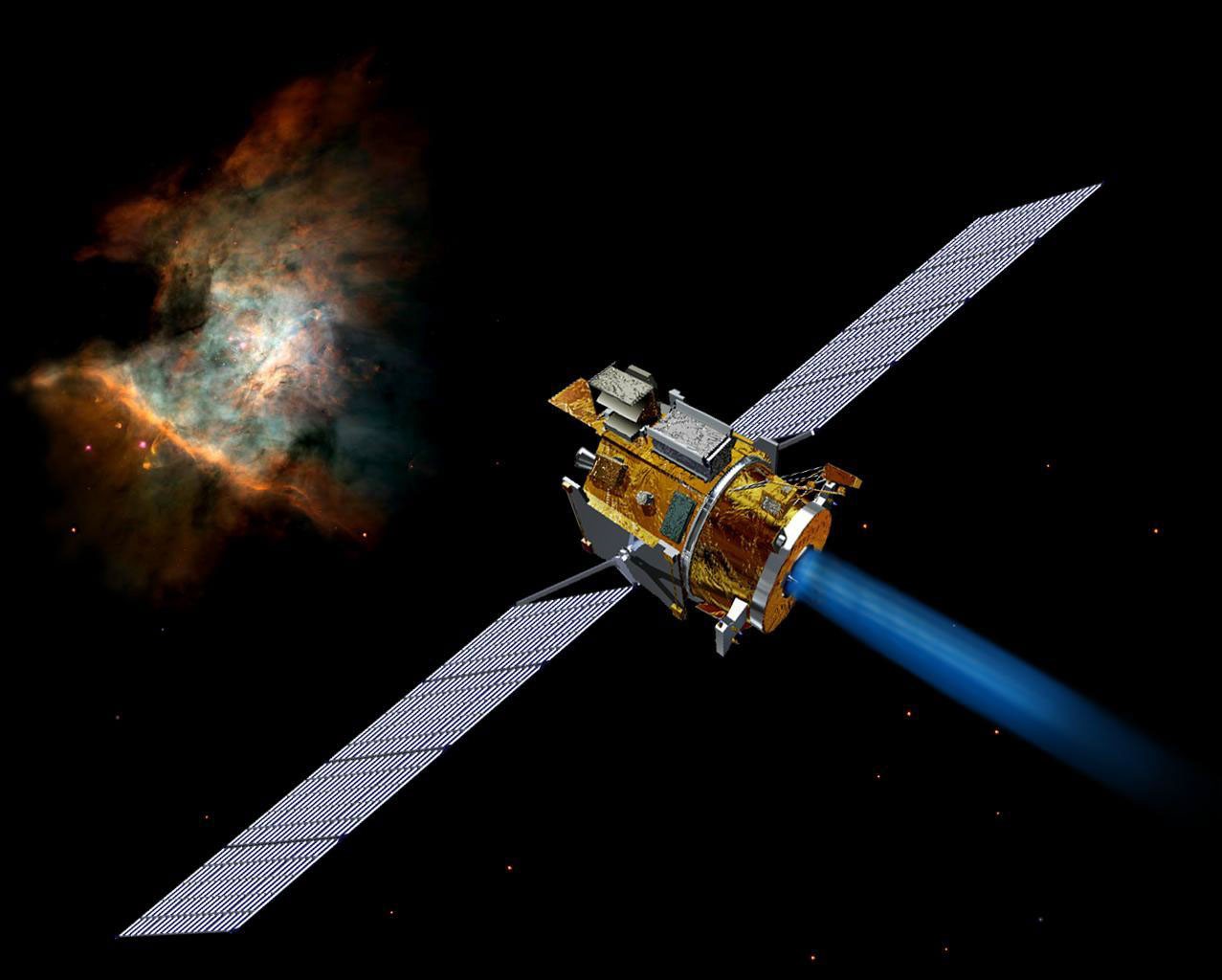
NASA is launching **Dragonfly**, a nuclear-powered octocopter, to exploit these physics. It will fly miles across the surface in a single "hop."
DRAGONFLY ROBOT
Human Flight Experience on Titan FAQs
Examining the aeronautical dynamics, low gravity, thick atmosphere, and unique piloting conditions future human aviators would experience flying through Saturn's largest moon
Flying on Titan would feel remarkably effortless due to low gravity and high air density, allowing human aviators to soar through orange skies using simple personal wings or lightweight propeller aircraft.
Titan's surface gravity is only about 14 percent of Earth's gravity, meaning a human weighing 100 kilograms would weigh just 14 kilograms, drastically reducing the physical load required to maintain lift.
Titan possesses a nitrogen-rich atmosphere roughly 1.5 times denser than Earth's sea-level atmosphere, providing massive aerodynamic lift even at very slow flight velocities.
Yes, theoretical calculations show that a human wearing simple mechanical wings could flap their arms or glide effortlessly through Titan's air without needing heavy jet or rocket engines.
Pilots would contend with extreme cryogenic temperatures averaging -179°C, thick haze layers limiting visibility, unexpected hydrocarbon storm downpours, and the complete lack of breathable oxygen.
Traditional combustion engines require oxygen, so aircraft on Titan would likely rely on closed-cycle nuclear thermal power or advanced battery systems driving large electric propellers.
Aviators would gaze down upon dark hydrocarbon seas, sprawling ice dunes, winding river canyons, and towering methane cloud formations under a hazy, amber-tinted sky dominated by Saturn's distant rings.
Titan rotates synchronously with its orbit around Saturn, creating gentle global wind circulation patterns that make long-range cruising predictable and energy-efficient for autonomous or crewed gliders.
Due to the freezing toxic atmosphere, human explorers would require fully pressurized, heavily insulated thermal flight suits equipped with independent heating elements and oxygen life support systems.
Robotic missions like NASA's upcoming Dragonfly rotorcraft explore Titan's surface terrain, mapping wind currents and atmospheric stability to gather foundational safety data for future human exploration.
- Horizon -

Saturn

Ring Particle Collision

Thickness / Scale Ratio

Shepherd Moon Gravity
Roche Limit Calc

Dust to Ice Ratio
Ring Orbital Speed

Hexagon Wind Speed

Saturn's Density

Helium Rain Energy

Diamond Rain Energy

Supersonic Jet Streams

Methane Rain Ratio

Human Flight on Titan

Hydrocarbon Lake Depth

Titan Buoyancy

Gravity Well

Atmospheric Opacity

Enceladus Geyser Height

Light Travel Delay
Saturn Season Tilt
/https://tf-cmsv2-smithsonianmag-media.s3.amazonaws.com/filer_public/ca/b0/cab0042a-70c0-4d60-a94a-20474eb1885b/gettyimages-560665807.jpg)
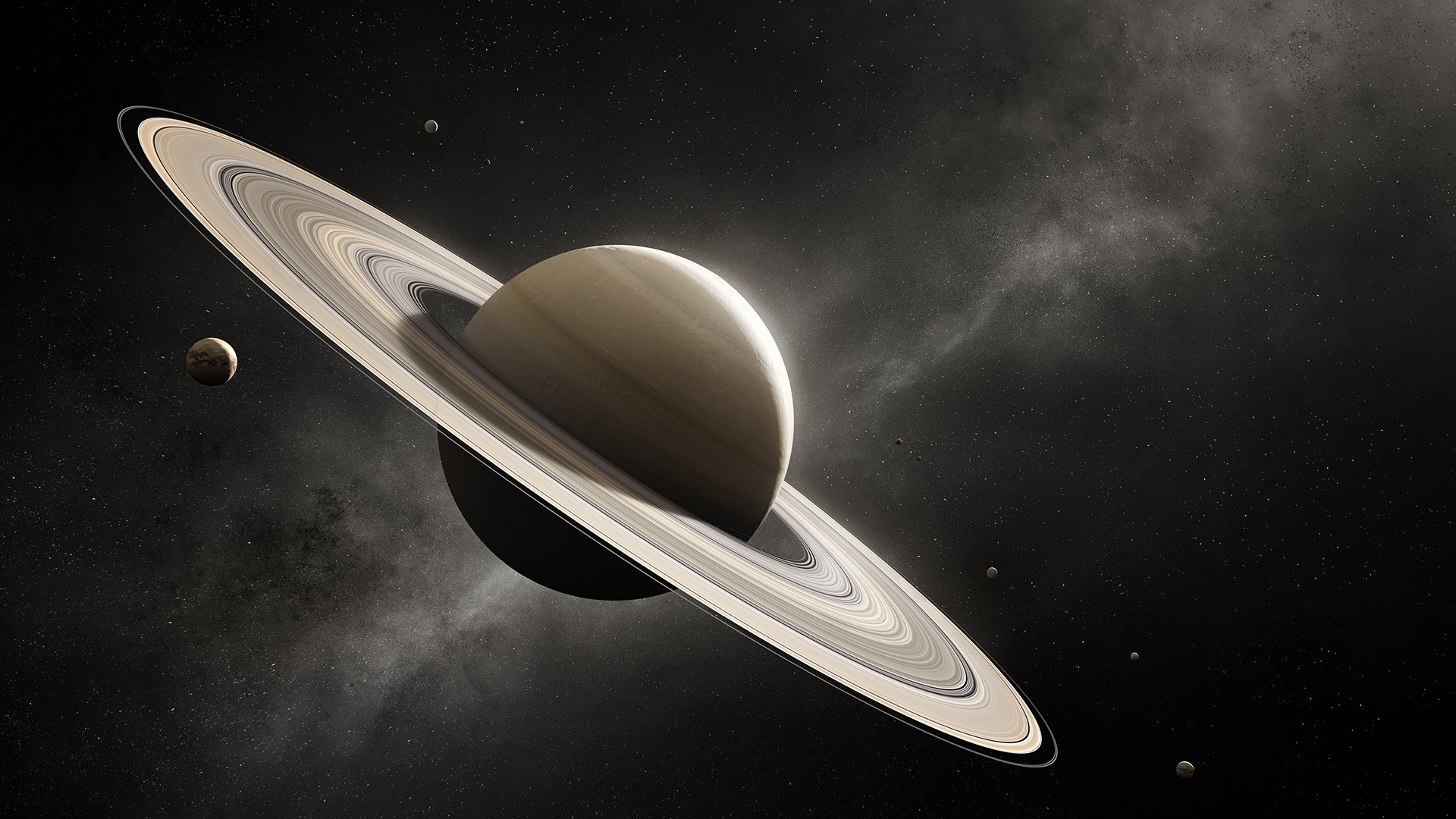
3D Model of Saturn