Shepherd Moon Gravity
SHEPHERD MOON GRAVITY
ORBITAL CONTAINMENT & RING DYNAMICS
Gravitational Herding
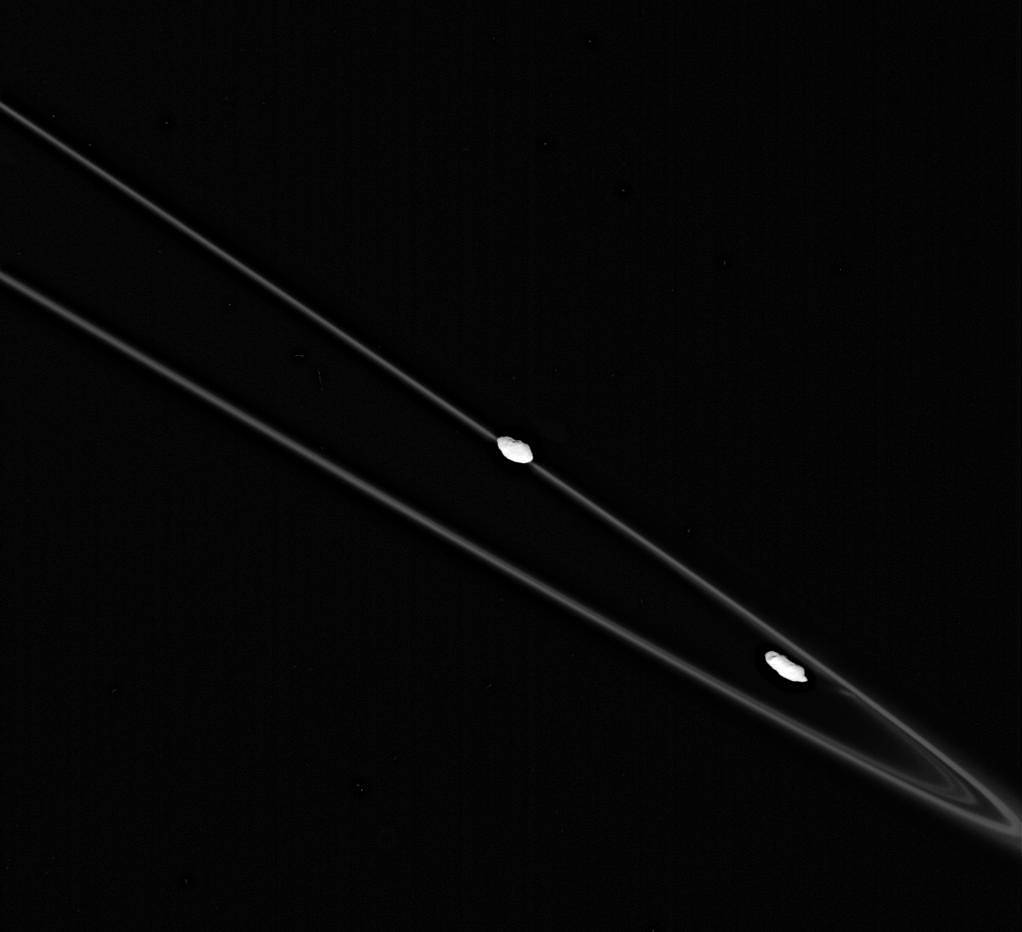
Shepherd moons are small inner satellites that orbit near the edges of a planetary ring. Through precise gravitational nudges, they prevent ring particles from dispersing outward or inward, effectively acting as cosmic sheepdogs maintaining clean gaps and distinct boundaries.
Gravitational interactions impart momentum boosts and losses, pushing stray particles back into alignment.
Without these small moons, ring boundaries would slowly blur and disperse into the surrounding void.
Shepherd Sync
Orbital Confinement Mapping. Analyzing the gravitational "kick" constant that prevents ring-edge decay. New Horizons monitors the Hill Radius to track the F-Ring's structural integrity.
- 🛰️ Guardians: Prometheus & Pandora.
- 📐 Mechanism: Angular Momentum Exchange.
- 💍 Result: Razor-Sharp Ring Edges.
Clearer Sync
Orbital Path Mapping. Analyzing the 325 km Encke Gap maintained by the moon Pan. New Horizons monitors the Clearing Constant to track the "Snowplow" effect within the A-ring.
- 🧹 Action: Gravitational Particle Sweeping.
- 🥟 Geometry: Walnut-shaped Accretion.
- 📏 Width: 325 km Cleared Path.
Momentum Sync
Velocity Vector Mapping. Analyzing the $\Delta v$ constant exchanged between moons and rings. New Horizons monitors the Energy Shift to track the "Orbital Corridor" stability.
- 🚀 Inner Moon: Accelerates / Pushes Out.
- ⚓ Outer Moon: Decelerates / Pulls In.
- ⚖️ Result: Perfectly Balanced Ring Edge.
ASTROPHYSICS / ORBITAL DYNAMICS
THE COSMIC SHEEPDOGS
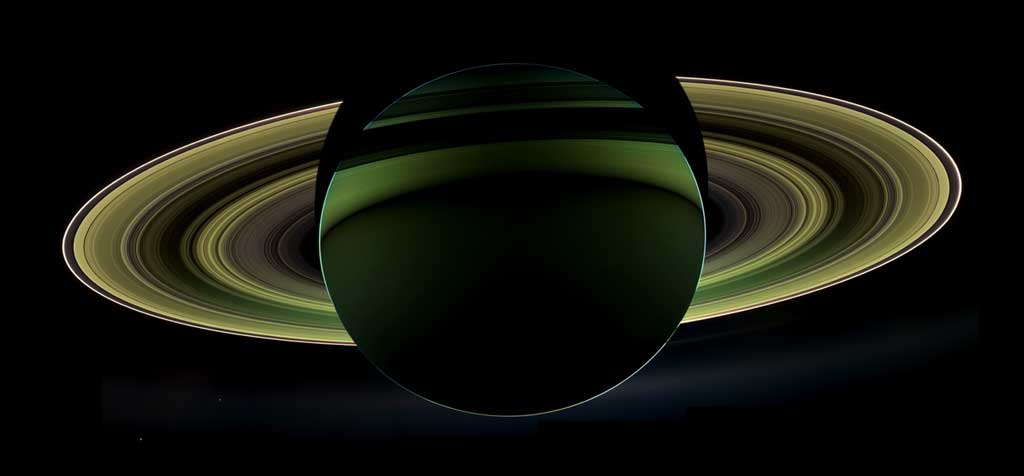
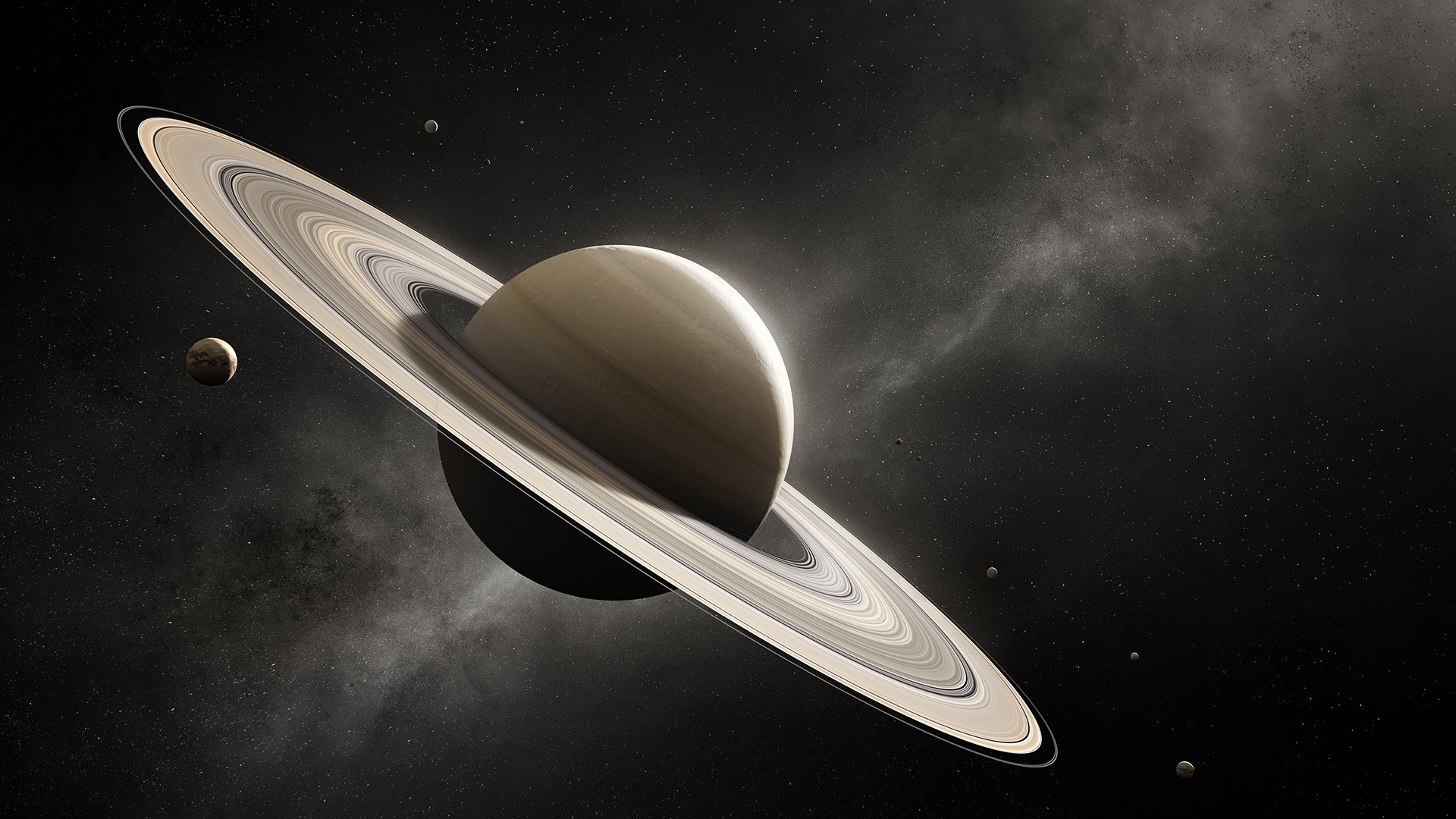
Without gravitational shepherds like Prometheus and Pandora, Saturn's rings would naturally spread out and diffuse into space. Instead, these minor moons use precise orbital resonances to herd stray ice particles back into line, carving sharp edges and distinct gaps.
ASTROPHYSICS / ORBITAL RESONANCE
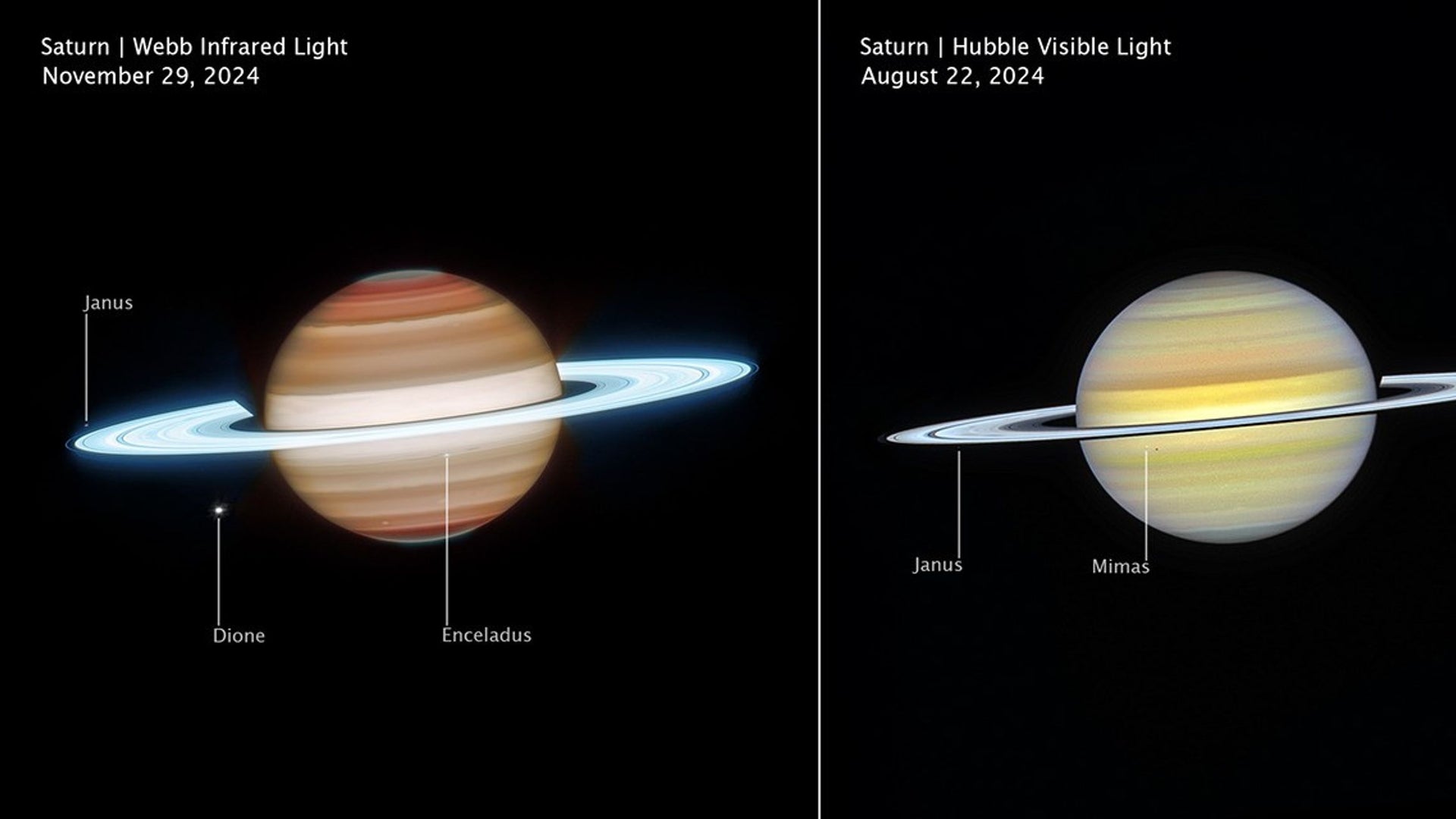
THE GRAVITATIONAL WALTZ
Shepherd moons do not just hold ring edges in place; they actively sculpt them into intricate waves and braided patterns. Through precise gravitational resonances, these moons exchange momentum with the ice particles, organizing chaos into synchronized structures.
ASTROPHYSICS / EMBEDDED DYNAMICS
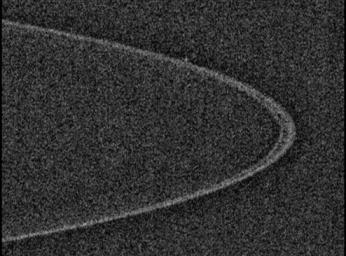
WAKES AND MOONLETS
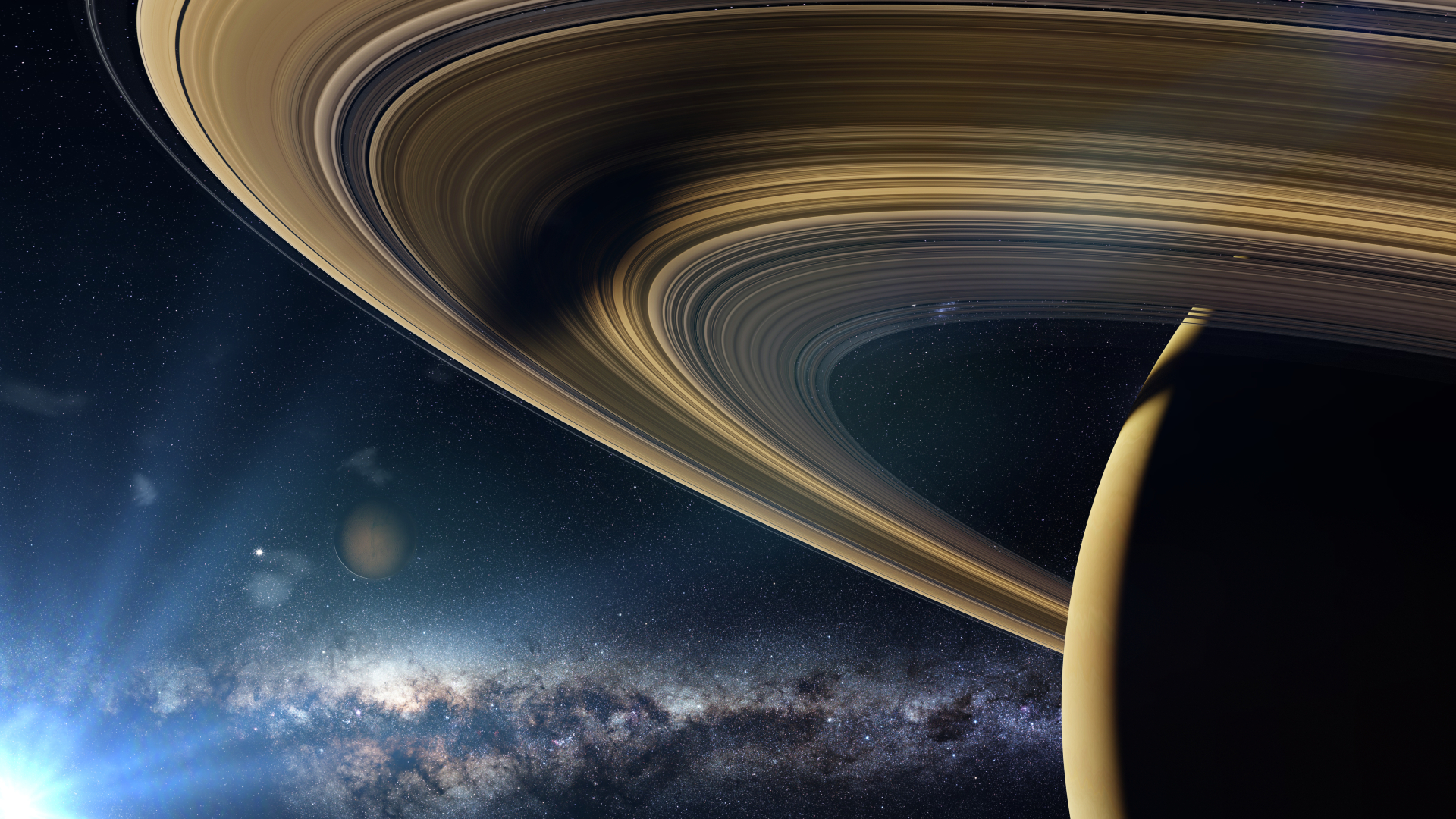
When tiny moons plow through gaps in the rings, their gravity leaves towering walls of ice particles in their wake. These gravitational wakes and propeller-like disturbances offer direct visual proof of ongoing interactions between solid bodies and diffuse debris.
ASTROPHYSICS / TIDAL ACCRETION
THE CYCLE OF DESTRUCTION
The region surrounding Saturn's rings is a cosmic recycling plant. As embedded moonlets sweep through debris, they accumulate ice and grow, only to be sheared apart by tidal forces once they venture too close to the planet's gravitational gradient.

Shepherd Moon & Ring Gravity FAQs
How gravitational forces from small moons shape and maintain Saturn's rings
A shepherd moon is a small satellite whose gravitational field interacts with a planetary ring, helping to corral its particles and maintain a sharply defined edge.
As these moons orbit near or within the ring system, their gravitational pull herds stray particles away, sweeping clear pathways like the Cassini Division or narrower gaps.
Prometheus and Pandora are classic examples that act as "shepherds" for Saturn's thin F ring, keeping the ring material confined between their orbits.
They are either gravitationally flung into a different orbit, forced back into the main ring stream, or occasionally accreted onto the moon's surface.
Yes, gravitational tugs from embedded or nearby moonlets can induce vertical waves and ripples, temporarily increasing particle heights within specific ring bands.
- Horizon -

Saturn

Ring Particle Collision

Thickness / Scale Ratio

Shepherd Moon Gravity
Roche Limit Calc

Dust to Ice Ratio
Ring Orbital Speed

Hexagon Wind Speed

Saturn's Density

Helium Rain Energy

Diamond Rain Energy

Supersonic Jet Streams

Methane Rain Ratio

Human Flight on Titan

Hydrocarbon Lake Depth
Titan Buoyancy

Gravity Well

Atmospheric Opacity

Enceladus Geyser Height

Light Travel Delay
Saturn Season Tilt
/https://tf-cmsv2-smithsonianmag-media.s3.amazonaws.com/filer_public/ca/b0/cab0042a-70c0-4d60-a94a-20474eb1885b/gettyimages-560665807.jpg)
3D Model of Saturn
Saturn Mysteries
Sources
INNER SHEPHERD LOGIC
An inner moon (like **Prometheus**) moves faster than ring particles. As it passes them, its gravity pulls them forward, increasing their energy and boosting them back to a higher orbit.
F-RING DYNAMICSOUTER SHEPHERD LOGIC
An outer moon (like **Pandora**) moves slower. As particles lap it, its gravity pulls them backward, decreasing their energy and causing them to drop back to a lower orbit.
ORBITAL TORQUEGRAVITY WAKES
Small moons like **Daphnis** create vertical "waves" in ring edges. Its gravity pulls particles out of the ring plane, creating structures up to 1.6 km high.
WAVE PERTURBATIONS