Roche Limit Calc
THE ROCHE LIMIT
TIDAL DISRUPTION & GRAVITATIONAL STRESS
The Tidal Breaking Point
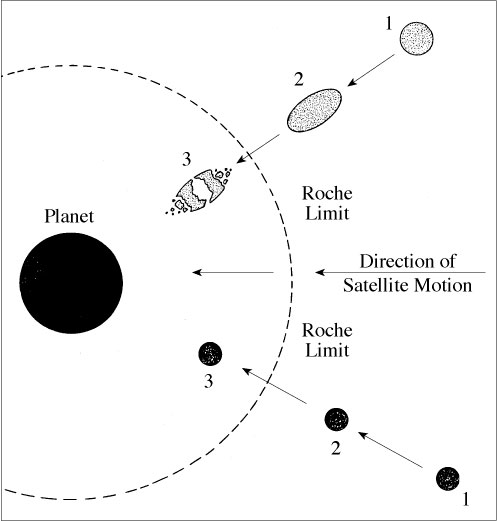
The Roche limit is the minimum distance to which a celestial body, held together only by its own gravity, can approach a second body without being torn apart by tidal forces. Inside this boundary, the primary planet's differential gravity exceeds the satellite's internal cohesion.
Differential forces pull the near side and far side apart with immense, unequal acceleration vectors.
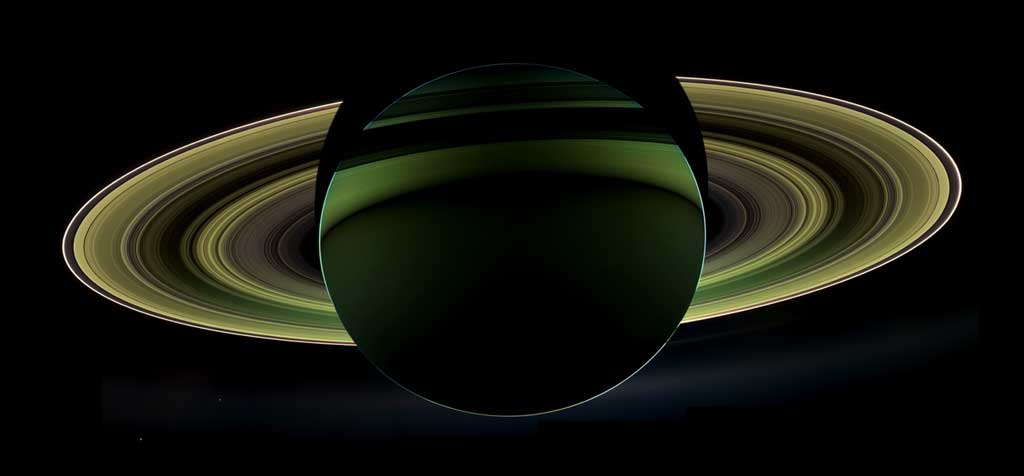
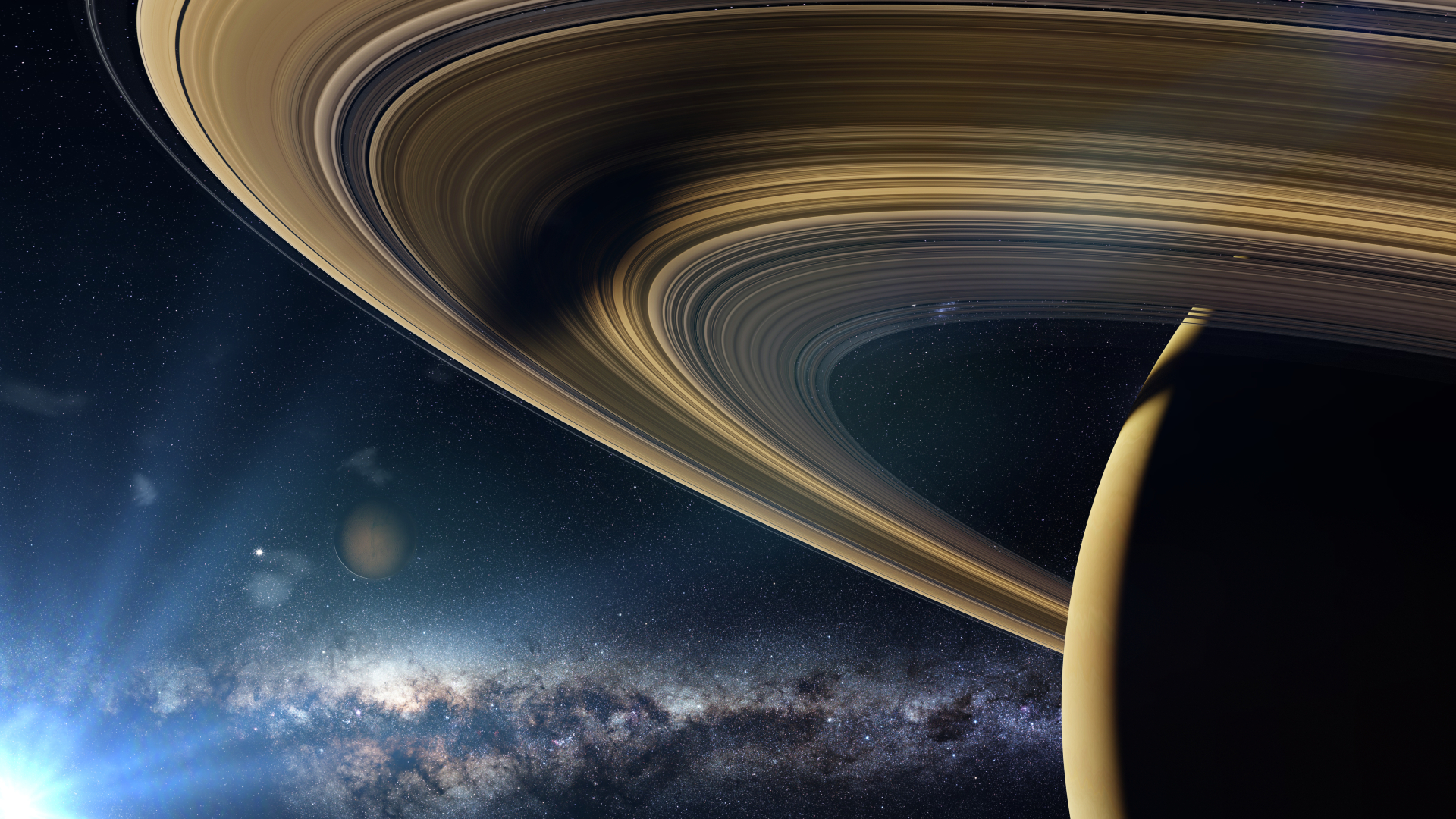
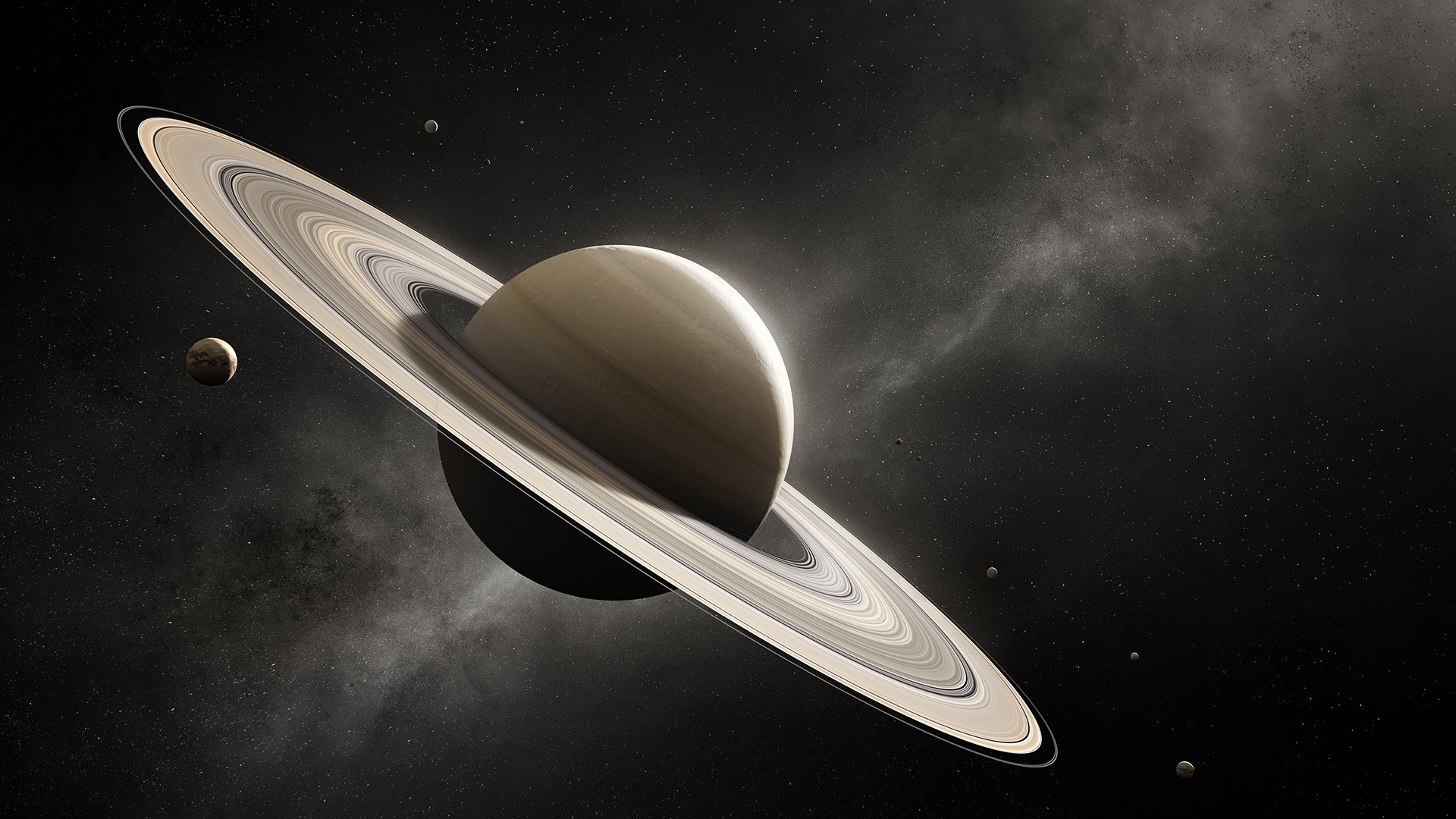
Saturn's magnificent ring system exists squarely within its Roche limit, preventing debris from ever aggregating into a moon.
Roche Sync
Tidal Disruption Mapping. Analyzing the 147,000 km "Shatter Constant" where moon integrity fails. New Horizons monitors the Density Ratio to track ring formation boundaries.
- 💥 Shatter: Tidal Force > Self-Gravity.
- 💍 Rings: Permanent Debris Corridor.
- 📐 Limit: Approx. 2.44 Planetary Radii.
Shatter Sync
Tidal Tension Mapping. Analyzing the $d^3$ gradient constant that overcomes internal gravity. New Horizons monitors the Tension Ratio to track moon disintegration events.
- 💥 Force: Tidal Gradient > Self-Gravity.
- 📐 Scaling: $1/d^3$ Disruption Law.
- 💍 Outcome: Debris Dispersion (Ring Formation).
Limit Sync
Anti-Accretion Mapping. Analyzing why the 147,000 km Roche boundary prevents moon formation. New Horizons monitors the Shear Constant to track ring stability.
- 💍 Zone: A, B, and C Rings (Inside Limit).
- 📐 Force: Tidal Shear > Particle Gravity.
- ✨ Result: Permanent Brilliance / No Moon.
Destruction Sync
Structural Failure Mapping. Analyzing the 147,000 km collapse constant where internal moon gravity fails. New Horizons monitors the Stress Ratio to track tidal disassembly.
- ❄️ Result: Billions of Ice Fragments.
- 📏 Boundary: 147,000 km Limit.
- ⚖️ Physics: Tidal Stress > Material Strength.
Fluid Sync
Hydrostatic Limit Mapping. Analyzing the 2.44x radial constant for non-rigid celestial bodies. New Horizons monitors the Density Ratio to track fluid tidal disruption.
- 🌊 Physics: Hydrostatic Equilibrium Failure.
- 📐 Coefficient: 2.44 (Fluid) vs 1.26 (Rigid).
- 💍 Result: Rapid Ring Dispersion.
ASTROPHYSICS / GRAVITATIONAL MECHANICS
THE GRAVITATIONAL SHREDDER
When any celestial body ventures too close to a massive planet, the gravitational pull on its near side becomes significantly stronger than on its far side. Once this differential stress exceeds the internal self-gravity of the object, the Roche limit is breached, tearing the body apart.
ASTROPHYSICS / TIDAL DEBRIS
FROM MOON TO DEBRIS FIELD
When a moon breaches the Roche limit, the destruction is not a single cataclysmic explosion, but a progressive unravelling. As internal cohesion fails, the body stretches into an elongated filament before shearing completely into an orbiting cloud of boulders, ice, and dust.
ASTROPHYSICS / PLANETARY BOUNDARIES
THE ACCRETION LINE
The Roche limit serves as a strict dividing line in planetary architecture. Outside this boundary, gravity favors the gathering of debris into solid spherical moons. Inside this boundary, tidal forces prevent accumulation, ensuring that matter remains forever trapped as a scattered ring of ice and rock.

Roche Limit & Tidal Disruption FAQs
Understanding how gravitational forces tear celestial bodies apart
The Roche limit is the minimum distance to which a celestial body, held together only by its own gravity, can approach a second body without being torn apart by tidal forces.
Tidal disruption occurs when an object gets close enough to a massive body that the gravitational pull on its near side is significantly stronger than on its far side, stretching and shredding it apart.
Saturn's rings lie well within its Roche limit. This is why a moon cannot form there—any large accumulation of matter is pulled apart or prevented from coalescing by Saturn's intense gravity.
Yes! A tidal disruption event (TDE) happens in astronomy when an unlucky star drifts too close to a supermassive black hole and gets ripped apart into a long stream of gas.
Yes. Objects that are denser or held together by internal chemical bonds (like rocky asteroids or artificial satellites) can survive closer to a planet than loosely bound rubble piles or icy comets.
- Horizon -

Saturn

Ring Particle Collision

Thickness / Scale Ratio

Shepherd Moon Gravity
Roche Limit Calc

Dust to Ice Ratio
Ring Orbital Speed

Hexagon Wind Speed

Saturn's Density

Helium Rain Energy

Diamond Rain Energy

Supersonic Jet Streams

Methane Rain Ratio

Human Flight on Titan

Hydrocarbon Lake Depth
Titan Buoyancy

Gravity Well

Atmospheric Opacity

Enceladus Geyser Height

Light Travel Delay
Saturn Season Tilt
/https://tf-cmsv2-smithsonianmag-media.s3.amazonaws.com/filer_public/ca/b0/cab0042a-70c0-4d60-a94a-20474eb1885b/gettyimages-560665807.jpg)
3D Model of Saturn
Saturn Mysteries
Sources
THE FLUID LIMIT
For a non-rigid body (like a loose pile of ice), the Roche limit is roughly 2.44 Rₚ (ρₘ/ρₛ)¹/³. For Saturn, this is about **147,000 km**.
DERIVATION MATHTIDAL DISRUPTION
Gravity pulls harder on the "near side" of a moon than the "far side." Inside the limit, this stretching force overcomes the moon's own self-gravity.
RING ORIGINSSMALL MOON SURVIVAL
Moons like Pan or Daphnis survive inside the limit because they are held together by **chemical bonds** (solid rock/ice) rather than just gravity.
MOONLET STATS