Neptune
Welcome To Neptune
Neptune

Supersonic Winds

Triton Retrograde Orbit

Signal Delay (Speed of Light)
Great Dark Spot

Internal Heat Radiator

Triton Geyser Height

Cloud Top Gravity

Density Comparison

"Scooter" Cloud

Atmospheric Velocity

Solar Distance Flux
Escape Velocity

Possibility of Life

View 3D Neptune
FOUNDATIONS / PLANETARY PROFILES
NEPTUNE: THE ICY SENTINEL
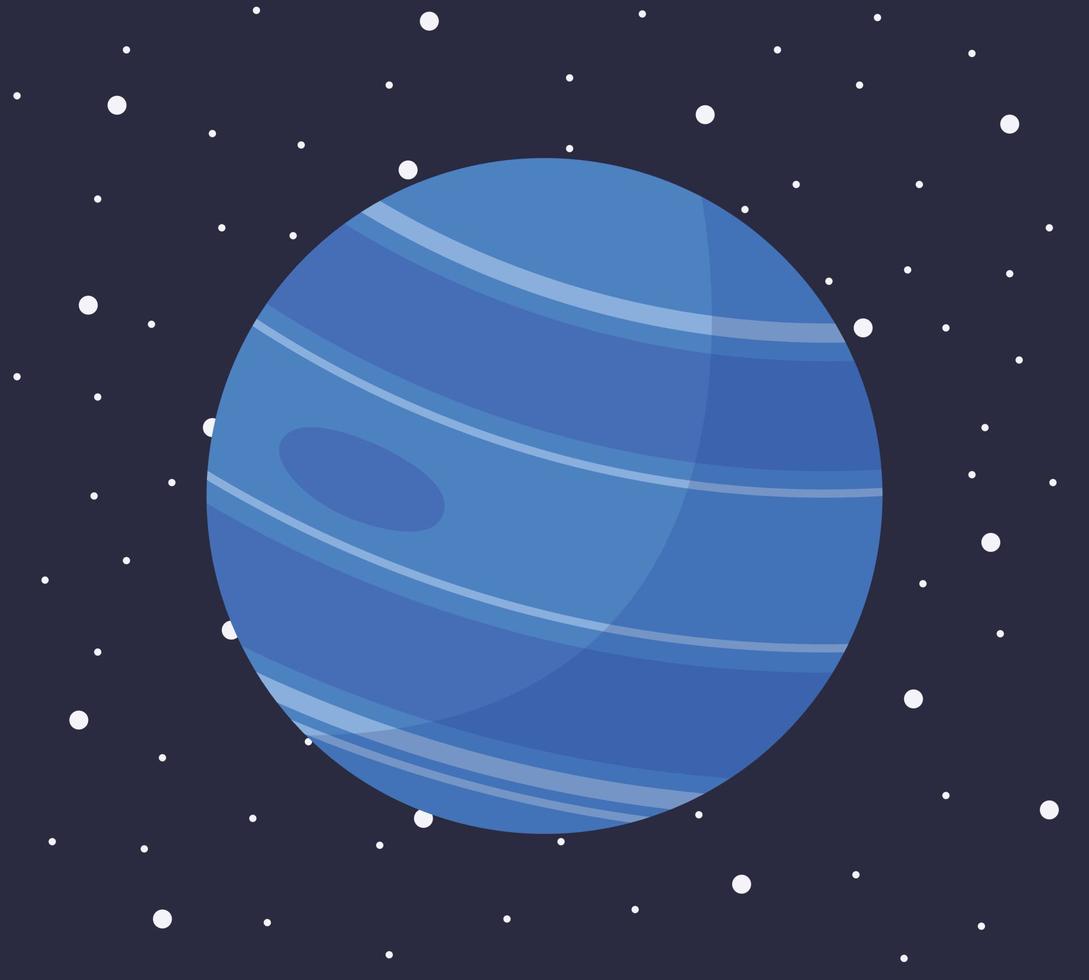
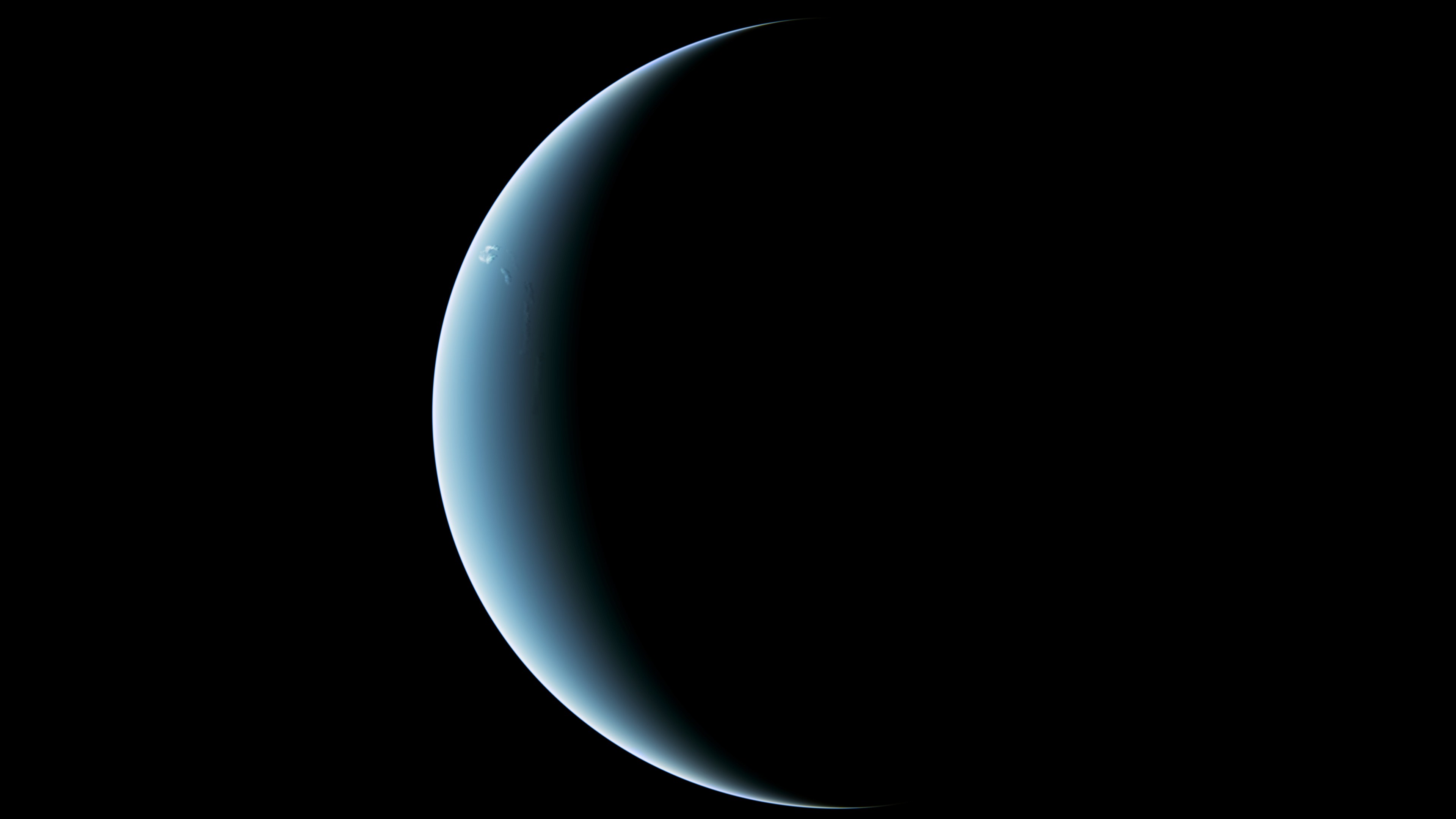
Neptune is the eighth and farthest known major planet from the Sun. It is an ice giant, characterized by its intense blue hue—caused by methane in its atmosphere—and the fastest wind speeds recorded in the solar system, reaching over 2,000 km/h. For New Horizons, Neptune is a critical site for studying cryogenic atmospheric dynamics and high-energy outer solar system weather patterns. Its moon, Triton, is a particularly high-value target for its retrograde orbit and potential cryovolcanic activity.
FOUNDATIONS / STRATEGY
WHY STUDY NEPTUNE?
We study Neptune because it serves as the ultimate benchmark for extreme-distance planetary science. By analyzing Neptune, we decode the atmospheric physics of Ice Giants, which are common in the galaxy, allowing us to better understand exoplanetary systems. Additionally, the study of its moon, Triton, is vital for understanding captured Kuiper Belt Objects and the geological history of the outer solar system. For New Horizons, this research is essential to push the boundaries of autonomous long-range navigation and deep-space communication technologies.

FOUNDATIONS / STRATEGY
WHY STUDY NEPTUNE?
Studying Neptune is vital because it is our local benchmark for Ice Giant physics. Because Ice Giants are the most abundant planets discovered in the galaxy, Neptune provides the data necessary to model the formation and behavior of exoplanetary systems. Furthermore, Neptune’s moon, Triton, is a captured object from the Kuiper Belt; studying it provides a "free" sample of the solar system’s outer rim without having to travel that much further. For New Horizons, this research is the foundation for mastering extreme-distance power, thermal, and communication systems.

ICE GIANT
The eighth and farthest known planet from the Sun; an ice giant composed of water, ammonia, and methane ices.
OVERVIEWSUPERSONIC WINDS
Neptune features the strongest winds in the solar system, reaching speeds up to 2,100 km/h (1,300 mph).
CLIMATETRITON
The largest moon of Neptune, Triton orbits in the opposite direction of the planet's rotation (retrograde).
MOON DATADISCOVERY
Neptune was the first planet located through mathematical predictions rather than empirical observation.
HISTORYGREAT DARK SPOT
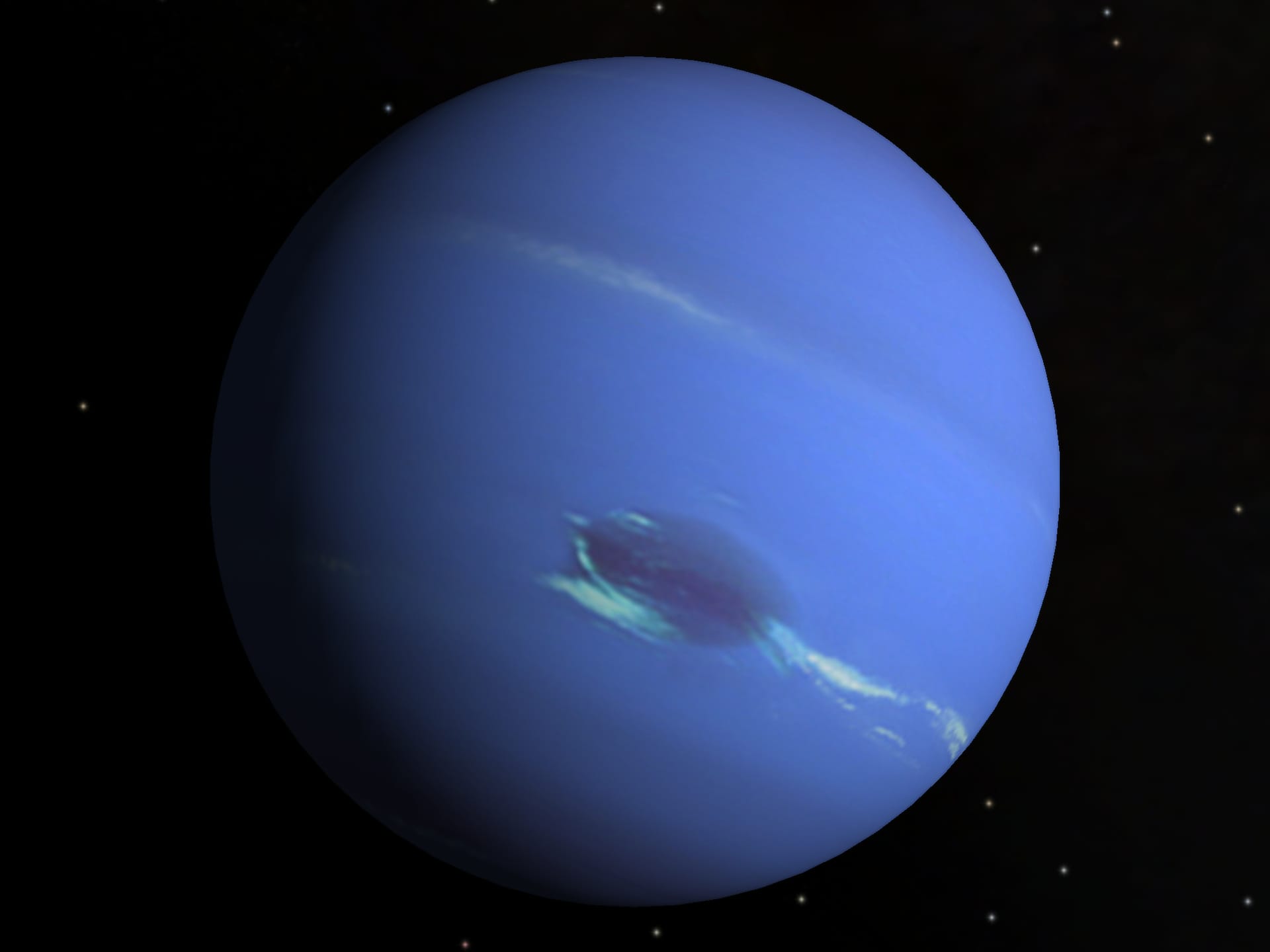
A massive, Earth-sized storm system similar to Jupiter's Great Red Spot, observed by Voyager 2.
STORMSEXPLORATION
Voyager 2 remains the only spacecraft to have visited Neptune, performing a flyby in 1989.
MISSION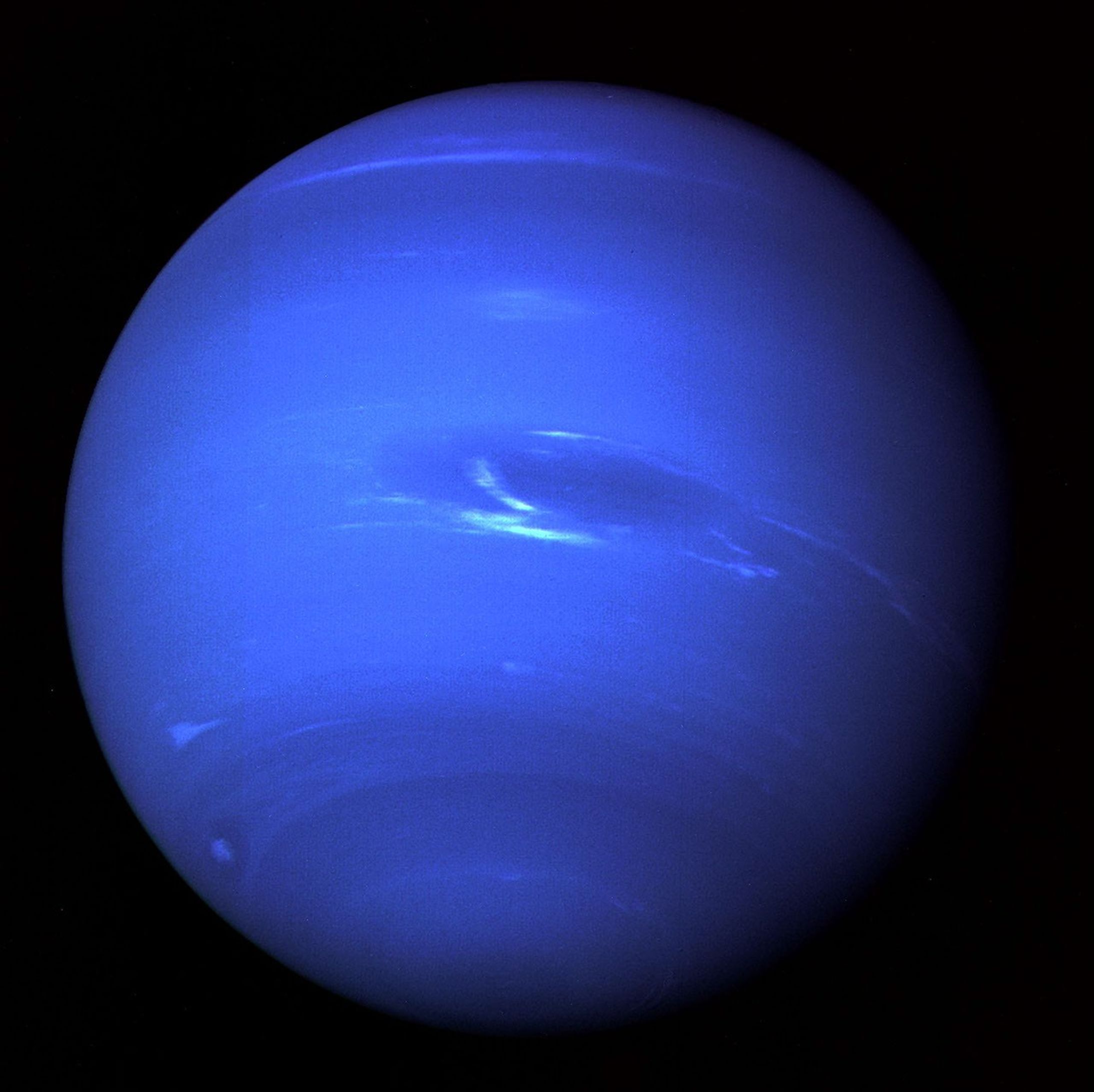
Exploring The Ice Giant
Neptune remains one of the most enigmatic worlds in our solar system. Dive into our latest research on its supersonic winds, atmospheric composition, and the mysterious internal heat that defines this distant blue giant. Discover the science behind the furthest reaches of our neighborhood.
READ NEPTUNE LOGSJoin Our Newsletter
Stay updated with the latest astronomical discoveries, space mission updates, and community events from HORIZONS. It is an honor to have you join our journey through the stars.