
Neptune Connection
NEPTUNE COMMUNICATION LAG
LIGHT-SPEED SIGNAL DELAY & TELEMETRY
The Four-Hour Echo
Because radio waves and light travel at a finite cosmic speed (roughly 300,000 km/s), communicating with a spacecraft or probe stationed near Neptune requires immense patience. At an average distance of 30 AU, instructions take hours to arrive.
A transmission sent from Earth takes over four hours to reach the ice giant's coordinates.
Waiting for an acknowledgment means mission controllers face over eight hours per interactive query loop.
Signal Delay
The 4-Hour Echo. At the edge of the solar system, communication isn't a conversation—it's an 8-hour round-trip message in a bottle.
- 🛰️ One-Way: 4 Hours, 10 Minutes.
- 🔁 Round-Trip: 8 Hours, 20 Minutes.
- 🤖 Autonomy: Essential for outer-planet survival.
Signal Latency
The Universal Speed Limit. Radio waves are fast, but space is vast. Every bit of data from Neptune is a 4-hour-old ghost by the time it reaches Earth.
- 📏 Distance: 4.5 Billion km (avg).
- ⚡ Speed: Capped at 299,792 km/s.
- 🔁 Latency: 8.4-hour round trip.
Signal Fading
Surviving the Void. To reach Earth, a signal from Neptune must overcome a -300 dB path loss, becoming a billion times weaker than a wristwatch battery.
- 📉 Path Loss: Strength drops by the square of distance.
- 🌀 Doppler: Frequency shifts due to orbital motion.
- 🐌 Data Rate: Capped at roughly 21 kbps.
ASTRONOMY / INTERPLANETARY TELEMETRY
THE LIGHT-SPEED DELAY
Communicating with the edge of the solar system requires immense patience. Because Neptune orbits thirty times farther from the Sun than Earth, radio signals traveling at light speed face a multi-hour voyage across the cosmic void.

ASTRONOMY / DEEP SPACE NETWORK
CATCHING THE FAINT WHISPER
By the time radio signals broadcast from Neptune cross billions of kilometers of space to reach Earth, they are worn down to a whisper. Extracting high-resolution data requires massive planetary-scale antenna arrays and hyper-sensitive receivers.

ASTRONOMY / OPTICAL TELEMETRY
THE LASER HORIZON
As the demand for high-definition outer-system telemetry grows, traditional radio frequencies are reaching their limits. The future of Neptune communication lies in deep-space laser optical systems capable of beaming massive data packets across the void.


Neptune Communication Lag FAQs
Understanding the reality of light-speed delays across the solar system
Because Neptune is about 4.5 billion kilometers away, a radio signal traveling at light speed takes roughly 4 hours to reach the planet (and 4 hours to return).
Communication lag is the unavoidable time delay between sending a command from Earth and receiving a response from a spacecraft due to the finite speed of light.
No. Due to the 4-hour delay each way, any spacecraft sent to Neptune must operate using highly sophisticated autonomous AI to handle maneuvers or emergencies.
Yes. As Earth and Neptune move in their respective orbits, the distance between them varies, meaning the time delay can fluctuate by over an hour throughout the year.
Spacecraft use advanced error-correcting codes, high-gain antennas, and the Deep Space Network (DSN) on Earth to reconstruct weak signals sent over immense distances.
Explore Tools!

Neptune

Supersonic Winds

Triton Retrograde Orbit

Signal Delay (Speed of Light)
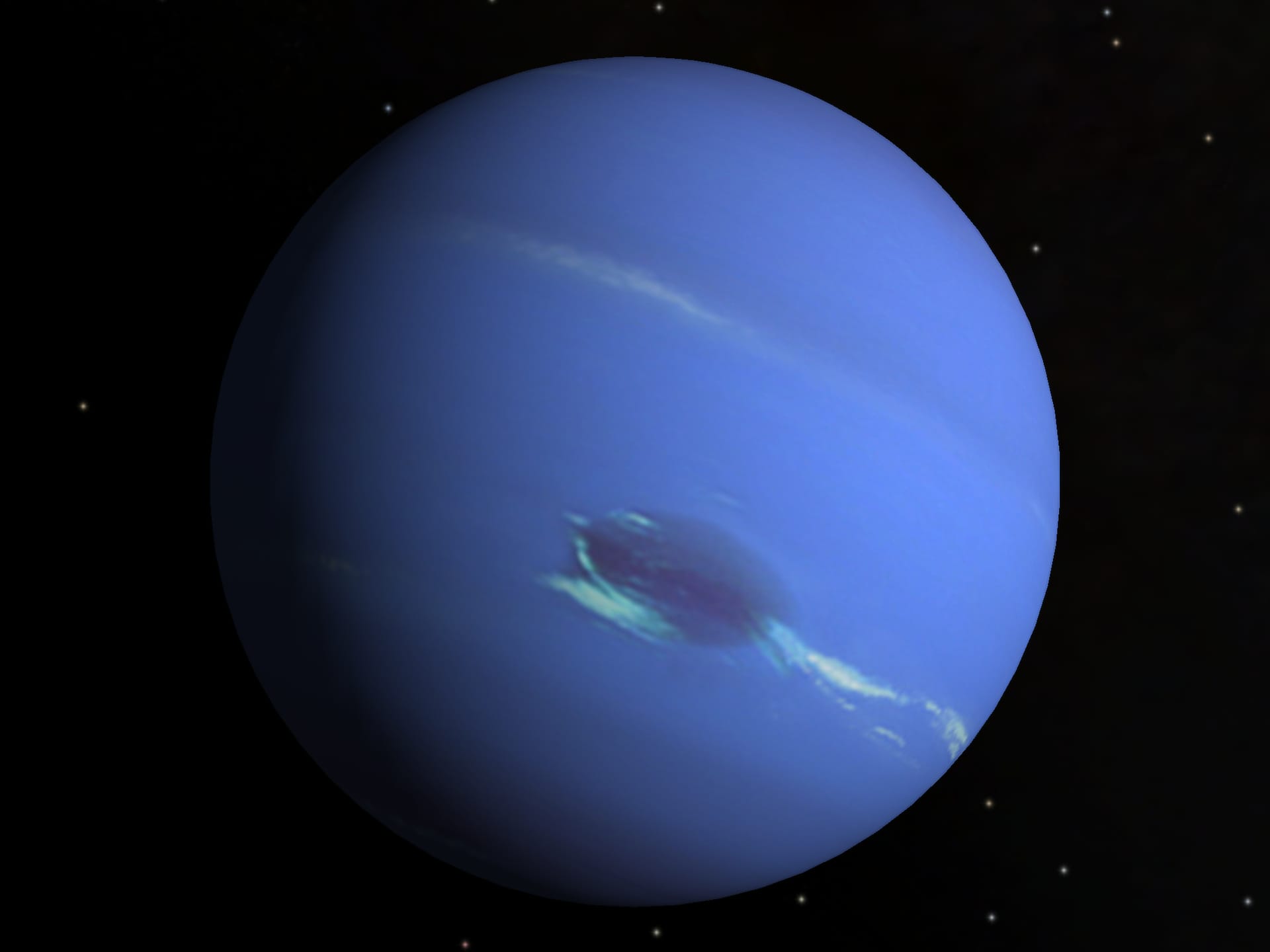
Great Dark Spot

Internal Heat Radiator

Triton Geyser Height

Cloud Top Gravity

Density Comparison

"Scooter" Cloud

Atmospheric Velocity

Solar Distance Flux
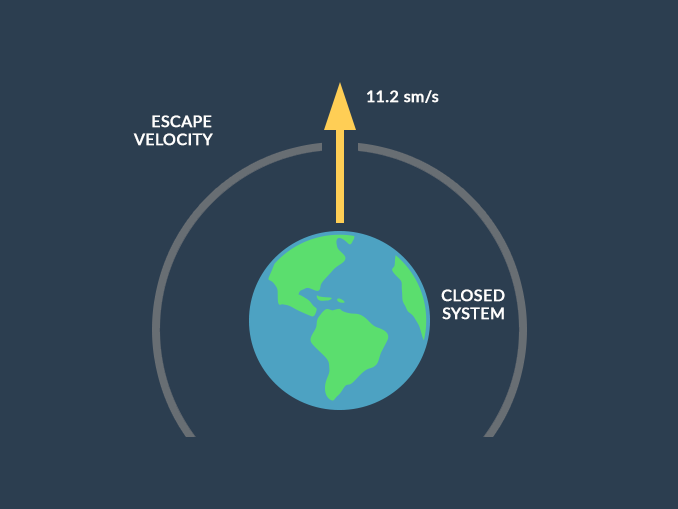
Escape Velocity

Possibility of Life

View 3D Neptune
Sources
AVERAGE LATENCY
At an average distance of 4.5 billion km, a one-way signal takes approximately **4 hours and 10 minutes**.
NASA DISTANCE DATAROUND-TRIP TIME
Sending a command and receiving confirmation (Round-Trip Light Time) takes over **8 hours**, making real-time control impossible.
DSN OPERATIONSORBITAL VARIATION
Depending on the relative positions of Earth and Neptune, the delay fluctuates by about **16 minutes** throughout the year.
ORBITAL MECHANICS