Gravity Well
PLANETARY LAB: SATURN GRAVITY WELL
MASSIVE POTENTIAL ENERGY, ESCAPE VELOCITY & ORBITAL MECHANICS
The Depth of Saturn's Gravity Well
As the second-largest planet in the solar system, Saturn possesses a massive gravitational potential well. Despite having 95 times the mass of Earth, its enormous radius distributes that mass, resulting in a surface gravity remarkably close to Earth's while demanding a high escape velocity.
Only ~1.06 times Earth's surface gravity due to volumetric expansion.
Velocity required to break free from Saturn's gravitational grasp.
Gravity Well
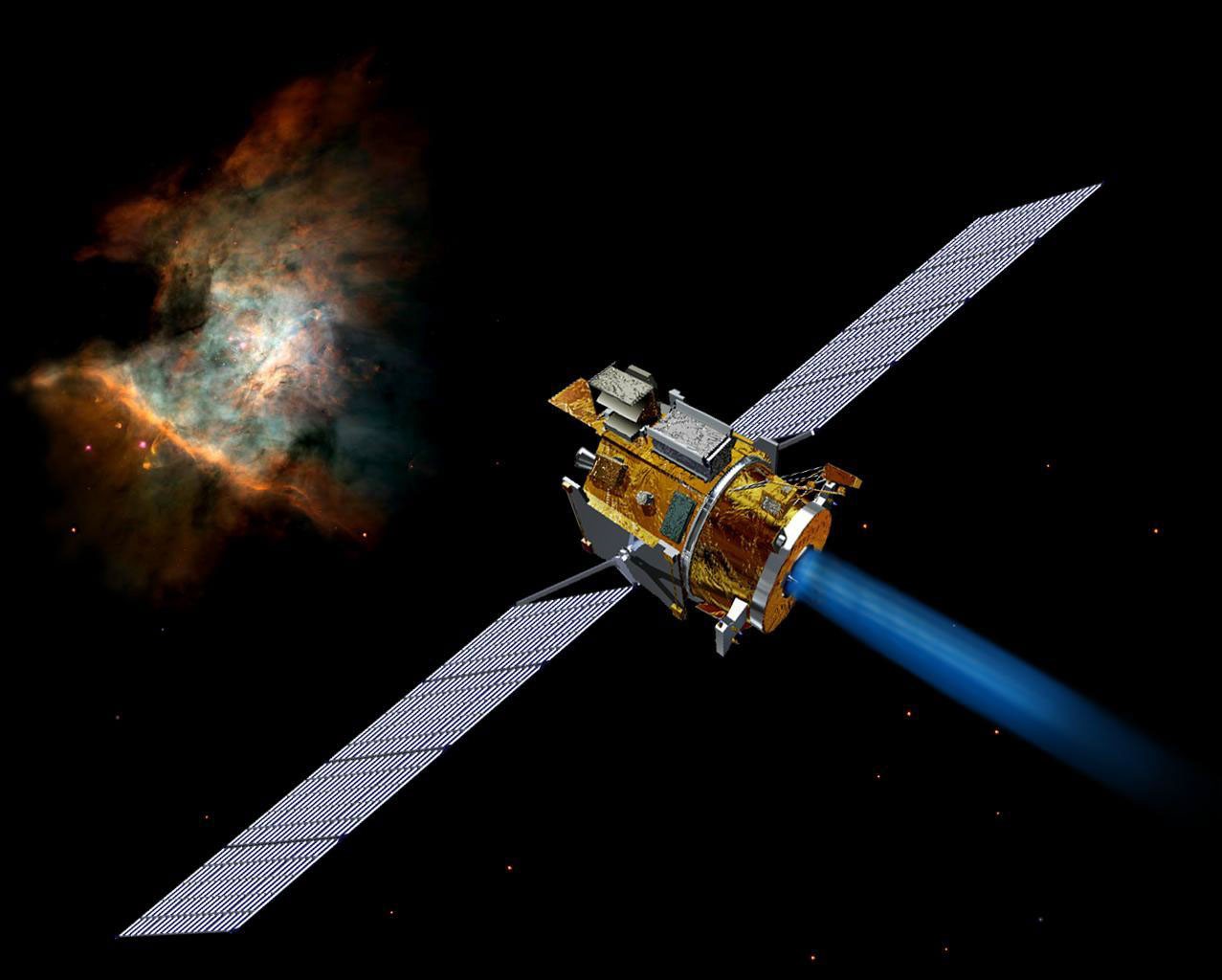
Spacetime Mapping. Analyzing the 10.44m/s² / 95x Mass constant. New Horizons monitors the Orbital Buffer to track the curvature of Saturn's gravity well.
- 🌀 Curvature: High-Density Spacetime Sync.
- 🚀 Velocity: 35.5 km/s Escape Constant.
- 🪐 Tidal: Gravitational Friction Buffer.
Escape Sync
Kinetic Mapping. Analyzing the 35.5 km/s / 127,800 km/h constant. New Horizons monitors the Velocity Buffer to track the energy required for Saturn breakout.
- ⚡ Energy: 10x Earth's Kinetic Requirement.
- 📉 Gravity: Deep-Well Breakout Calibration.
- 💨 Speed: 127,800 km/h Velocity Sync.
Weight Sync
Gravity Mapping. Analyzing the 10.44 m/s² / 1.07g constant. New Horizons monitors the Density Buffer to track perceived weight on Saturn's 1-bar level.
- ⚖️ Delta: Only 7% Heavier than Earth.
- ☁️ Level: Measured at 1-Bar Pressure Sync.
- 🔄 Rotation: Centrifugal Lift Buffer.
ORBITAL MECHANICS / PLANETARY GRAVITY WELLS
The Deep Gravitational Potential of Saturn
Saturn possesses one of the most immense gravitational wells in our solar system, second only to Jupiter among planetary bodies. With a mass nearly 95 times that of Earth, the ringed gas giant exerts a colossal gravitational pull that shapes the orbits of over one hundred moons, traps radiation belts, and accelerates incoming spacecraft to extreme hyperbolic velocities during flybys. Overcoming this gravitational well requires immense delta-v budgets, making orbital insertion and departure maneuvers around Saturn some of the most energy-intensive operations in interplanetary navigation.
ORBITAL MECHANICS / TRIBUTARY GRAVITY ASSISTS
Tidal Forces and Moon System Gravitation
Beyond Saturn’s central mass, its vast gravitational gradient generates intense tidal forces across its ring system and inner satellites. Moons like Enceladus and Titan orbit deep within this gravitational network, experiencing complex tidal flexing that heats their internal cores and drives subsurface geological activity. Spacecraft navigating the Saturnian system can harness these localized gravitational interactions to execute precision trajectory alterations, trading momentum with moons to reshape their orbits without expending scarce onboard propellant.
ORBITAL MECHANICS / SPACECRAFT DISPOSAL
Navigating the Inner Rings and Planetary Descent
Managing Saturn's extreme gravity well culminates in the ultimate orbital disposal phase for deep space missions. As demonstrated by the Cassini spacecraft's Grand Finale, navigating the narrow gap between Saturn's innermost ring and its cloud tops requires precise trajectory control against massive tidal forces. Plunging a spacecraft directly into Saturn's deep gravitational well guarantees its complete incineration in the hydrogen-helium envelope, permanently protecting pristine icy moons like Titan and Enceladus from accidental biological contamination.
Sources
ESCAPE VELOCITY
To "climb out" of Saturn's gravity well, a spacecraft must reach **35.5 km/s** (79,400 mph). For comparison, Earth's escape velocity is only **11.2 km/s**.
VELOCITY DATASURFACE GRAVITY
Despite its massive size, Saturn's surface gravity is only **1.065 g** (10.44 m/s²) because of its low density. You would weigh nearly the same there as on Earth.
GRAVITY SPECSHILL SPHERE
Saturn's "sphere of influence" extends **65 million km**. Anything within this radius is effectively trapped in Saturn's gravity well rather than the Sun's.
ORBITAL RADIUS
Saturn Gravity Well & Orbital Mechanics FAQs
Analyzing the immense gravitational pull, orbital energy requirements, and deep gravitational well surrounding the ringed gas giant Saturn
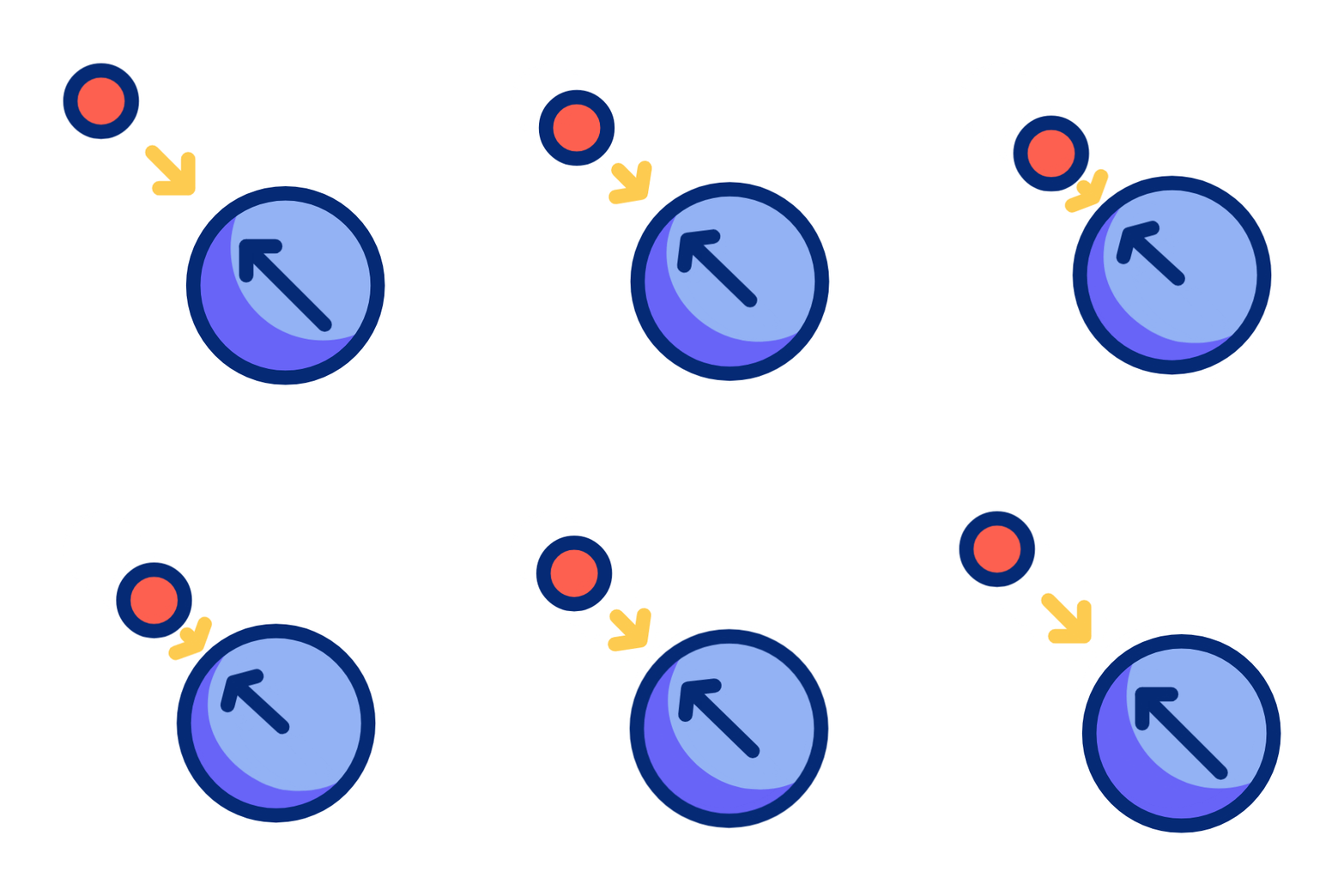
A gravitational well is the conceptual depression in spacetime created by Saturn's massive mass, meaning spacecraft require immense energy to climb down into or escape out of its gravitational field.
Despite being 95 times more massive than Earth, Saturn's massive radius results in a surface gravity at its cloud tops that is very similar to Earth's—about 10.44 meters per second squared.
Because of Saturn's deep gravity well and high orbital velocity requirements, arriving spacecraft build up immense kinetic energy that must be shed using massive rocket burns for orbital insertion.
Spacecraft perform planetary flybys of Venus, Earth, and Jupiter, stealing small amounts of orbital momentum to swing deeper into the solar system without needing prohibitive amounts of onboard fuel.
Large moons like Titan and icy inner satellites orbit within Saturn's gravitational network, creating complex orbital resonances and tidal forces that sculpt the structure of the planetary rings.
An object trying to break free from Saturn's deep gravitational grip directly from its upper atmosphere must reach an astounding escape velocity of roughly 36 kilometers per second.
Proximity to Saturn introduces strong gravitational gradients where the gravitational pull on the near side of a spacecraft is noticeably stronger than on the far side, inducing structural stress.
The rings exist inside Saturn's Roche limit, where the planet's intense tidal gravitational forces prevent ice particles and debris from coalescing into a single larger moon.
During its final months, Cassini executed 22 daring dives through the 2,400-kilometer gap between Saturn and its rings, utilizing precise gravity calculations to skim the inner rim.
Any spacecraft or probe falling into Saturn's gravity well is rapidly crushed by extreme atmospheric pressures and incinerated by crushing temperatures long before reaching any solid core.
Saturn Surface Gravity Comparison
Solar System Planets • Equatorial / 1-bar Level GravitySurface gravity (g) at the 1-bar level for gas giants. Saturn’s gravity is surprisingly close to Earth’s because its low density and large size spread its mass over a huge volume. Rapid rotation further reduces effective gravity at the equator.
| Body | Surface Gravity | vs Earth |
|---|---|---|
|
Mercury
Innermost planet
|
0 m/s² | 0 g |
|
Venus
Earth’s twin
|
0 m/s² | 0 g |
|
Earth
Reference
|
0 m/s² | 0 g |
|
Moon
Earth’s satellite
|
0 m/s² | 0 g |
|
Mars
Red Planet
|
0 m/s² | 0 g |
|
Jupiter
Largest planet
|
0 m/s² | 0 g |
|
Saturn Focus
Ringed gas giant
|
0 m/s² | 0 g |
|
Uranus
Ice giant
|
0 m/s² | 0 g |
|
Neptune
Ice giant
|
0 m/s² | 0 g |
|
Pluto
Dwarf planet
|
0 m/s² | 0 g |
- Horizon -

Saturn

Ring Particle Collision

Thickness / Scale Ratio

Shepherd Moon Gravity
Roche Limit Calc

Dust to Ice Ratio
Ring Orbital Speed

Hexagon Wind Speed

Saturn's Density

Helium Rain Energy

Diamond Rain Energy

Supersonic Jet Streams

Methane Rain Ratio

Human Flight on Titan

Hydrocarbon Lake Depth

Titan Buoyancy

Gravity Well

Atmospheric Opacity

Enceladus Geyser Height

Light Travel Delay
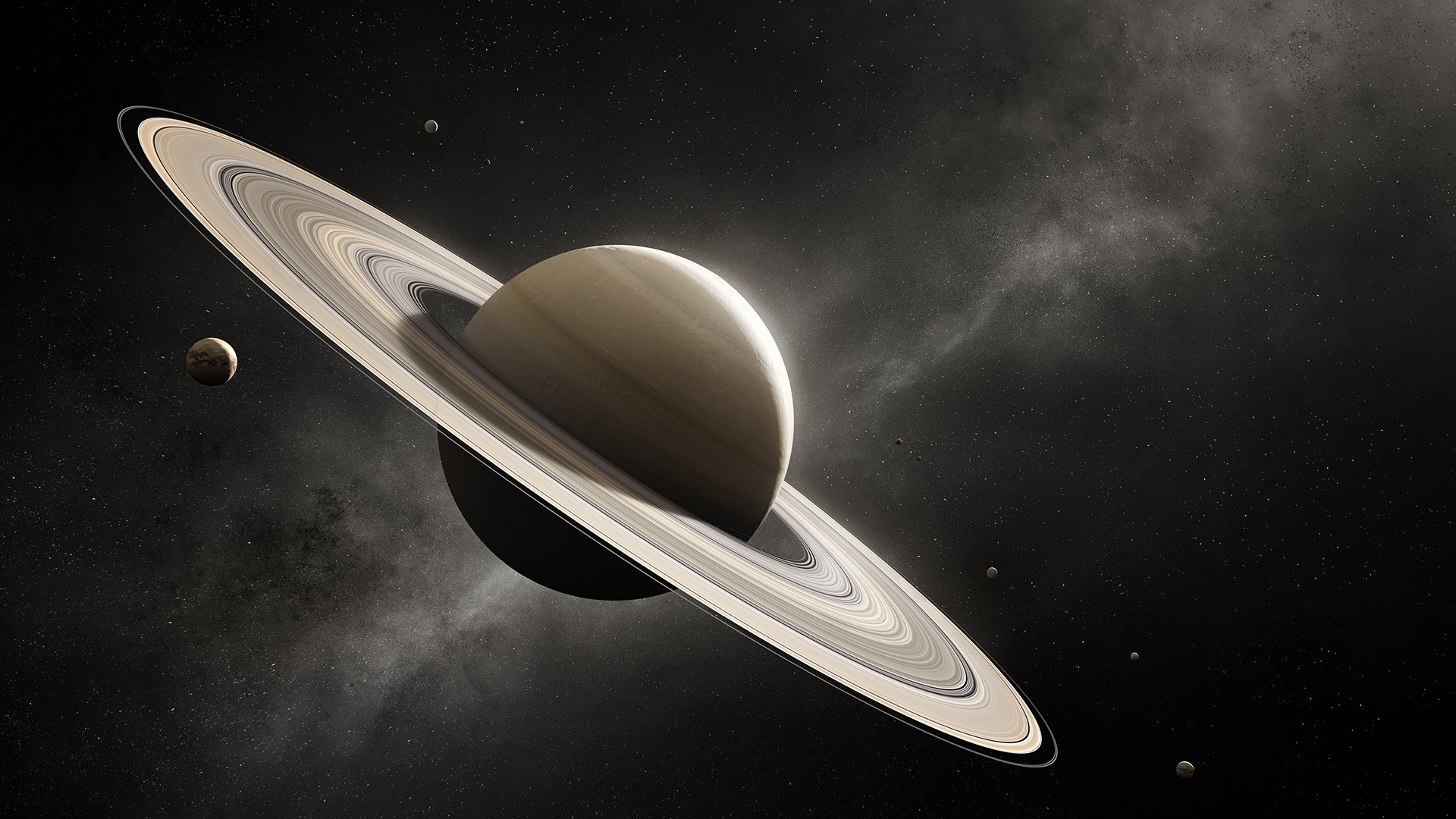
Saturn Season Tilt
/https://tf-cmsv2-smithsonianmag-media.s3.amazonaws.com/filer_public/ca/b0/cab0042a-70c0-4d60-a94a-20474eb1885b/gettyimages-560665807.jpg)
3D Model of Saturn