Atmospheric Opacity
PLANETARY LAB: SATURN ATMOSPHERIC OPACITY
AEROSOL SCATTERING, AMMONIA CLOUD DECKS & OPTICAL DEPTH ($\tau$)
Atmospheric Opacity & Light Penetration
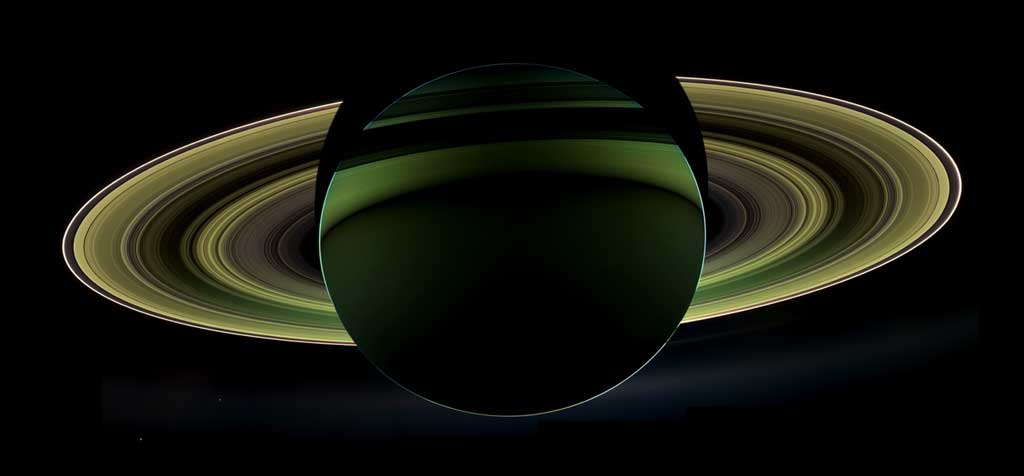
Saturn’s atmosphere features complex layers of haze, ice crystals, and cloud decks that dictate how light penetrates its gaseous envelope. Optical depth ($\tau$) varies drastically across altitude tiers, driven by photochemical hazes in the stratosphere and dense ammonia clouds deeper down.
Transition point where direct sunlight is completely diffused.
Suspended particulate layers obscuring deep interior views.
Opacity Sync
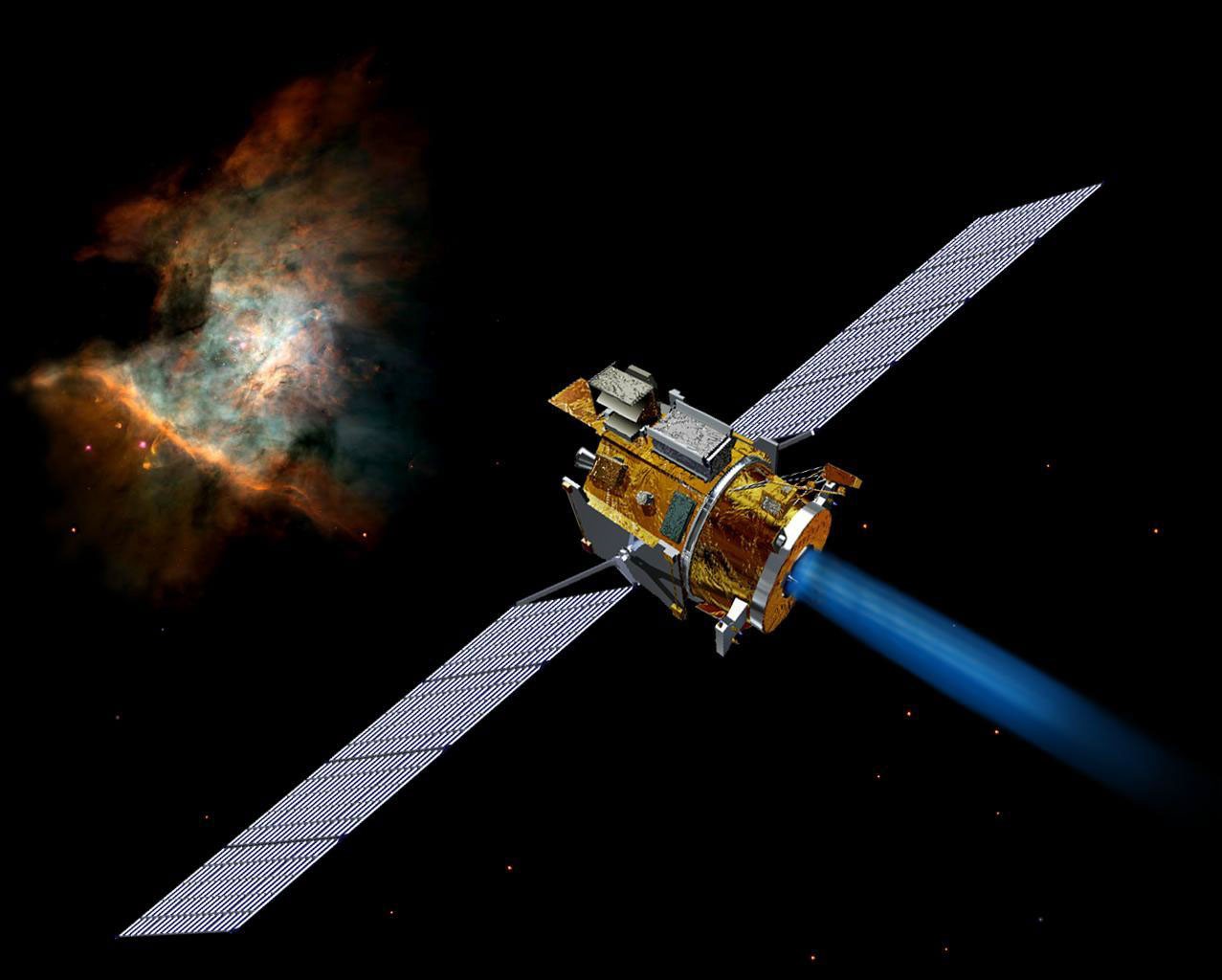
Radiative Mapping. Analyzing the Absorption / Extinction constant. New Horizons monitors the Optical Buffer to track photon transmission through planetary gases.
- ☁️ Density: Molecular Extinction Calibration.
- 📡 Windows: Electromagnetic Transmission Bands.
- 🌡️ Thermal: Greenhouse Heat Retention Sync.
Ammonia Sync
Crystal Mapping. Analyzing the NH 3 / Condensation constant. New Horizons monitors the Ammonia Buffer to track solar scattering in the upper Saturnian atmosphere.
- ❄️ Crystalline: Solid Phase NH 3 Particle Sync.
- ☀️ Albedo: High Reflectivity Scattering Protocol.
- 🔭 Opacity: Hidden Deep-Layer Stratigraphy.
Aerosol Sync
Spectral Mapping. Analyzing the CH4 / UV Photolysis constant. New Horizons monitors the Haze Buffer to track the scattering of shorter wavelengths.
- 🧪 Photochemical: Methane-to-Hydrocarbon Sync.
- 💛 Chromophore: Golden Wavelength Dominance.
- 🌫️ Haze: Stratospheric Blue-Light Scattering.
Stellar Sync
Shadow Mapping. Analyzing the I/I 0 / Tau constant. New Horizons monitors the Occultation Buffer to track ring particle density through light-curve analysis.
- ⭐️ Photonic: Background Star Intensity Calibration.
- 📉 Depth: Optical Tau Density Sync.
- 📏 Spatial: Meter-Scale Structural Resolution.
PLANETARY ATMOSPHERES / RADIATIVE TRANSFER
The High Opacity of Saturn's Cloud Deck
Saturn’s upper atmosphere features a deeply layered, highly opaque cloud deck dominated by ammonia ice crystals, ammonium hydrosulfide, and deep water-ice formations. Unlike Jupiter's vivid, high-contrast belt and zone structures, Saturn's disk is shrouded in a thick photochemical haze and upper-tropospheric ammonia veil that scatters sunlight diffusely. This extreme optical depth obscures the planet's deeper convective dynamics, requiring specialized infrared and radio astronomy wavelengths to peer beneath the visible golden surface.
PLANETARY ATMOSPHERES / VERTICAL RADIATIVE PROFILES
Thermal Radiative Profiles and Opacity Gradients
Saturn's atmospheric opacity directly dictates its vertical radiative transfer and thermal structure. The multi-layered cloud decks absorb incoming solar ultraviolet radiation within the upper stratosphere while simultaneously trapping outgoing infrared thermal emissions from the deep interior. This complex opacity gradient creates distinct temperature inversion layers and fuels hyper-velocity zonal wind streams, such as the famous north polar hexagon, which circulate beneath the dense photochemical haze without losing momentum.
PLANETARY ATMOSPHERES / RADIO SOUNDING & PROBES
Probing Deep Atmospheric Opacity with Radio Science
Piercing Saturn’s dense atmospheric opacity requires advanced remote sensing and direct in-situ telemetry. Because visible wavelengths cannot penetrate the thick ammonium hydrosulfide and water-ice cloud decks, planetary scientists rely on microwave radiometry and radio occultation experiments—such as those executed during Cassini's final orbits. By measuring how radio signals bend and attenuate as they pass through the gaseous envelope, researchers can construct precise vertical profiles of ammonia abundance, temperature, and pressure beneath the opaque golden shroud, revealing the hidden dynamics of the gas giant's deep interior.
Sources
INERTIA CONCEPT
Inertia is the resistance of any physical object to any change in its velocity. This includes changes to the object's speed or direction of motion.
INERTIA BASICSNET FORCE (F)
If the net force is zero (F = 0), acceleration is zero. An object in space keeps moving forever because there is no air friction to stop it.
FORCE VECTORSREAL-WORLD BRAKING
When a car stops suddenly, your body continues forward. This is your inertia at work, which is why seatbelts (external forces) are necessary.
APPLICATION
Saturn Atmospheric Opacity FAQs
Examining the haze layers, cloud decks, light scattering, and optical depth properties of Saturn's complex gas giant atmosphere
Atmospheric opacity refers to how opaque or resistant Saturn's outer gas layers are to the penetration of light, determining how deep remote-sensing instruments and sunlight can probe into the planet.
Saturn features a thick, highly opaque layer of photochemical smog and ammonia-ice hazes suspended high in its upper stratosphere, which diffuses sunlight and obscures the deeper, sharper storm bands.
The atmosphere is composed primarily of molecular hydrogen and helium, mixed with trace elements like methane, ammonia, and water vapor that condense into distinct, vertically separated cloud decks.
Researchers use infrared, ultraviolet, and radio occultation measurements—tracking how spacecraft signals degrade or bend as they pass through the atmospheric layers—to map density and opacity profiles.
As Saturn moves through its 29-year orbit, varying sunlight exposure triggers chemical reactions in the upper stratosphere, altering haze thickness and shifting hemispheric color tones over time.
Sunlight penetrates only through the upper ammonia-ice cloud deck before encountering layers of total optical opacity where multiple scattering completely diffuses incoming radiation.
Temperature and pressure gradients dictate where different chemical compounds condense, creating an upper ammonia cloud deck, a middle ammonium hydrosulfide layer, and a deep water-ice cloud layer.
Greenhouse gases and cloud opacity trap internal planetary heat, regulating the thermal balance and causing Saturn to radiate more energy into space than it receives from the distant Sun.
Yes, massive convective upheavals like the periodic Great White Spot eruption force deep, bright material upward through the upper haze layers, dramatically altering regional opacity.
Mapping opacity helps climatologists model wind speeds, jet streams, and heat transport mechanisms hidden beneath the opaque veil of Saturn's upper atmosphere.
- Horizon -

Saturn

Ring Particle Collision

Thickness / Scale Ratio

Shepherd Moon Gravity
Roche Limit Calc

Dust to Ice Ratio
Ring Orbital Speed

Hexagon Wind Speed

Saturn's Density

Helium Rain Energy

Diamond Rain Energy

Supersonic Jet Streams

Methane Rain Ratio

Human Flight on Titan

Hydrocarbon Lake Depth

Titan Buoyancy

Gravity Well

Atmospheric Opacity

Enceladus Geyser Height

Light Travel Delay
Saturn Season Tilt
/https://tf-cmsv2-smithsonianmag-media.s3.amazonaws.com/filer_public/ca/b0/cab0042a-70c0-4d60-a94a-20474eb1885b/gettyimages-560665807.jpg)
3D Model of Saturn