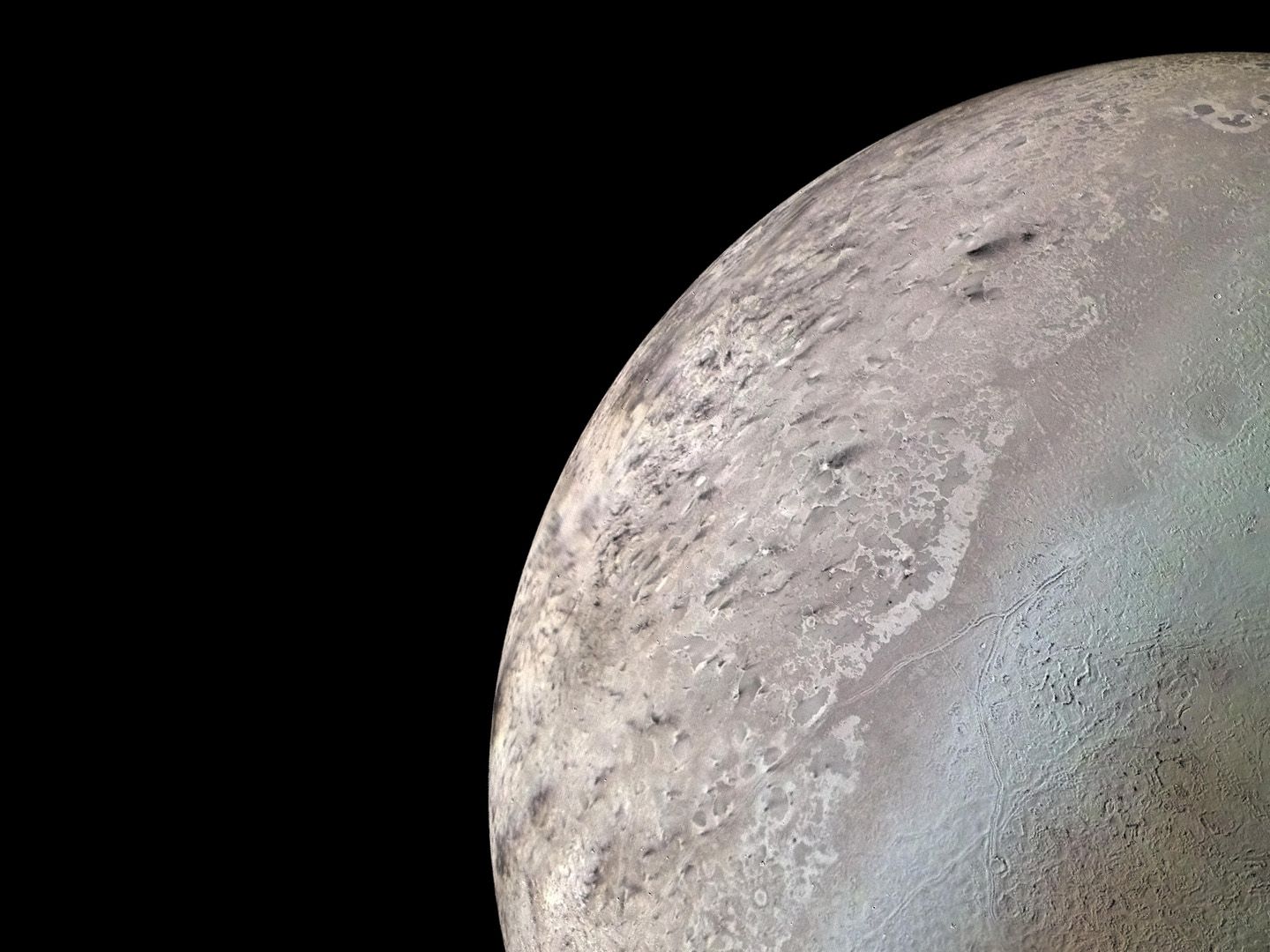
Neptune Triton
TRITON'S RETROGRADE ORBIT
KUIPER BELT CAPTURE & TIDAL DECAY
Backward Motion
Triton is the only large moon in our solar system that orbits in the opposite direction of its planet's rotation (retrograde). This definitive mechanical signature proves it is not a native satellite, but a massive Kuiper Belt object captured by Neptune long ago.
Orbits backward against Neptune's rotation, creating immense gravitational drag forces.
Tidal friction is steadily lowering Triton's orbit, placing it on a collision course to be ripped apart.
Triton
The Captured World. A frozen relic of the Kuiper Belt, Triton orbits Neptune backward while spewing nitrogen gas into the void.
- 🔄 Orbit: Retrograde (Captured KBO).
- 🌋 Geysers: Nitrogen plumes reach 8km high.
- 📉 Future: Will eventually form a ring system.
Moon Origin
Native vs. Visitor. While Neptune has its own family of inner moons, its largest resident, Triton, is a captured visitor from the Kuiper Belt.
- ⬅️ Triton: Retrograde orbit confirms visitor status.
- 🌀 Inner Moons: Native fragments of ancient collisions.
- 📉 The End: The visitor will eventually become a ring.
Standard Orbit
Prograde Stability. Born from the same spinning disk as the planet, standard moons move in harmony with their host world.
- 🔄 Vector: Matches planet's rotational spin.
- 📐 Inclination: Locked near the equatorial plane.
- ⏳ Legacy: A relic of the early solar system.
Tidal Braking
The Inward Spiral. Moving against Neptune's spin, Triton is trapped in a gravitational drag that will eventually tear the moon apart.
- 🔄 Force: Lagging tidal bulge creates orbital drag.
- 📏 Fate: Spiraling inward toward the Roche Limit.
- 🪐 Outcome: Future formation of a massive ring.
Roche Limit
Final Boundary. Once Triton crosses the 65,000 km mark, Neptune's gravity will overcome the moon's internal cohesion, shattering it into a ring.
- 💥 Tidal Stress: Gravity tears the moon apart from within.
- 📉 Spiral: Retrograde orbit ensures this fate is inevitable.
- ✨ Creation: The death of a moon is the birth of a ring.
ASTRONOMY / SATELLITE DYNAMICS
THE REBEL RETROGRADE ORBIT
Among all of the major moons in our solar system, Triton stands entirely alone. While every other large natural satellite revolves in the direction of its parent planet's spin, Triton moves in a sharp, counter-rotating retrograde path.

ASTRONOMY / CRYOGEOLOGY
THE FROZEN PLAINS & GEYSERS
Triton's surface is an active, frozen wasteland of nitrogen ice plains, cantaloupe-textured crusts, and mysterious cryovolcanoes that shoot plumes of dark organic dust miles high into a virtually nonexistent atmosphere.

ASTRONOMY / ASTROBIOLOGY
THE SUBSURFACE OCEAN
Deep beneath Triton’s frozen nitrogen shell lies a compelling possibility: a liquid water ocean kept warm by ancient tidal flexing and radioactive decay, opening a window into potential outer-system habitability.


Triton's Retrograde Orbit FAQs
Uncovering the mysteries of Neptune's unique, backward-orbiting moon
A retrograde orbit is an orbital path in which a moon revolves around its host planet in the direction opposite to the planet's own rotation.
Triton is the only large moon in the solar system to orbit its planet in the opposite direction, a strong indicator that it was not formed alongside Neptune.
Most astronomers believe Triton was an independent object in the Kuiper Belt before it was captured by Neptune's massive gravitational pull billions of years ago.
Due to its retrograde motion, Triton is slowly spiraling inward toward Neptune. Millions of years from now, it will likely be torn apart by tidal forces, forming a ring system.
Yes; the tidal stresses caused by its unique orbital decay generate internal heat, which powers the active nitrogen cryovolcanoes observed on its surface.
Explore Tools!
Neptune

Supersonic Winds

Triton Retrograde Orbit

Signal Delay (Speed of Light)
Great Dark Spot

Internal Heat Radiator

Triton Geyser Height

Cloud Top Gravity

Density Comparison

"Scooter" Cloud

Atmospheric Velocity

Solar Distance Flux
Escape Velocity

Possibility of Life

View 3D Neptune
Sources
CAPTURE ORIGIN
Triton’s retrograde motion suggests it was likely a binary KBO system before being captured by Neptune.
CAPTURE THEORYTIDAL DECELERATION
Because of its retrograde orbit, tidal forces are gradually slowing Triton down and pulling it closer to Neptune.
ORBITAL DECAYORBITAL INCLINATION
Triton's orbit is tilted at a significant 157° relative to Neptune's equator, confirming its irregular nature.
PHYSICAL STATS