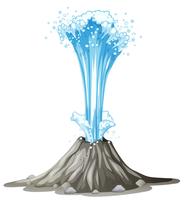
Triton Geyser Height
TRITON GEYSER HEIGHT
CRYO-VOLCANIC PLUMES & NITROGEN DYNAMICS
Towering Nitrogen Plumes
When Voyager 2 flew past Triton, it captured active cryo-volcanic geysers shooting dark dust and vapor high into the thin atmosphere. Driven by sunlight penetrating a translucent nitrogen ice sheet, subsurface liquid or gas bursts upward with incredible force.
Geyser plumes climb up to 8,000 meters high before meeting horizontal wind shear layers.
Falling dark soot particles drift horizontally for over a hundred kilometers, painting the ice crust.
Geyser Height
Cryovolcanic Plumes. In Triton's weak gravity, pressurized nitrogen gas erupts through the ice, towering 8 kilometers above the frozen surface.
- 📏 Vertical: 8,000 meters high.
- ↔️ Horizontal: 150 km wind streaks.
- ☀️ Driver: Subsurface Solar Greenhouse effect.
Vertical Limit
8 Kilometers High. In Triton's near-vacuum and weak gravity, nitrogen plumes reach altitudes that dwarf Earth's highest mountains.
- 📏 Vertical: 8 km straight-up ascent.
- 🌬️ Horizontal: Drifts into 150 km streaks.
- 📉 Gravity: Only 0.779 m/s² (8% of Earth).
Atmospheric Streaks
Horizontal Migration. High-altitude winds catch the dark geyser dust, dragging it across the icy plains to create 150km-long signatures of Triton’s climate.
- 🏁 Range: Over 150 km from the source vent.
- 🌪️ Velocity: 30–50 m/s high-altitude winds.
- 🌑 Material: Dark carbon-rich "tholin" dust.
Sub-Surface Pressure
The Greenhouse Explosion. Trapped solar heat sublimates nitrogen ice into high-pressure gas, turning Triton's crust into a ticking geological time bomb.
- ☀️ Input: Solar penetration through nitrogen ice.
- 💨 Process: Solid-to-gas sublimation.
- ⚡ Result: Pressure-driven supersonic eruption.
ASTRONOMY / CRYOCLIMATE DYNAMICS
TOWERING NITROGEN PLUMES
Though locked in a subzero wasteland, Triton hosts active cryovolcanic geysers that thrust dark organic dust and nitrogen vapor up to eight kilometers high into the thin exosphere, defying the frozen tranquility of the outer solar system.

ASTRONOMY / PLUME COMPOSITION
THE DARK STREAKS & SEASONS
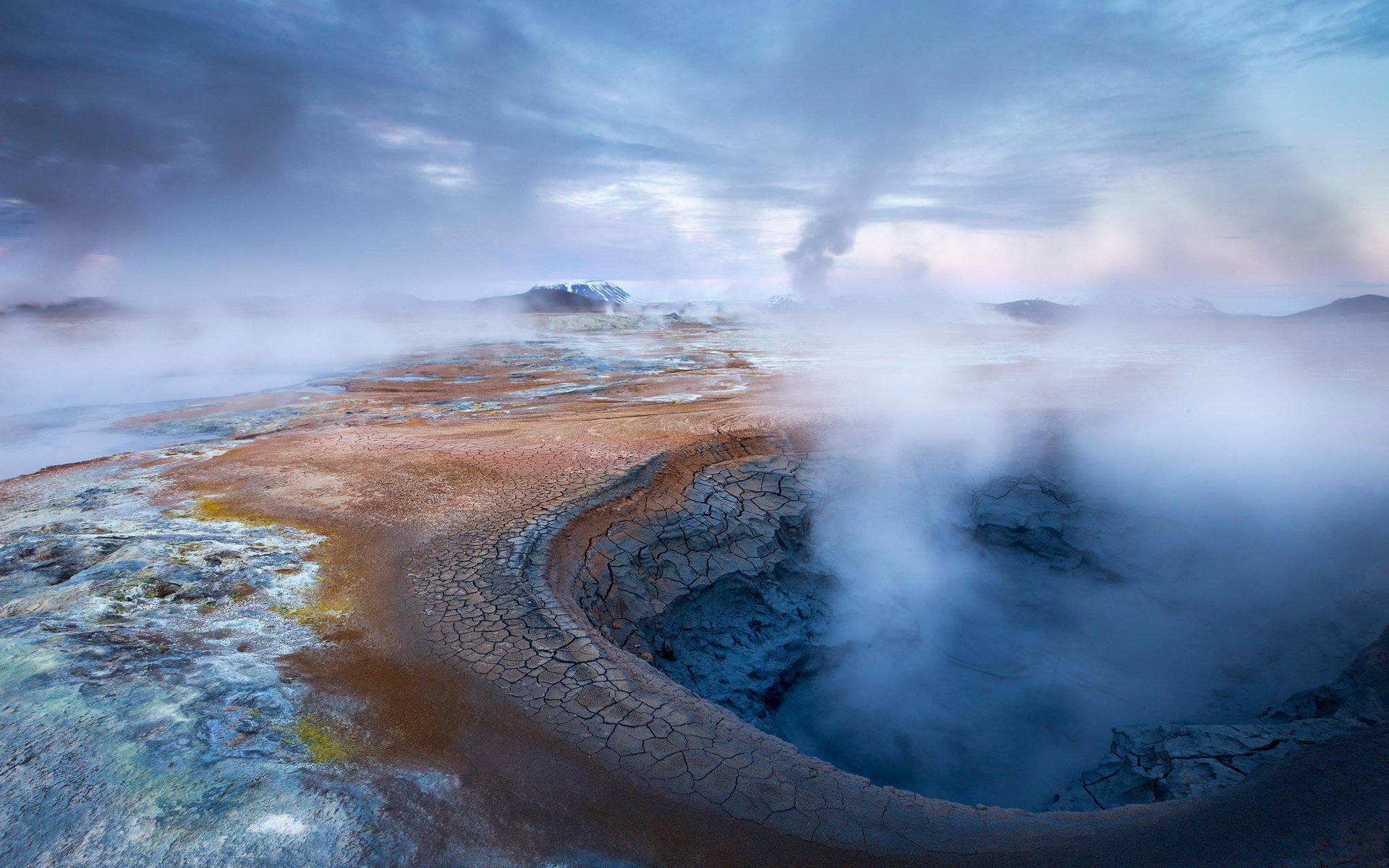
The towering geysers of Triton do more than erupt into the sky—they actively paint the frost-covered moon. As vaporized nitrogen and dark organic particles settle back down, they leave behind elongated smudges that trace the direction of high-altitude winds.
ASTRONOMY / FUTURE EXPLORATION
RETURNING TO TRITON
Since Voyager 2's fleeting 1989 flyby, Triton has remained untouched by human instruments. Next-generation planetary mission concepts aim to return to the ice giant system, deploying dedicated orbiters and landers to study active cryovolcanism firsthand.
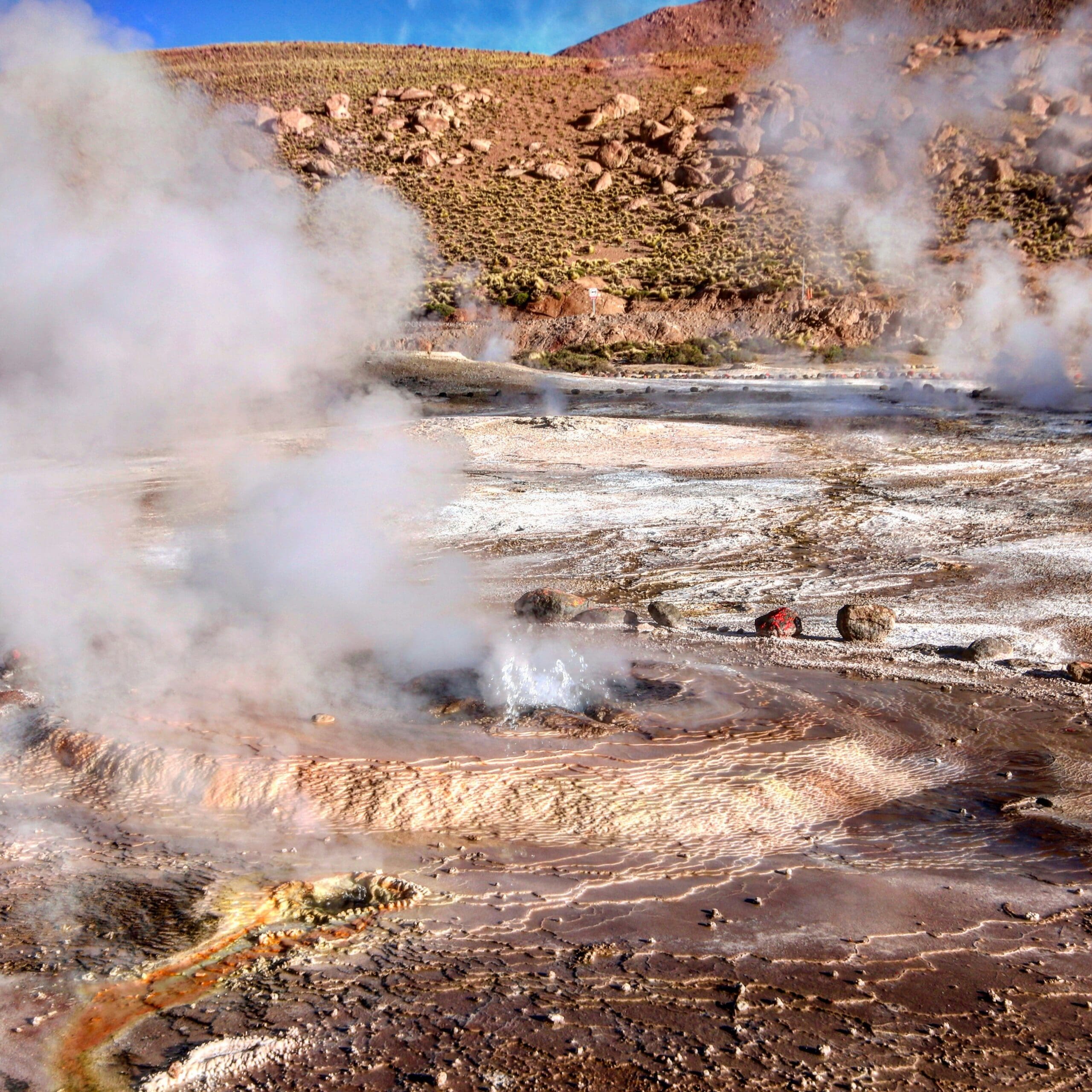

Triton's Geyser Heights FAQs
Examining the colossal cryovolcanic plumes erupting across Neptune's largest moon
Triton's cryovolcanic plumes can shoot nitrogen gas and dark dust particles up to 8 kilometers (about 5 miles) high into the thin atmosphere.
Sunlight penetrates Triton's translucent nitrogen ice crust, creating a greenhouse effect that heats subsurface nitrogen gas until it bursts violently through weak points.
As the gas geysers shoot upward, high-altitude winds blow the dust and dark organic material sideways, creating long, prominent streaks across the bright icy surface.
Triton has a much lower surface gravity than Earth and an extremely thin atmosphere, allowing erupting material to coast effortlessly over much greater vertical distances.
They were famously captured by the Voyager 2 spacecraft during its historic flyby of the Neptune system in August 1989, surprising scientists with active volcanism.
Explore Tools!

Neptune

Supersonic Winds

Triton Retrograde Orbit

Signal Delay (Speed of Light)
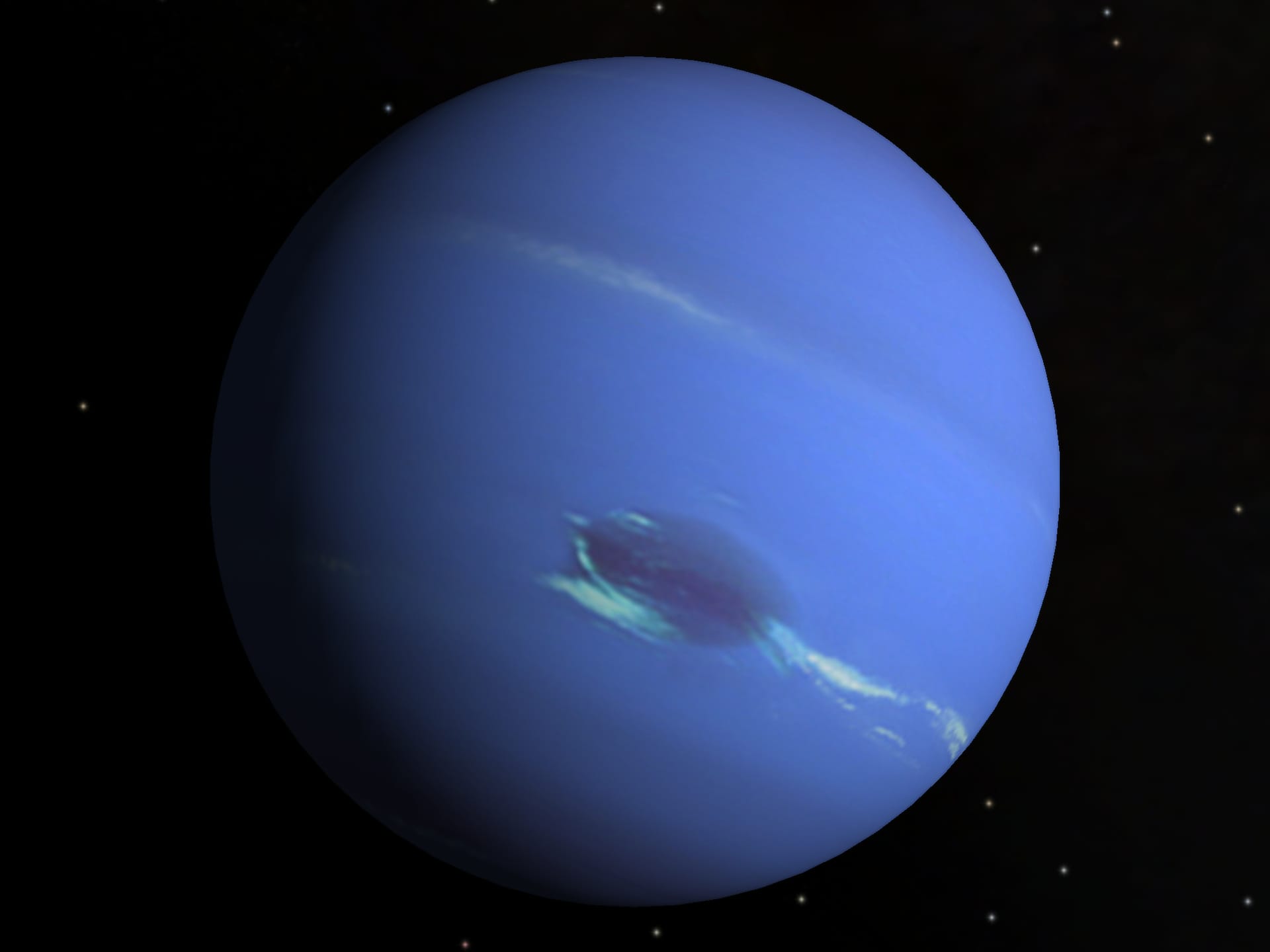
Great Dark Spot

Internal Heat Radiator

Triton Geyser Height

Cloud Top Gravity

Density Comparison

"Scooter" Cloud

Atmospheric Velocity

Solar Distance Flux
Escape Velocity

Possibility of Life

View 3D Neptune
Sources
VERTICAL HEIGHT
Eruptions shoot nitrogen gas and dust plumes directly upward to an altitude of **8 kilometers** (5 miles).
NASA MISSION DATAHORIZONTAL DRIFT
Once the plumes reach the thin atmosphere, they drift horizontally for over **150 kilometers** due to high-altitude winds.
VOYAGER IMAGERYDRIVING FORCE
Subsurface nitrogen is heated by the Sun through a "greenhouse effect" in the ice, creating pressure that vents through cracks.
CRYOVOLCANO MATH