
Cloud Top Gravity
CLOUD-TOP GRAVITY
PLANETARY MASS & ACCELERATION DYNAMICS
Earth-Like Pull at the Clouds
Despite being over 17 times more massive than Earth, Neptune's large radius spreads out that mass. Consequently, the gravitational pull at its 1-bar atmospheric cloud tops is surprisingly close to what we experience on Earth.
Roughly 1.14 times Earth's standard gravitational acceleration ($1.14G$).
A massive ice and rock core generates intense gravitational fields deep within the planet.
Cloud Top Gravity
The Mass Paradox. Neptune is 17 times more massive than Earth, yet you would only feel 14% heavier at its cloud tops due to its massive radius.
- ⚖️ Constant: 11.15 m/s² (1.14g).
- 🌀 Rotation: Centrifugal force reduces equatorial gravity.
- ☁️ Datum: Measured at the 1-bar pressure level.
Relative Weight
The 1.14g Factor. While Neptune is a massive giant, its gravity is the most "Earth-like" in the outer solar system, increasing your weight by only 14%.
- ⚖️ Earth: 100 kg baseline.
- 🔵 Neptune: 114 kg cloud-top equivalent.
- 📏 Ratio: 1.14x Earth's gravitational pull.
Escape Velocity
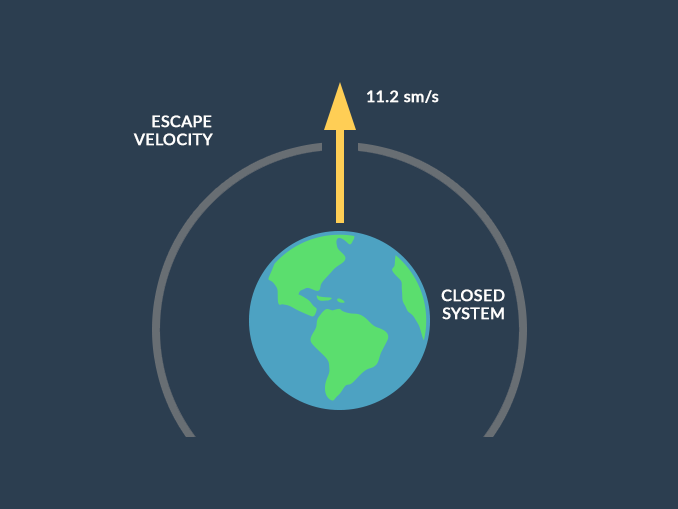
Breaking the Pull. Escaping Neptune requires a staggering 23.5 km/s—doubling Earth's requirement and highlighting the hidden depth of the ice giant's gravity.
- 🚀 Target: 23.5 km/s (84,600 km/h).
- ⚖️ Energy: 4.4x Earth's escape energy.
- 📏 Ratio: 2.1x Earth's velocity requirement.
Density Factor
Compact Power. Neptune’s high density makes it the gravity heavyweight of the ice giants, packing 17 Earth-masses into a concentrated, violent sphere.
- 📦 Density: 1.64 g/cm³ (Densest Giant).
- ⚖️ Gravity: 11.15 m/s² (vs Uranus's 8.69).
- 🧪 Result: Greater atmospheric compression.
ASTRONOMY / PLANETARY GRAVITATION
THE CLOUD-TOP GRAVITY FIELD
Because gas and ice giants lack a solid ground level, planetary scientists measure surface gravity at the level where the atmospheric pressure equals one bar. Despite being nearly seventeen times more massive than Earth, Neptune's immense size spreads out that mass, yielding a surprisingly familiar gravitational pull at its cloud tops.

ASTRONOMY / INTERIOR COMPRESSION
THE CRUSHING GRADIENT
While Neptune's cloud-top gravity feels remarkably familiar, descending into the planet tells a radically different story. As gravity accumulates mass above, atmospheric pressure climbs at an extraordinary rate, transforming gases into dense, supercritical fluids.

ASTRONOMY / GRAVITATIONAL MAPPING
READING THE INVISIBLE FIELD
Because we cannot physically drill into an ice giant, planetary scientists rely on precision spacecraft tracking to map Neptune's gravitational harmonics, turning subtle orbital wobbles into a window straight to the planet's core.


Neptune's Cloud-Top Gravity FAQs
Investigating the surprising gravitational forces at the edge of the ice giant's atmosphere
At Neptune's 1-bar atmospheric pressure level (the cloud tops), the surface gravity is about 11.15 $m/s^2$, which is roughly 1.14 times Earth's gravity.
Even though Neptune is much more massive than Earth, its radius is also much larger. Because gravitational pull decreases with the square of the distance from the center, its massive size spreads out that mass.
Since you cannot actually stand on a gas or ice giant, if you were somehow suspended at its cloud tops, you would feel just slightly heavier than you do on Earth (about 14% heavier).
Yes. As you descend past the upper clouds toward the dense mantle and rocky core, the gravitational pull increases dramatically due to the immense mass accumulated beneath you.
Scientists measure a planet's gravity by carefully tracking tiny shifts in the radio signals and flight paths of passing spacecraft, like Voyager 2, as they get pulled by the planet's gravitational field.
Explore Tools!
Neptune

Supersonic Winds

Triton Retrograde Orbit

Signal Delay (Speed of Light)
Great Dark Spot

Internal Heat Radiator

Triton Geyser Height

Cloud Top Gravity

Density Comparison

"Scooter" Cloud

Atmospheric Velocity

Solar Distance Flux
Escape Velocity

Possibility of Life

View 3D Neptune
Sources
JUPITER EXTREME
Jupiter has the highest cloud-top gravity at **24.79 m/s²**, about 2.5 times Earth's gravity, due to its massive bulk.
JUPITER STATSNEPTUNE SURPRISE
Despite being smaller than Saturn, Neptune’s cloud-top gravity (**11.15 m/s²**) is higher because it is much denser.
NEPTUNE DATASATURN BUOYANCY
Saturn is so large but so diffuse that its cloud-top gravity is only **10.44 m/s²**, very close to Earth's 9.8 m/s².
SATURN PHYSICSICE GIANT WORLD
NEPTUNE GRAVITY
Exploring how the gravitational pull of our solar system's outermost major planet stacks up against Earth's benchmark.
SURFACE ACCELERATION
11.15 m/s²
Neptune's surface gravity at the 1-bar pressure level is approximately 11.15 m/s², compared to Earth's standard 9.81 m/s².
RELATIVE STRENGTH
1.14x EARTH
Neptune exerts about 114% of Earth's gravity. If you weigh 100 kg on Earth, you would feel like you weigh 114 kg on Neptune.
MASS VS. RADIUS
17x MASS
Though Neptune has 17 times Earth's mass, its much larger radius (~3.9 times Earth) spreads out that mass, keeping surface gravity remarkably close to home.
GASEOUS ABSENCE
NO SOLID GROUND
As a gas and ice giant without a solid surface, you would sink into its dense atmosphere rather than walk on it.
Planetary Surface Gravity Comparison
Neptune & Solar System Analogs • Gravitational Acceleration MetricsA comparative look at surface or 1-bar atmospheric reference gravity across the planets. Values are indexed against Earth's standard gravity ($1g \approx 9.81 \, \text{m/s}^2$).
| Planet & Class | Surface Gravity | Earth Multiple |
|---|---|---|
|
Neptune Ice Giant
Subdued bulk density compression
|
0.0 m/s² | 0.0x |
|
Earth Terrestrial
Standard reference baseline
|
0.0 m/s² | 0.0x |
|
Saturn Gas Giant
Low density despite massive bulk
|
0.0 m/s² | 0.0x |
|
Jupiter Gas Giant
Strongest gravitational well
|
0.0 m/s² | 0.0x |
|
Uranus Ice Giant
Lighter net surface pull than Earth
|
0.0 m/s² | 0.0x |
Newton's Law of Gravity: an essential way to calculate gravitational forces and planetary orbits
Explore Newton's law of universal gravitation when analyzing Neptune's gravitational field, orbital mechanics, and mass distribution. Discover how gravitational pull dictates the trajectories of distant worlds and spacecraft alike.
Open Newton's Law HubEscape Velocity: a definitive way to calculate the speed needed to break free from Neptune's gravity
Discover how to overcome massive gravitational wells like Neptune's. Learn the mechanics of escape velocity, orbital insertion thresholds, and the energy required for spacecraft to break free into deep space seamlessly.
Open Escape Velocity Hub