
Escape Velocity
NEPTUNE ESCAPE VELOCITY
GRAVITATIONAL WELL & ORBITAL DETACHMENT
Breaking the Ice Giant's Grip
To completely break free from Neptune's gravitational pull without any additional propulsion, an object must achieve a high minimum velocity. Because of the planet's substantial mass, this threshold is more than double Earth's required speed.
Equivalent to roughly 84,600 kilometers per hour (52,500 mph) starting from cloud top levels.
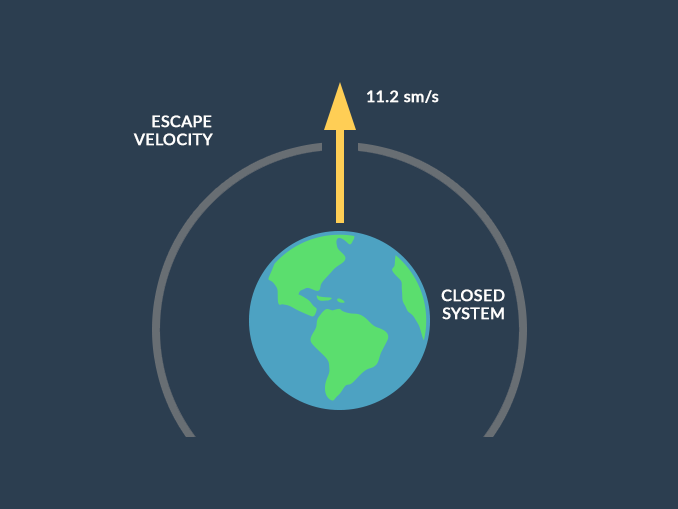
Significantly higher than Earth's 11.2 km/s escape requirement due to the ice giant's massive core.
Escape Velocity
Breaking Free. To escape Neptune's gravitational grip, an object must reach 23.5 km/s. That is over 84,000 km/h—more than double the speed needed to leave Earth.
- 🚀 Velocity: 23.5 km/s (Mach 68 on Earth).
- ⚖️ Gravity: 1.14g at the cloud tops.
- 🏁 Factor: 2.1x Earth's Escape Speed.
Critical Escape
The 23.5 km/s Barrier. To leave Neptune's orbit, a spacecraft must reach 23,500 meters per second. This extreme speed is a direct result of Neptune's 17x Earth mass.
- 🚀 Velocity: 23,500 m/s (Mach 68).
- ⚖️ Mass: 17.15 Earth Masses.
- 🏁 Comparison: 2.1x faster than Earth escape.
Interplanetary Scale
Solar Rank #3. Outperformed only by the gas giants, Neptune’s 23.5 km/s escape velocity marks it as a gravitational powerhouse, exerting 2.1x the pull of Earth.
- 🏆 System Rank: 3rd Highest (After Jup/Sat).
- 🚀 Earth Factor: 2.1x Escape Speed.
- 🌀 Effect: Total Atmospheric Retention.
The Math of Escape
Gravitational Mechanics. Derived from the balance of Kinetic and Potential energy, the escape formula defines the speed required to break a planet's 17x mass-grip.
- G: 6.674 × 10⁻¹¹ m³kg⁻¹s⁻²
- M: 1.024 × 10²⁶ kg
- R: 2.476 × 10⁷ m
ASTRONOMY / ORBITAL DYNAMICS
THE ESCAPE VELOCITY
Leaving the realm of the ice giant requires immense kinetic energy. Because of its massive mass-to-radius ratio, Neptune generates a formidable gravitational well, demanding extreme velocities for any spacecraft seeking to break free into interstellar space.

ASTRONOMY / HELIOCENTRIC TRAJECTORIES
THE INTERSTELLAR THRESHOLD
Escaping Neptune's local gravitational sphere of influence is only half the battle. To truly leave the solar system, a spacecraft must reach solar escape velocity from 30 astronomical units out, turning planetary flybys into masterclasses in orbital energy management.

ASTRONOMY / ADVANCED PROPULSION
THE RAPID TRANSIT HORIZON
Reaching Neptune using traditional chemical rockets requires decades of coasting and complex multi-planet gravity assists. The next generation of outer-planet exploration relies on advanced nuclear propulsion to slash transit times and conquer the abyss.


Neptune's Escape Velocity FAQs
Breaking down the massive speed needed to escape the ice giant's gravitational grip
Neptune has an escape velocity of approximately 23.5 kilometers per second (about 84,600 km/h or 52,600 mph) at its cloud tops.
Escape velocity is the minimum speed an object needs to break free from a celestial body's gravitational pull without any further propulsion.
It is significantly higher than Earth's escape velocity of 11.2 km/s, reflecting Neptune's much larger mass and intense gravitational strength.
A strong gravitational hold helps an ice or gas giant retain its thick atmosphere of light gases like hydrogen and helium over billions of years.
Spacecraft like Voyager 2 bypassed being trapped by using powerful planetary gravity assists or carrying massive amounts of fuel to accelerate past escape velocity limits.
Explore Tools!
Neptune

Supersonic Winds

Triton Retrograde Orbit

Signal Delay (Speed of Light)
Great Dark Spot

Internal Heat Radiator

Triton Geyser Height

Cloud Top Gravity

Density Comparison

"Scooter" Cloud

Atmospheric Velocity

Solar Distance Flux
Escape Velocity

Possibility of Life

View 3D Neptune
Sources
GRAVITATIONAL BIND
Neptune's mass is 17 times that of Earth, creating a deep gravity well that requires significant kinetic energy to exit.
NEPTUNE STATSVS EARTH
Earth's escape velocity is **11.2 km/s**. To leave Neptune's cloud tops, you must travel **2.1 times faster** than on Earth.
PLANETARY PHYSICSRADIUS IMPACT
Because escape velocity is calculated at the 1-bar cloud level, the planet's large radius (24,622 km) actually mitigates the extreme mass.
ORBITAL MATH