Periapsis Return
PERIAPSIS RETURN LAB
NEW HORIZONS MISSION CONTROL • ASTRODYNAMICS GEOMETRY MODULE 2026
Orbital Perigee
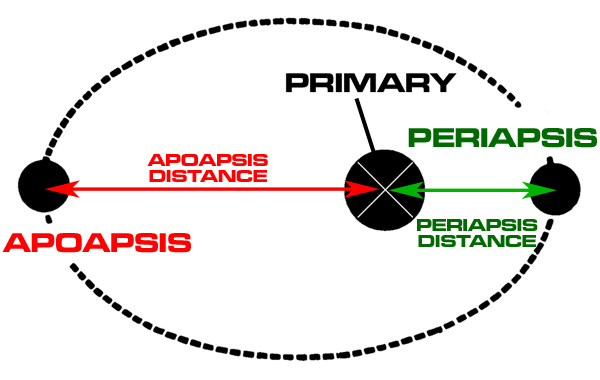
Closest Approach. The periapsis represents the point in an elliptical orbit where a spacecraft or celestial body makes its closest approach to the primary central mass it revolves around.
Core Mechanics: Managing periapsis passages is critical for deep space navigation, gravity assists, and executing precise orbital insertion burns with maximum fuel efficiency.
- 🛰️ Maximum orbital velocity points.
- 🌌 Deep space trajectory alignment.
Oberth Advantage
Maximizing Burn Efficiency. Firing rocket engines at periapsis harnesses the Oberth effect, where chemical propulsion yields vastly superior kinetic energy gains due to high orbital speed.
Strategic Maneuvers: Returning to periapsis for major velocity adjustments allows interplanetary missions to escape gravity wells using a fraction of normal propellant requirements.
- ⚡ High-velocity propulsion burns.
- 🚀 Optimal fuel mass management.
Slingshot Physics
Planetary Momentum. Passing closely by a planet's periapsis allows spacecraft to borrow orbital momentum, altering trajectories and accelerating toward outer solar system targets.
Precision Navigation: Calculating exact return windows ensures that gravity assists deliver the correct vector heading without requiring excessive onboard propellant reserves.
- 🪐 Planetary gravitational momentum transfer.
- 🎯 Interplanetary trajectory shaping.
Atmospheric Drag
Aero-Insertion Technique. Dipping a spacecraft's periapsis into the upper atmosphere of a target body utilizes aerodynamic friction to circularize highly elliptical orbits.
Thermal Shielding: Controlled atmospheric passes lower apoapsis altitudes progressively over multiple returns, saving thousands of kilograms of rocket fuel during planetary capture.
- 🔥 Upper atmosphere friction braking.
- 📉 Progressive orbit circularization.
Perturbation Forces
Gravitational Drift. Solar radiation pressure, third-body gravitational pulls from moons and suns, and non-uniform planetary mass distributions constantly alter orbital paths.
Trajectory Corrections: Regular tracking and minor station-keeping burns ensure that returning spacecraft hit precise periapsis coordinates without drifting off course.
- 🌌 Third-body gravitational drift.
- 📐 Precision station-keeping burns.
Earth Return
Free-Return Paths. Lunar missions utilize free-return trajectories where gravitational loops naturally steer spacecraft back toward Earth periapsis if propulsion systems fail.
Re-Entry Corridors: Hitting the precise atmospheric entry corridor upon periapsis return ensures capsules decelerate safely without burning up or skipping back out into space.
- 🌍 Lunar free-return orbit design.
- 🛡️ Precision atmospheric entry corridors.
Mission Telemetry
Real-Time Tracking. Deep space tracking networks monitor spacecraft velocity, altitude, and orbital period during every periapsis passage to update navigation models.
Autonomy & Precision: Advanced onboard computers calculate delta-v requirements instantly, enabling autonomous course corrections during high-speed close encounters.
- 📡 Deep space network tracking arrays.
- 💻 Autonomous velocity vector calculation.
Future Navigation
Next-Gen Exploration. Mastering periapsis return dynamics opens pathways for sustainable interplanetary transport networks, ion propulsion staging, and crewed Mars missions.
Expanding Horizons: As space architecture evolves, precise periapsis manipulation remains the cornerstone of energy-efficient deep space travel and cosmic exploration.
- 🌟 Interplanetary transport staging.
- 🚀 Sustainable deep space architecture.
ORBITAL MECHANICS / NONLINEAR DYNAMICS
THE PERIAPSIS RETURN MAP
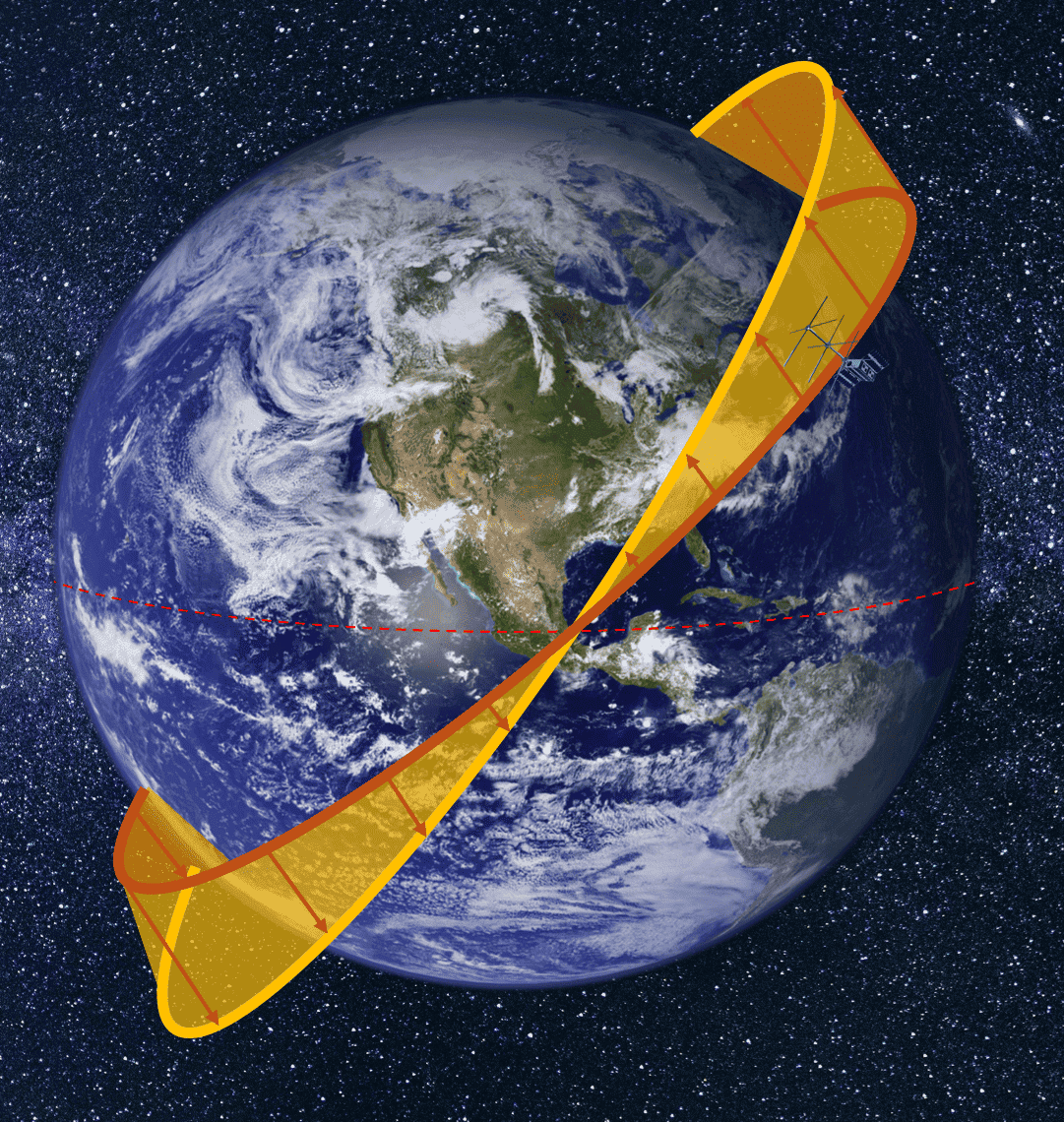
Moving beyond individual planetary flybys, celestial mechanics utilizes Poincaré return maps to visualize multi-millennial orbital stability. By tracking periapsis passage points across successive revolutions, we decode the hidden mathematical structures of gravitational resonance.

ORBITAL MECHANICS / PHASE SPACE GEOMETRY
KAM TORI & CHAOTIC SEAS
When plotting successive periapsis returns across phase space, orderly orbits form closed invariant curves known as KAM tori. However, overlapping gravitational resonances shatter these barriers, unleashing widespread stochastic chaos.
ORBITAL MECHANICS / COMPUTATIONAL PREDICTION
MAPPING MILLENNIAL STABILITY
By combining high-speed numerical integration with Poincaré return maps, astrodynamicists simulate millions of years of gravitational interactions in seconds, revealing the ultimate destiny of planets, moons, and artificial satellites.

Explore More!

Orbital Velocity

Transfer Orbit

Escape Velocity

Orbital Period

Apsides (Apo/Peri)

Inclination Shift

Sphere of Influence

Synodic Period

Kepler's Laws
Lagrange Points
Satellite Coverage
Inclination Δv