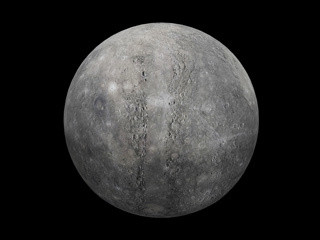
Mercury Distance
PLANETARY LAB: MERCURY DISTANCE
SOLAR PROXIMITY, ORBITAL ECCENTRICITY & EARTH SEPARATION
Orbital Separation & Solar Proximity
As the closest planet to the Sun, Mercury moves along a highly elliptical orbit. Its distance fluctuates dramatically between its closest approach (perihelion) and its furthest point (aphelion), driving intense variations in solar irradiance.
Equivalent to approximately 0.38 Astronomical Units (AU).
Inner solar system baseline for intense stellar radiation.
Innermost Orbit
Proximity to the Sun. Mercury holds the position of the closest planet to our Sun, operating within the most intense gravitational and thermal zone of the inner solar system.
Orbital Scale: Its distance from the Sun is measured across millions of kilometers, shifting dramatically due to its highly elliptical pathway.
- ☀️ Nearest planet to the solar system's center.
- 📐 Distinctive elliptical distance fluctuations.
Average Distance
The 58 Million Kilometer Mark. On average, Mercury maintains a mean distance of about 57.9 million kilometers (36 million miles) or 0.38 Astronomical Units (AU) from the Sun.
Solar Units: This means it sits at roughly 38 percent of the distance that Earth maintains from the Sun.
- 📏 ~57.9 million kilometers from the Sun.
- 🌐 Equal to 0.38 Astronomical Units.
Perihelion Point
Extreme Close-Up. At its closest point to the Sun, known as perihelion, Mercury pushes inward to a distance of just 46 million kilometers (28.5 million miles).
Intense Solar Radiation: During this phase of its orbit, the planet experiences maximum solar heating, driving surface temperatures up to their absolute peak.
- 🔥 Closest approach of 46 million km.
- 🎯 Point of maximum orbital velocity.
Aphelion Point
Farthest Reach. At its greatest distance from the Sun, known as aphelion, Mercury swings out to roughly 70 million kilometers (43.5 million miles).
Elliptical Variance: This massive 24-million-kilometer swing between perihelion and aphelion gives Mercury one of the most eccentric orbits of any major planet.
- ❄️ Farthest distance of 70 million km.
- 🔄 Highly elliptical orbital eccentricity.
Earth Proximity
Shifting Interplanetary Gap. Because both Earth and Mercury orbit the Sun at different speeds, the distance between our two planets constantly changes.
Close Approaches: Mercury can approach Earth as closely as 77 million kilometers (48 million miles), making it our closest planetary neighbor for a portion of its orbit.
- 🌍 Minimum distance to Earth is ~77 million km.
- 🔄 Distance varies based on orbital alignment.
Light Travel Time
Speed of Sunlight. Sunlight traveling across the short gap between the Sun and Mercury takes only about 3.2 minutes to reach the planet's surface.
Cosmic Speed: For comparison, sunlight takes over 8 minutes to reach Earth, highlighting how deeply embedded Mercury is within the solar inner core.
- ⚡ Solar photons arrive in ~3.2 minutes.
- ⏱️ Rapid communication transit window.
Solar Scale
Inner Planet Hierarchy. Sitting at the very front of the planetary line, Mercury sets the baseline for measuring distances across the inner solar system.
Orbital Spacing: While Mercury sits at 0.38 AU, Venus follows at 0.72 AU, and Earth occupies the 1.0 AU benchmark, establishing a clear cosmic ladder.
- 🪐 Mercury distance: 0.38 AU.
- ✨ Venus distance: 0.72 AU.
Mission Distance
Reaching the Inner World. Although Mercury is physically close to Earth, launching a spacecraft to it requires massive multi-billion-kilometer trajectories.
Gravity Assist Routes: Because probes must fight the Sun's immense gravitational pull to slow down, missions like BepiColombo travel billions of kilometers using Earth, Venus, and Mercury flybys to enter orbit.
- 🚀 Multi-year interplanetary trajectories.
- 🛰️ Utilizes gravity assists to match velocity.
ORBITAL DYNAMICS / HELIOCENTRIC DISTANCE
The Eccentric Orbit and Solar Proximity
Mercury occupies the innermost orbit of our solar system, maintaining a remarkably close yet highly eccentric path around the Sun. Because of its pronounced orbital eccentricity, Mercury's distance from the Sun varies dramatically across its quick 88-day revolution, swinging from a scorching perihelion of roughly 46 million kilometers out to an aphelion of nearly 70 million kilometers. This extreme variation creates intense thermal fluctuations and subjects the planet to fluctuating solar radiation pressure.
ORBITAL DYNAMICS / RESONANCE MECHANICS
The Three-to-Two Spin-Orbit Resonance
Mercury's orbital distance and gravitational coupling with the Sun enforce a unique three-to-two spin-orbit resonance. Instead of being tidally locked with one permanent day side, Mercury completes exactly three rotations on its axis for every two revolutions it makes around the Sun. This celestial mechanics interaction ensures that specific longitudes face intense solar radiation during alternating perihelion passages, driving extreme thermal gradients across the rocky mantle.
ORBITAL DYNAMICS / THERMAL EXTREMES
Thermal Extremes and Surface Temperature Gradients
Because of Mercury's close proximity to the Sun and its exceptionally thin exosphere, the planet experiences the most extreme temperature fluctuations in the entire solar system. During the long Mercurian day, unfiltered solar radiation bakes the equator up to 430 degrees Celsius. Conversely, during the pitch-black night, temperatures plummet down to -180 degrees Celsius. These drastic thermal shifts place immense mechanical stress on surface materials, driving continuous thermal fracturing and weathering across the barren regolith.

Mercury Distance & Orbital Range FAQs
Examining Mercury's distance from the Sun, perihelion and aphelion extremes, orbital eccentricity, and proximity metrics relative to Earth
Mercury orbits the Sun at an average distance of about 57.9 million kilometers (36 million miles), or roughly 0.387 astronomical units (AU).
At its closest point to the Sun, known as perihelion, Mercury's highly eccentric orbit brings it to a distance of roughly 46 million kilometers (28.5 million miles).
At its farthest point from the Sun, or aphelion, Mercury reaches a distance of about 69.8 million kilometers (43.4 million miles) due to its elongated path.
Mercury possesses the most eccentric orbit of any major planet in the solar system, with an orbital eccentricity value of approximately 0.21.
When Mercury and Earth align on the same side of the Sun during inferior conjunction, the closest distance between the two planets drops to about 77 million kilometers (48 million miles).
When Mercury is on the exact opposite side of the Sun relative to Earth, the maximum separation distance can stretch up to roughly 222 million kilometers (138 million miles).
Traveling at the speed of light, sunlight takes approximately 3.2 minutes on average to bridge the gap between the solar surface and Mercury.
Because its orbital distance swings by over 23 million kilometers between perihelion and aphelion, the intensity of sunlight striking Mercury changes by more than 50 percent across its year.
Reaching Mercury requires complex trajectory paths and multiple gravity assists past Earth, Venus, and Mercury itself, meaning transit times typically span several years despite the short baseline distance.
Though Mercury is the closest planet to the Sun, Venus actually approaches Earth more closely on average, making Venus the closest planetary neighbor to Earth over long time cycles.

What is Mercury

Mercury Weight
Mercury Age

Jump Height

Mercury Distance

Day/Night Temp

Solar Intensity

Sun Visual Size

Double Sunrise

Travel Time

Messenger Simulation

Orbit Insertion

Signal Delay (Comms)

Mercury Precession
Iron Core Ratio

Gravity Well
Magnetosphere Shield

Thermal Expansion
Underground Living

Oxygen for Base

Solar Energy Harvest

Mercury Ice Hunter

Solar Radiation

Heavy Machinery
Mercury Mysteries