Mercury Age
PLANETARY LAB: MERCURY AGE & TIMELINE
SOLAR SYSTEM FORMATION (~4.5 BYA) & GEOLOGICAL EPOCHS
Planetary Age & Geological History
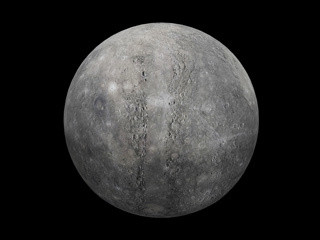
Like the rest of the terrestrial planets, Mercury formed approximately 4.5 billion years ago during the primary accretion phase of the solar nebula. Its ancient surface preserves a brutal history of heavy bombardment, volcanic flooding, and global thermal contraction.
Formed concurrently with the solar nebula coalescence.
Highly preserved cratered terrain dating back over 4 billion years.
Solar Orbit
The Quickest Revolution. Mercury completes one full orbit around the Sun in just 88 Earth days, meaning a planetary "year" passes by in less than three months.
Orbital Speed: Racing through space at an average speed of nearly 47 kilometers per second, it defies long cosmic years by cycling through seasons at an unprecedented rate.
- ⏱️ One year takes only 88 Earth days.
- 🚀 Fastest orbital velocity in the solar system.
Age Computation
The Chronological Formula. To find out how old someone would be on Mercury, divide their total Earth days lived by 88 (the number of days in a Mercurian year).
Accelerated Aging: Because Mercury's calendar flips so quickly, time measured in planetary orbits accumulates at more than four times the rate experienced on Earth.
- 🧮 Divide Earth days by 88.
- 📈 Results in an age roughly 4.15 times higher.
Being Age 9
Translating 9 Earth Years. If someone has lived for 9 standard Earth years (approximately 3,287 days including leap days), they have completed roughly 37.3 full orbits around the Sun.
Mercurian Milestone: At age 9 on Earth, a person would celebrate their 37th birthday if they lived on Mercury, highlighting the vast difference in planetary timekeeping.
- 🎂 Equal to ~37.3 Mercurian years.
- 🌍 Represents 3,287 Earth days of existence.
Spin vs Orbit
Unusual Rotation Rate. Mercury rotates on its axis very slowly, taking 59 Earth days to complete just one single spin.
The 3-to-2 Resonance: Because of a unique tidal lock with the Sun, Mercury rotates exactly three times for every two times it completes an orbit, creating bizarre solar days.
- 🔄 Takes 59 Earth days to spin once.
- ☀️ Unique 3:2 spin-orbit resonance.
Solar Days
Sunrise to Sunrise. A single solar day on Mercury (from one sunrise to the next) takes 176 Earth days—longer than two full Mercurian years!
Extended Daylight: This means that a person living on Mercury would experience scorching sunlight for months at a time before the Sun finally sets.
- 🌅 One solar day lasts 176 Earth days.
- ⏳ Day length exceeds a Mercurian year.
Planetary Ages
Cosmic Perspective. An Earth age of 9 translates drastically depending on the planet, making you much older on fast inner worlds and very young on outer gas giants.
Interplanetary Scale: While a 9-year-old would be 37 on Mercury, they would be just over 4 and a half on Venus, and a mere fraction of a year old on Saturn or Neptune.
- 🪐 Venus age: ~14.6 years.
- ✨ Mercury age: ~37.3 years.
Birthday Frequency
Frequent Celebrations. If you lived on Mercury, you would get to blow out birthday candles roughly every three months according to Earth calendars.
Rapid Milestones: Children growing up on a Mercurian colony would rack up hundreds of orbital birthdays before reaching standard adult milestones.
- 🎉 New year every 88 Earth days.
- 🎈 Four birthdays per Earth year.
Mercurian Time
Relative Chronology. Time is ultimately a measure of planetary movement rather than an absolute constant across the cosmos.
The Final Verdict: While an Earth age of 9 feels like a childhood milestone, on Mercury it represents more than 37 completed orbits around the blazing center of our solar system.
- 🌌 Time adapts to orbital mechanics.
- ⭐ Age 9 on Earth equals age 37 on Mercury.
PLANETARY CHRONOLOGY / GEOLOGICAL AGE
The 4.5 Billion Year Chronology of Mercury
Mercury formed alongside the rest of the inner solar system approximately 4.5 billion years ago from the accretion of primordial solar nebula material. Despite its ancient genesis, the planet's surface preserves a complex, multi-stage geological history defined by intense early heavy bombardment, extensive volcanic plains flooding, and massive global tectonic contraction as its oversized metallic core slowly cooled and shrank over eons.
PLANETARY CHRONOLOGY / STRATIGRAPHIC EPOCHS
Stratigraphic Systems and Basin Evolution
Geologists divide Mercury's 4.5 billion year history into distinct stratigraphic periods, including the Tolstoj, Caloris, Mansurian, and Kuiperian systems, categorized by impact crater degradation and volcanic plain emplacement. The formation of the colossal Caloris Basin approximately 3.8 billion years ago marked a major geological milestone, triggering widespread antipodal seismic disruption and flooding the surrounding lowlands with smooth volcanic basalt plains.
PLANETARY CHRONOLOGY / TECTONIC CONTRACTION
Global Contraction and Lobate Scarps
Mercury's multi-billion-year timeline is characterized not only by impact craters, but by profound global tectonic contraction. As its massive metallic core gradually cooled and solidified over the eons, the planet's volume decreased, causing the brittle outer silicate crust to buckle and fracture. This widespread thermal shrinkage birthed thousands of miles of colossal cliffs known as lobate scarps, proving that Mercury's geological evolution features active contractional faulting long after its initial primordial formation.

Mercury Age & Geological Timeline FAQs
Examining the absolute age of planet Mercury, radiometric dating of meteorites, solar system formation timelines, and ancient surface eras
Mercury is approximately 4.5 billion years old, having formed concurrently with the Sun and the rest of the solar system out of a collapsing nebula of gas and dust.
Researchers determine Mercury's age by combining radiometric dating of pristine solar system materials like primitive meteorites with crater-counting chronology models.
Mercurian history is divided into distinct stratigraphic epochs, including the pre-Tolstojan, Tolstojan, Calorian, Kuiperian, and Mansolian periods, based on impact crater degradation states.
The Late Heavy Bombardment occurred roughly 4.1 to 3.8 billion years ago, during which Mercury's surface was intensely pummeled by asteroids and leftover planetesimals.
Older terrain features a much higher density of overlapping impact craters, whereas younger smooth volcanic plains show fewer craters because lava flows reset the surface age.
Extensive global volcanism peaked around 3.5 to 4 billion years ago during the Calorian period, gradually tapering off as the planet's interior cooled and contracted.
As Mercury's massive iron core cooled over billions of years, the planet shrank by several kilometers, fracturing its ancient crust and forming massive tectonic scarps.
While internal melting has largely stopped, micro-meteoroid impacts, solar wind erosion, and slow thermal fracturing continue to shape Mercury's surface on a continuous basis.
The Caloris Basin—one of the largest impact structures in the solar system, measuring 1,550 kilometers across—was carved out about 3.8 billion years ago.
Understanding Mercury's timeline provides crucial insights into how rocky bodies form close to stars, cool down over eons, and retain or lose volatile elements.

What is Mercury

Mercury Weight
Mercury Age

Jump Height

Mercury Distance

Day/Night Temp

Solar Intensity

Sun Visual Size

Double Sunrise

Travel Time

Messenger Simulation

Orbit Insertion

Signal Delay (Comms)

Mercury Precession
Iron Core Ratio

Gravity Well
Magnetosphere Shield

Thermal Expansion
Underground Living

Oxygen for Base

Solar Energy Harvest
Mercury Ice Hunter
Solar Radiation

Heavy Machinery
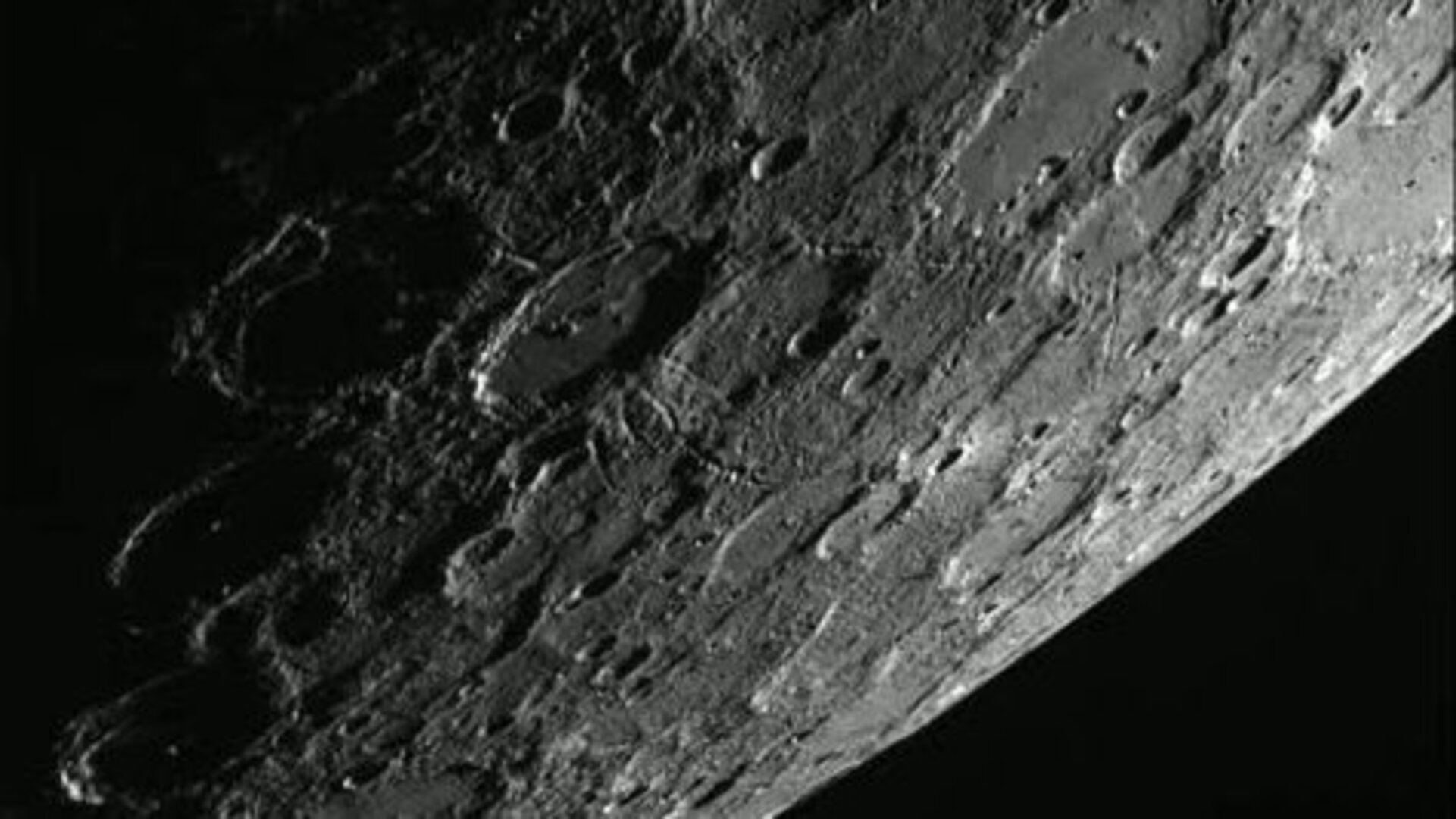
Mercury Mysteries