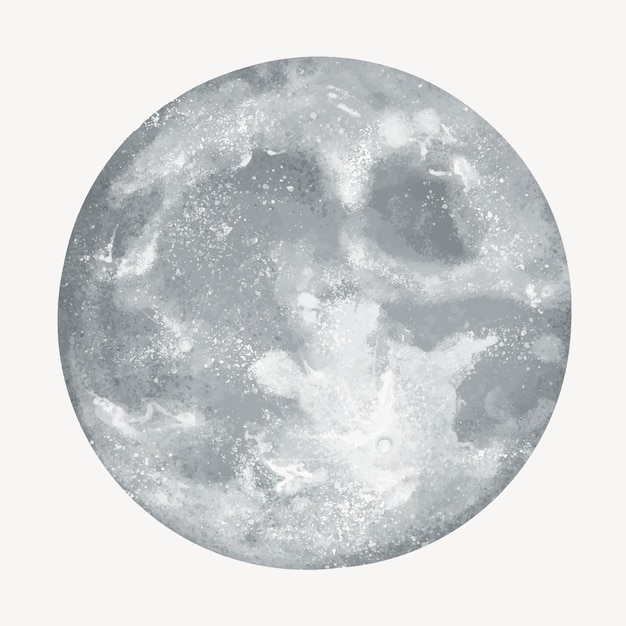
Pluto vs Moon
PLUTO VS LUNAR SCALE
SIZE & PHYSICAL COMPARISON MATRIX
Diameter Differential
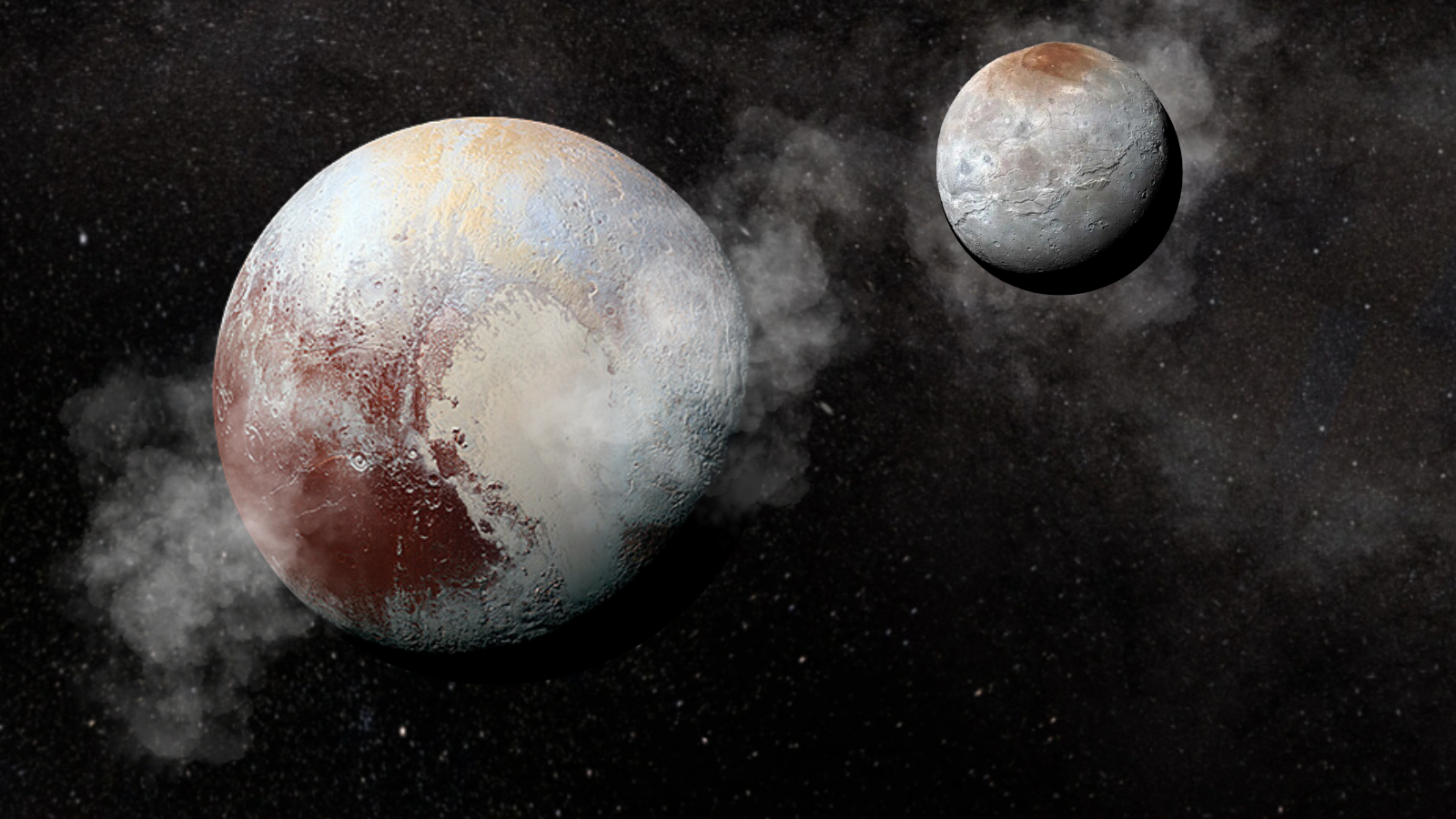
Pluto is notably smaller than Earth's Moon. Pluto's diameter measures roughly 2,376 kilometers across, which means it spans only about two-thirds the width of our Moon's 3,475-kilometer physical diameter.
Pluto fits comfortably inside the geographical profile footprint of the continental United States.
A large water-ice content makes Pluto much lighter than the rock-and-iron dense lunar body.
Scale Sync
Dimension Mapping. Analyzing the r moon > r pluto constant. New Horizons monitors the Volumetric Buffer to track the surprising scale disparity between our satellite and the dwarf planet.
- 📏 Radius: 1,737km (Moon) vs 1,188km (Pluto).
- ⚖️ Gravity: 2.6x Stronger on the Lunar Buffer.
- 🌍 Area: Russia-scale vs Americas-scale.
Diameter Sync
Lateral Mapping. Analyzing the moon > pluto constant. New Horizons monitors the Width Buffer to track how 134340 compares to terrestrial and lunar scales.
- 📏 Width: 2,376 km (Pluto) vs 3,474 km (Moon).
- 🇺🇸 Terrestrial: Smaller than the US West-East Sync.
- ⚖️ Gap: 1,098 km Missing Diameter Buffer.
Mass Sync
Inertial Mapping. Analyzing the $6x$ Mass Constant. New Horizons monitors the Density Buffer to track the gravitational disparity between the Moon and Pluto.
- ⚖️ Ratio: 6 Plutos = 1 Moon Sync.
- 🧪 Density: Rock-Iron vs. Icy-Rock Buffer.
- 🛰️ Gravity: Strong Lunar Inertial Protocol.
Area Sync
Spatial Mapping. New Horizons monitors the Terrain Buffer to track the dimensional scale between the Moon and the 134340 system.
- 🏔️ Pluto: 17.7M km² (Russia-Scale Sync).
- 🌑 Moon: 38M km² (Americas-Scale Buffer).
- 📐 Ratio: 2.14x Total Surface Allotment.
COMPARATIVE PLANETOLOGY / SCALE ANALYSIS
THE SCALE DISPARITY
When placed side-by-side, the Moon dwarfs Pluto in terms of mass and density. The Moon is a terrestrial object—primarily composed of silicates and iron—with a stable, high-gravity environment. Pluto, conversely, is an icy body composed of roughly 30-35% water ice and 65-70% rock. If you could swap them, the Moon would easily be the largest object in the Kuiper Belt, while Pluto would barely qualify as a mid-sized moon of a gas giant.
| Metric | The Moon | Pluto |
|---|---|---|
| Diameter | 3,474 km | 2,377 km |
| Mass | 7.34 × 10²² kg | 1.30 × 10²² kg |
| Composition | Silicate Rock | Ice & Rock |

SURFACE PHYSICS / GEOLOGICAL ACTIVITY
ACTIVE VS. STATIC WORLDS
The Moon is a record of the early solar system’s violent bombardment, preserved in a vacuum with almost no internal geologic "refresh" cycle. Its surface is dominated by impact craters and ancient basaltic maria. Pluto, by contrast, is a dynamic environment. Because of its volatile ices, Pluto undergoes cryotectonic renewal. The nitrogen glaciers we discussed, combined with tidal heating from Charon, constantly resurface the landscape, erasing impact craters and creating vast, smooth plains that are geologically "young."

- Horizon -

Pluto
Pluto vs Moon Size
Charon Tidal Lock

Nitrogen Ice Flow

Atmospheric Freeze
Orbital Overlap (Neptune)

Weight on Pluto

Sun Brightness (Pluto Time)

Pluto Year Converter

Binary System Calc

Life on Pluto?

Signal Delay (Comms)

3D Pluto
Sources
DIAMETER RATIO
The Moon’s diameter is ~**3,474 km**, while Pluto’s is ~**2,376 km**. Pluto is only about two-thirds the width of our Moon.
MOON STATSMASSIVE DIFFERENCE
The Moon is roughly **6 times** more massive than Pluto. This is because the Moon is mostly rock, whereas Pluto is about one-third ice.
PLUTO STATSSURFACE AREA
The Moon has a surface area of ~**38 million km²**, while Pluto has ~**17.7 million km²**—less than the total land area of Russia.
GEOGRAPHY