Pluto Planet
PLUTO SYSTEM PORTAL
KING OF THE KUIPER BELT OVERVIEW
Sputnik Planitia Heart
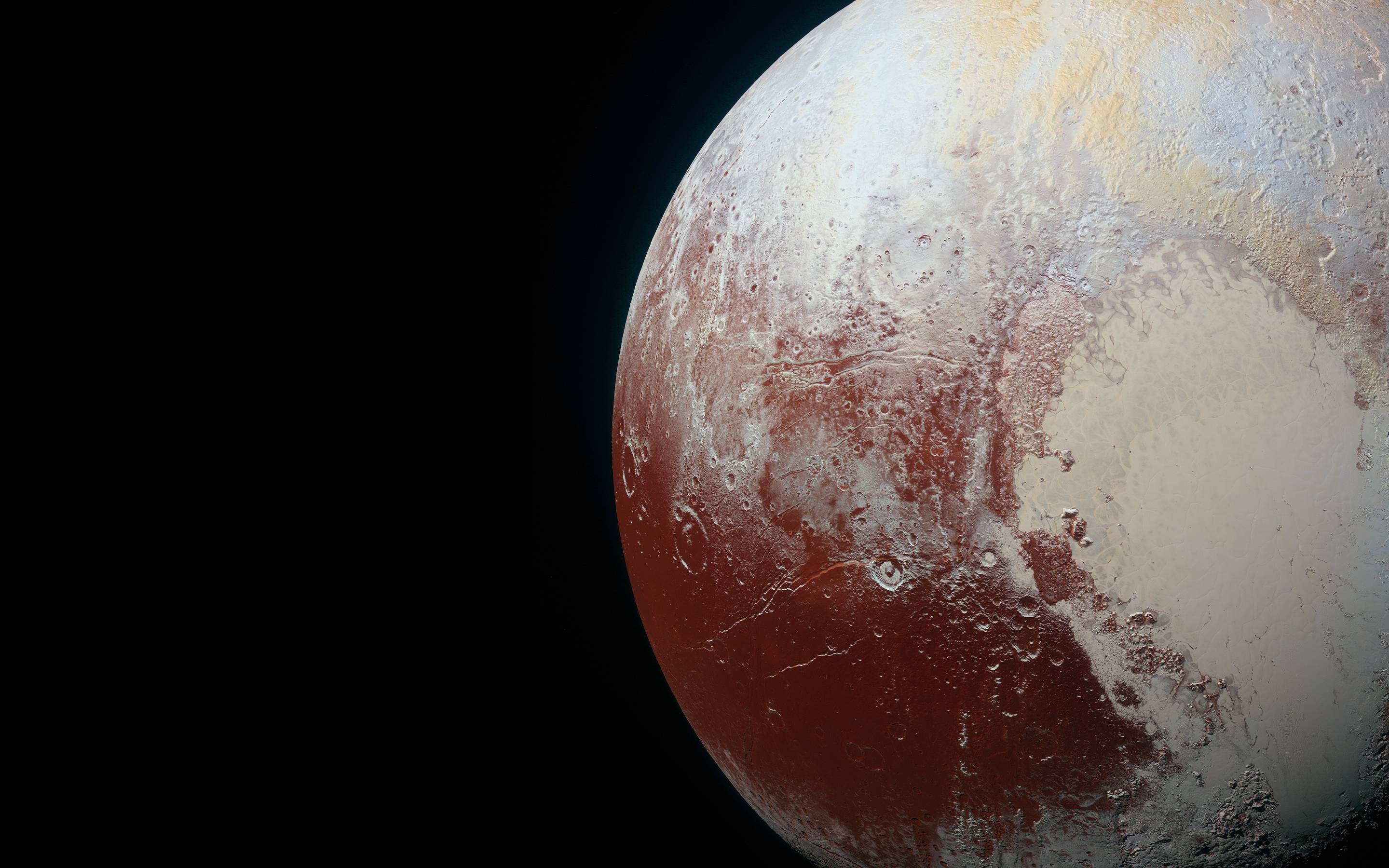
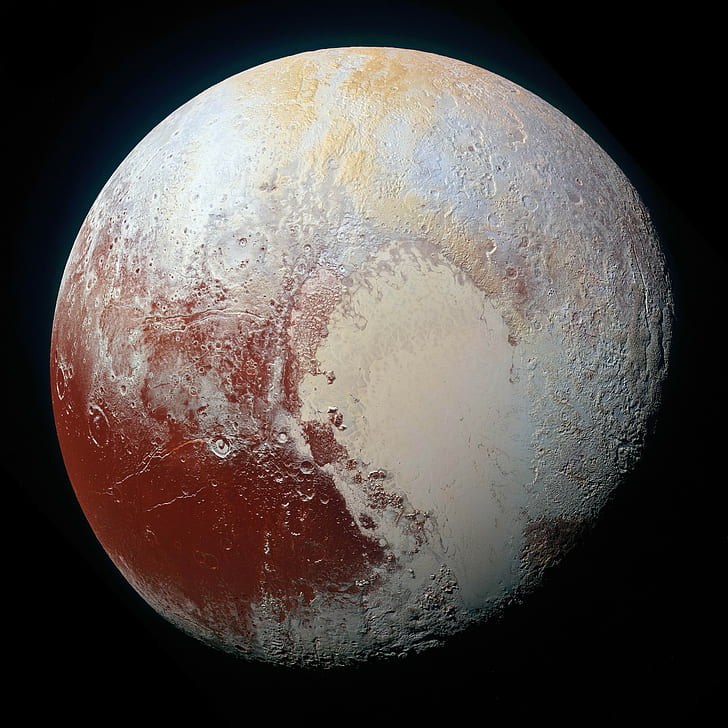
Pluto's most striking visual profile feature is Tombaugh Regio, a massive, bright, heart-shaped plain. The left lobe, Sputnik Planitia, is a vast, 1,000-kilometer ice sheet made of frozen nitrogen that actively churns and wells up from geothermal heat below.
Sailing along a complex, tilted 248-year journey through the outer realms of deep frozen space.
Anchored by giant Charon, and flanked by smaller satellites: Styx, Nix, Kerberos, and Hydra.
Pluto Sync
Kuiper Mapping. Analyzing the Trans-Neptunian constant. New Horizons monitors the Orbital Buffer to track the nitrogen-ice dynamics of the 134340 system.
- 🖤 Tombaugh: Nitrogen-Ice Heart Sync.
- 🔄 Resonance: 2:3 Neptune Interaction Buffer.
- 🛰️ Latency: 5.5-Hour Signal Propagation Protocol.
Dwarf Sync
Dominance Mapping. Analyzing the Neighborhood Clearance constant. New Horizons monitors the Orbital Debris Buffer to track why 134340 is categorized as a dwarf.
- 🔍 Failed: Neighborhood Clearance Protocol.
- 🌌 Kuiper: Shared Orbital Path Buffer.
- ⚖️ Mass: 0.07 Dominance Sync Ratio.
Orbital Sync
Radial Mapping. Analyzing the e = 0.248 constant. New Horizons monitors the Elliptical Buffer to track why 134340 occasionally breaches Neptune's orbital lane.
- 📐 Inclination: 17 Ecliptic Deviation Sync.
- 🔄 Eccentric: 0.248 Radial Elongation Buffer.
- 🛰️ Crossing: 20-Year Inner Orbit Protocol.
Binary Sync
Mutual Mapping. Analyzing the Barycenter constant. New Horizons monitors the Orbital Buffer to track the dual-rotation dynamics of the Pluto-Charon pair.
- ⚖️ Barycenter: External Center of Mass Sync.
- 🔒 Locked: Dual-Face Tidal Buffer.
- 🛰️ Satellites: Multi-Moon Interaction Protocol.
PLANETARY SCIENCE / ASTROPHYSICS
THE DWARF PLANET
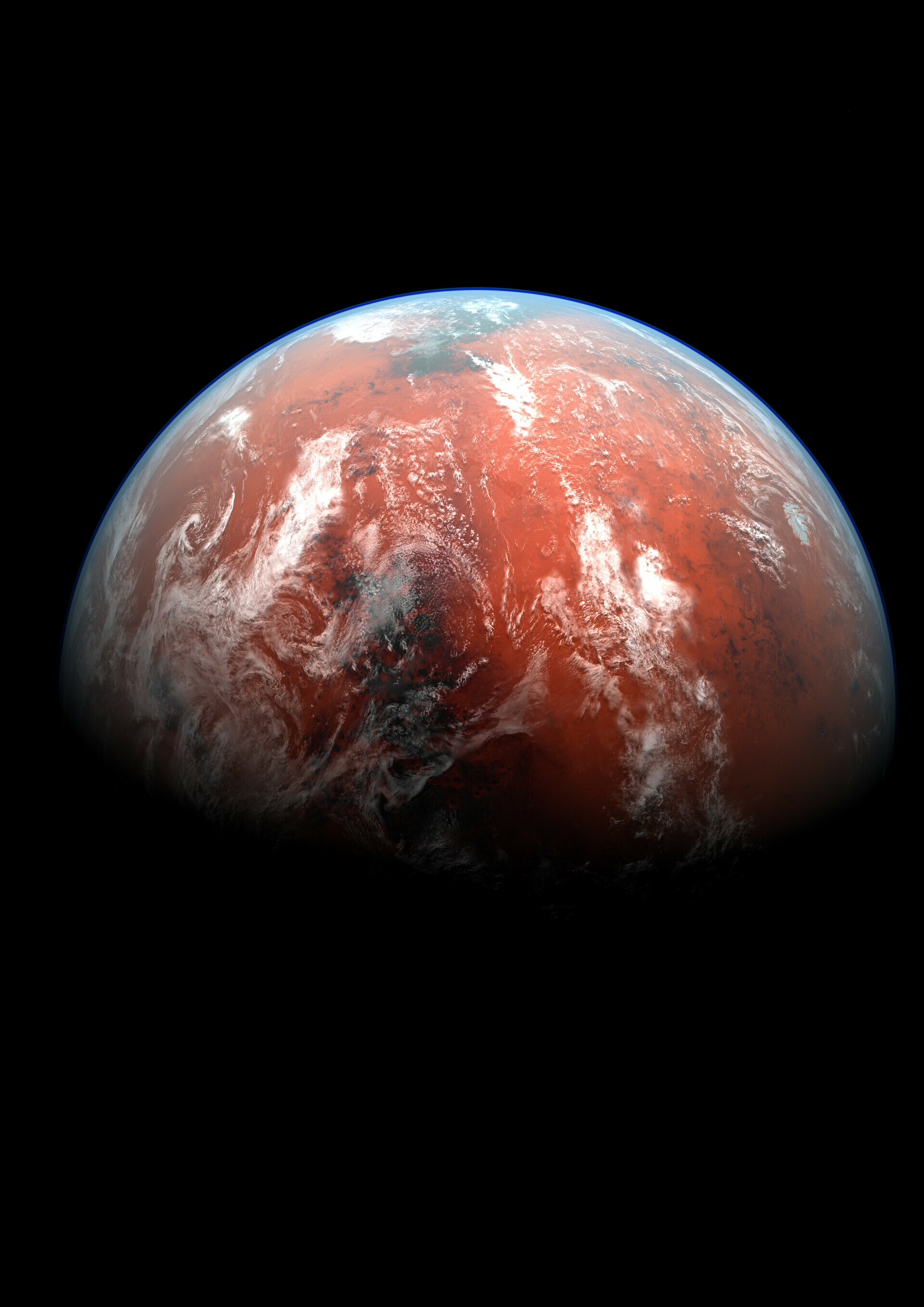
Pluto is defined as a dwarf planet because, while it has enough mass to achieve hydrostatic equilibrium (it is spherical), it has not "cleared its neighborhood" of other debris. It orbits within the Kuiper Belt, sharing its orbital path with millions of other icy objects. It is roughly 1/6th the mass of the Moon and possesses a tenuous atmosphere, a complex surface of nitrogen ice, and a family of five moons.
PLANETARY METEOROLOGY / CRYOTECTONICS
THE ATMOSPHERIC COLLAPSE
Pluto’s orbit brings it from 29 AU (astronomical units) to 49 AU from the Sun. When it is closest to the Sun (perihelion), the warmth causes surface ices—primarily nitrogen, methane, and carbon monoxide—to sublimate, creating a thin, hazy atmosphere. As Pluto moves toward its farthest point (aphelion), temperatures drop below the condensation point of these gases. The atmosphere then experiences a massive "freeze-out," effectively snowing onto the surface and causing the atmospheric pressure to plummet.
ORBITAL MECHANICS / TIDAL PHYSICS
THE BINARY DANCE
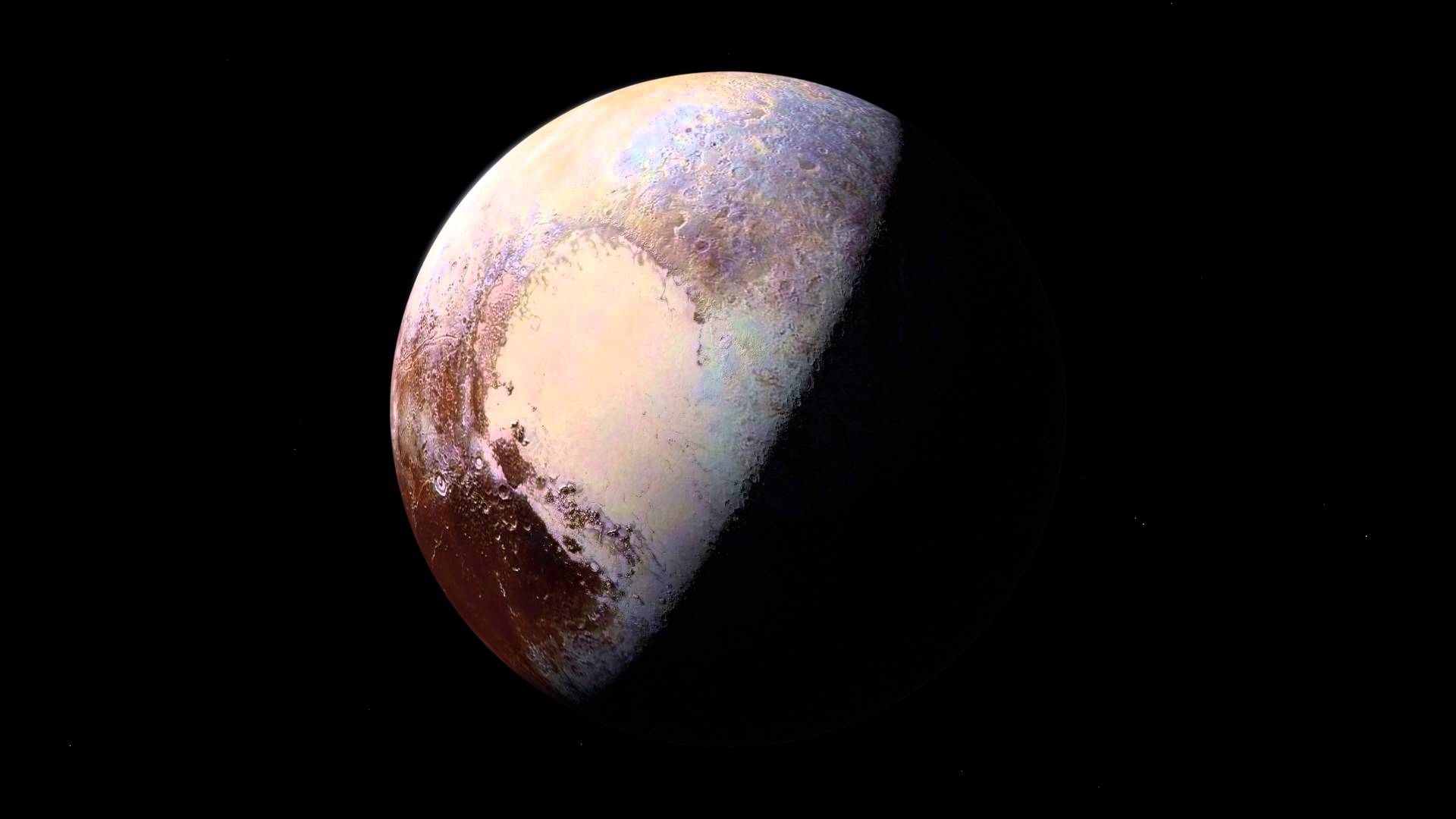
Unlike most moons that orbit a parent planet, Charon is so massive (roughly half the diameter of Pluto) that the center of gravity between the two bodies lies in the empty space between them. They are mutually tidally locked, meaning they always keep the same face toward one another, forever dancing in a rhythmic embrace. This locked state is not perfectly circular; the gravitational tugs create Tidal Dissipation, generating internal heat within Pluto that keeps its subsurface warm enough to drive the nitrogen glacial activity we discussed previously.
ORBITAL DYNAMICS / MULTI-BODY SYSTEMS
THE CHAOTIC DANCE
The smaller moons of Pluto (Styx, Nix, Kerberos, Hydra) exhibit resonant chains and chaotic rotation. Unlike Earth’s Moon, which is tidally locked, these small moons tumble through space, their rotations shifting wildly due to the complex, non-spherical gravitational field created by the Pluto-Charon binary pair. They are effectively trapped in a gravitational "pinball machine," where their orbits are stable only due to precise integer ratios, yet their physical orientations remain unpredictable.
ORBITAL MECHANICS / SYSTEM EVOLUTION
THE PLUTO ENDGAME
The Pluto system is a temporary arrangement in the grand timescale of the solar system. While currently stable due to the resonance of its moons, long-term secular perturbations—small, cumulative gravitational nudges from the gas giants—will eventually destabilize the orbits of the smaller satellites. Pluto is essentially a system in slow decay, where the eventual fate is the migration of these moons or their eventual ejection from the system, leaving Pluto and Charon as a isolated binary relic.
- Horizon -

Pluto
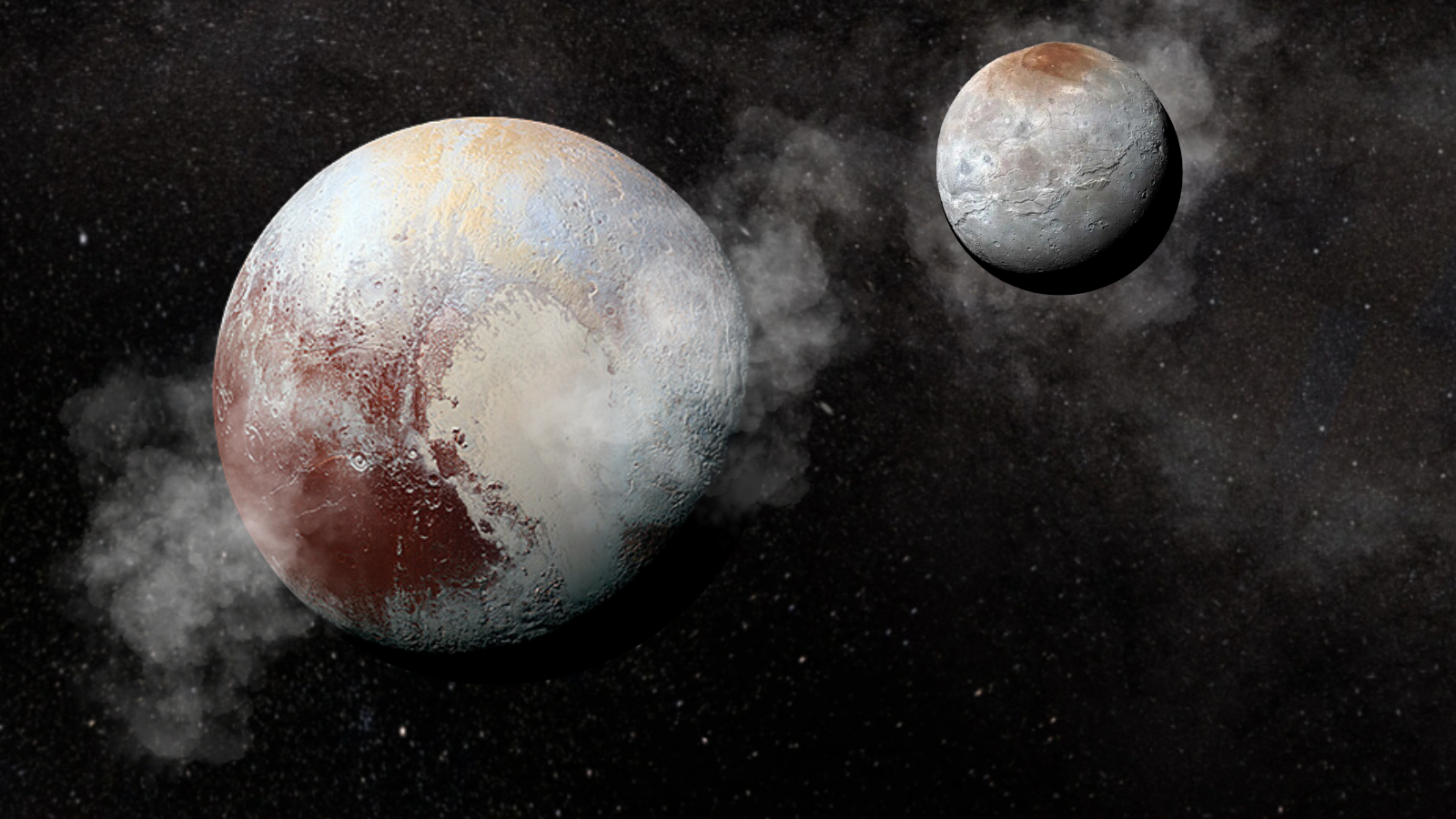
Pluto vs Moon Size
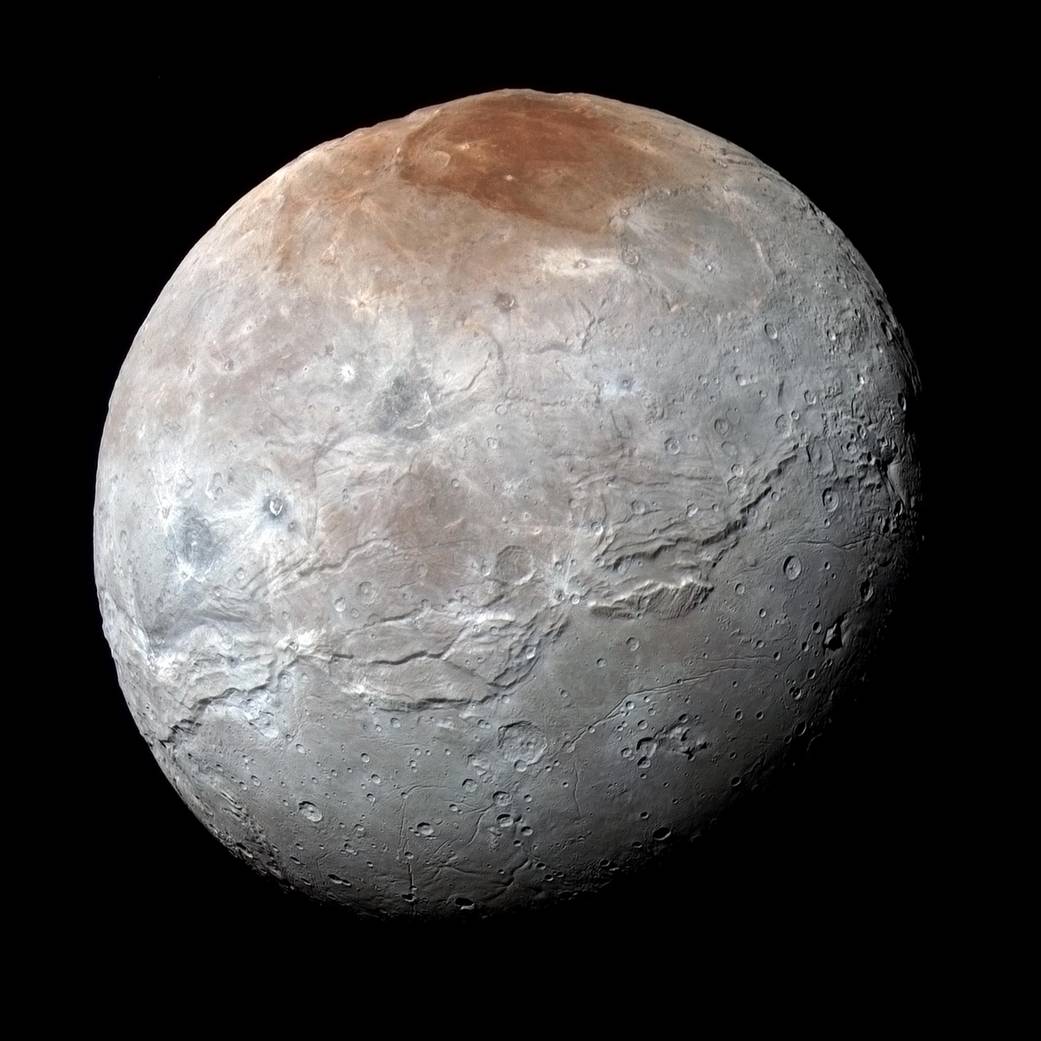
Charon Tidal Lock

Nitrogen Ice Flow

Atmospheric Freeze
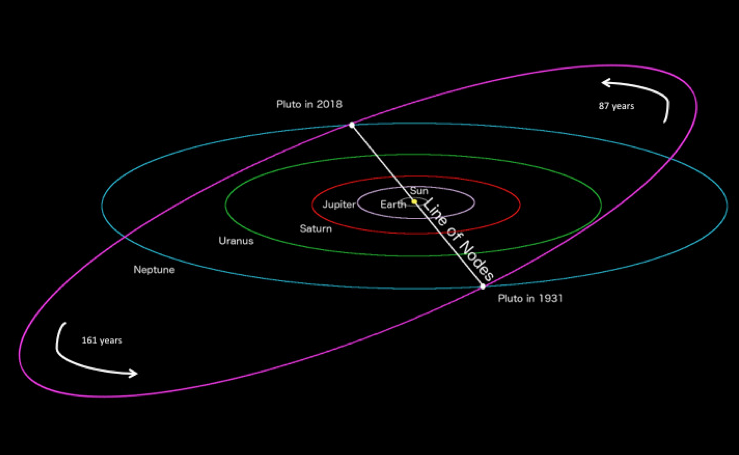
Orbital Overlap (Neptune)

Weight on Pluto
Sun Brightness (Pluto Time)

Pluto Year Converter

Binary System Calc

Life on Pluto?

Signal Delay (Comms)

3D Pluto
Sources
BINARY SYSTEM
Pluto's largest moon, **Charon**, is so massive that the two actually orbit a common center of gravity (barycenter) located in the space between them.
PLUTO'S MOONSNITROGEN GLACIERS
The "heart" of Pluto, **Sputnik Planitia**, is a massive basin filled with nitrogen ice that undergoes convection, behaving like a slow-moving fluid.
NEW HORIZONS DATAELLIPTICAL ORBIT
Pluto's orbit is highly eccentric; it actually comes closer to the Sun than Neptune for a 20-year period during its 248-year journey.
ORBITAL MECHANICS