
Atmospheric Freeze
ATMOSPHERIC COLLAPSE
PLUTO THERMAL DESCENT TELEMETRY
Descent into Aphelion
As Pluto moves along its highly stretched, elliptical orbit away from the Sun toward aphelion, it receives drastically less solar warmth. The drop in temperature causes the gases in its thin, fragile sky to rapidly condense and freeze solid.
Pluto swings billions of kilometers away from the solar core, triggering severe deep-freeze cycles.
Gaseous atmospheric pressures fall close to zero as the planet's sky turns to solid ground frost.
Frost Sync
Phase Mapping. Analyzing the P V = n R T constant. New Horizons monitors the Gas Buffer to track the atmospheric collapse and nitrogen freeze of the 134340 system.
- ❄️ State: Gas-to-Solid Deposition Sync.
- 📉 Pressure: 95% Atmospheric Loss Buffer.
- 🌡️ Trigger: Aphelion Cooling Protocol.
Phase Sync
Vapor Mapping. Analyzing the Clausius-Clapeyron constant. New Horizons monitors the Sublimation Buffer to track the seasonal gas-to-ice interface of 134340.
- 💨 Transition: Solid-to-Gas Direct Sync.
- 🕰️ Season: 248-Year Cycle Buffer.
- ⚖️ Pressure: Zero-Liquid Triple Point Protocol.
Pressure Sync
Vacuum Mapping. Analyzing the P = gM/A constant. New Horizons monitors the Microbar Buffer to track the atmospheric collapse of 134340.
- 📉 Scale: 100,000x Thinner than Earth Sync.
- ❄️ Collapse: Seasonal Freeze-to-Zero Protocol.
- ⚖️ Gravity: Low-Inertia Gas Retention Buffer.
Haze Sync
Optical Mapping. Analyzing the scattering constant. New Horizons monitors the Tholin Buffer to track the organic blue haze of the 134340 atmosphere.
- 🧪 Organics: $CH_4$ to Tholin Polymerization Sync.
- 🔵 Scattering: Rayleigh-Effect Blue Buffer.
- ☀️ Energy: UV-Driven Chemical Protocol.
PLANETARY METEOROLOGY / PHASE TRANSITION
THE GREAT FREEZE
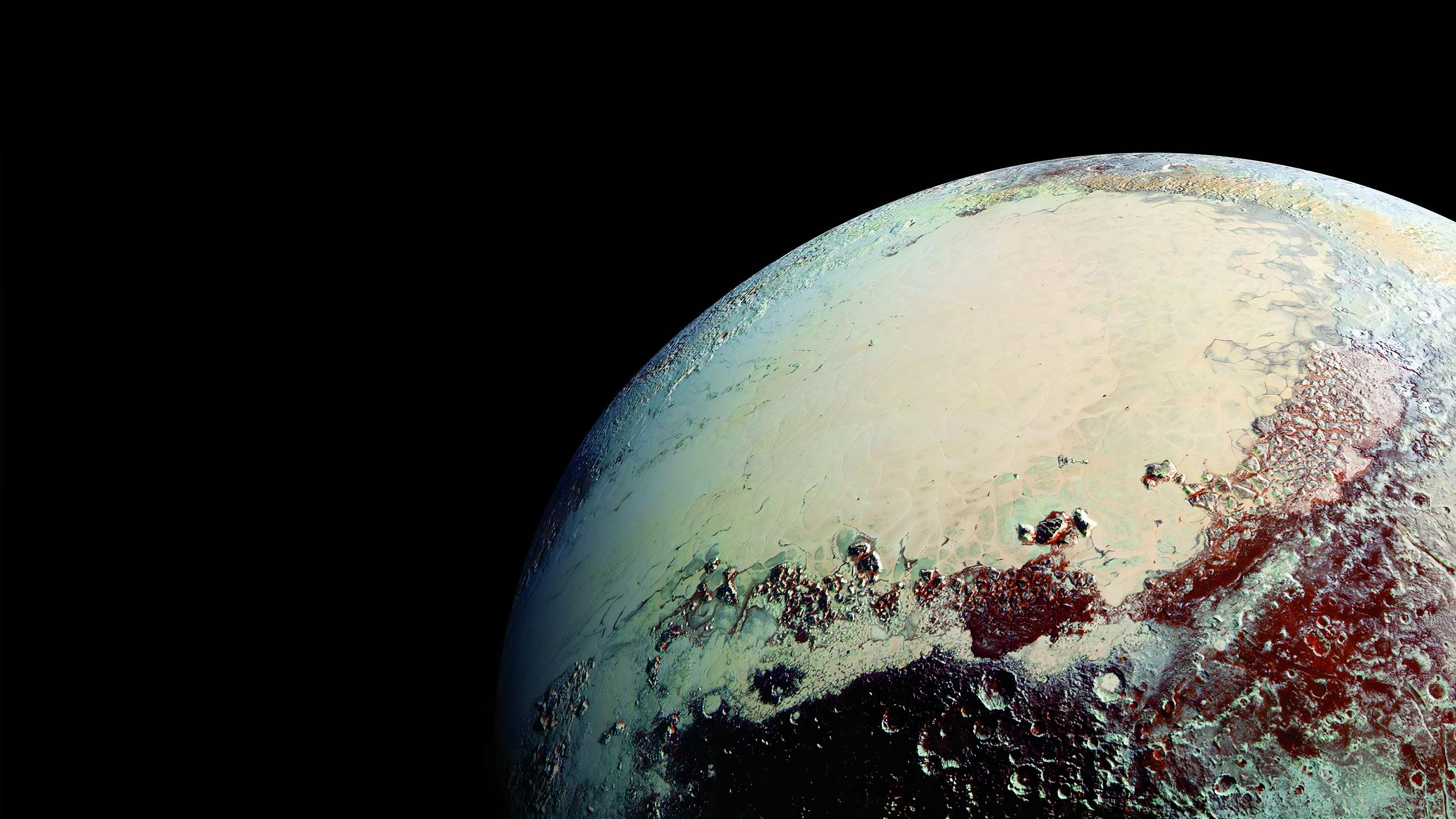
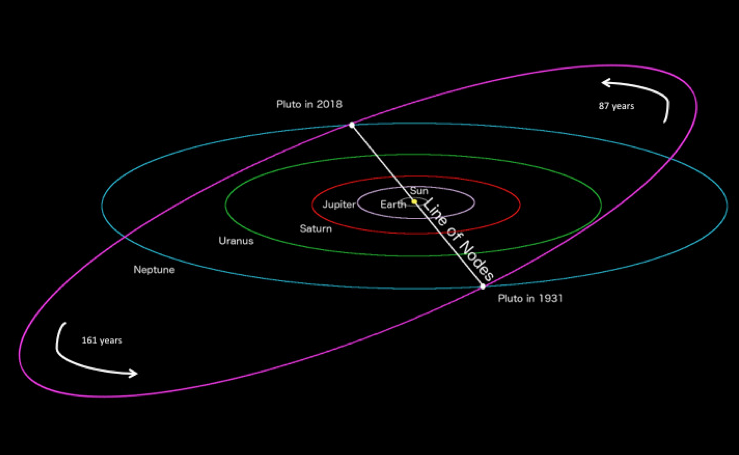
Pluto's orbit is so eccentric that its distance from the Sun varies by billions of kilometers. When Pluto is near perihelion (closest approach), surface ices sublimate into a thin, gaseous atmosphere. As Pluto moves toward aphelion (farthest distance), temperatures drop below the condensation point of nitrogen gas (~63 Kelvin). The atmosphere can no longer maintain a gaseous state and literally "snows out" onto the surface, causing the atmospheric pressure to drop by a factor of 10,000 or more.
GLACIOLOGY / CRYOTECTONICS
FLOWING NITROGEN GLACIERS
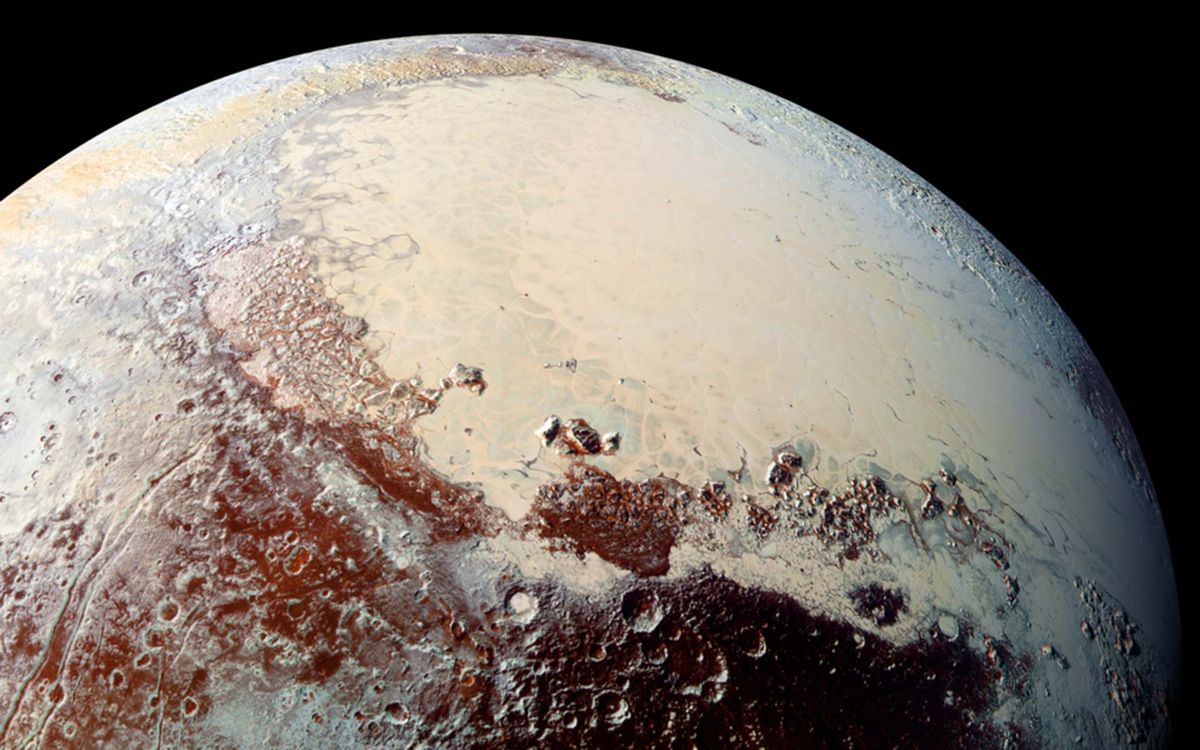
At Pluto's surface temperatures, nitrogen ice is near its melting point. This makes it extremely "malleable." In the massive impact basin known as Sputnik Planitia, these nitrogen ices build up into kilometers-thick layers. Under their own weight, they undergo viscous creep, flowing out from the center of the basin toward the edges. This process is effectively a planetary-scale lava lamp, where convection cells in the nitrogen ice continuously overturn, bringing "fresh," warmer ice to the surface and recycling the older, colder crust back into the depths.
ORBITAL MECHANICS / TIDAL PHYSICS
THE TIDAL TUG-OF-WAR
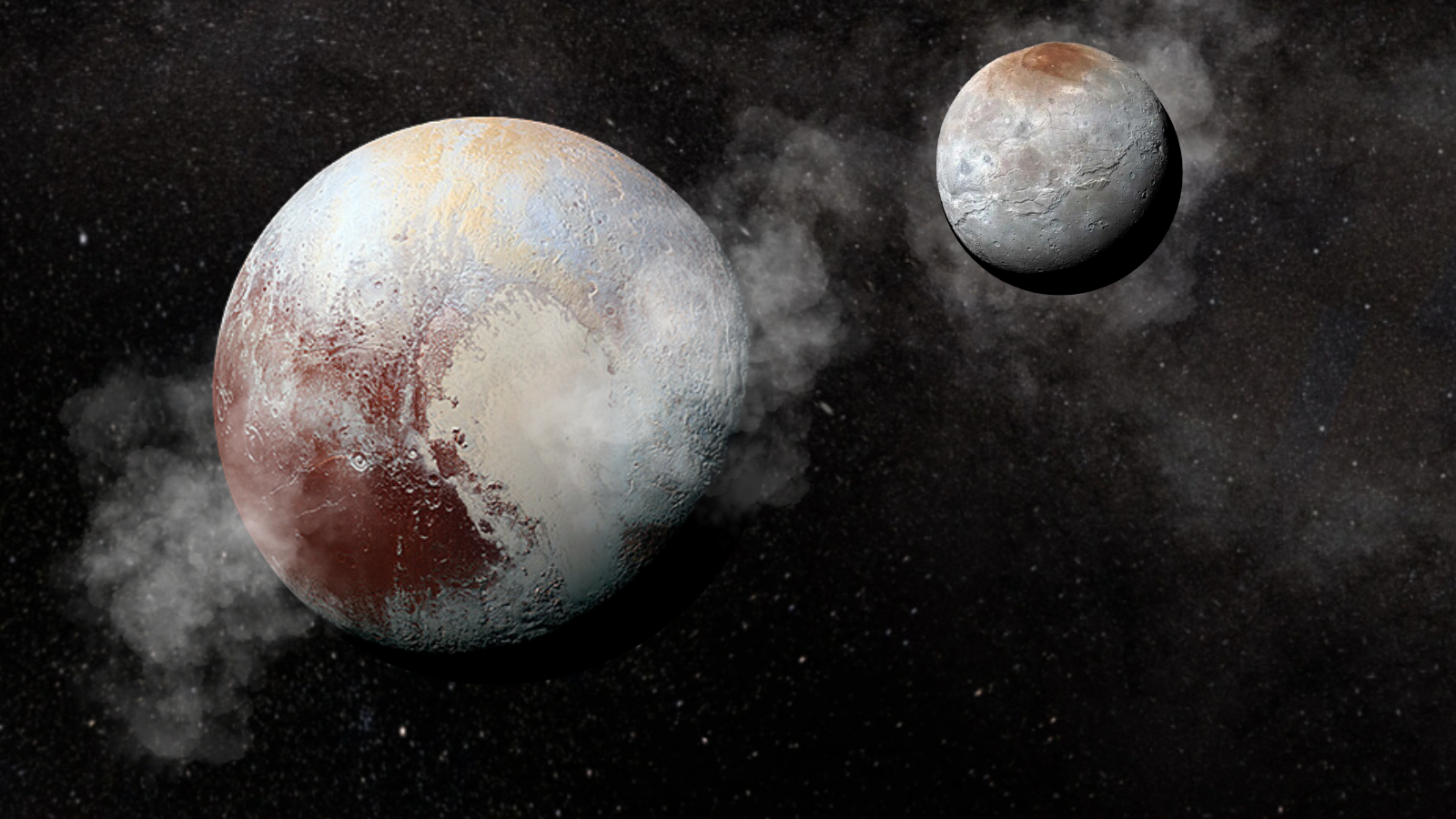
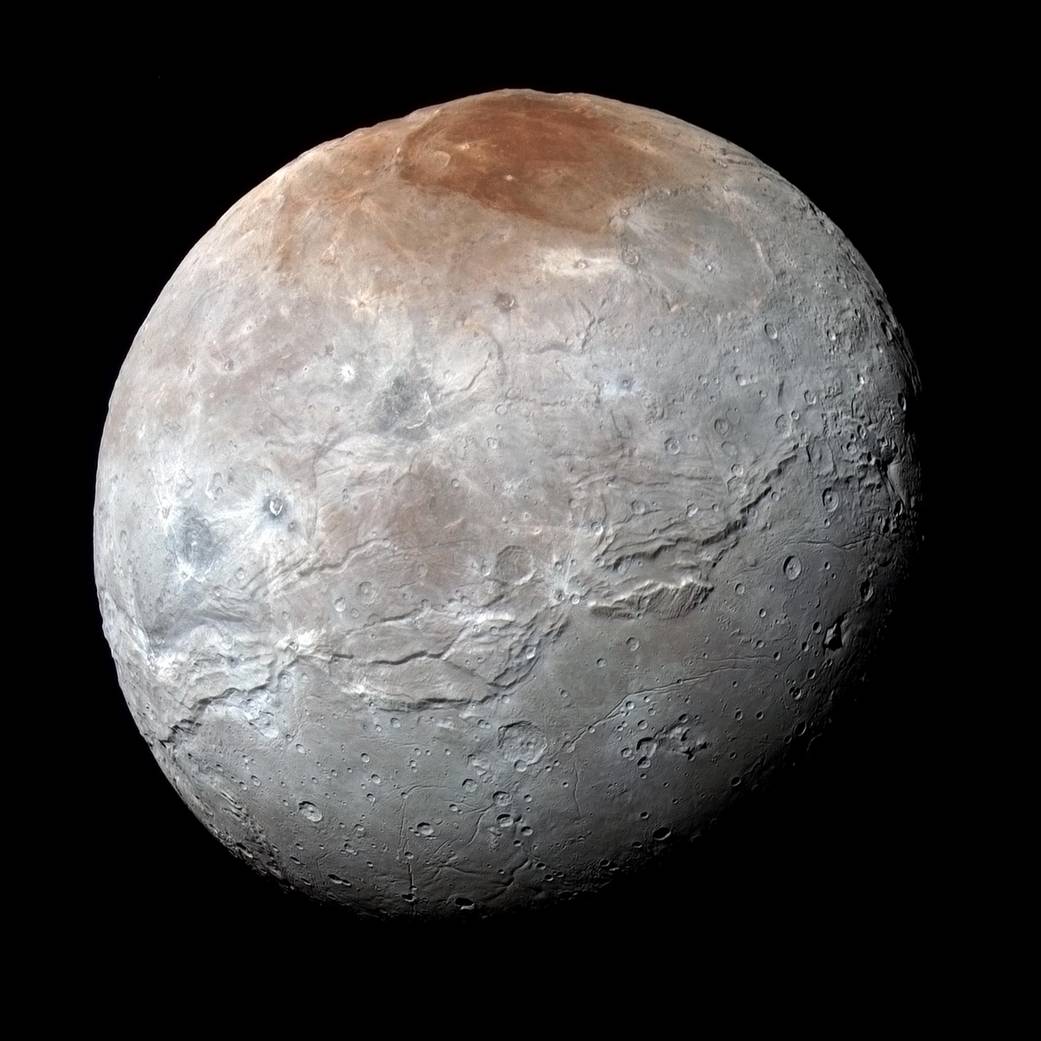
Because Pluto and Charon are mutually tidally locked, they always face the same side toward each other. However, this lock is not perfectly circular. The slight eccentricity in their mutual orbit creates Tidal Flexing. As the distance between them fluctuates slightly, the gravitational strain induces internal stress within Pluto's crust. This mechanical energy is converted into heat, contributing to the internal warmth required to drive the convection of nitrogen glaciers in Sputnik Planitia. Without Charon's constant gravitational "massaging," Pluto’s internal engine might have frozen over eons ago.
- Horizon -

Pluto
Pluto vs Moon Size
Charon Tidal Lock

Nitrogen Ice Flow

Atmospheric Freeze
Orbital Overlap (Neptune)

Weight on Pluto

Sun Brightness (Pluto Time)

Pluto Year Converter

Binary System Calc

Life on Pluto?

Signal Delay (Comms)

3D Pluto
Sources
SUBLIMATION CYCLE
As Pluto approaches the Sun (Perihelion), surface ices turn directly into gas. When it moves away (Aphelion), the gas cools and freezes back onto the surface.
PHASE CHANGEPRESSURE DROP
Recent observations suggest Pluto's atmospheric pressure is currently decreasing as it retreats from the Sun, indicating the "freeze-out" has already begun.
PRESSURE DATATHOLIN HAZES
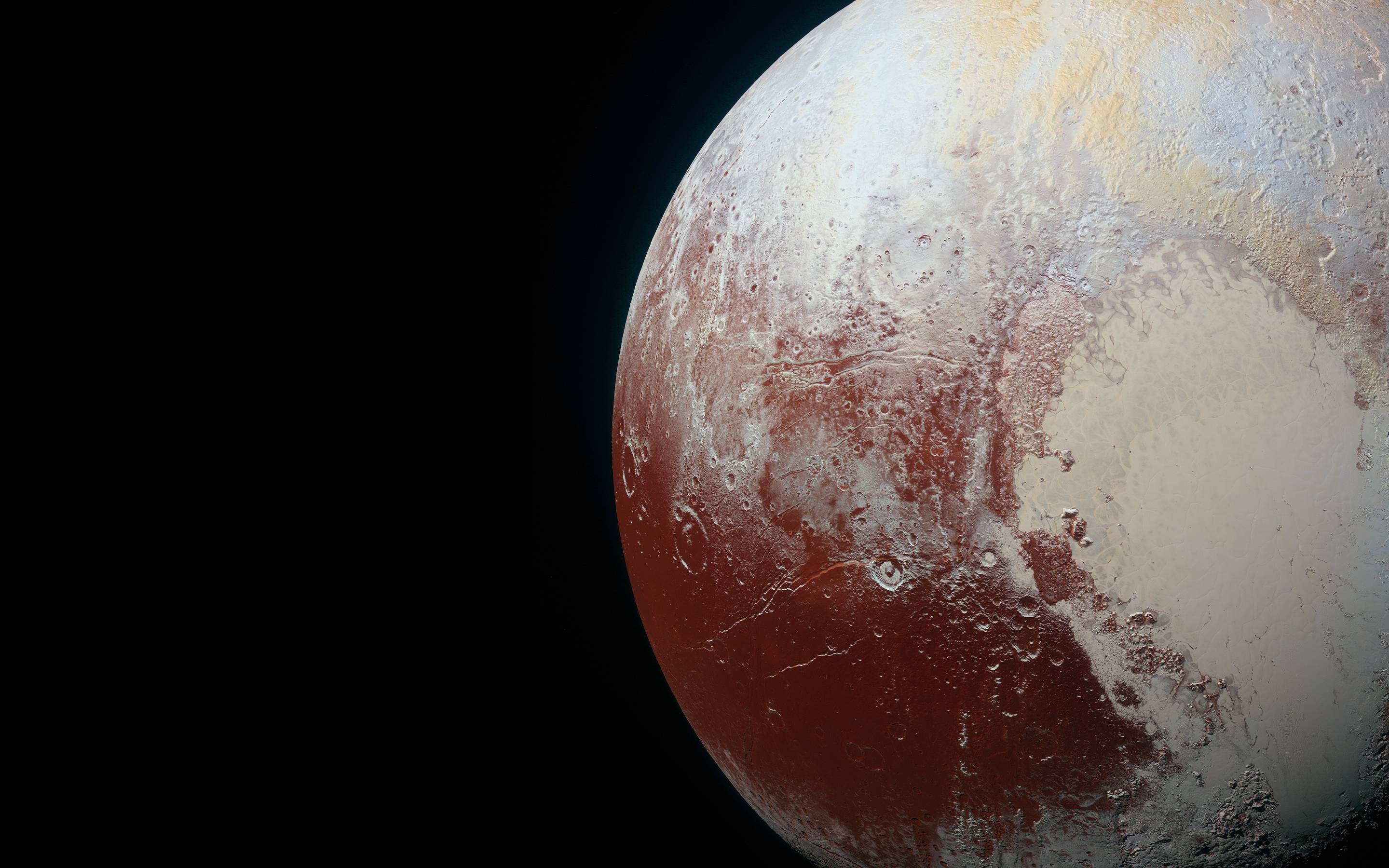
Sunlight breaks down methane in the atmosphere, creating complex organic molecules called **tholins**. These fall to the surface, staining the ice a deep reddish-brown.
ATMOSPHERE COMP