New Horizons Banner

Water Evaporation Caluculator

HYDRO LAB V3
EVAPORATION ACTIVE

WATER EVAPORATION CALCULATOR

MASS LOSS • ENERGY • RATE

VOLUME EVAPORATED


48.6 L
LITERS
Evaporation Rate
2.03 mm/day
Energy Required
118 MJ
MASS LOST
48.6 kg
Driven by vapor pressure deficit & wind

HYDROLOGY • EVAPORATION MATRIX 2026

science
ASK NEWTON AI

Evaporation Metrics

The Evaporation Rate is a critical calculation for managing water resources in coastal and tropical environments. By analyzing Vapor Pressure and Wind Velocity, our Beach Sunset engine predicts exactly how much water is lost to the atmosphere per hour.

  • Solar Intensity: High-impact thermal energy tracking.
  • Relative Humidity: Precision moisture saturation analysis.
  • Aerodynamic Factor: Wind speed influence on surface molecules.
  • Conservation Logic: Actionable data for pool and tank maintenance.
Hydro-Engine
0.15 mm/hr
Active Evaporation Rate
Temp: 32°C (Sunset Peak)
Humidity: 65% (Coastal Flow)
Wind: 15 km/h (Sea Breeze)
CALCULATION LIVE
TERRA PORE

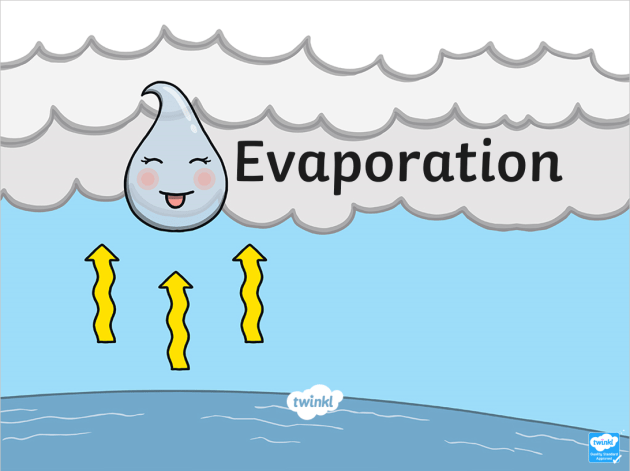
The Evaporation Process

Evaporation is a type of vaporization that occurs on the surface of a liquid as it changes into the gas phase. This is an Endothermic Process, meaning the water absorbs heat energy to break the molecular bonds holding it in place.

  • Kinetic Energy: Surface molecules gain speed as temperature rises.
  • Phase Transition: Liquid water turns into invisible water vapor.
  • Cooling Effect: As the fastest molecules escape, the remaining liquid cools down.
  • Vapor Pressure: Higher air temp allows more molecules to "fit" in the air.
LIQUID PHASE
Excited States
Molecules escaping surface tension
VAPOR FLOW

Post-Evaporation Effects

Once water molecules escape into the atmosphere, the remaining body of water undergoes significant changes. This "Water Loss" phase is not just about volume; it affects the Thermodynamics and Chemical Concentration of the entire system.

  • Evaporative Cooling: The average temperature of the remaining water drops.
  • Solute Concentration: Salts and chemicals become more concentrated as volume decreases.
  • Humidity Spike: Local air becomes saturated, eventually slowing the evaporation rate.
  • Energy Transfer: Latent heat is moved from the water surface to the sky.
System Update
Water Depletion
Mass Balance Shifted
Metric: Increased Salinity
Status: Thermal Energy Reduced
Logic: Latent Heat Loss
POST-LOSS DATA
ATMOS SYNC

The Water Cycle Explained

The Water Cycle (Hydrologic Cycle) is Earth's continuous movement of water above and below its surface. It's a closed system, meaning the total amount of water never changes, only its form and location. This fundamental process is vital for all life.

  • Evaporation: Liquid to gas (from oceans, lakes, and plants).
  • Condensation: Gas to liquid (forming clouds).
  • Precipitation: Water falling back to Earth (rain, snow, hail).
  • Collection: Accumulating in rivers, lakes, oceans, and groundwater.
Diagram of the Water Cycle
CONTINUOUS RENEWAL

Evaporation & Existence

The rate of evaporation isn't just a number—it's the pulse of our planet. High evaporation rates directly influence Freshwater Availability and Ecological Health, determining which species thrive and how humans manage vital resources.

  • Agriculture: Excessive rates cause soil drying, threatening food security.
  • Biodiversity: Drying wetlands destroy habitats for amphibians and birds.
  • Human Health: Evaporation regulates body temp through sweat (thermoregulation).
  • Energy: It drives hydroelectric cycles and global weather patterns.
Biosphere Impact
Eco-Balance
Humidity & Survival
Human: Water Security
Bio: Habitat Desiccation
Climate: Latent Heat Horizons
LIFE SYNC ACTIVE
TERRA IMPACT

METEOROLOGY / PHASE TRANSITION

THE LIQUID ASCENT

Water evaporation is the fundamental physical process where liquid water absorbs thermal energy from its environment, breaking intermolecular hydrogen bonds to transform into invisible water vapor gas and rise into the atmosphere.

Thermal Kinetic Energy Molecule motion acceleration via solar heat
Hydrogen Bond Break Overcoming cohesive forces at the liquid surface
Vapor Dispersion Invisible gas molecules lifting into air currents
Water evaporation and atmospheric phase transition concept

METEOROLOGY / KINETIC FACTORS

DRIVERS OF VAPORIZATION

The speed of water evaporation is not uniform; it is strictly governed by environmental conditions like ambient temperature, wind movement, surface area, and atmospheric humidity levels.

Temperature & Energy Higher thermal input increases molecular velocity
Wind & Air Currents Sweeping away saturated vapor from the liquid surface
Relative Humidity Dry air accelerates vaporization while moist air slows it
Atmospheric weather analysis and scientific evaporation concept

METEOROLOGY / CLIMATE & ENERGY

THE GLOBAL ENGINE

Evaporation is not just a localized drying process; it is a massive planetary heat transfer system. By lifting thermal energy from tropical oceans and releasing it as condensation in upper storm clouds, it stabilizes Earth's climate and drives global weather systems.

Heat Redistribution Moving thermal energy from equator to poles
Cloud Formation Vapor condensing around microscopic airborne particles
Precipitation Cycle Returning fresh water back to terrestrial land masses
Global climate, clouds, and atmospheric evaporation concept

Recommended Tools

View All

Loading recommended tools...


Dive Deep