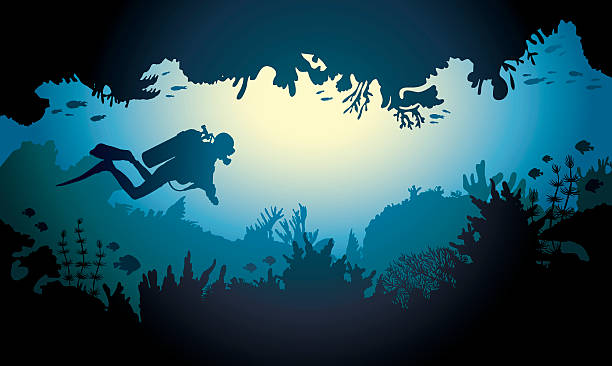
Ocean Deep Pressure Caluculator
OCEAN DEEP PRESSURE
HYDROSTATIC PRESSURE • ABYSSAL FORCE
100.5 atm
10.18 MN
~100.5 × surface
OCEANOGRAPHY • DEEP PRESSURE MATRIX 2026
Hydrostatic Basics
Accumulated Mass. Water is dense—roughly 800 times denser than air. Every 10 meters (33 feet) of depth adds another full atmosphere (atm) of pressure to whatever is below.
Core Principle: At the ocean surface, pressure is 1 atm. By the time you reach the deep sea, this cumulative weight creates an immensely crushing environment.
- 🌊 1 atmosphere per 10 meters.
- ⚖️ Massive water density.
Twilight Zone
Fading Light, Rising Force. Spanning from 200 to 1,000 meters deep, the mesopelagic zone experiences pressures ranging from 20 to 100 atmospheres.
Adaptation: Creatures living here, such as lanternfish and squids, feature specialized gelatinous bodies that prevent them from being crushed by the tightening squeeze.
- 🦑 20 to 100 atmospheres.
- 🌌 Gelatinous adaptations.
Abyssal Depths
Freezing and Pitch Black. Stretching from 4,000 to 6,000 meters down, pressures here reach up to 600 atmospheres. Only specialized life forms can endure this extreme realm.
Biology: Fish and invertebrates in the abyss often lack traditional swim bladders, which would otherwise collapse instantly under the crushing weight.
- 🌑 Up to 600 atmospheres.
- 🐟 No gas-filled organs.
Hadal Trenches
Over 1,000 Atmospheres. Found in deep ocean trenches like the Mariana Trench down to nearly 11,000 meters, pressures exceed 1,000 atmospheres—equivalent to an elephant standing on your thumb.
Piezophiles: Astonishingly, specialized bacteria and amphipods thrive here, utilizing unique cellular membranes that remain fluid under extreme pressure.
- 🏔️ Mariana Trench depths.
- 🦠 Piezophile survival.
Cellular Stress
Molecular Deformation. High pressure physically forces water molecules into tighter configurations, which can disrupt delicate protein structures and stop normal enzyme functions.
TMAO Solution: Deep-sea animals accumulate a protective chemical called trimethylamine N-oxide (TMAO) inside their cells to stabilize proteins against crushing forces.
- 🧬 Protein folding disruption.
- 🛡️ TMAO chemical shield.
Submersible Tech
Titanium and Spheres. Designing vehicles to explore deep pressure requires thick titanium hulls and perfectly spherical designs to distribute external loads evenly across the surface.
Exploration: Famous vessels like Trieste and modern deep-sea research subs make it possible for humanity to witness these hidden, crushing environments firsthand.
- 🛸 Titanium spherical hulls.
- ⚓ Even load distribution.
Sound Propagation
The SOFAR Channel. Pressure and temperature combine around 1,000 meters deep to form a specialized sound fixing and ranging channel where acoustic waves travel thousands of miles.
Acoustics: Whales use this unique deep-pressure sound duct to communicate across entire ocean basins without interference.
- 🔊 SOFAR acoustic duct.
- 🐋 Long-range whale calls.
Planetary Connection
Beyond the Seafloor. Deep ocean pressure is just the gateway to understanding planetary physics, mirroring the extreme forces acting deep within Earth's mantle and core.
Insight: Studying how materials and life behave under intense hydrostatic pressure gives scientists vital clues about planetary formation and ocean worlds across the solar system.
- 🌍 Mantle pressure parallels.
- 🪐 Astrobiology insights.
OCEANOGRAPHY / HYDROSTATIC PHYSICS
THE CRUSHING DEPTHS
Ocean pressure builds continuously as you descend beneath the waves. Because water is far denser than air, the sheer weight of the liquid column above exerts immense hydrostatic force on everything trapped within the deep sea.

OCEANOGRAPHY / MATHEMATICAL PHYSICS
CALCULATING THE ABYSS
Hydrostatic pressure follows a strict physical formula based on depth, gravity, and fluid density. As submarines and scientific probes descend into the trenches, this crushing mathematical reality dictates absolute structural limits.

OCEANOGRAPHY / DEEP-SEA BIOLOGY
LIFE UNDER PRESSURE
While unshielded machines fail instantly in the abyss, specialized deep-sea fauna thrive. By eliminating rigid air pockets and utilizing specialized cellular compounds, abyssal creatures turn crushing pressure into a stable home.

Recommended Tools
View AllLoading recommended tools...
Dive Deep
Photosynthesis Yield

Cell Doubling

Human Lung Capacity
Carbon Dating
Earth Quake Energy

Soil Porosity

Genetic Cross
Water Evaporation Rate
<
Ocean Pressure At Depth

Wind Chill Factor

Glacier Melt Volme
