Mineral Hardness
MINERAL HARDNESS
MOHS SCALE • SCRATCH TEST
8.0
1.0
Topaz scratches Quartz
MINERALOGY • HARDNESS MATRIX 2026
The Mohs Scale
Relative Scratch Resistance. Proposed in 1812 by German geologist Friedrich Mohs, this qualitative ordinal scale characterizes the scratch resistance of various minerals through the ability of a harder material to scratch a softer one.
Core Principle: The scale spans from 1 (the softest known mineral) to 10 (the hardest natural substance on Earth), providing field geologists with a quick and reliable identification test.
- 💎 Ten standardized reference minerals.
- 📏 Ordinal scratch resistance metric.
Level 1: Talc
The Softest Benchmark. Talc occupies the base of the Mohs scale at hardness 1. It is a hydrous magnesium silicate that feels exceptionally greasy or soapy to the touch and can be easily scratched with a fingernail.
Industrial Uses: Because of its extreme softness and moisture absorption, pulverized talc is widely used in manufacturing paper, ceramics, paint, and cosmetic powders.
- ✋ Easily scratched by a fingernail.
- 🌿 Magnesium silicate composition.
Level 2: Gypsum
Soft Sulfate. Gypsum is a soft sulfate mineral composed of calcium sulfate dihydrate. While slightly harder than talc, it can still be readily scratched with a human fingernail.
Construction Staple: Massive deposits of gypsum form alabaster and rock gypsum, which are mined extensively to manufacture drywall, plaster of Paris, and cement additives.
- 🧱 Calcium sulfate structure.
- 🏠 Primary drywall ingredient.
Level 3: Calcite
Carbonate Crystal. Calcite is a common carbonate mineral and the chief constituent of limestone and marble. It cannot be scratched by a fingernail, but a copper coin or knife blade will leave a mark.
Chemical Property: In addition to its hardness rating of 3, calcite reacts vigorously with weak acids, fizzing and releasing carbon dioxide gas.
- 🪙 Scratched by copper coin.
- ⚗️ Effervescent acid reaction.
Level 4: Fluorite
Vibrant Halide. Fluorite is a colorful halide mineral composed of calcium and fluorine. It has a definite cleavage and can be easily scratched with a steel knife blade.
Optical Wonder: Beyond its hardness rating of 4, fluorite crystals are famous for exhibiting strong fluorescence under ultraviolet light and are used in specialized optical lenses.
- 🔪 Scratched by steel blade.
- ✨ UV fluorescence properties.
Level 5: Apatite
Phosphate Group. Apatite is a group of phosphate minerals that marks hardness 5 on the Mohs scale. It can just barely scratch window glass and can be scratched by a knife with moderate effort.
Biological Link: Phosphate variations of apatite form the primary mineral content of teeth enamel and bones in vertebrates across the animal kingdom.
- 🪟 Scratches window glass.
- 🦴 Bone and tooth composition.
Level 6: Feldspar
Rock-Forming Silicate. Feldspar is an abundant rock-forming tectosilicate mineral group that makes up over half of Earth's crust. It easily scratches glass and cannot be marked by an ordinary steel knife.
Durability: Requiring a hardened steel file to scratch it, feldspar serves as a reliable baseline for identifying igneous rocks like granite.
- ⛰️ Core crustal constituent.
- 🛡️ Resists steel knife blades.
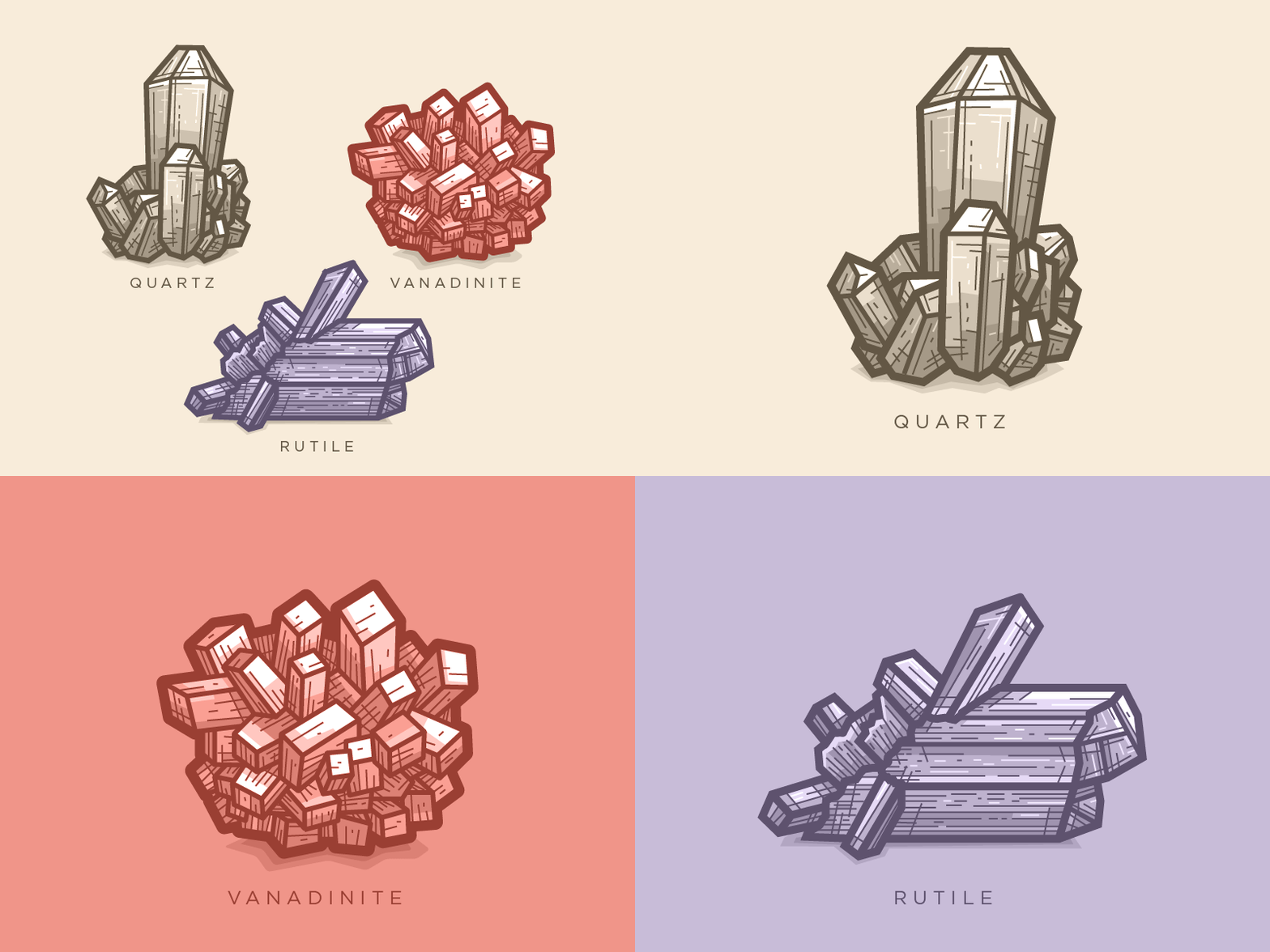
Level 7: Quartz
Silica Standard. Quartz is a hard, crystalline mineral composed of silicon and oxygen atoms. Because quartz is common in sand and soil, dust containing quartz can scratch softer materials easily.
Marker Threshold: Any mineral with a hardness of 7 or higher can scratch window glass effortlessly and leave sharp scratches on steel files.
- ⏳ Silicon dioxide crystal structure.
- 🔍 Standard scratch test anchor.
Level 8: Topaz
Silicate Gem. Topaz is a silicate mineral of aluminium and fluorine holding a hardness rating of 8. It forms prismatic crystals that can easily scratch quartz and all softer minerals.
Jewelry Grade: While pure topaz is colorless, trace impurities produce vibrant blue, pink, yellow, and amber gemstones highly prized in fine jewelry crafting.
- 💍 Aluminium fluoro-silicate.
- ✨ Scratches quartz easily.
Level 9: Corundum
Aluminum Oxide. Corundum is a crystalline form of aluminum oxide representing hardness 9 on the Mohs scale. It is surpassed only by diamond in natural scratch resistance.
Gem Varieties: Gem-quality red corundum is known as ruby, while all other color variations—most famously deep blue—are classified as sapphires.
- 🔴 Ruby and sapphire chemistry.
- ⚙️ Industrial abrasive applications.
Level 10: Diamond
Ultimate Carbon Lattice. Diamond sits at the absolute peak of the Mohs scale at hardness 10. Formed under immense heat and pressure deep within Earth's mantle, its rigid tetrahedral carbon bonding makes it the hardest known natural material.
Cutting Power: Because nothing in nature can scratch a diamond except another diamond, industrial variants are indispensable for heavy-duty cutting, drilling, and grinding tools.
- 💎 Tetrahedral carbon crystal lattice.
- ⚡ Maximum natural scratch resistance.
Absolute Hardness
Exponential Scaling. While the Mohs scale increases linearly from 1 to 10 in steps, absolute indentation hardness (measured via sclerometer testing) reveals a massive exponential curve toward the top.
The Diamond Leap: Corundum (9) is roughly four times harder than topaz (8), but diamond (10) is more than four times harder than corundum, demonstrating an astronomical leap in atomic bonding strength.
- 📈 Non-linear indentation metrics.
- 🚀 Massive exponential jump at level 10.
Field Testing
Practical Kits. Field geologists rarely carry reference mineral blocks; instead, they rely on readily available everyday items calibrated to specific Mohs thresholds.
Standard Toolkit: A fingernail (2.5), a copper penny (3.5), a pocketknife blade (5.5), a window glass shard (6.5), and a steel file (7.0) form a complete, portable hardness kit for rapid rock identification anywhere in the world.
- 🛠️ Everyday calibration items.
- 🌍 Rapid rock and mineral ID.
Recommended Tools
View AllLoading recommended tools...