Limiting Friction
PHYSICS LAB: LIMITING FRICTION
PEAK STATIC RESISTANCE & BREAKAWAY MECHANICS
Understanding Limiting Friction
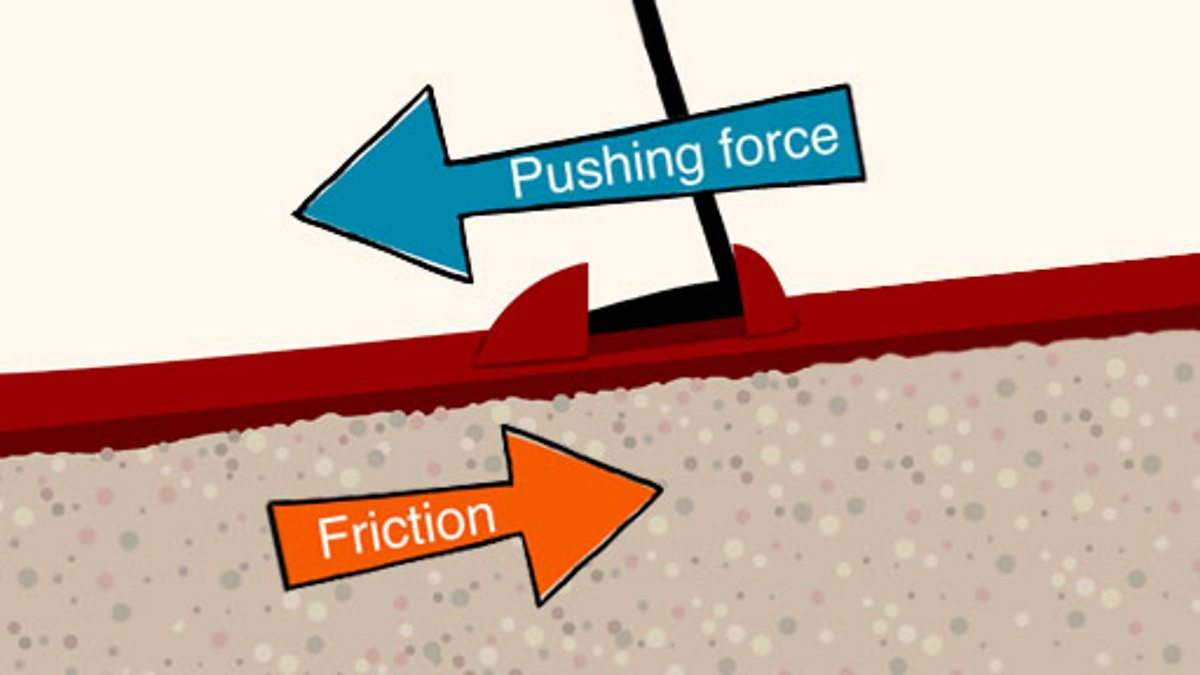
Limiting friction refers to the maximum possible value that static friction can attain before an object begins to slide. When an applied force equals this precise threshold, the object is on the absolute verge of motion.
Maximum resistive force right before sliding occurs.
The critical tipping point separating rest from active kinetic slip.
Kinetic Sync
Vector Mapping. Monitoring the Limiting-Friction Buffer to track the transition from static resistance to active kinetic motion.
- ⚖️ Threshold: Limiting Friction Maxima.
- ⚙️ Coefficient: (μₖ) Operational Buffer.
- 📉 Force: Applied Load Gradient Protocol.
Dynamic Sync
Equation Mapping. Monitoring the Force-Velocity Buffer to track the product of the kinetic coefficient and normal force.
- 📐 Formula: fₖ = μₖN Calculation Sync.
- ↕️ Normal: Perpendicular Force Buffer.
- ⬅️ Direction: Anti-Velocity Vector Protocol.
Coefficient Sync
Relative Mapping. Monitoring the $\mu_s$ vs $\mu_k$ interface to track why initiating motion requires higher energy input than maintaining it.
- 🏁 Static Peak: $\mu_s$ Resistance Maxima.
- 🏃 Kinetic Drop:μₖ vs μₛ Efficiency Sync.
- ⚡ Inertia: Motion Initiation Protocol.
Thermal Sync
Entropy Mapping. Monitoring the Work-Heat Buffer to track the conversion of mechanical displacement into molecular kinetic energy.
- 🌡️ Excitation: Surface Temperature Sync.
- ⚛️ Conversion: Mechanical Work to Q Buffer.
- 🔥 Dissipation: Interfacial Energy Protocol.
Limiting Friction • 100 Problems
Maximum Static Friction • Just Before Motion Starts • Pre-CalculatedSources
COEFFICIENT OF FRICTION
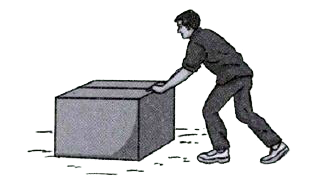
Kinetic friction is generally lower than static friction. This is why it is harder to start sliding a heavy box than it is to keep it moving once it's in motion.
PHYSICS FUNDAMENTALSTHERMAL ENERGY
Kinetic friction converts mechanical work into heat. On a microscopic level, "cold welding" points between surfaces are broken and reformed, releasing energy.
ENERGY DYNAMICSSURFACE INTERACTION
Unlike static friction, kinetic friction is relatively independent of the sliding velocity and the contact area, focusing instead on surface roughness.
MECHANICAL SPECS
Limiting Friction FAQs
Understanding the maximum threshold of static friction before motion begins
Limiting friction is the maximum possible value of static friction that acts on a body when it is just at the verge of sliding over a surface.
The object breaks its stationary hold, overcomes the threshold, and transitions into motion as kinetic friction takes over.
Limiting friction is directly proportional to the normal reaction force pressing the two contact surfaces together.
It is expressed as F_l = mu_s * N, where mu_s is the coefficient of static friction and N is the normal force.
For standard solid objects, limiting friction is independent of the apparent surface contact area as long as the total normal force remains unchanged.
At the verge of motion, microscopic surface irregularities (asperities) interlock deeply and require maximum force to shear apart compared to when already sliding.
It depends on the nature and roughness of the contacting materials and the weight or downward pressure pressing them together.
No, it changes dynamically if the normal force changes—for example, if extra weight is loaded onto the object, the limiting friction increases.
Engineers rely on limiting friction calculations to design reliable brakes, clutches, structural anchors, and slip-resistant flooring.
It defines the critical maximum angle of repose at which an object can rest on a ramp without sliding downward.
Friction Lab
Explore the mechanics of surface resistance and kinetic energy through interactive surface simulations. Test different materials, adjust normal forces, and measure how varying coefficients of friction influence motion and deceleration in real-time. This lab offers an intuitive digital workbench for investigating physical forces and dynamic interactions.