New Horizons Banner

Friction Force

PHYSICS LAB: FRICTION FORCE

MECHANICAL RESISTANCE, COEFFICIENTS & SURFACE DYNAMICS

PHYSICS MODULES:

Static vs. Kinetic Friction

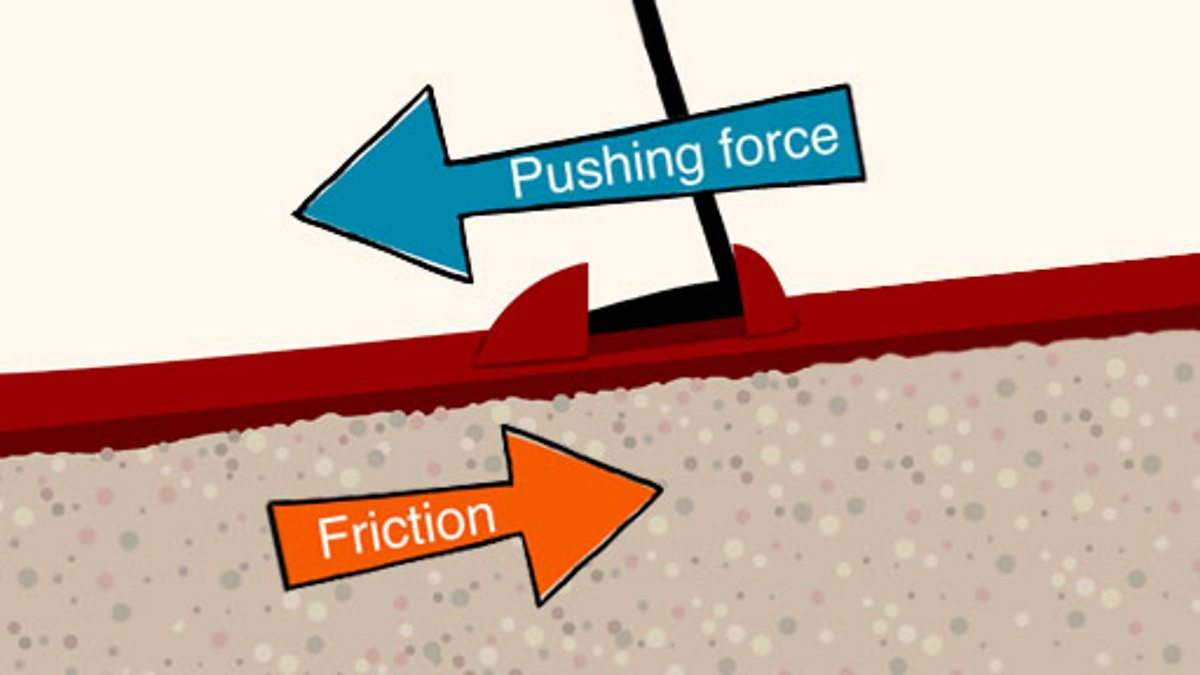
Friction is the resistive force generated when two surfaces slide or tend to slide across one another. It is categorized primarily into static friction (preventing stationary objects from moving) and kinetic friction (resisting objects already in motion).

CORE FORMULA EQUATION
f = μ · N

Frictional resistance equals the friction coefficient multiplied by normal force.

MECHANICAL STATUS
CONTACT RESISTANCE

Converts kinetic energy into thermal energy via microscopic surface interlocking.

Traction Sync

Resistance Mapping. Analyzing the μₛ . μₖconstant. New Horizons monitors the Friction Buffer to track energy loss and motion thresholds between surfaces.

  • 🧱 Static: Initial Resistance Buffer.
  • ⛸️ Kinetic: Dynamic Sliding Sync.
  • 📐 Normal: Vertical Pressure Protocol.
FRICTION SYNC
🛑
GRIP LEVEL
LOCKED
INTERFACE BUFFER ACTIVE
RESISTANCE CALIBRATION SECURE

Equation Sync

Interface Mapping. Analyzing the f = μₛ N constant. New Horizons monitors the Surface Buffer to track the relationship between vertical pressure and lateral resistance.

  • 📐 Normal: Perpendicular Pressure Sync.
  • 🧪 Coefficient: Material Interaction Buffer.
  • 🛑 Friction: Resultant Resistance Protocol.
FRICTION SYNC
f=μN
RESISTANCE
ACTIVE
SURFACE BUFFER SECURE
INTERFACE CALIBRATION SECURE

Threshold Sync

Transition Mapping. Analyzing the μₛ > μₖ constant. New Horizons monitors the Resistance Buffer to track the energy shift between stationary locking and dynamic sliding. 🛑⛸️

  • 🛑 Static: Peak Locking Force Buffer.
  • ⛸️ Kinetic: Lower Sustaining Motion Sync.
  • 📉 Drop: Friction Reduction Protocol.
FRICTION BUFFER
μₛ > μₖ
THRESHOLD
BREACHED
KINETIC SYNC ACTIVE
TRANSITION CALIBRATION COMPLETE

Interface Sync

Factor Mapping. Analyzing the μₛ and N constants. New Horizons monitors the Surface Buffer to track material nature while excluding area variables.

  • 🔍 Nature: Microscopic Roughness Sync.
  • ⚖️ Pressing: Normal Force Load Buffer.
  • 🚫 Area: Variable Independence Protocol.
SURFACE SYNC
🔍
CONTACT
MATERIAL
AREA SYNC NEUTRAL
DYNAMICS CALIBRATION SECURE
1. The Invisible Brake: What is Friction?

Friction is the resistance force that acts when two surfaces slide or try to slide across each other, turning our moving energy straight into warmth.

2. Static Friction: The Stubborn "Not Going Anywhere" Force

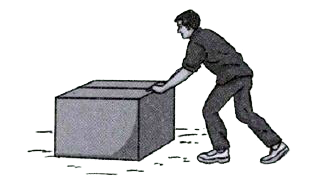
This is the tricky force that keeps objects stuck in place, matching your push palaver for palaver until you finally break its grip.

3. Kinetic Friction: The Slide Glide

Once things are already moving, kinetic friction takes over—usually feeling a bit more forgiving than static friction as objects smoothly glide along.

4. Microscopic Mountains: Why Surfaces Stick Together

Even tables and floors that look glass-smooth are actually packed with tiny bumps and crags that catch on each other like millions of microscopic speed bumps.


Friction Force Problems

100 Common Calculations • Static • Kinetic • Inclines • Pre-Solved
Max Static
10 kg box, μs = 0.5, horizontal floor. Maximum force before it starts moving? (g=10)
Force 0 N
fs,max = μs N = 0.5 × 100
Kinetic Force
10 kg box sliding, μk = 0.3. Kinetic friction force?
Force 0 N
fk = μk mg = 0.3 × 100
Acceleration
20 kg box, push 100 N, μk = 0.3. Acceleration while sliding?
a 0 m/s²
a = (F − fk)/m
Normal Force
10 kg box on flat surface. Normal force N?
N 0 N
N = mg (g=9.8)
Static Limit
8 kg crate, μs = 0.5. Max force without sliding? (g=9.8)
Force 0 N
≈ 0.5 × 78.4
Incline Static
5 kg on 30° incline, μs = 0.6. Max friction force up the plane?
fs,max 0 N
μs mg cos 30°
Down Component
5 kg on 30° incline. Component of weight parallel to plane?
Force 0 N
mg sin 30° (g=10)
Will It Slide?
4 kg, μs = 0.4, push 15 N horizontal. Does it move? Friction force if not?
f 0 N
Static matches applied (15 N < fmax)
Car Friction
1000 kg car, μk = 0.3. Force needed for constant speed?
Force 0 N
fk = 0.3 × 9800
Net Accel
10 kg, F=50 N, μk=0.2 (g=10). Acceleration?
a 0 m/s²
(50 − 20)/10
Start Moving
100 kg box, μs = 0.25. Min force to start motion? (g=9.8)
Force 0 N
μs mg
Kinetic Simple
10 kg sliding, μk = 0.2 (g=10). Friction force?
fk 0 N
0.2 × 100
Box Force
5 kg, μ = 0.2, horizontal. Frictional force while sliding?
Force 0 N
0.2 × 49 (g=9.8)
Heavy Crate
120 kg wood on wood, μs = 0.5. Max force without moving? (g=9.8)
Force 0 N
0.5 × 1176
After Slip
120 kg, continue with max static force, μk=0.3. Acceleration?
a 0 m/s²
(588 − 353)/120 ≈ 2
Critical Angle
Approximate angle (degrees) where tan θ = μs = 0.577 for slipping?
θ 0°
θ = arctan(μs)
Incline Kinetic
5 kg, 30°, μk=0.2. Kinetic friction force? (g=10)
fk 0 N
μk mg cos 30° ≈ 8.7 → 8
Accel Down
5 kg, 30°, μk=0.2. Acceleration down the incline? (g=10)
a 0 m/s²
g(sinθ − μk cosθ) ≈ 3.3
Push Force
50 kg, μs=0.3. Force to start moving? (g=10)
Force 0 N
0.3 × 500
Keep Moving
50 kg, μk=0.2. Force for constant velocity? (g=10)
Force 0 N
0.2 × 500
Types
Main types of dry friction taught in introductory physics (static + kinetic).
Types 0
Static & Kinetic
Amontons
Number of classic Amontons–Coulomb laws of friction.
Laws 0
Proportional to load, independent of area, independent of velocity
Crate Normal
20 kg crate. Normal force on horizontal floor? (g=9.8)
N 0 N
mg
Static Max
20 kg, μs=0.7. Max static friction? (g=9.8)
fs,max 0 N
0.7 × 196
Kinetic
20 kg, μk=0.6. Kinetic friction force?
fk 0 N
0.6 × 196
μ from Force
It takes 200 N to start a 50 kg box (g=10). Approximate μs × 100?
μs×100 0
μs = F / mg = 0.4
Stopping Dist
Object sliding at 10 m/s, μk=0.2. Approximate distance to stop (m)? (g=10)
d 0 m
v² = 2 a d → d = v²/(2μg)
Ice Puck
Hockey puck, μk≈0.03. Rough order of friction force for 0.16 kg (N × 10)?
0.0 N
Very low μ
Piston
Force needed to insert dry steel piston (classic problem value).
Force 0 N
Common textbook example
Oiled
Approximate force after oiling the same piston (much lower).
Force 0 N
μ drops dramatically
Wood Crate
40 kg, μs=0.2 (g=10). Max static friction?
Force 0 N
0.2 × 400
Does It Move
40 kg, μs=0.2, applied 60 N. Friction force (static matches)?
f 0 N
60 < 80 → no motion
Rubber Tire
Approximate μs × 10 for rubber on dry concrete (typical value).
μ×10 0
~1.0–1.2
Wet Road
Approximate μk × 10 for rubber on wet concrete.
μ×10 0
~0.5–0.7
Knee Joint
Max friction force (N) supporting 66 kg on one knee (classic problem order).
Force 0 N
Very small μ in joints
Exercise Load
10× body weight force case – order of max joint friction (N).
Force 0 N
Still relatively small
Incline N
5 kg on 30°, normal force? (g=9.8)
N 0 N
mg cos 30° ≈ 42.4
Hold or Slide
5 kg, 30°, μs=0.7. Can static friction hold it? (yes, margin ~5 N)
Margin 0 N
fmax − mg sinθ
Puck Distance
Puck at 5 m/s, μk=0.03. Approximate distance (m) before stop?
d 0 m
v² / (2μg)
Golf Cart
600 kg cart stops in 24 m from 5 m/s. Approximate friction force (N)?
Force 0 N
From kinematics + Newton 2
Mission
Master these 100 problems and you can solve virtually any introductory friction question.
Problems 0
Practice → Mastery


Sources

FRICTION FORMULA


The magnitude of friction depends on the Normal force (N) and the coefficient of friction : **f = μₛ N**. It does not depend on surface area.

FRICTION MATH

STATIC VS. KINETIC


Static friction prevents motion, while Kinetic friction acts during motion. Usually, μₛ > μₖ, making it harder to start an object than to keep it moving.

FRICTION TYPES

ENERGY LOSS


Friction converts kinetic energy into thermal energy (heat). This is why space capsules need heat shields when entering an atmosphere at high speed.

THERMODYNAMICS


rocket_launch
ASK QUARK AI

Friction Lab

Explore the mechanics of surface resistance and kinetic energy through interactive surface simulations. Test different materials, adjust normal forces, and measure how varying coefficients of friction influence motion and deceleration in real-time. This lab offers an intuitive digital workbench for investigating physical forces and dynamic interactions.


Rock Megalith Illustration on White Background

Friction Force FAQs

Understanding the fundamental mechanics, types, and real-world applications of friction

What is friction force? +

Friction is the resistive force generated whenever two surfaces slide or attempt to slide against each other, opposing relative motion.

What are the primary types of friction? +

The main categories include static friction (holding objects still), kinetic friction (during sliding), rolling friction, and fluid resistance (drag).

What factors affect the amount of friction between surfaces? +

Friction depends directly on the nature of the contact materials (roughness coefficient) and the perpendicular normal force pressing them together.

What is the difference between static and kinetic friction? +

Static friction prevents stationary objects from moving and is generally stronger, whereas kinetic friction acts continuously once an object is already sliding.

How is friction calculated in physics? +

Friction force equals the coefficient of friction multiplied by the normal force pressing the objects together ($F = \mu N$).

Why is friction essential for everyday life? +

Without friction, we couldn't walk without slipping, vehicles couldn't brake or accelerate safely, and nails or screws wouldn't stay fastened in wood.

What are some common ways to reduce unwanted friction? +

Friction can be minimized using lubricants (oil, grease), ball bearings, streamlining shapes, or making contact surfaces smoother.

Does the surface contact area affect friction magnitude? +

Surprisingly, for rigid solids under standard conditions, surface area does not significantly change total friction because pressure adjusts inversely.

What energy transformation occurs due to friction? +

Friction converts mechanical kinetic energy into thermal energy (heat), which is why rubbing your hands together warms them up.

What causes microscopic friction between solid objects? +

Even smooth-looking surfaces possess microscopic peaks and valleys called asperities that catch, bond, and resist sliding.