Asteriods Space
ASTEROID DATA MATRIX
INDIVIDUAL OBJECT TRACKING & TELEMETRY
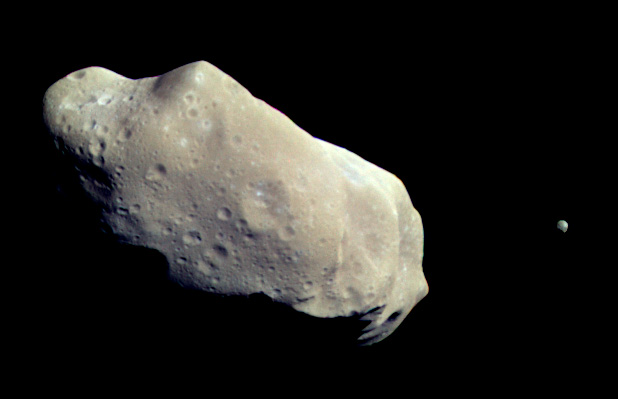
16 Psyche
One of the most massive objects in the main asteroid belt, Psyche is a giant M-type asteroid. Instead of rock or ice, scientists believe this massive core is composed almost entirely of exposed metallic iron, nickel, and gold.
Hypothesized to be the ancient, violent remnant of a shattered protoplanetary iron core.
Contains roughly 1% of the total mass of the entire main asteroid belt.
Space Sync
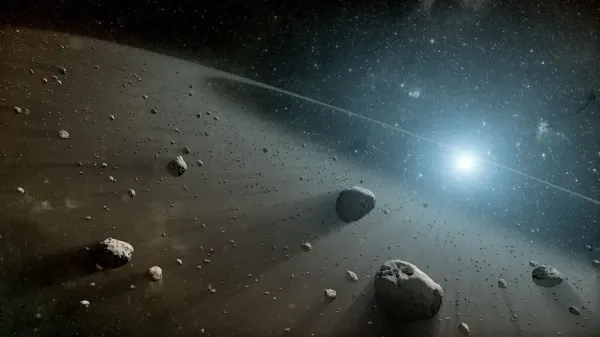
Volumetric Isolation Mapping. Analyzing the vast gaps between kinetic fragments in the Mars Jupiter transition. New Horizons monitors the Spacing Constant to verify the low density of the orbital torus.
- 🛰️ Average Gap: 1 Million Kilometers.
- 🌑 Density: 1 km Rock per 60 Million km³.
- 🛡️ Status: Maximum Vacuum Saturation.
Isolation Sync
Million KM Gap Mapping. Analyzing the extreme spatial separation within the Mars Jupiter torus. New Horizons monitors the Isolation Constant to verify the statistical safety of high velocity vacuum transit.
- 🌑 Gap: 1,000,000 km Mean Distance.
- 📡 Density: Negligible Matter Saturation.
- 🚀 Risk: 1 in 1 Billion Collision Odds.
Isolation Sync
Statistical Isolation Mapping. Analyzing the probabilistic vacuum of the Mars Jupiter gap. New Horizons monitors the Isolation Constant to confirm why blind navigation is functionally safe.
- 🔭 Visibility: Zero Object Detection Probability.
- 📏 Spacing: 1 Million KM Kinetic Buffer.
- 🚀 Transit: Safe Blind Sync Confirmed.
Odds Sync
Calculated Risk Mapping. Analyzing the billion to one safety ratio of the asteroid belt. New Horizons monitors the Odds Constant to confirm why space transit is the safest form of kinetic displacement.
- 🎲 Odds: 1 in 1,000,000,000.
- 🚶 Safety: Greater than Street Crossing.
- ✅ Status: Nominal Risk Profile.
History Sync
Legacy Transit Mapping. Analyzing the 100 percent success rate of NASA belt crossings. New Horizons monitors the History Constant to track why zero collisions have occurred across decades of orbital exploration.
- 🛰️ Missions: 10+ Successful Transits.
- 🛡️ Impacts: Zero Terminal Collisions.
- 📈 Status: Reliable Navigation Sync.
ASTRODYNAMICS / SURFACE ENVIRONMENT
THE PHYSICS OF LOW-G SURFACES
Landing on an asteroid is fundamentally different from landing on a planet. With negligible gravity, traditional landing gear is useless. Instead, you encounter Regolith Dynamics—the surface is often covered in a layer of loose, pulverized rock that behaves more like a fluid than a solid. When your probe touches down, it does not "land"; it encounters a granular medium that can shift, sink, or erupt, making surface interaction a problem of soft-soil mechanics.

ORBITAL DYNAMICS / THERMAL PHYSICS
THE YARKOVSKY PUSH
The Yarkovsky effect is a force that arises from the way an asteroid absorbs sunlight and re-radiates it as heat. Because an asteroid rotates, the "afternoon" side is warmer than the "morning" side. This re-radiation of thermal photons acts like a tiny, constant thruster. Over millions of years, this minute force can significantly alter an asteroid's semi-major axis, potentially drifting a harmless rock into an Earth-crossing orbit or pushing it into one of the Kirkwood Gaps we discussed earlier.
Sources
AVERAGE DISTANCE
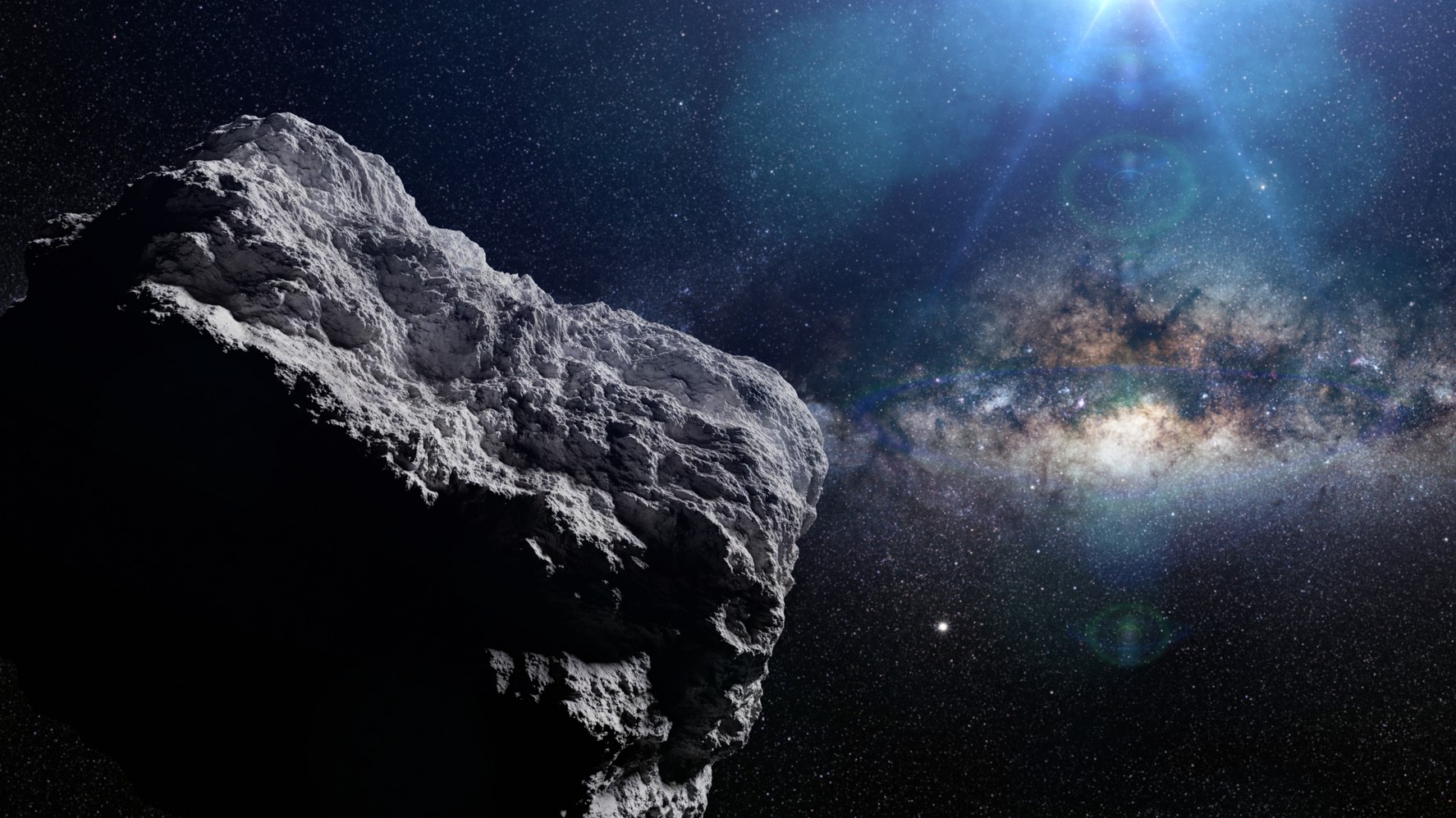
On average, the distance between two asteroids in the belt is roughly **966,000 kilometers** (600,000 miles).
NASA ASTEROID DATAPROBABILITY OF IMPACT
The chance of a spacecraft hitting an asteroid while crossing the belt is estimated at less than **one in a billion**.
MISSION STATSVOLUME DENSITY
The belt occupies a volume of trillions of cubic miles, yet the total mass is far less than that of the dwarf planet Pluto.
PHYSICAL VOLUME- ASTERIODS -
Asteroid
Asteroid Spacing

Space View Point

Ceres Gravity/Size

Mining Profit

Impact Energy

Trojan Logic

Ceres 3D Model
