Redshift Distance Calculator
REDSHIFT DISTANCE
LUMINOSITY • COMOVING • LOOKBACK
—
—
—
—
—
COSMOLOGICAL REDSHIFT • DISTANCE MATRIX 2026
Cosmic Shift
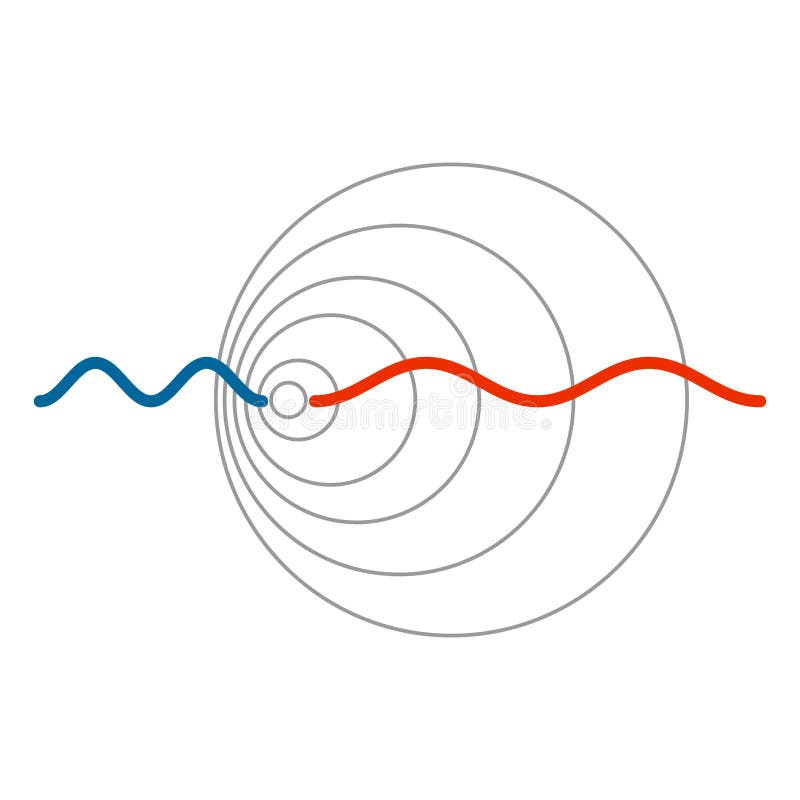
Stretching Light. Redshift is a phenomenon where electromagnetic radiation from an object undergoes an increase in wavelength, shifting toward the red end of the light spectrum.
Distance Indicator: In an expanding universe governed by Hubble's law, greater redshift correlates directly to greater cosmological distance and look-back time.
- 📈 Wavelength elongation across space.
- 🌌 Direct marker for deep cosmic expansion.
The Redshift Variable
Quantifying the Shift. Redshift is denoted by the letter z and is calculated by comparing observed wavelength against the rest wavelength emitted by the source.
Mathematical Definition: The equation is expressed as z = (λobs - λrest) / λrest, where positive values indicate movement away from the observer.
- 🔢 Calculated via fractional wavelength change.
- 📐 Standardized parameter z across astronomy.
Hubble's Law
Velocity Proportional to Distance. Discovered by Edwin Hubble, the law states that the recession speed of galaxies is directly proportional to their distance from Earth.
Core Equation: Formulated as v = H0 × d, where v is velocity, H0 is the Hubble constant, and d represents proper distance.
- 🔭 Links velocity directly to spatial distance.
- ⚡ Governed by the expansion rate H0.
Mechanisms of Shift
Motion vs Space Expansion. Local Doppler shift is caused by physical movement through space, whereas cosmological redshift results from the actual stretching of spacetime itself.
Cosmic Scale Factor: For cosmological redshift, light wavelengths stretch in tandem with the cosmic scale factor a(t) as the universe expands over billions of years.
- 🚗 Doppler applies to local velocities.
- 🌌 Cosmological reflects expanding metrics.
Spectral Signatures
Atomic Fingerprints. Astronomers identify redshift by locating known spectral emission and absorption lines, such as the Hydrogen-alpha line or Lyman-alpha forest.
Infrared Shift: As objects push toward extreme distances (e.g., z > 10), optical light shifts completely into infrared wavelengths, requiring specialized space telescopes.
- 🔍 Tracking shifted atomic emission lines.
- 🛰️ Infrared observation for high-z galaxies.
Time Machine Scale
Gazing Into History. High redshift values directly correlate to significant look-back time, allowing scientists to peer back to the early formative epochs of our universe.
Relativistic Modeling: Converting redshift to physical distance requires complex cosmological models integrating dark energy, matter density, and curvature parameters.
- ⏳ Direct window into early galaxy formation.
- 🌐 Requires Lambda-CDM cosmological calculations.
The Edge of Space
Primordial Frontiers. Modern space observatories routinely discover galaxies at redshifts exceeding z = 13, capturing light emitted less than 400 million years after the Big Bang.
Cosmic Microwave Background: The ultimate limit is the cosmic microwave background at roughly z ≤ 1100, marking when the universe first became transparent to light.
- 🌌 Galaxies detected past z = 13.
- 🔥 CMB horizon wall at z = 1100.
Mapping the Cosmos
3D Spatial Surveys. Large-scale astronomical surveys use redshift data to map the three-dimensional distribution of millions of galaxies across the universe.
Cosmic Web: These maps reveal intricate cosmic structures, including vast galactic filaments, dense clusters, and massive cosmic voids spanning hundreds of megaparsecs.
- 🗺️ 3D spatial mapping of galactic networks.
- 🕸️ Unveiling the web-like structure of space.
Next-Gen Discovery
Advanced Instrumentation. Next-generation ground and space telescopes are poised to measure redshifts for billions of galaxies with unprecedented precision.
Unlocking Dark Energy: By tracking how redshift changes over cosmic epochs, astrophysicists aim to constrain the nature of dark energy and the ultimate fate of our universe.
- 🚀 Precision tracking for billions of targets.
- 💡 Probing the physics of dark energy.

Redshift Distance FAQs
Unraveling how light wavelengths stretch across expanding space to measure cosmic distances
Redshift occurs when light emitted from distant astronomical objects increases in wavelength, shifting toward the red (lower frequency) end of the electromagnetic spectrum.
According to Hubble's Law, the further away a galaxy is from us, the faster it is receding due to the expansion of the universe, resulting in a higher redshift value.
Redshift is denoted by the letter z, calculated as z = (λobserved - λemitted) / λemitted, comparing observed wavelengths to known laboratory values.
Cosmological redshift is primarily caused by the expansion of space itself stretching the light wave packets as they travel, rather than the galaxies speeding away through static space.
Using Hubble's constant (H0), distance (d) can be estimated by dividing the recession velocity (derived from redshift) by the expansion rate of the universe: v = H0 × d.
Doppler redshift results from local motion through space (like stars moving within a galaxy), whereas cosmological redshift stems from the stretching of spacetime over vast intergalactic distances.
For distant galaxies and quasars where traditional parallax and standard candles fail, measuring spectral line redshift provides a reliable indicator of lookback time and distance.
Advanced space telescopes like James Webb have identified primordial galaxies with redshifts exceeding z = 10, capturing light from when the universe was only a few hundred million years old.
Almost all distant objects show redshift due to cosmic expansion, with a few local exceptions like the Andromeda Galaxy, which is gravitationally blueshifted because it is moving toward us.
Key search phrases include: redshift distance relation, cosmological redshift formula z, Hubble's Law expansion rate, and measuring high-redshift galaxies.


