Gravity Turn Calculator
GRAVITY LAB
NEW HORIZONS MISSION CONTROL • ORBITAL KINEMATICS MATRIX 2026
Gravity (g)
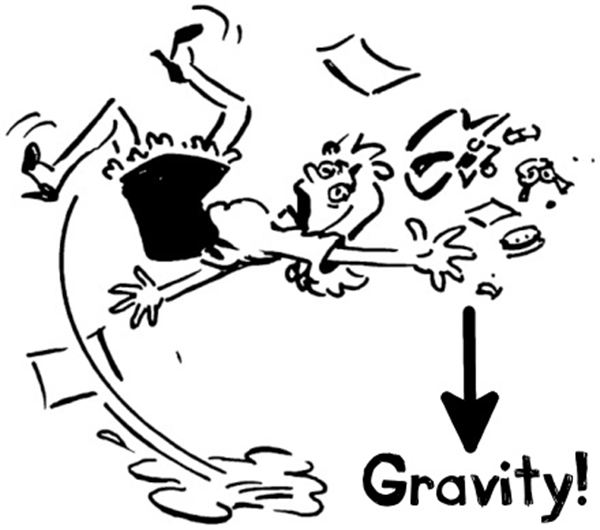
The Universal Architect. Gravity defines the cost of spaceflight. It determines the Escape Velocity (11.2 km/s for Earth) and dictates the parabolic arc of every object launched into the sky.
- ● Acceleration: Constant 9.81m/s2 at Earth's surface.
- ● Well Depth: Earth's gravity "costs" 9.4km/s of Delta v to reach orbit.
- ● Orbit: Gravity provides the centripetal force for stable flight.
The Gravity Turn
The Optimal Path. By tilting slightly after launch, the rocket allows Earth's gravity to pull its trajectory into a curve. This transition from vertical to horizontal is what allows a craft to "fall around the Earth" rather than falling back to it.
- ⟳ Pitch-Over: The initial move that begins the arc.
- ⟳ Prograde: Staying aligned with the flight path to reduce drag.
- ⟳ Efficiency: Converts vertical thrust into horizontal speed.
The Gravity Turn
A rocket is a momentum machine. The gravity turn allows the craft to transition from 0° (Vertical) to 90° (Horizontal) using the planet's own pull. This saves tons of fuel that would otherwise be wasted fighting a vertical tug-of-war.
- 1. Launch: Vertical ascent to exit high-pressure air.
- 2. Pitch: 2-5 degree tilt starts the process.
- 3. Coast: Gravity curves the path into a perfect arc.
Turn Calculation
The Guidance Algorithm. Calculating a gravity turn requires a "Predictive Loop." The flight computer simulates thousands of paths per second to find the one that consumes the least fuel while ensuring the rocket reaches 7.8 km/s at the exact moment it hits vacuum.
- ∑ Variable Mass: Rocket loses ~10 tons of mass per second.
- ∑ Dynamic g: Gravity weakens as altitude ($h$) increases.
- ∑ Integration: Solving for the perfect "Pitch-over" time.
Max Q
The Structural Bottleneck. Max Q is the most dangerous moment of the ascent. It is the peak of aerodynamic resistance, occurring usually around 11km to 14km altitude. If a rocket is going to fail structurally, it usually happens here.
- ⚠ Dynamic Pressure: The "wind" force hitting the nosecone.
- ⚠ Throttle Bucket: Reducing thrust to minimize stress.
- ⚠ Altitude: ~13,000 meters (Typical for Orbital Class).
Recommended Tools
View AllLoading recommended tools...
Gravity Turn Simulation Lab: an efficient way to optimize orbital insertion and atmospheric ascents
Master the physics of fuel-efficient launches by simulating gravity turns. Model pitch maneuvers, aerodynamic drag, and orbital trajectory shaping in real time to reach orbit with maximum delta-V remaining.
Open Gravity Turn LabExplore More!

Delta-V Equation

Thrust-to-Weight
Specific Impulse

Gravity Turn

Re-entry Heating

Staging Mass

Fuel Flow Rate

Nozzle Efficiency

Aerodynamic Drag

Aero Braking

Chamber Pressure
Mass Fraction

Exhaust Velocity

Structural G-Load

Combustion Stability

Aero Stability (CoP)
Your Rocket Engineering AI assistant.
Ask me about Max-Q, delta-v, TWR, specific impulse, staging, re-entry, nozzle design, or any formula on this site.
I explain everything step-by-step with clear lists.